
As heatwaves become more frequent across the globe, millions of outdoor workers face a growing challenge: how do you stay productive and safe when temperatures climb above 45°C (113°F)?
The answer may be hanging in a closet rather than installed in a building.
Cooling vests are becoming one of the most important wearable technologies for construction workers, oil field crews, miners, agricultural laborers, and emergency responders working in extreme heat. Some experts believe these simple-looking garments could become as essential as hard hats in the coming decades.
Why Extreme Heat Is Becoming a Global Workplace Crisis
In many parts of the world, summer temperatures now regularly exceed 45°C. Countries in the Middle East, Australia, India, and parts of the United States have experienced record-breaking heat in recent years.

When the human body is exposed to such temperatures for extended periods, several serious risks emerge:
- Heat exhaustion
- Heat stroke
- Severe dehydration
- Reduced concentration
- Increased workplace accidents
- Lower productivity
For workers performing physically demanding tasks outdoors, these risks can become life-threatening.
What Is a Cooling Vest?
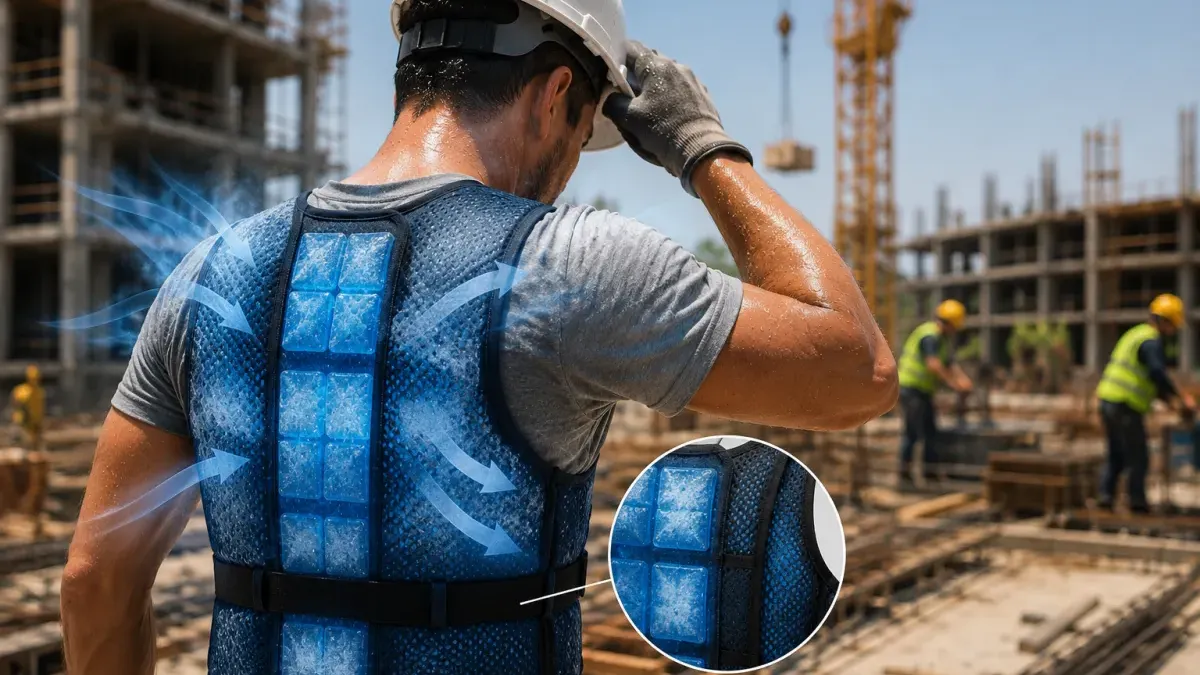
A cooling vest is a wearable garment designed to reduce body temperature by absorbing excess heat before it can raise the body's core temperature to dangerous levels.
Unlike traditional workwear, these vests actively help workers manage heat stress, allowing them to remain comfortable and productive for longer periods.
Some advanced models can reduce perceived body temperature by several degrees, making a dramatic difference during long shifts under direct sunlight.
Read More
The Four Main Types of Cooling Vests
1. Ice-Pack Cooling Vests
These vests contain removable ice packs or frozen gel inserts.
Advantages
- Powerful cooling effect
- Affordable
- Easy to use
Disadvantages
- Heavier than other options
- Limited cooling duration
- Requires access to freezers
Typical cooling time: 2–4 hours.
2. Phase Change Material (PCM) Cooling Vests
PCM technology uses special materials that absorb heat while maintaining a consistent temperature.
Unlike ice packs, PCM inserts do not become excessively cold, making them more comfortable for long-term use.
Advantages
- Consistent cooling
- Lightweight
- Comfortable for extended wear
- Effective in humid environments
Disadvantages
Higher initial cost
3. Evaporative Cooling Vests
These vests are soaked in water before use.
As the water evaporates, it removes heat from the body.
Advantages
- Lightweight
- Inexpensive
- No batteries required
Disadvantages
- Less effective in humid climates
- Requires occasional re-wetting
4. Battery-Powered Cooling Vests
These advanced systems use built-in fans or active cooling technology.
Advantages
- Continuous cooling
- Suitable for long work shifts
- Highly effective in extreme heat
Disadvantages
- Higher price
- Requires battery charging
Cooling Vest Comparison Table
| Cooling Vest Type | Cooling Power | Comfort | Weight | Cost | Best For |
|---|---|---|---|---|---|
| Ice-Pack | High | Medium | Heavy | Low | Construction Sites |
| PCM | High | High | Light | Medium-High | Industrial Workers |
| Evaporative | Medium | High | Very Light | Low | Dry Climates |
| Battery-Powered | Very High | High | Medium | High | Extreme Heat Conditions |
The Industries Adopting Cooling Vests the Fastest
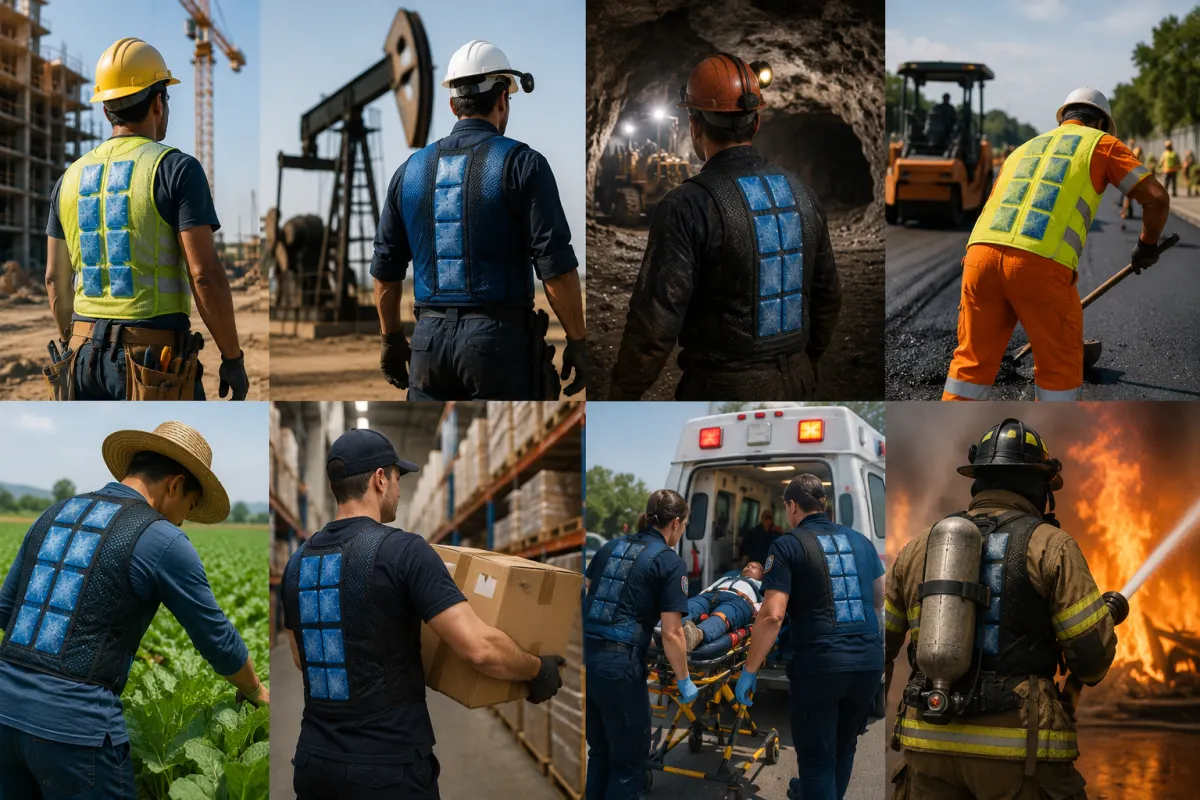
Cooling vest adoption is increasing rapidly across:
- Construction
- Oil and Gas
- Mining
- Road Maintenance
- Agriculture
- Warehousing
- Emergency Services
- Firefighting
Large industrial employers are increasingly viewing cooling vests as an investment rather than an expense because reducing heat-related illnesses also reduces lost work hours and medical costs.
Can Cooling Vests Really Prevent Heat Stroke?
Research suggests that cooling garments can significantly reduce heat strain, lower skin temperature, and improve worker comfort in high-temperature environments.
In some extreme conditions, cooling vests have helped workers remain operational for substantially longer periods compared to conventional workwear.
This technology is becoming increasingly important as climate change drives more frequent and intense heatwaves worldwide.
The Future of Cooling Wearables
The next generation of cooling vests may include:
- Smart temperature sensors
- AI-powered heat monitoring
- Automatic cooling adjustment
- Real-time health tracking
- Integration with industrial safety systems
Some manufacturers are already experimenting with wearable technologies capable of warning workers before heat stress becomes dangerous.