

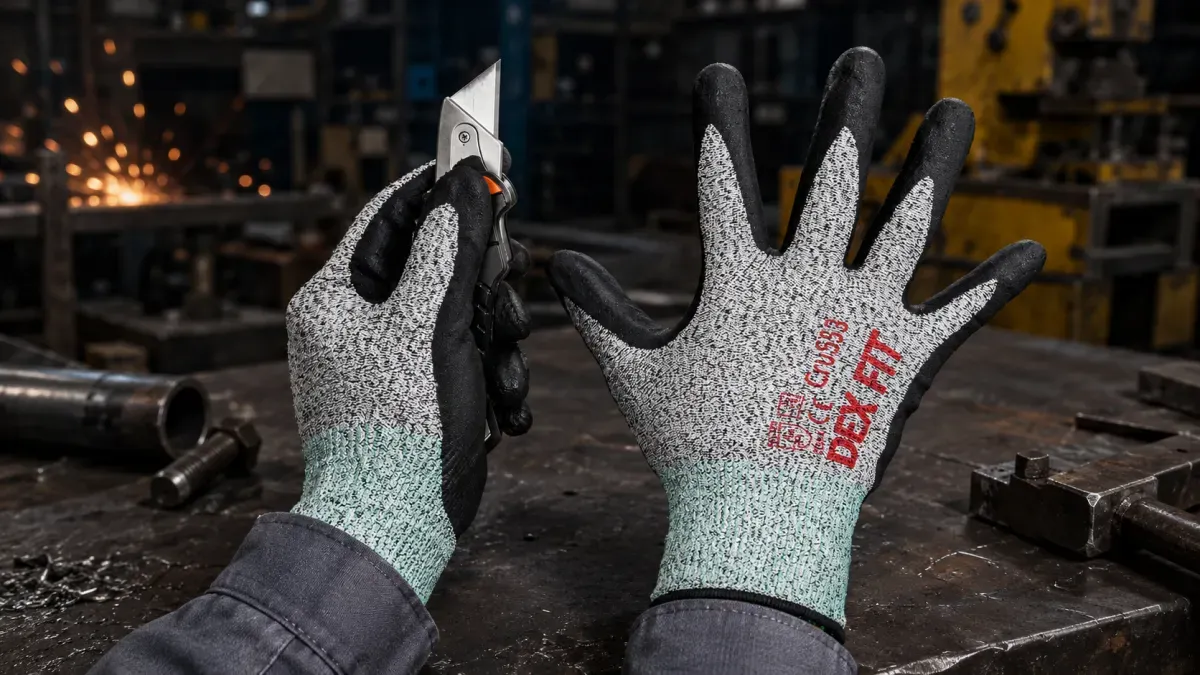

Most people think a glove is nothing more than a layer of fabric, rubber, or leather. However, some premium industrial gloves costing $80 to $150 contain advanced materials originally developed for aerospace, automotive manufacturing, and high-risk industrial environments.
Modern cut-resistant and chemical-resistant gloves from brands such as Honeywell and Dex Fit are packed with engineering that most users never see. The secret lies in the fibers, coatings, and testing standards hidden beneath the surface.
What Is Actually Inside These Gloves?
High-end safety gloves are not made from a single material. Instead, they combine multiple layers of engineered fibers designed to protect against cuts, punctures, abrasion, and chemical exposure.

1. HPPE (High-Performance Polyethylene)
One of the most important materials used in modern cut-resistant gloves is HPPE.
Key advantages include:
- Exceptional strength-to-weight ratio
- High resistance to cuts and abrasion
- Lightweight construction
- Excellent flexibility
Manufacturers often describe HPPE as being stronger than steel by weight while remaining incredibly light and comfortable. This material forms the backbone of many Level A5 to A9 cut-resistant gloves used in manufacturing and metalworking industries.
2. Aramid Fibers (Kevlar)
Many professional Honeywell gloves incorporate aramid fibers, including Kevlar.
Benefits include:
- Outstanding cut resistance
- Heat resistance
- Long service life
- Flexibility and comfort
Honeywell's CoreShield series combines Kevlar with advanced synthetic fibers to create gloves that maintain dexterity while providing substantial protection.
Read More

3. Metal and Alloy Fibers
Some of the highest-rated gloves contain microscopic strands of stainless steel or engineered alloy fibers woven into the fabric.
These fibers help by:
- Distributing cutting forces
- Slowing blade penetration
- Increasing durability
- Improving overall cut protection
In premium industrial gloves, these metal fibers are often combined with HPPE and other advanced materials to achieve ANSI A8 and A9 cut-resistance ratings.
Why Can't a Knife Easily Cut Through Them?
A common misconception is that cut-resistant gloves are "knife-proof."
In reality, they work through several engineering principles:
Force Distribution
When a blade contacts the glove, the force is spread across a larger area instead of concentrating at a single point.
Blade Deflection
The fiber structure and specialized coatings make it more difficult for a blade edge to grip and slice through the material.
Energy Absorption
Advanced fibers absorb part of the cutting energy before it reaches the skin underneath.
Rather than completely stopping a blade, these mechanisms significantly reduce the risk of serious injury.
What Does ANSI A9 Actually Mean?
Most people have seen labels such as A3, A5, or A9 without understanding their significance.
These ratings are part of the ANSI/ISEA 105 cut-resistance standard.
| Rating | Protection Level |
|---|---|
| A1 | Basic protection |
| A3 | Moderate protection |
| A5 | High industrial protection |
| A7 | Heavy-duty protection |
| A9 | Maximum standard protection |
To achieve an ANSI A9 rating, a glove must withstand more than 6,000 grams of cutting force during standardized laboratory testing.
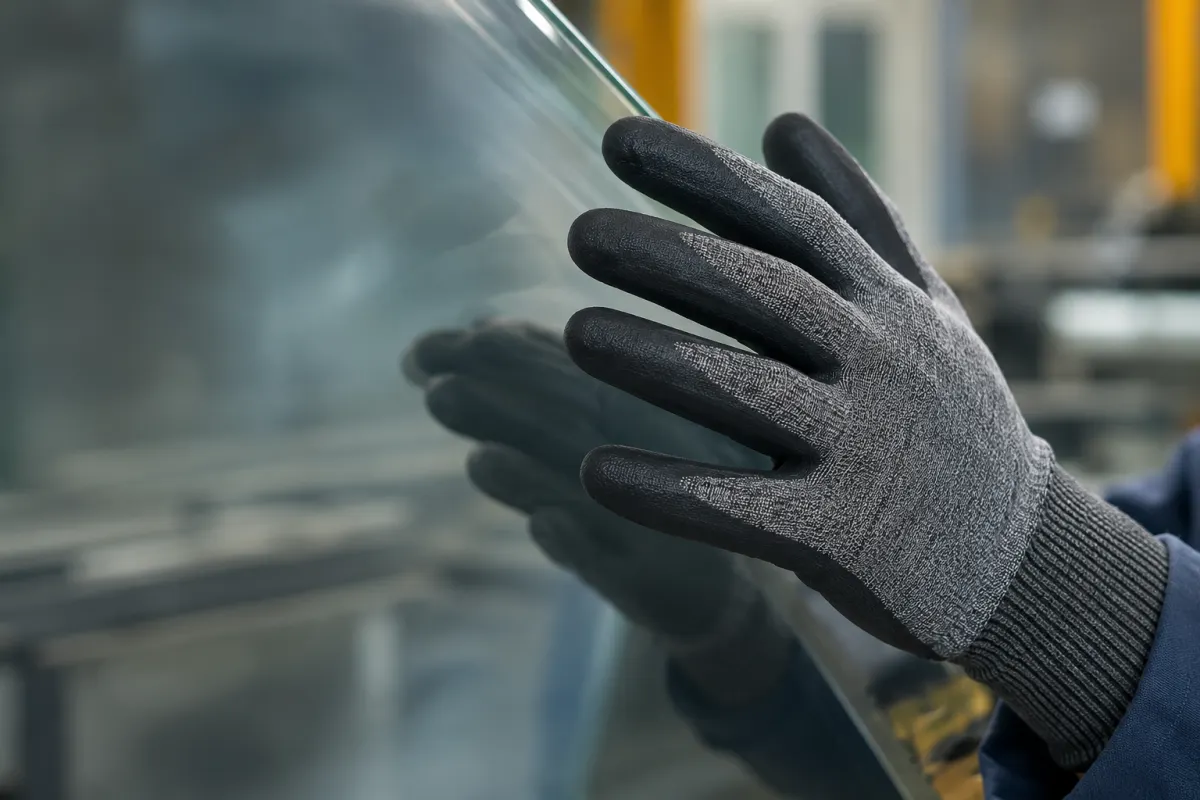
This level of protection is commonly required in industries such as metal fabrication, glass manufacturing, automotive production, and heavy machinery maintenance.
How Does Chemical Resistance Work?
The technology behind chemical-resistant gloves is entirely different from cut resistance.
Here, protective coatings play the most important role.
Nitrile Coatings
Nitrile is one of the most widely used materials in chemical-resistant gloves because it offers:
- Excellent oil resistance
- Fuel resistance
- Protection against many acids
- Resistance to various industrial solvents
Double-Coating Technology
Some premium industrial gloves feature dual nitrile coatings.
This approach improves:
- Chemical protection
- Abrasion resistance
- Grip performance
- Overall durability
The result is a glove capable of handling harsh industrial environments where both mechanical hazards and chemical exposure are present.
Why Are These Gloves So Expensive?
A professional-grade pair of safety gloves can easily cost $100 or more.
Several factors contribute to the price:
- Advanced engineered fibers are expensive to manufacture.
- Multi-layer construction requires complex production processes.
- ANSI and EN388 certification testing is costly.
- Many models are designed for demanding industries such as oil and gas, mining, automotive manufacturing, and heavy industry.
- Their lifespan is often significantly longer than standard work gloves.
For companies, preventing even a single serious hand injury can justify the cost many times over.
The Surprising Detail Most People Don't Know
Many modern premium gloves no longer rely on fiberglass reinforcement.
Older cut-resistant designs often used fiberglass fibers to increase protection, but they could reduce comfort and sometimes cause skin irritation.
Newer generations of gloves, including advanced Honeywell models, increasingly use softer engineered fibers that deliver comparable or superior cut resistance while improving comfort and wearability.
The Future of Protective Gloves
As materials science continues to evolve, safety gloves are becoming lighter, stronger, and more comfortable.
Researchers are experimenting with:
- Nano-engineered fibers
- Graphene-enhanced materials
- Smart textiles with embedded sensors
- Advanced chemical-resistant coatings
The result could be a new generation of gloves that not only protect workers from cuts and chemicals but also monitor environmental hazards in real time.
What looks like an ordinary glove may actually contain some of the most advanced protective materials available today—a remarkable example of how modern engineering can hide extraordinary technology in everyday industrial equipment.