

At first glance, paying serious money for a dead graphics card sounds irrational. After all, if a GPU no longer works, what value could possibly remain inside it?
The answer is far more complicated than most people realize.
Behind the growing market for burned-out graphics cards lies an ecosystem of repair specialists, component harvesters, recyclers, AI hardware traders, and even international smuggling networks. In today's AI-driven technology race, a damaged GPU is often viewed not as electronic waste but as a valuable resource.
As demand for high-performance computing continues to surge, even broken NVIDIA and AMD graphics cards can carry significant economic value.
Read More


What Does a “Dead GPU” Actually Mean?
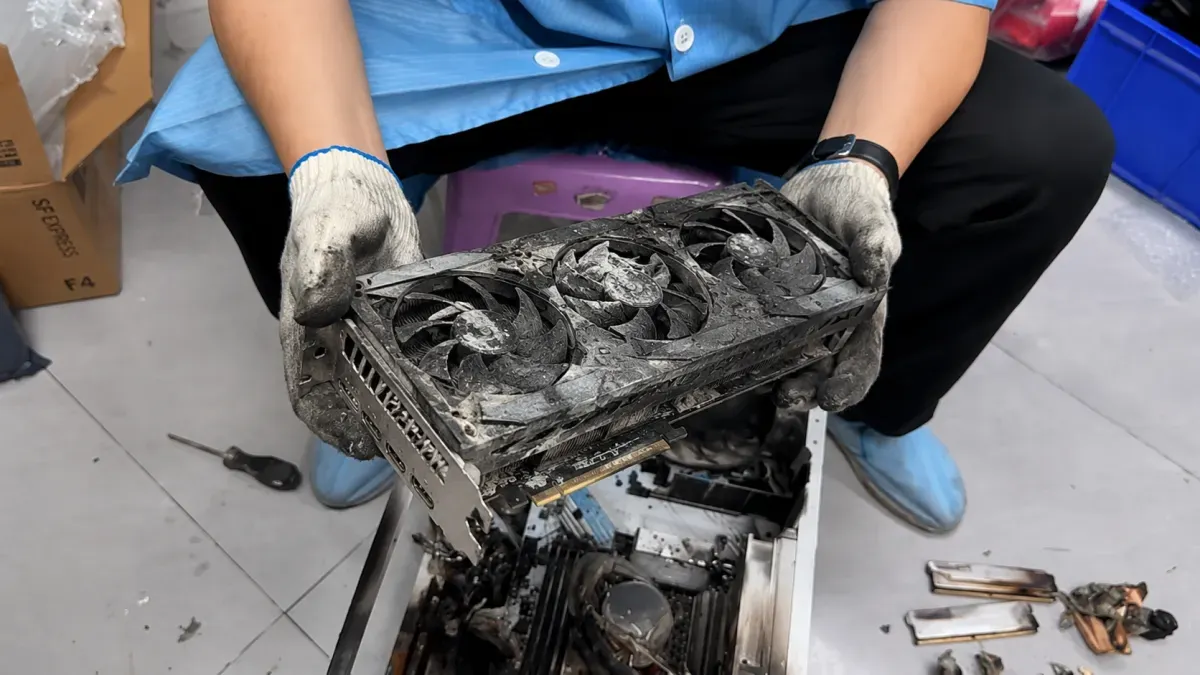
The term «dead GPU» can be misleading.
In many cases, the graphics card is not completely destroyed. Instead, only certain components have failed while other valuable parts remain functional.
Common failures include:
- Defective VRAM memory chips
- Burned MOSFETs and power-delivery components
- Voltage regulation failures
- BGA solder cracking
- Partial PCB damage
- Damaged display outputs
A card that appears completely dead to an average user may still contain a healthy GPU core, working memory modules, or recoverable electronic components.
This distinction is what fuels the market for damaged graphics cards.
Hidden Value #1: Salvaging Expensive Components
One of the biggest reasons buyers seek out broken GPUs is component harvesting.
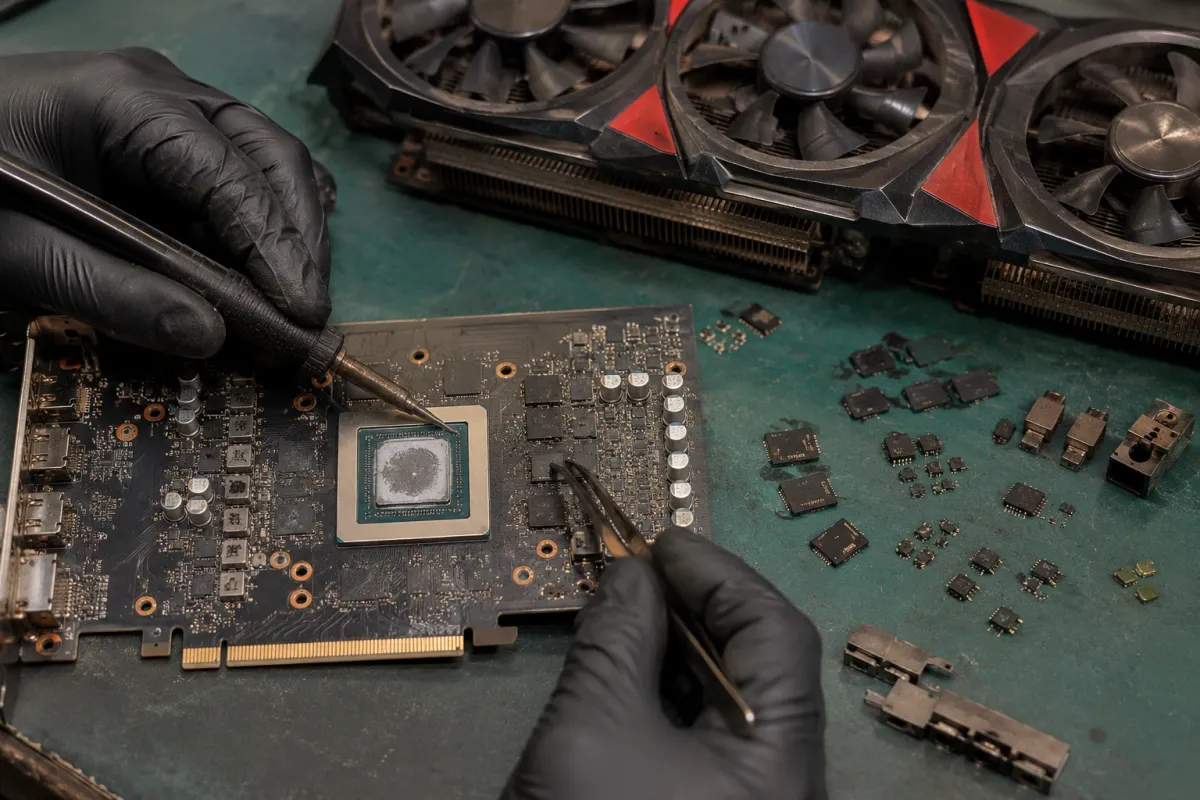
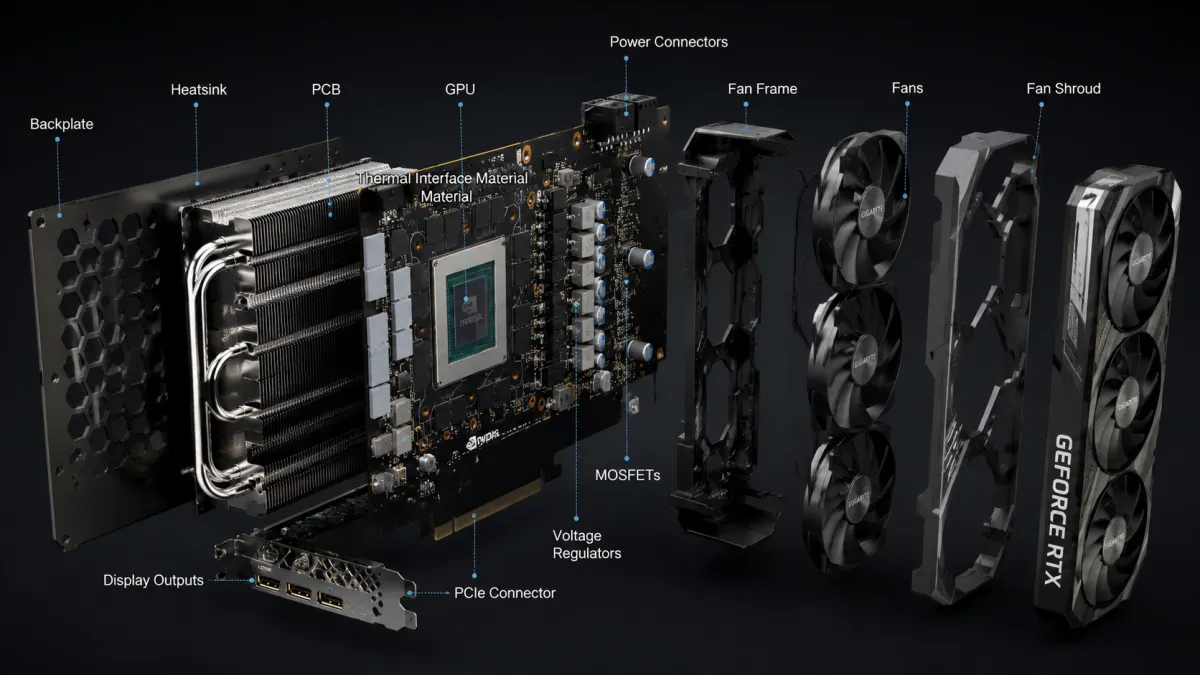
Modern graphics cards contain numerous parts that can be removed and reused, including:
- GDDR6 and GDDR6X memory chips
- Voltage regulators
- MOSFETs
- PCIe connectors
- Cooling systems
- Power-delivery components
Repair shops frequently purchase damaged cards simply to obtain replacement parts for other repairs.
As newer GPU generations become more expensive and harder to source, the value of harvested components continues to increase.
Hidden Value #2: Precious Metal Recovery
Even when a GPU cannot be repaired, it still contains valuable raw materials.
Graphics cards include recoverable amounts of:
- Gold
- Copper
- Palladium
- Silver
- Aluminum
Specialized recycling companies process large volumes of electronic waste to extract these materials.
While the amount of precious metal inside a single gaming GPU is relatively small, large-scale recycling operations can recover significant value from thousands of units.
This is one reason why even completely non-functional cards continue to attract buyers.
Hidden Value #3: GPU Repair and Refurbishment
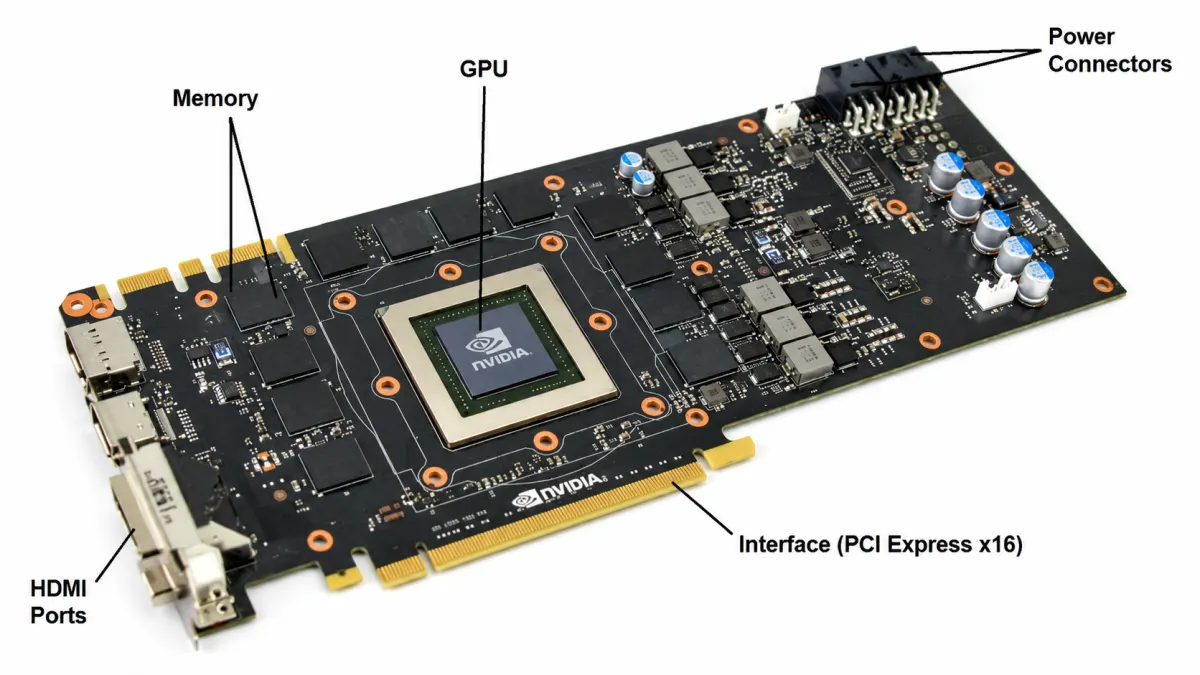
Many supposedly «dead» graphics cards can be restored.
Specialized repair centers perform services such as:
- VRAM replacement
- BGA reballing
- PCB trace repair
- Power-stage replacement
- Firmware recovery
A card purchased as non-working can sometimes be repaired and resold for a substantial profit.
As GPU prices rise, refurbishment has become increasingly attractive for repair businesses around the world.
The Rise of the Secondary AI Hardware Market
The economics become even more interesting when data-center GPUs enter the picture.
AI accelerators such as:
- NVIDIA H100
- NVIDIA A100
- AMD Instinct MI300
can sell for tens of thousands of dollars per unit.
Because of their high value, organizations increasingly repair, refurbish, and resell damaged AI hardware rather than discard it.
Even partially functional AI accelerators can retain substantial market value.
China's GPU Repair Boom
The market expanded dramatically after U.S. export restrictions limited China's access to advanced AI chips.
As access to new hardware became more difficult, demand for repairs increased.
Specialized companies in Shenzhen now focus on repairing advanced NVIDIA AI accelerators, helping extend the lifespan of hardware that would otherwise be discarded.
For many businesses, repairing a restricted GPU is significantly cheaper and faster than acquiring a replacement.
When Gaming GPUs Become AI Hardware
One of the most fascinating developments is the repurposing of gaming graphics cards for AI workloads.
Enthusiasts and small engineering firms have experimented with:
- Increasing VRAM capacity
- Modifying memory configurations
- Rebuilding damaged cards
- Converting gaming GPUs into AI-focused systems
As AI computing demand continues to grow, these modifications can dramatically increase the usefulness—and value—of older hardware.
The Dark Side: Smuggling and Gray Markets
The enormous value of AI hardware has also created opportunities for illegal trading.
Authorities in multiple countries have investigated networks accused of moving restricted AI chips through intermediary regions and gray-market channels.
Because advanced AI accelerators can command extremely high prices, even damaged units may become part of international resale and refurbishment networks.
This reality has transformed certain categories of GPUs from ordinary computer components into strategic assets.
Risks for Buyers
The market for damaged graphics cards is not without dangers.
Common risks include:
- Missing GPU cores
- Removed VRAM chips
- Hidden PCB damage
- Counterfeit repairs
- Misrepresented functionality
Some cards look fully intact externally while key components have already been harvested.
Buyers should carefully inspect any «for parts» GPU before making a purchase.
Why Burned-Out GPUs Still Have Value
The economic case is surprisingly simple:
| Reason | Why It Matters |
|---|---|
| Component Harvesting | Working parts can repair other GPUs |
| Precious Metals | Gold, copper, silver, and palladium recovery |
| Refurbishment | Many cards can be restored |
| AI Demand | High-performance hardware remains valuable |
| Supply Constraints | Advanced GPUs are still expensive |
| Export Restrictions | Scarcity increases secondary-market value |
| Hardware Repurposing | Gaming cards can be adapted for AI workloads |
Are burned GPUs worth money?
Yes. Many damaged GPUs contain reusable components, recoverable precious metals, or repairable hardware that retains significant value.
Can a dead graphics card be repaired?
Often, yes. Common repairs include VRAM replacement, power-stage repair, and BGA reballing.
Why do repair shops buy broken GPUs?
They use them for parts harvesting, refurbishment projects, and component-level repairs.
Do data-center GPUs have higher salvage value?
Yes. AI accelerators such as NVIDIA H100 and A100 can retain considerable value even when partially damaged.
Is buying a broken GPU risky?
Absolutely. Some cards have missing components or hidden damage that can make repair impossible.