
The Red Puddle at the Bottom of Your Plate
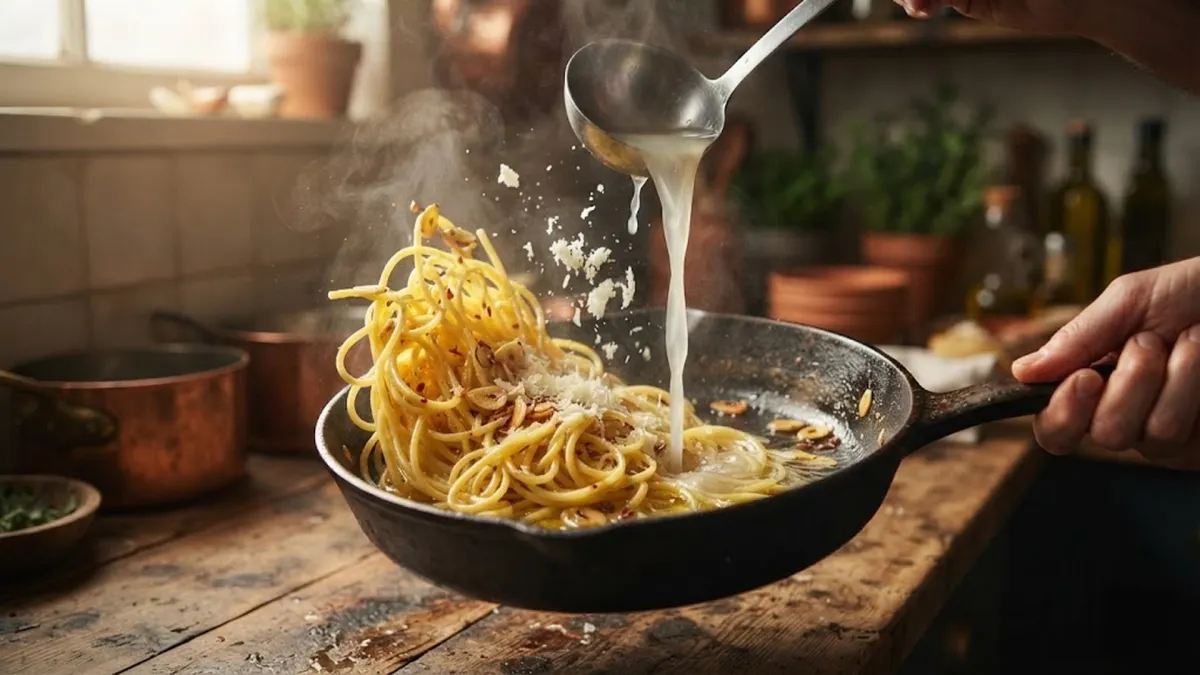
Every home cook has experienced that disappointing moment at the dinner table. You boil a pot of spaghetti, strain it in a metal colander, scoop it into a clean white bowl, and ladle hot tomato sauce straight over the top. But by the time you sit down with a fork, the sauce has slid completely off the naked noodles, pooling into a watery, greasy red puddle at the bottom of the plate.
I learned the cure for this tragedy from an old family friend named Marco who ran a small trattoria in Rome. When I told him my pasta sauce always separated from the noodles, he threw his hands up in theatrical despair. "You are throwing the soul of the dish straight down the sink," he told me, pointing toward the kitchen drain. "That cloudy cooking water is the single most valuable ingredient in Italian cooking."
Professional chefs treat pasta water like liquid gold. As dry semolina pasta tumbles in a pot of boiling water, microscopic starches dissolve off the outer surface of the noodles and suspend themselves in the bubbling liquid. Dumping that water down the drain is like throwing away the binder that makes sauces glossy, rich, and clung tightly to every bite.
Why Door Shelves Spoil Milk Faster (and the 34-Degree Refrigerator Secret)
Why Starchy Pasta Water Is Liquid Gold
To understand why pasta water is so transformative, you have to look at the chemistry of emulsion. Cooking fats like extra-virgin olive oil, melted butter, and rendered guanciale naturally repel water. If you try to mix hot oil directly with wet boiled pasta, they stay separate, resulting in a greasy mouthfeel and dry noodles.
Starch molecules act as natural chemical bridges. One end of a dissolved starch chain binds easily to water molecules, while the opposite end grabs tightly onto fat droplets. When you ladle two tablespoons of cloudy boiling pasta water into a hot skillet with your sauce and toss the noodles vigorously over medium heat, the starch molecules physically lock the fats and liquids together into a creamy, glossy glaze.
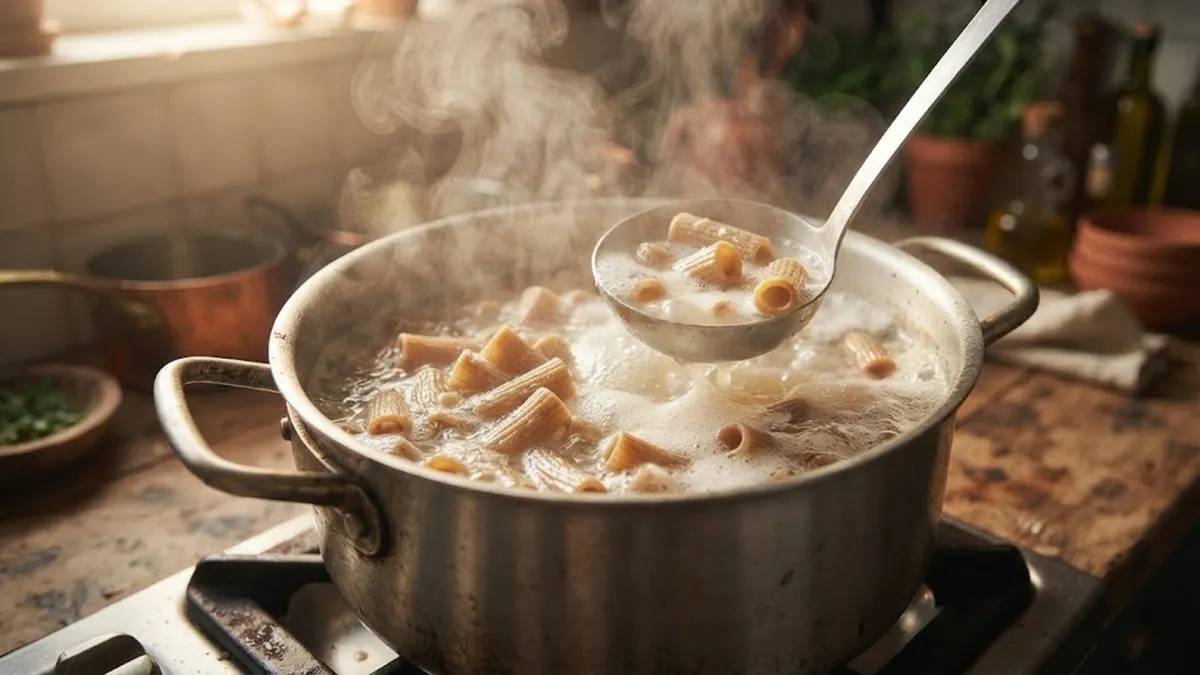
This culinary process is called mantecatura. Instead of having a sauce that drips off your fork and spatters your shirt, the emulsion wraps around each strand of spaghetti like a velvet glove. The noodles absorb seasoning from the inside out, creating a cohesive restaurant-quality texture in your home kitchen.
| Classic Sauce | Core Pantry Ingredients | The Starch Water Secret |
|---|---|---|
| Aglio e Olio | Olive oil, fresh garlic, red pepper flakes, parsley | Binds pure olive oil into a silky golden coating without greasiness |
| Cacio e Pepe | Coarse black pepper, grated Pecorino Romano cheese | Melts dry cheese smoothly without clumping into rubbery strings |
| Quick Pomodoro | Crushed San Marzano tomatoes, garlic, fresh basil | Reduces tomato acidity and thickens sauce to cling to noodles |
| Lemon Butter & Sage | Unsalted butter, fresh lemon juice, whole sage leaves | Forms a velvety citrus cream without adding heavy dairy cream |
4 Master Sauces You Can Make in 15 Minutes
You do not need hours of slow simmering to create unforgettable Italian pasta. These four iconic sauces rely entirely on everyday pantry staples and finish cooking in the exact time it takes to boil a box of dry noodles.
1. Aglio e Olio (Garlic and Olive Oil)
Thinly slice four cloves of fresh garlic. Heat four tablespoons of good extra-virgin olive oil in a wide skillet over gentle medium-low heat. Add the garlic and a pinch of dried red pepper flakes, letting them sizzle slowly until the garlic turns a pale golden straw color. The moment your spaghetti is two minutes shy of package directions, transfer the dripping noodles straight into the skillet with a ladle of pasta water. Swirl and toss for sixty seconds until the water and oil transform into a glossy golden sauce that coats every strand.
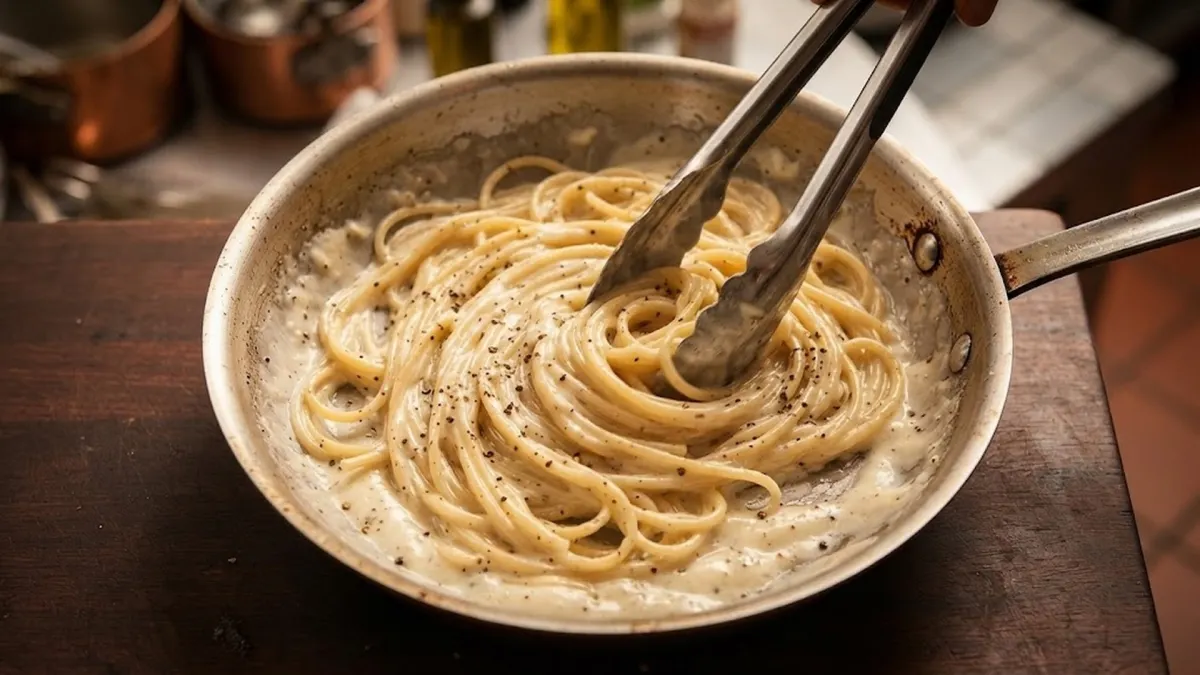
2. Cacio e Pepe (Cheese and Black Pepper)
Toast two teaspoons of freshly cracked black peppercorns in a dry skillet over medium heat for one minute until fragrant. Add half a cup of hot pasta water to create a peppery broth. In a separate small bowl, mix one cup of finely grated Pecorino Romano cheese with a few tablespoons of warm pasta water until it forms a thick paste. Toss your cooked tonnarelli or spaghetti in the pepper skillet, pull the pan off the heat, and stir in the cheese paste. The residual starch prevents the cheese proteins from seizing, giving you a luscious cream sauce without a single drop of heavy cream.
3. Quick Crushed Tomato Pomodoro
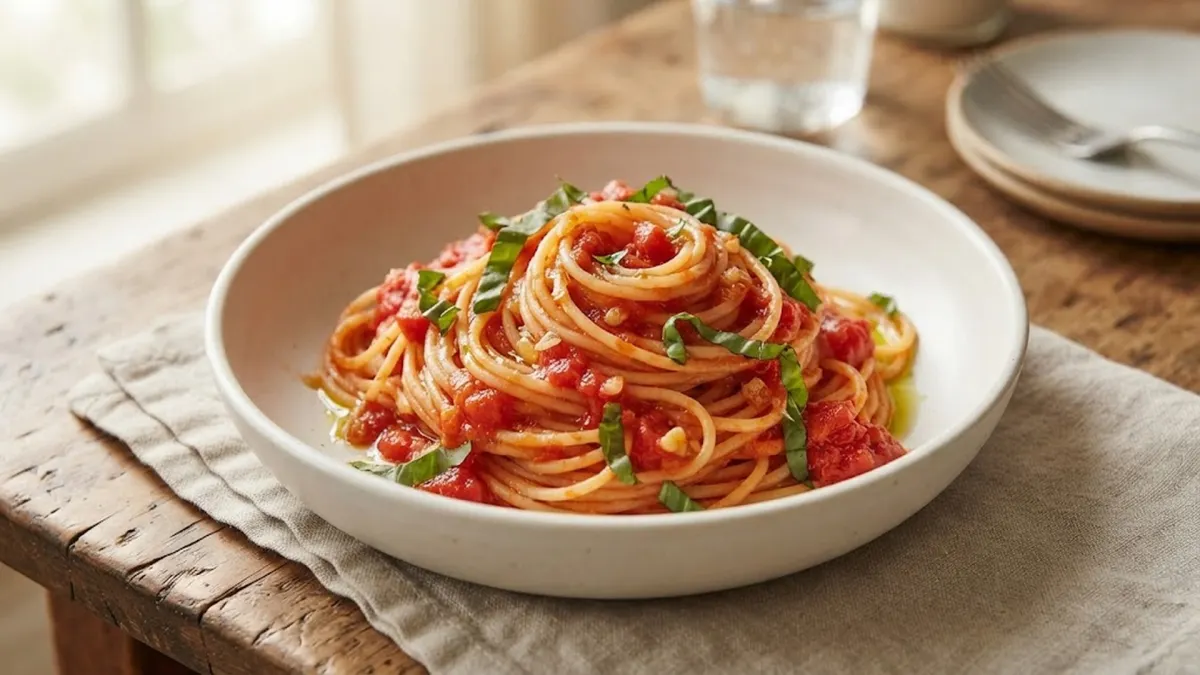
Sizzle two smashed garlic cloves in olive oil until aromatic, then pour in a 14-ounce can of whole San Marzano tomatoes crushed by hand. Simmer vigorously for ten minutes until the juices thicken. When you toss the al dente pasta into the skillet, add two tablespoons of starchy water and a handful of torn sweet basil leaves. The dissolved starch tames the natural sharpness of canned tomatoes, yielding a bright, balanced red sauce that clings tightly to every ridge.
4. Lemon Butter and Crispy Sage
Melt four tablespoons of unsalted butter in a wide pan over medium heat with six whole fresh sage leaves until the butter begins to foam and turn slightly nutty brown. Squeeze in two tablespoons of fresh lemon juice, then immediately add your al dente pasta and a splash of boiling cooking water. Swirl the pan rapidly. The dairy fats and starch molecules whip into a velvety citrus emulsion that feels decadent yet exceptionally light.
The Pot Water Salting Rule
Never salt your pasta water like ocean water if you plan to use it for emulsification. As the water boils down and you add ladles to your skillet, excess salt can easily overwhelm your sauce. Aim for water that tastes pleasantly seasoned, like a light soup broth.
The 60-Second Skillet Finish
The single greatest difference between amateur pasta and restaurant perfection happens during the final sixty seconds. Never dump boiled pasta into a serving bowl and spoon sauce on top. Always pull your noodles from the boiling water one to two minutes before they are fully tender, dropping them directly into the simmering sauce pan.
This allows the thirsty, half-cooked core of the pasta to absorb seasoned sauce and starchy water as it finishes cooking. The friction of tossing the noodles against the metal pan activates surface starches, tightening the sauce into a mirror-like finish that stays bonded until the very last bite.
The 15-Minute Pasta Master Rules
Rule of Thumb: The skillet is where pasta and sauce marry; the colander is only for draining excess water.
- Save a Coffee Mug: Always scoop out half a cup of cooking water before pouring anything into a colander.
- Pull Early: Transfer noodles into your sauce skillet when they still have a firm white dot at the center.
- Toss Vigorously: Rapid tossing and swirling over medium heat whips starch and fat into a glossy emulsion.
- Off-Heat Cheese: Always remove your pan from direct flame before stirring in grated cheese to prevent clumping.