

How the Mafia Helped Bring Italian Football to Its Knees
For decades, Italian football was the gold standard of the sport. Legendary clubs, World Cup triumphs, and iconic players made Serie A the envy of Europe. But behind the packed stadiums and historic rivalries, another force was quietly gaining influence — the Italian mafia.
Italian Football Was Once the World's Biggest Stage
Few countries have shaped football history like Italy.
With four FIFA World Cup titles, legendary clubs such as AC Milan, Inter Milan, Juventus, Napoli, and Roma, plus stars like Paolo Maldini, Roberto Baggio, Alessandro Del Piero, Francesco Totti, and Diego Maradona, Italian football dominated global headlines for decades.
During the late 1980s and throughout the 1990s, Serie A was widely regarded as the strongest football league on Earth. The world's best players wanted to play in Italy, television audiences exploded, and billions of euros flowed into the game.
Yet while football flourished on the surface, organized crime was quietly expanding its influence behind the scenes.
Why the Mafia Became Interested in Football
Football in Italy is much more than a sport.
It is a multi-billion-euro industry that generates enormous revenues through television rights, sponsorships, ticket sales, merchandise, hospitality, and tourism.
For criminal organizations, it represented the perfect opportunity.
Rather than purchasing football clubs outright, mafia groups found it easier—and less visible—to infiltrate the business surrounding the game.
Their goal wasn't to score goals.It was to control the money.
The Three Mafia Organizations That Changed Italy
Italy has long battled three powerful criminal organizations:
- Cosa Nostra in Sicily
- Camorra in Naples
- 'Ndrangheta in Calabria
Among them, 'Ndrangheta has emerged as Europe's most powerful organized crime network.
Fueled by international cocaine trafficking, the organization accumulated billions of dollars before investing that money into legitimate businesses across Italy and beyond.
Hotels.
Restaurants.
Construction companies.
Transportation.
Entertainment.
And eventually...
Football.
San Siro Became More Than a Football Stadium
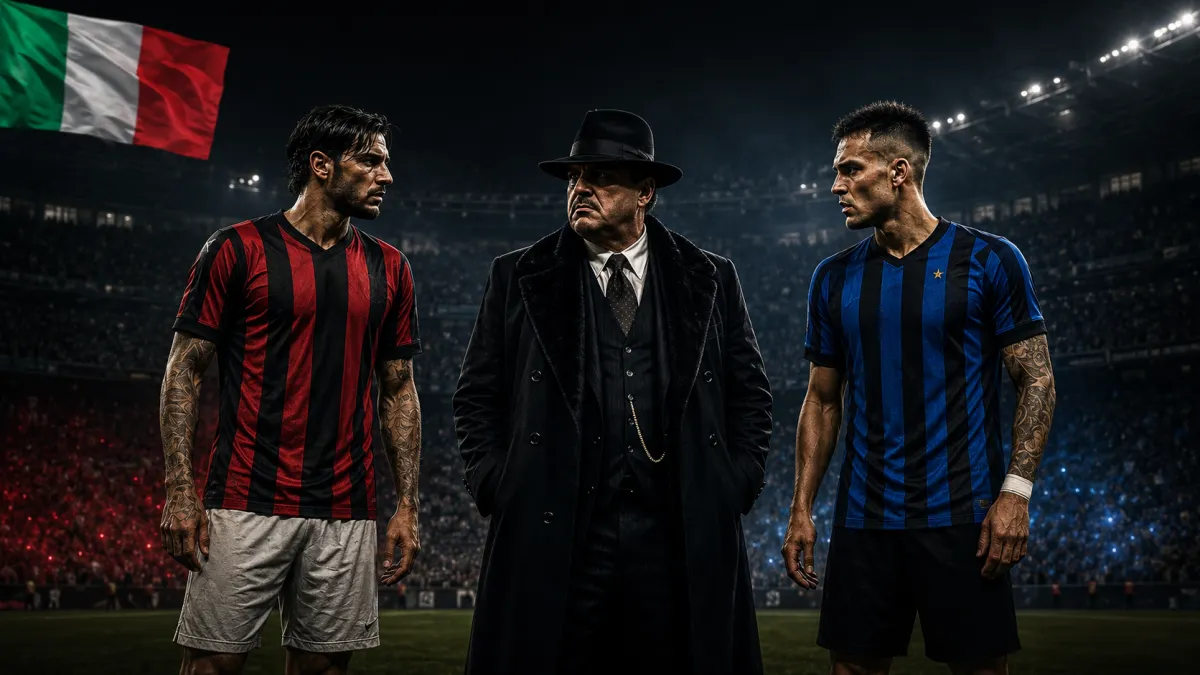
The San Siro is one of football's most iconic venues.Home to both AC Milan and Inter Milan, it attracts millions of supporters every season.
But investigators say criminal organizations saw something else.A massive cash machine.
Instead of attempting to own the clubs themselves, organized crime allegedly focused on controlling the businesses operating inside and around the stadium.
Investigations over recent years have linked criminal groups to activities including:
- Ticket distribution
- Parking operations
- Food and beverage concessions
- Merchandise sales
- Black-market ticket trading
Each match generated enormous amounts of cash.
And wherever cash moved, organized crime wanted a share.
The Ultras Became a Powerful Target
Perhaps the most controversial chapter involves Italy's ultras.Ultras are not ordinary supporters.
They organize stadium choreography, lead chants, and often influence the atmosphere inside the stadium.
Most are passionate football fans.However, authorities have repeatedly uncovered cases where certain ultra leaders maintained connections with organized crime.
According to prosecutors, some groups became involved in:
- Illegal ticket resales
- Extortion
- Stadium intimidation
- Criminal rackets surrounding matchdays
These activities turned sections of Italian football into lucrative businesses far beyond the game itself.
Black Market Tickets Worth Millions
Few matches in Europe generate demand like the Milan Derby.With tickets selling out almost instantly, the secondary market became incredibly profitable.
Italian investigations uncovered networks that allegedly obtained discounted tickets before reselling them for several times their face value.
The profits often bypassed both the clubs and genuine supporters.Instead, criminal intermediaries pocketed the money.
Corruption Didn't Start on the Pitch
Italian football has experienced several major corruption scandals over the past few decades.
The most famous remains the Calciopoli scandal in 2006, which exposed illegal influence over referee appointments and resulted in severe punishments for multiple clubs.
Although Calciopoli was not considered a mafia operation, it demonstrated how vulnerable Italian football had become to corruption at different levels.
Combined with organized crime operating around stadiums, the damage to public trust became significant.
Did the Mafia Cause Italy's Football Decline?
Italy's recent struggles have sparked endless debate.
The Azzurri famously failed to qualify for the 2018 and 2022 FIFA World Cups—an unimaginable outcome for one of football's greatest nations.
Some commentators argue that decades of corruption, criminal influence, and poor governance weakened Italian football from within.
However, there is no verified evidence proving that mafia organizations directly caused Italy's World Cup failures.
Most football analysts instead point to a combination of factors, including:
- Poor youth development
- Management failures
- Financial instability
- Declining competitiveness in Serie A
- Long-term structural problems within Italian football
Still, the existence of organized crime around parts of the football ecosystem has undeniably damaged the sport's reputation.
The Fight Isn't Over
Italian authorities have intensified their campaign against organized crime in football.
Police operations have targeted illegal ticket networks, criminal ultra groups, and financial crimes linked to stadium operations.
Several high-profile investigations have resulted in arrests and stricter oversight.
While progress has been made, experts believe the battle is far from finished.