


Here is something that should stop you mid-bite. Add up the value of just the ten companies on this list and you are looking at roughly $408 billion — more than the entire GDP of countries like Finland or Portugal. That is the price tag the global market puts on the act of feeding people fries, burritos, fried chicken, pizza, breadsticks, and bubbling pots of broth.
The hook: you've eaten inside a trillion-dollar story and never noticed
And the strangest part? The single most valuable restaurant company on Earth, McDonald's, arguably isn't really in the restaurant business at all. More on that in a moment — because it changes how you should read every other name on this list.
This isn't a list of the biggest chains by number of stores, or the most beloved by diners. It's a ranking by market value — what investors are willing to bet these brands are worth. And that single lens reveals the real machinery of the modern food world: franchising, real estate, technology, and the slow, steady migration of the global palate. Let's walk down the list, one plate at a time.
1. McDonald's — ~$202 billion 🇺🇸
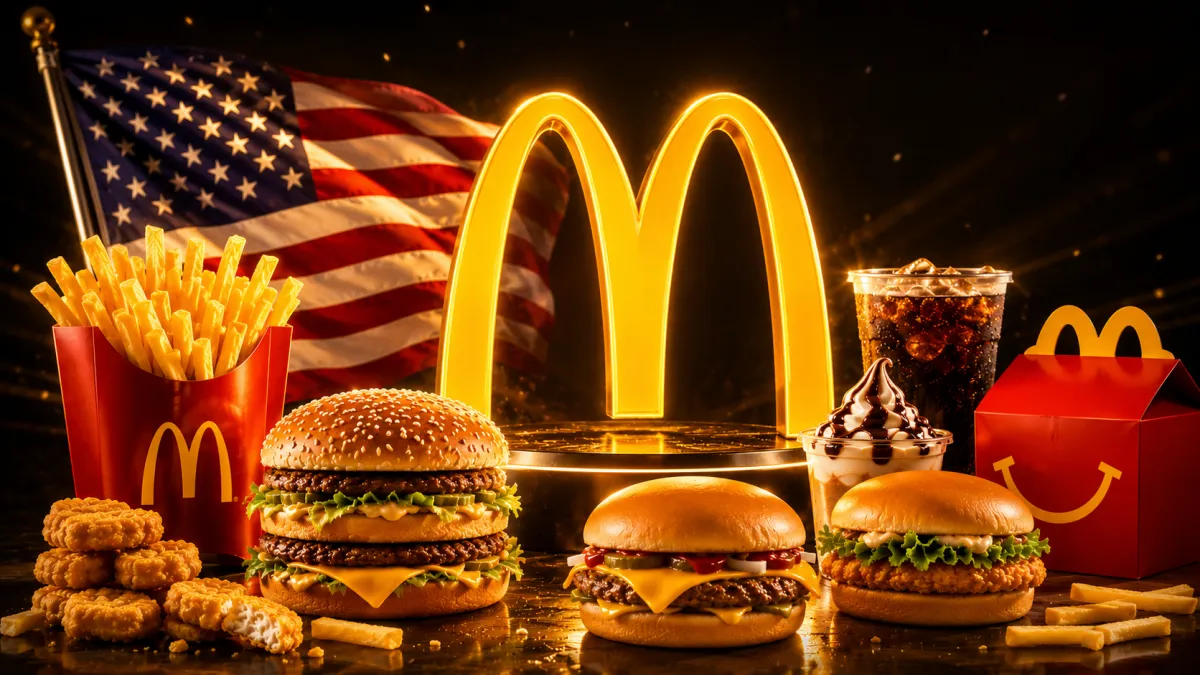
The real estate company that happens to sell hamburgers
McDonald's is so far ahead of everyone else on this list that it's almost its own category. The number two brand is worth less than a quarter of it.
But the detail every diner should know is this: McDonald's makes a huge share of its money not from selling food, but from owning the land and buildings underneath its restaurants and leasing them to franchisees. Roughly nine out of ten McDonald's locations worldwide are run by independent operators, who pay rent and royalties back to the corporation. The kitchen sells Big Macs; the corporation sells consistency, brand power, and prime real estate. This is why insiders have long joked that McDonald's is a property empire wearing a clown costume.
Read More
The scale is almost hard to comprehend: tens of thousands of restaurants across more than 100 countries, serving on the order of tens of millions of customers every single day — a meaningful fraction of the entire human population, daily. The story started in 1954 when a milkshake-machine salesman named Ray Kroc walked into a small, hyper-efficient burger stand run by the McDonald brothers in California and saw not a restaurant, but a system that could be copied infinitely. That insight — sell the system, not just the sandwich — is the founding idea behind almost every other company on this list.
Why it's #1: Predictable franchise royalties + real estate + the most recognized food brand on the planet = the kind of stable, compounding cash machine investors pay a premium for.
2. Chipotle Mexican Grill — ~$44 billion 🇺🇸
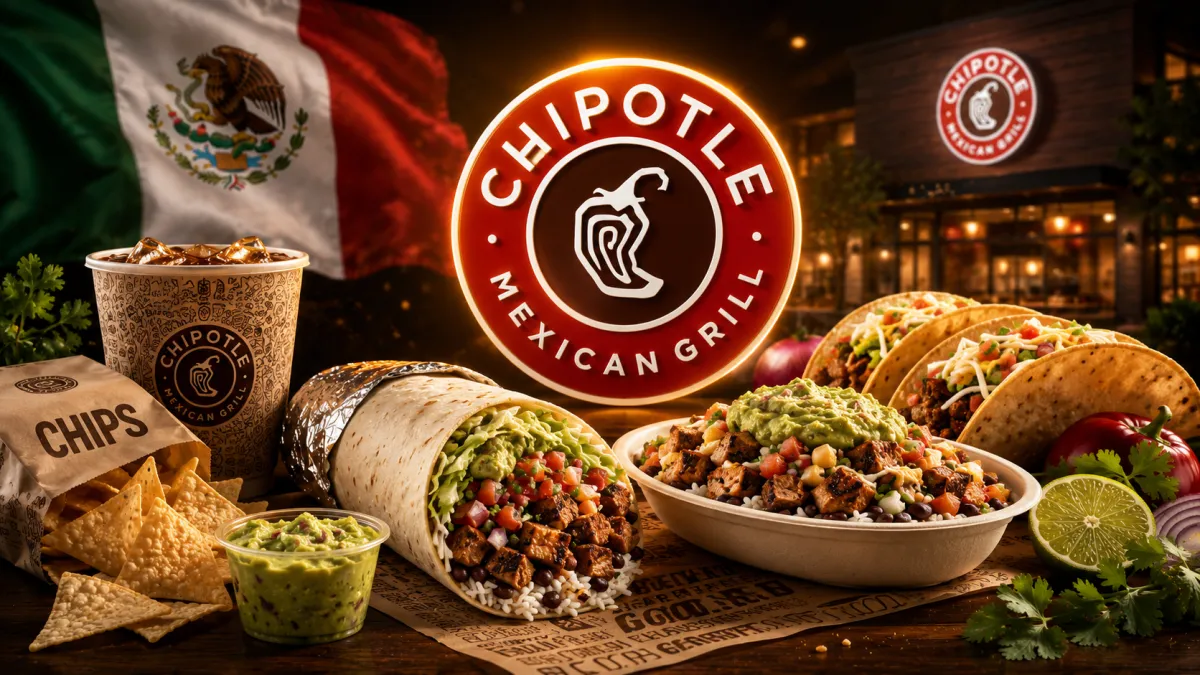
The rebel who refused to franchise
Chipotle is the most fascinating outlier on this entire list, because it broke the rule McDonald's invented — and got rich doing it.
While nearly every giant chain grows by franchising (letting other people fund and run the stores), Chipotle owns and operates virtually every one of its restaurants itself. No franchisees. That makes its scaling slower and more capital-intensive, but it gives the company total control over the one thing it built its identity on: ingredient quality and the «food with integrity» promise of responsibly sourced meat and fresh, in-store prep.
Here's a detail diners love: there's no freezer-to-fryer assembly line hidden in the back the way there is at a classic fast-food chain — the model is built around a visible, customizable «assembly line» where you watch your burrito or bowl get built in front of you. That theater of customization, plus a near-religious focus on a short menu done consistently, is why a single Mexican-food concept is worth more than the company that owns KFC, Pizza Hut, and Taco Bell combined in the next slot. Chipotle has also been one of the most aggressive adopters of digital ordering and dedicated «digital make-lines,» turning the smartphone into a second drive-thru.
Why it's #2: Premium pricing power, fanatical brand loyalty, industry-leading per-store sales, and a company-owned model that lets it capture the full profit of every bowl.
3. Yum! Brands — ~$43 billion 🇺🇸
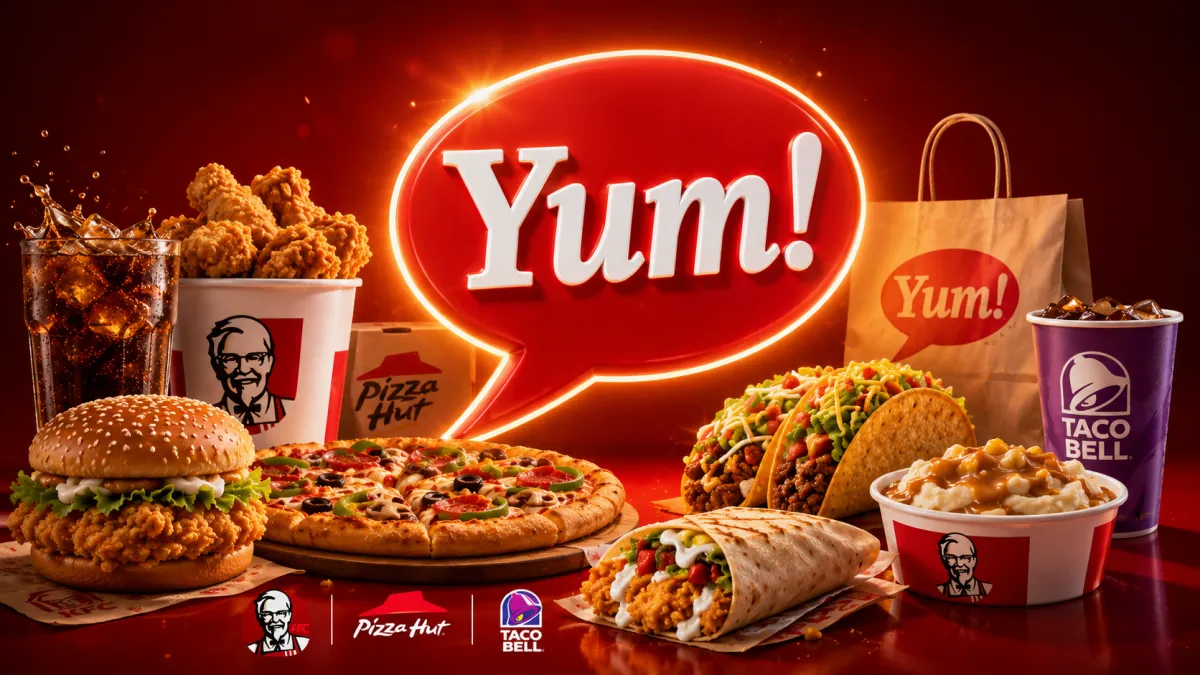
Three of fast food's most famous names under one roof
If McDonald's is one giant brand, Yum! Brands is the opposite strategy: a portfolio. It owns KFC, Pizza Hut, Taco Bell, and the wing chain Habit Burger & Grill, operating tens of thousands of restaurants across more than 150 countries.
The number that explains Yum! is its franchising ratio — the overwhelming majority of its restaurants (around 98%) are run by franchisees. Yum! is essentially a brand-licensing and operations machine: it collects royalties, runs marketing, sets the systems, and lets thousands of independent operators carry the capital risk. That asset-light design is exactly what investors reward — high margins, global reach, low overhead.
A detail worth knowing: Yum!'s real powerhouse in many markets is Taco Bell, whose relentless menu innovation and value-driven cultural marketing have made it one of the most resilient performers in American fast food, while KFC remains a giant outside the U.S. Note one important thing for the list: Yum!'s enormous China business is not counted here — it was spun off into its own separate company (which appears at #6).
Why it's #3: Three category-defining brands, near-total franchising, and a diversified, recession-resistant footprint.
4. Restaurant Brands International (RBI) — ~$35 billion 🇨🇦
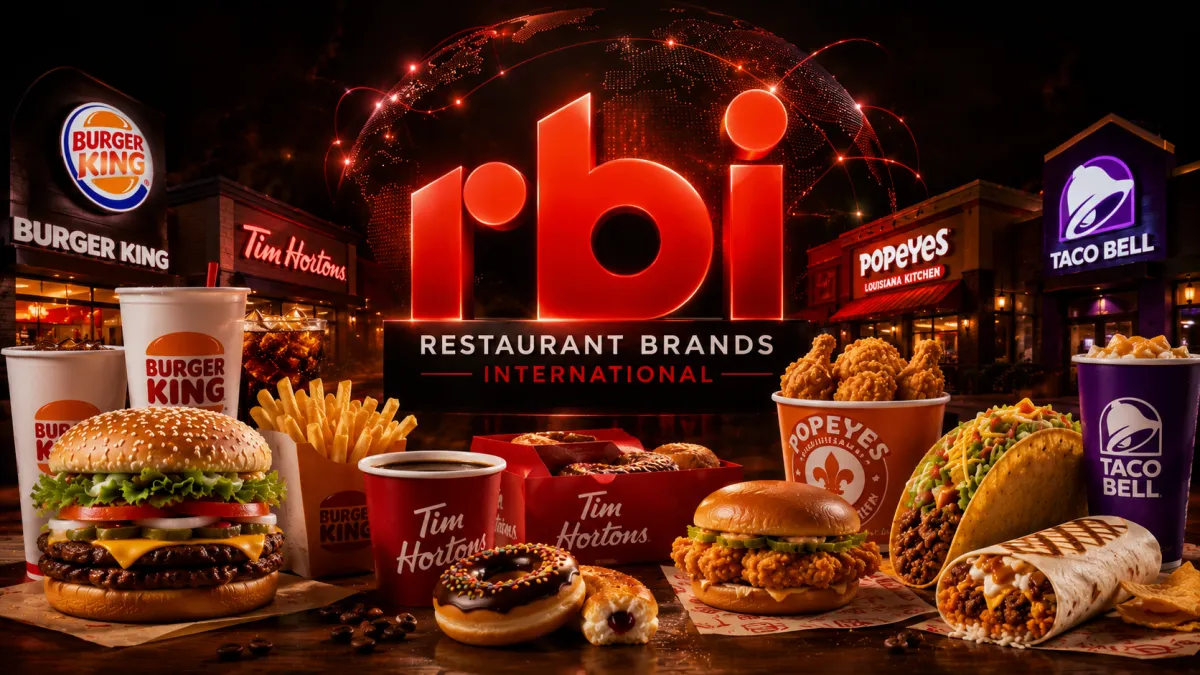
The Canadian holding company that quietly assembled a fast-food superpower
This is the name most diners don't recognize — and that's the point. RBI is a Canadian-headquartered holding company built through a series of mergers, and it owns a roster most people would recognize instantly: Burger King, Tim Hortons, Popeyes, and the sandwich chain Firehouse Subs.
RBI's story is a private-equity-style playbook applied to fast food: acquire iconic but underperforming brands, optimize them, scale them globally, and run the whole thing on a heavily franchised model (well over 95% of locations are franchised). Tim Hortons is a near-cultural institution in Canada; Popeyes turned a single viral chicken sandwich into one of the most talked-about food moments of the last decade; Burger King is the eternal challenger brand chasing McDonald's.
Why it's #4: A multi-brand, multi-country franchise engine with strong cash generation — the same asset-light logic as Yum!, just under a less famous corporate name.
5. Darden Restaurants — ~$23 billion 🇺🇸
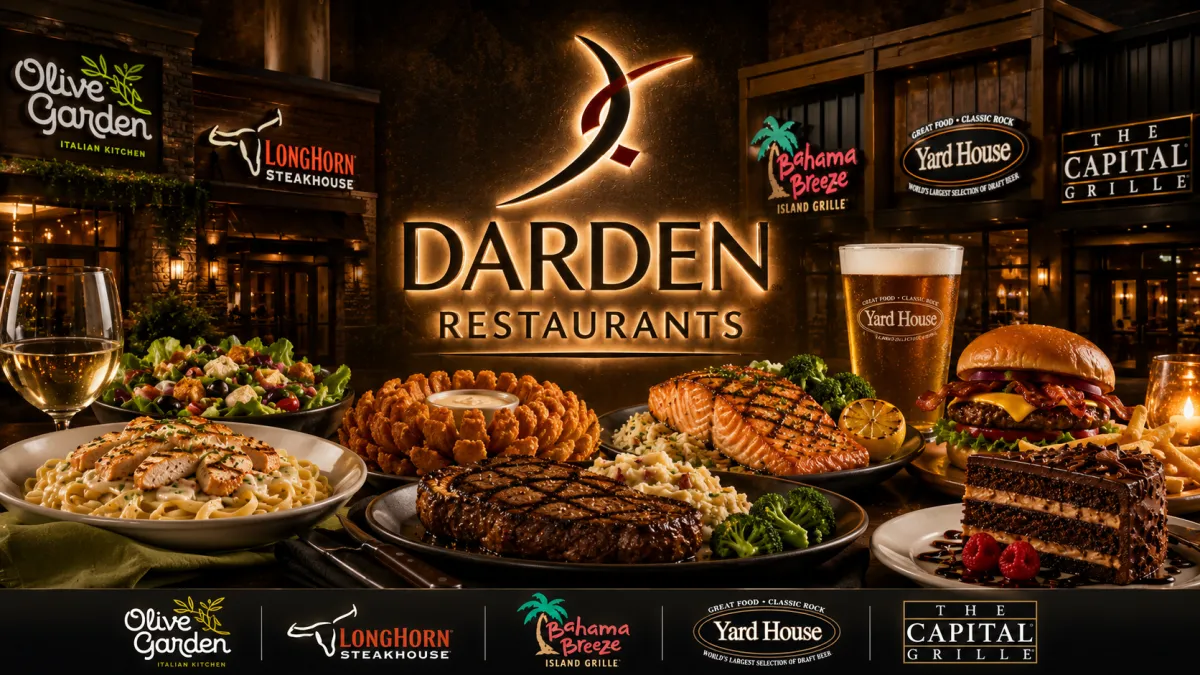
The only true "sit-down" empire near the top
Everything above this point is fast food or fast-casual. Darden is different — it's the giant of full-service casual dining, and it owns the names that define an American family dinner out: Olive Garden, LongHorn Steakhouse, Ruth's Chris Steak House, plus other brands like Yard House and Cheddar's.
Here's the strategic detail that matters: Darden largely does not franchise its domestic restaurants — it owns and operates them. That's the opposite of the Yum!/RBI model, and it makes Darden a fascinating counter-example. Its value comes not from collecting royalties, but from operational mastery at massive scale: purchasing power, supply-chain efficiency, and squeezing strong margins out of a notoriously thin-margin segment (full-service dining is far harder to run profitably than a drive-thru). Olive Garden's famous never-ending pasta and breadsticks are, underneath the carbs, a precision logistics operation.
Why it's #5: Proof that you can be worth tens of billions in sit-down dining — if you have the scale and operational discipline to make casual dining actually profitable.
6. Yum China — ~$17 billion 🇨🇳
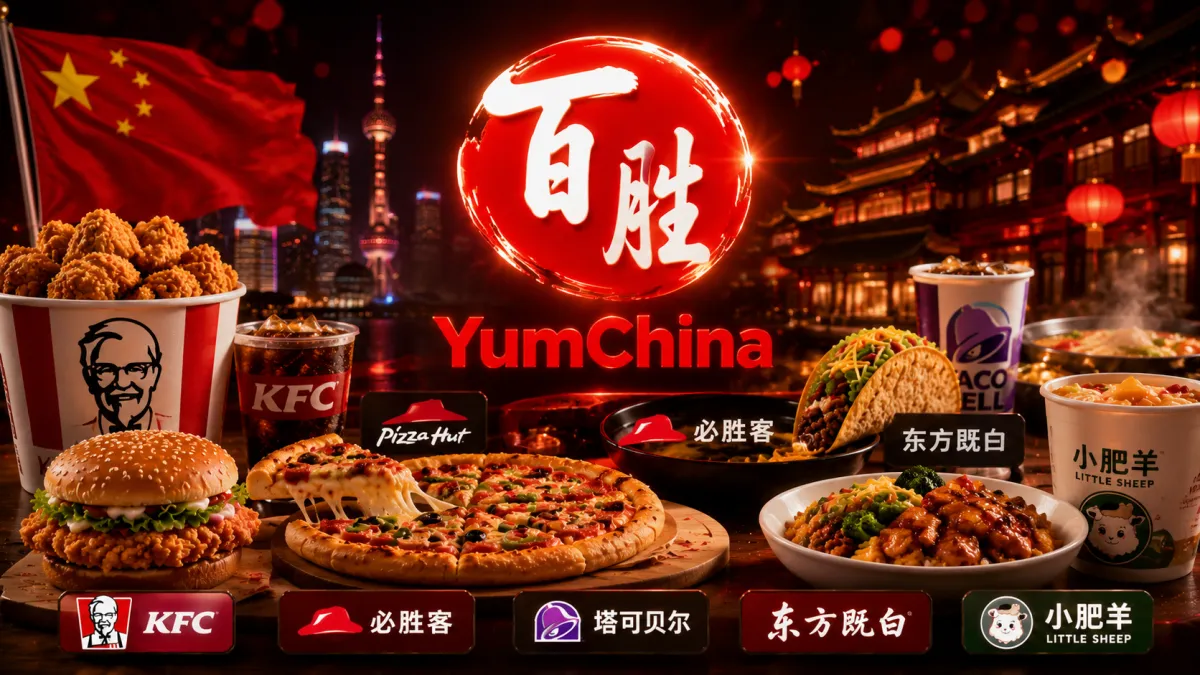
KFC's astonishing second life as China's favorite restaurant
This one surprises almost everyone. Yum China is a separate, independently listed company that holds the exclusive rights to operate KFC, Pizza Hut, and Taco Bell across China — and it is one of the largest restaurant operators in the entire country.
The detail that makes this remarkable: in China, KFC is not a minor American import — it is a dominant, deeply localized dining giant, with a menu adapted to local tastes (congee, egg tarts, rice dishes) and a store count that dwarfs many of its Western rivals. Yum China was spun out of Yum! Brands so that its enormous, fast-growing, China-specific business could be valued on its own terms. It's a masterclass in localization: take a Western brand, hand it to local operators, rebuild the menu around local palates, and let it become something the home market embraces as its own.
Why it's #6: A pure-play bet on Chinese consumer spending, run by operators who turned American fast food into a homegrown habit.
7. Domino's Pizza — ~$12 billion 🇺🇸
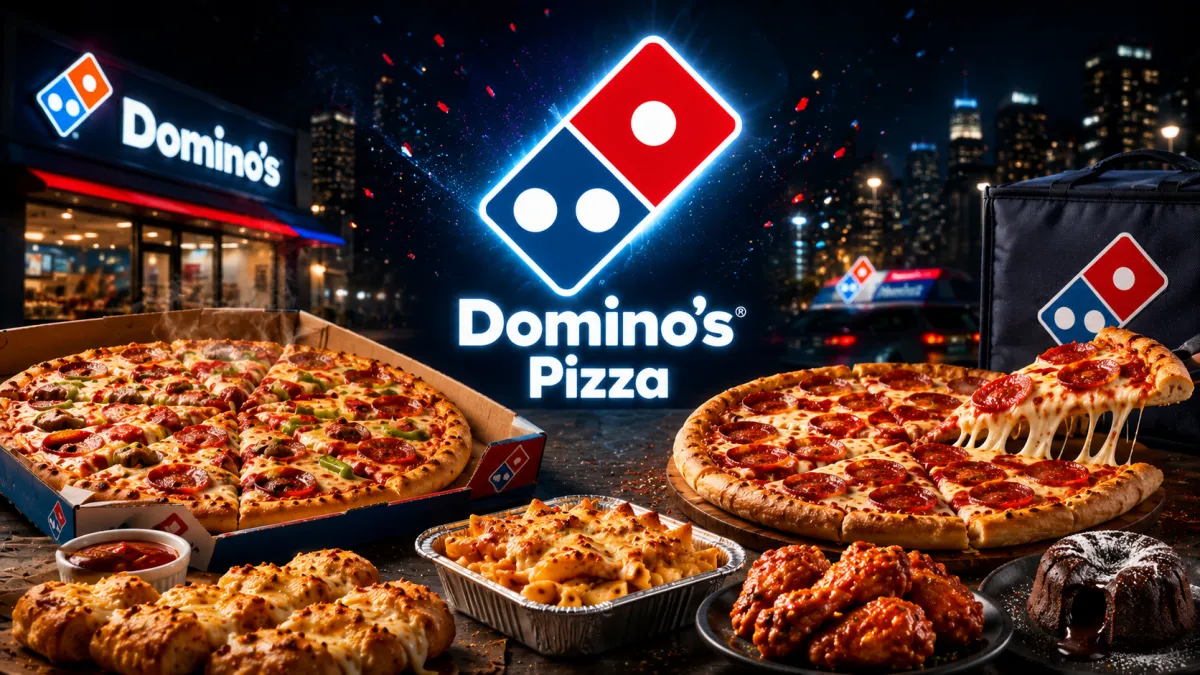
The "tech company that happens to sell pizza"
Domino's is the list's great reinvention story. A decade and a half ago it was a punchline; today it's a case study taught in business schools.
The pivot diners should understand: Domino's publicly admitted its pizza wasn't good enough, reformulated the recipe, and then bet the entire company on technology and delivery logistics. Executives have openly described it as a technology company that happens to sell pizza — a huge share of its orders now flow through its own apps and digital ordering systems, with delivery treated as a software-and-operations problem rather than a food problem. Combine that with an aggressively franchised global footprint and you get a brand that turned the humble pizza into a high-efficiency data and delivery machine.
Why it's #7: Digital ordering dominance + franchised scale + relentless operational efficiency in the world's most competitive food category.
8. CAVA Group — ~$11 billion 🇺🇸
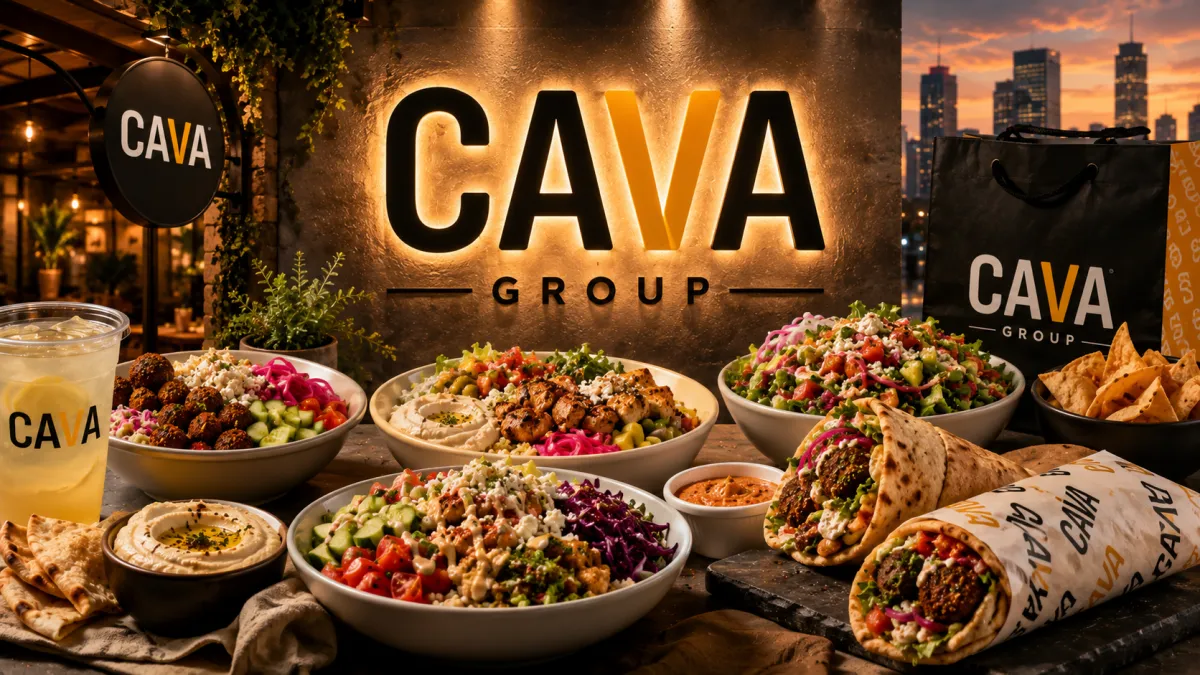
The "next Chipotle" — and the breakout star of the 2020s
If you want to know where the food market is heading, look here. CAVA is the youngest and fastest-rising name on this list, and analysts openly call it the «Mediterranean Chipotle.»
The story is striking. CAVA built a customizable, walk-the-line model — you point, they build your bowl or pita — but around Mediterranean food: hummus, pita, harissa, grain bowls, tzatziki. It scaled by acquiring and converting the struggling Zoës Kitchen chain, went public in a blockbuster 2023 IPO that nearly doubled on day one, and in early 2026 it crossed $1 billion in annual revenue for the first time, with full-year revenue growth above 22% — dramatically outpacing far larger rivals. A detail that explains its momentum: management deliberately kept price increases very low (well under 2% in a recent year) while competitors hiked aggressively, capturing health-conscious diners trading down from full-service restaurants who refused to trade down on quality.
Why it's #8: A rare chain that crossed the $1B revenue line while still growing double digits — the market is paying for the next decade, not just this one.
9. Texas Roadhouse — ~$10.8 billion 🇺🇸
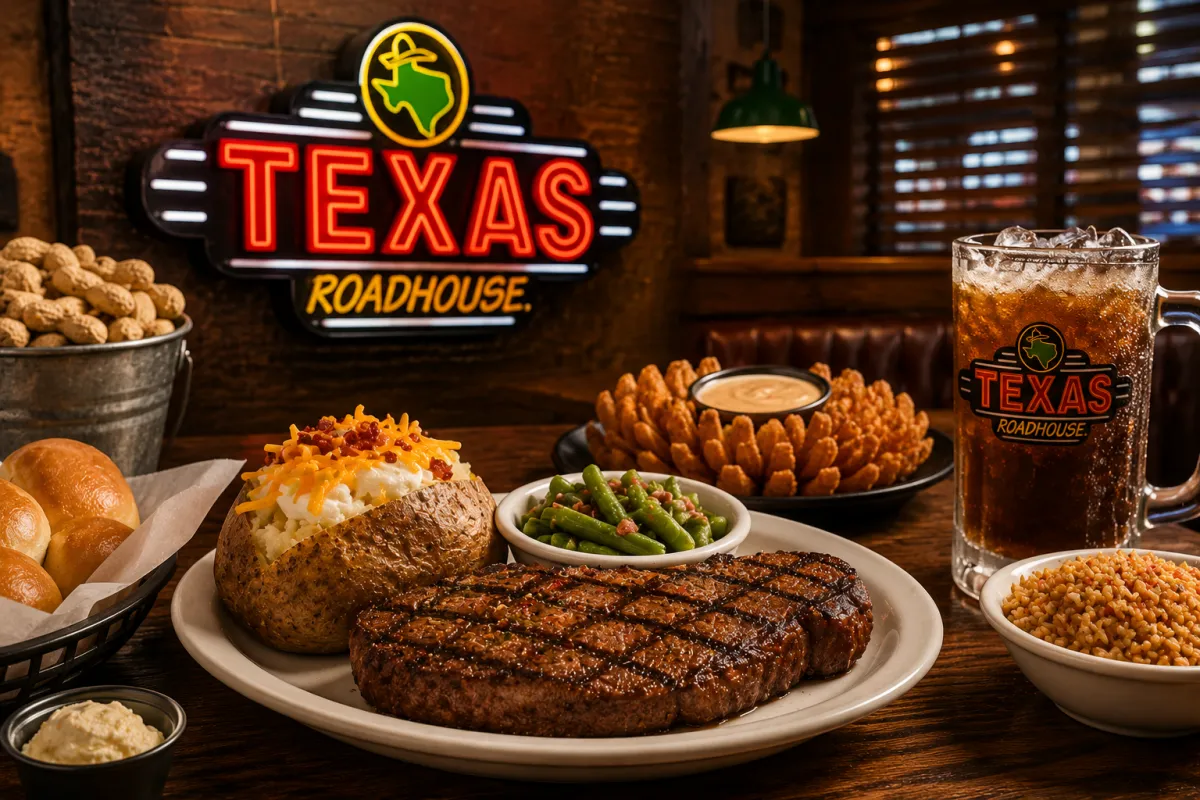
The steakhouse that beat the tech-driven chains
Texas Roadhouse is the proof that the «low-tech, high-experience» model still wins. It's a full-service, hand-cut-steak, made-from-scratch American steakhouse — fresh-baked rolls, line-dancing servers, peanuts on the table — and it's worth nearly as much as Domino's.
The detail that matters to both diners and analysts: Texas Roadhouse competes on value and consistency at scale, not on novelty. It built fierce customer loyalty by doing a small set of things — steaks, ribs, sides, atmosphere — extremely consistently across hundreds of busy locations, often with notoriously long wait times that the brand turned into a feature rather than a bug. In a list dominated by asset-light franchisors and tech-forward chains, it's a reminder that a packed dining room and a great steak still translate into serious market value.
Why it's #9: Best-in-class execution in casual dining, fierce repeat traffic, and value pricing that holds up when consumers get cautious.
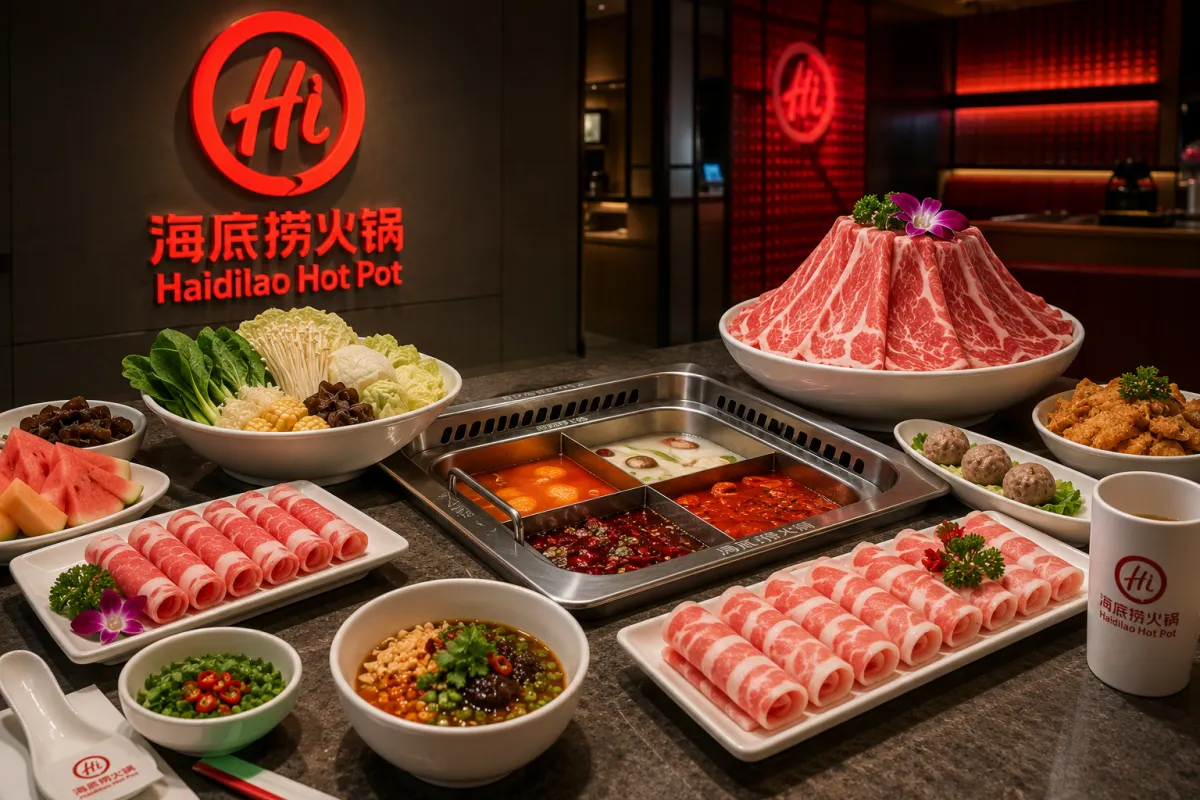
10. Haidilao Hot Pot — ~$10.4 billion 🇨🇳
The chain that made service itself the product
We finish with the most culturally distinctive name on the list — and arguably the most fun. Haidilao is China's largest hot-pot chain, and it became globally famous not for its broth, but for legendary, almost theatrical customer service.
The details here are genuinely remarkable, and they're the reason Haidilao goes viral around the world:
- While you wait for a table (often an hour or more), the restaurant offers free manicures, snacks, drinks, board games, and even phone screen protectors — the waiting area can take up roughly a third of the entire restaurant.
- Once seated, staff bring aprons, glasses-cleaning cloths, hair ties, and protective bags for your phone so spicy broth doesn't ruin anything.
- Servers will perform a noodle dance, theatrically stretching and spinning hand-pulled noodles into your pot.
- Solo diners are sometimes given a large stuffed toy to sit across from them so they don't feel alone.
- Its internal philosophy famously prioritizes employees, on the logic that staff who feel cared for deliver care to guests — a model studied at Harvard Business School.
Founded in Sichuan in 1994, Haidilao turned an undifferentiated dish (hot pot is sold on every Chinese street) into a premium, experience-led brand that diners will queue hours for and pay more for. Its overseas business operates internationally, including in Singapore, the UK, the US, and the UAE.
Why it's #10: It proved that in a commoditized food category, experience — not the recipe — can become the moat that justifies a multi-billion-dollar valuation.
World's 10 Most Valuable Restaurant Chains — Comparison Table (2026)
| # | Company | Market Value | Founded | Country / HQ | Key Brands Owned | Segment | Business Model |
|---|---|---|---|---|---|---|---|
| 1 | McDonald's | ~$202B | 1940 (corp. 1955) | 🇺🇸 USA | McDonald's | Quick-service (QSR) | ~95% franchised + real estate |
| 2 | Chipotle Mexican Grill | ~$44B | 1993 | 🇺🇸 USA | Chipotle | Fast-casual | Almost 100% company-owned |
| 3 | Yum! Brands | ~$43B | 1997 | 🇺🇸 USA | KFC, Pizza Hut, Taco Bell, Habit Burger | Quick-service (QSR) | ~98% franchised (portfolio) |
| 4 | Restaurant Brands Int'l (RBI) | ~$35B | 2014 | 🇨🇦 Canada | Burger King, Tim Hortons, Popeyes, Firehouse Subs | Quick-service (QSR) | 95%+ franchised (holding co.) |
| 5 | Darden Restaurants | ~$23B | 1968 | 🇺🇸 USA | Olive Garden, LongHorn, Ruth's Chris, Yard House | Full-service casual dining | Mostly company-owned |
| 6 | Yum China | ~$17B | 2016 (spin-off) | 🇨🇳 China | KFC China, Pizza Hut China, Taco Bell China | Quick-service (QSR) | Operator + sub-franchising |
| 7 | Domino's Pizza | ~$12B | 1960 | 🇺🇸 USA | Domino's | Quick-service (delivery) | Heavily franchised + tech-led |
| 8 | CAVA Group | ~$11B | 2006 | 🇺🇸 USA | CAVA | Fast-casual (Mediterranean) | Company-owned, high-growth |
| 9 | Texas Roadhouse | ~$10.8B | 1993 | 🇺🇸 USA | Texas Roadhouse, Bubba's 33 | Full-service steakhouse | Mostly company-owned |
| 10 | Haidilao | ~$10.4B | 1994 | 🇨🇳 China | Haidilao Hot Pot | Full-service (hot pot) | Company-owned, service-led |
What this list actually tells us about how the world eats
Step back from the individual names, and the ranking reveals four big truths a food-market analyst would point to:
1. The most valuable food companies often don't cook the food. McDonald's, Yum!, RBI, and Domino's win primarily by franchising — collecting royalties and rent while independent operators take on the capital and labor risk. Value flows to whoever owns the system and the brand, not the spatula.
2. The company-owned model can still win — if you're exceptional. Chipotle, Darden, and Texas Roadhouse own their restaurants and still command huge valuations, because operational excellence and pricing power can beat the asset-light playbook when execution is elite.
3. The future is fast-casual and health-conscious. CAVA's explosive rise — and Chipotle's dominance over the legacy giants relative to its size — signals where younger spending is going: customizable, fresher, «better-for-you,» ordered through an app.
4. China is its own restaurant universe. Two of the ten (Yum China and Haidilao) are Chinese-market stories, and one of them is American fast food that became a local institution. The next decade of restaurant value will be written substantially in Asia.
The single biggest takeaway: in the modern food industry, a great recipe is rarely the moat. The moat is the system, the brand, the real estate, the technology, or the experience wrapped around the food. That's the difference between a beloved local restaurant and a $200 billion empire.
What is the most valuable restaurant chain in the world in 2026?
McDonald's, by an enormous margin — valued at roughly $202 billion, more than four times the next-largest company on the list. Its value is driven heavily by franchising and real estate, not just food sales.
Why is McDonald's worth so much more than everyone else?
Because most of its locations are franchised and many sit on real estate McDonald's owns and leases back to operators. That creates highly predictable, low-risk income that investors value at a premium over volatile restaurant operations.
Which company owns KFC, Pizza Hut, and Taco Bell?
Yum! Brands owns them globally — except in China, where a separate company, Yum China, holds the exclusive rights and is so large it's valued independently at around $17 billion.
Who owns Burger King and Tim Hortons?
Restaurant Brands International (RBI), a Canadian-headquartered holding company that also owns Popeyes and Firehouse Subs.
Why is CAVA on a list with giants like McDonald's?
CAVA is the breakout fast-casual growth story of the decade — a «Mediterranean Chipotle» that crossed $1 billion in annual revenue in early 2026 while still growing over 20% a year. The market values its future trajectory, not just its current size.
Why is Haidilao famous?
For extraordinary customer service — free manicures and snacks while you wait, noodle-dance performances, phone-protection kits, and even stuffed toys for solo diners. It turned hot pot, an everyday dish, into a premium experience brand.
Is this ranking by number of restaurants or by money?
By market value (market capitalization) — what investors collectively judge each company to be worth — as of April 2026. A chain can have more locations than a rival yet be worth less.