

When most people think about joining two pieces of metal together, welding is usually considered the strongest solution available. But modern engineering tells a different story. In industries ranging from aerospace and automotive manufacturing to renewable energy and high-speed rail, engineers increasingly rely on structural adhesives instead of welds for many critical applications.
In the right conditions, these advanced adhesives don't just match the strength of welded joints—they can actually outperform them in durability, fatigue resistance, and long-term reliability.
So what makes them so incredibly strong?
Read More

What Is a Structural Adhesive?
Unlike household glues that simply stick two surfaces together, structural adhesives are specifically engineered to carry significant mechanical loads.
Once cured, these adhesives form an extremely strong three-dimensional polymer network capable of withstanding:
- Tensile loads
- Shear forces
- Heavy impacts
- Continuous vibration
- Fatigue from repeated stress cycles
- Extreme temperature changes
The most widely used structural adhesives include:
- Epoxy
- Methyl Methacrylate (MMA)
- Polyurethane
- Structural Acrylics

Why Can They Be Stronger Than Welding?
1. They Distribute Stress More Evenly
One of the biggest advantages of structural adhesives is how they transfer loads.A welded joint concentrates force along a relatively narrow seam. That concentrated stress can eventually become the starting point for cracks.
Structural adhesives work differently.
Instead of focusing the load on a single line, they bond the entire contact surface together, spreading stress across a much larger area. By eliminating stress concentration points, they significantly reduce the risk of structural failure.
2. They Offer Superior Fatigue Resistance
Most industrial components don't fail because of one massive impact.They fail after experiencing millions of repeated loading cycles.Cars, aircraft, wind turbines, and trains are constantly exposed to vibration and changing forces throughout their service lives.
Over time, welded joints can develop microscopic fatigue cracks.
Structural adhesives, however, maintain a slight degree of flexibility that allows them to absorb and dissipate these repeated stresses instead of concentrating them in one location.
The result is:
- Longer service life
- Fewer fatigue cracks
- Improved durability under cyclic loading
This is one reason why high-performance epoxy adhesives have become a preferred solution in many advanced engineering applications.
3. They Eliminate Heat Damage
Welding temperatures can exceed 2,700°F (1,500°C).
That intense heat can create several unwanted side effects, including:
- Changes to the metal's microstructure
- Residual internal stresses
- Distortion or warping
- Reduced strength in certain alloys
Structural adhesives cure at much lower temperatures, avoiding these problems entirely while preserving the original properties of the materials being joined.
4. They Can Bond Different Materials Together
Traditional welding is generally limited to compatible metals.
Structural adhesives, on the other hand, can successfully bond materials such as:
- Aluminum to steel
- Metal to carbon fiber
- Glass to metal
- Plastic to aluminum
- Composite materials
This also helps minimize issues like thermal expansion mismatch and galvanic corrosion that often occur when dissimilar materials are mechanically joined.
Just How Strong Are They?
Many structural epoxy adhesives deliver exceptionally high shear strength.
According to industrial testing, some advanced formulations can produce joints with strength comparable to welded assemblies. In certain shear tests, structural adhesives have even outperformed spot welds and mechanical fasteners such as rivets.
That doesn't mean every adhesive is stronger than every weld. Performance depends on the adhesive chemistry, joint design, materials involved, and how the connection is loaded.In engineering, choosing the right joining method is always application-specific.
Why the Automotive Industry Uses Them Everywhere
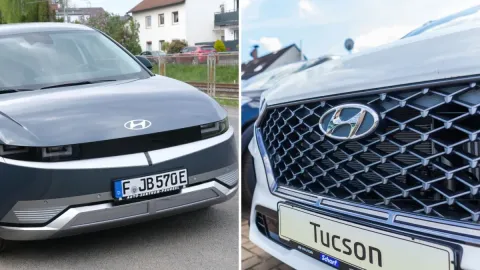
Modern vehicles contain far more adhesive bonding than most drivers realize.
Manufacturers use structural adhesives because they help:
- Reduce vehicle weight
- Increase body stiffness
- Lower cabin noise and vibration
- Improve crash energy absorption
- Prevent corrosion
- Extend structural durability
Today's vehicles often combine hundreds of adhesive-bonded joints with traditional welding to create lighter, stronger, and safer body structures.

Why Aerospace Engineers Trust Adhesives
Every hole drilled into an aircraft structure for a bolt or rivet adds weight and creates a potential stress concentration.
Structural adhesives eliminate many of those issues.
That's why modern aircraft rely heavily on advanced epoxy bonding systems to assemble composite components, while mechanical fasteners are typically reserved for areas where additional reinforcement is required.
If They're So Good, Why Isn't Everything Glued Together?
Despite their impressive capabilities, structural adhesives aren't the perfect solution for every application.
Some of their limitations include:
- Careful surface preparation is essential.
- Many products require curing time before reaching full strength.
- Some formulations lose performance at extremely high temperatures.
- Bonded joints can be difficult to separate for repairs.
- Joint design and adhesive thickness must be carefully controlled.
For these reasons, heavy industrial structures still rely heavily on welding, while many manufacturers combine both technologies to maximize performance.
The Next Generation of Industrial Adhesives
Materials scientists continue to develop new structural adhesives with even greater performance.
The latest formulations feature innovations such as:
- Nano-reinforced particles
- Improved resistance to moisture and chemicals
- Optimized flexibility
- Faster curing times
- Higher heat tolerance
- Longer service life in harsh environments
These advances are allowing adhesive technology to move into applications that were once considered suitable only for welding or mechanical fastening.