
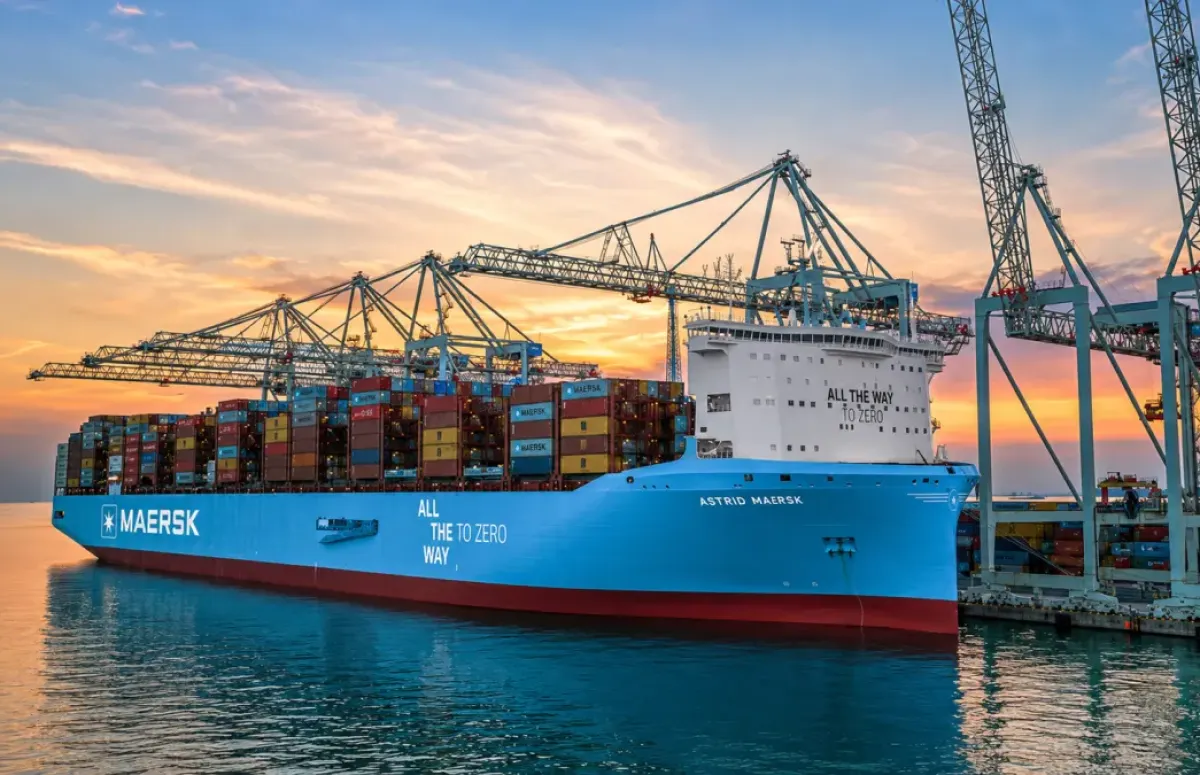
A.P. Moller–Maersk — commonly known simply as Maersk — is one of the most powerful names in global trade. Founded in 1904 and headquartered in Copenhagen, Denmark, the company has evolved far beyond ocean shipping into a full-scale, end-to-end logistics integrator operating in over 130 countries.
From Ocean Carrier to Global Logistics Integrator
For most of its history, Maersk was synonymous with container shipping. In recent years, however, the company has deliberately repositioned itself as a global integrator of container logistics — offering customers a single point of contact for their entire supply chain, from factory door to final delivery.
This transformation is designed to reduce dependence on volatile freight rates and grow revenue from more stable, value-added logistics services.
Read More

Core Business Segments
1. Ocean Shipping
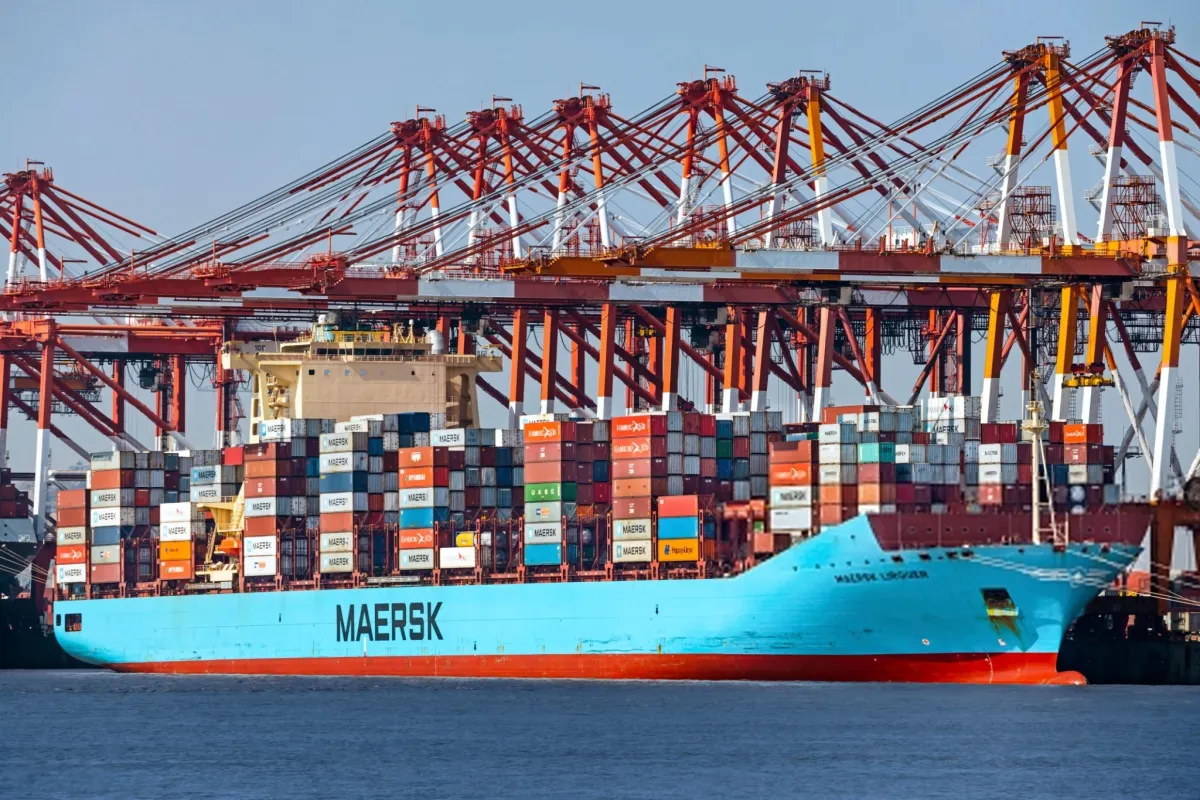
Ocean remains Maersk's largest revenue driver, accounting for roughly 66% of group revenue. The company operates one of the world's largest container fleets:
| Metric | Data (2025) |
|---|---|
| Fleet size | ~717 vessels (owned + chartered) |
| Total capacity | ~4.3 million TEU |
| Countries served | 130+ |
| APM Terminal ports | 76 worldwide |
Maersk serves major East-West and North-South trade lanes and has committed to maintaining — not expanding — its total fleet capacity as part of a disciplined replacement strategy.
2. Terminals — APM Terminals
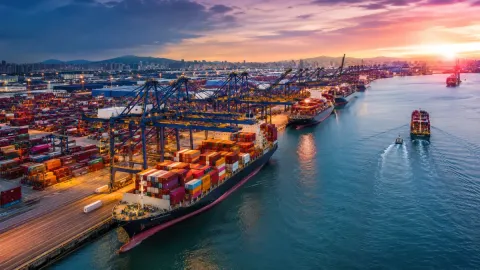
Maersk's terminal arm, APM Terminals, operates 76 ports and terminals globally. In 2025, the Terminals segment delivered its best financial results on record, with revenue growing 20% year-on-year driven by record-high cargo volumes, higher storage income, and improved rates.
Notably, around 63% of Terminals' revenue comes from customers outside the Maersk Ocean network, demonstrating genuine third-party competitiveness.
3. Logistics & Services
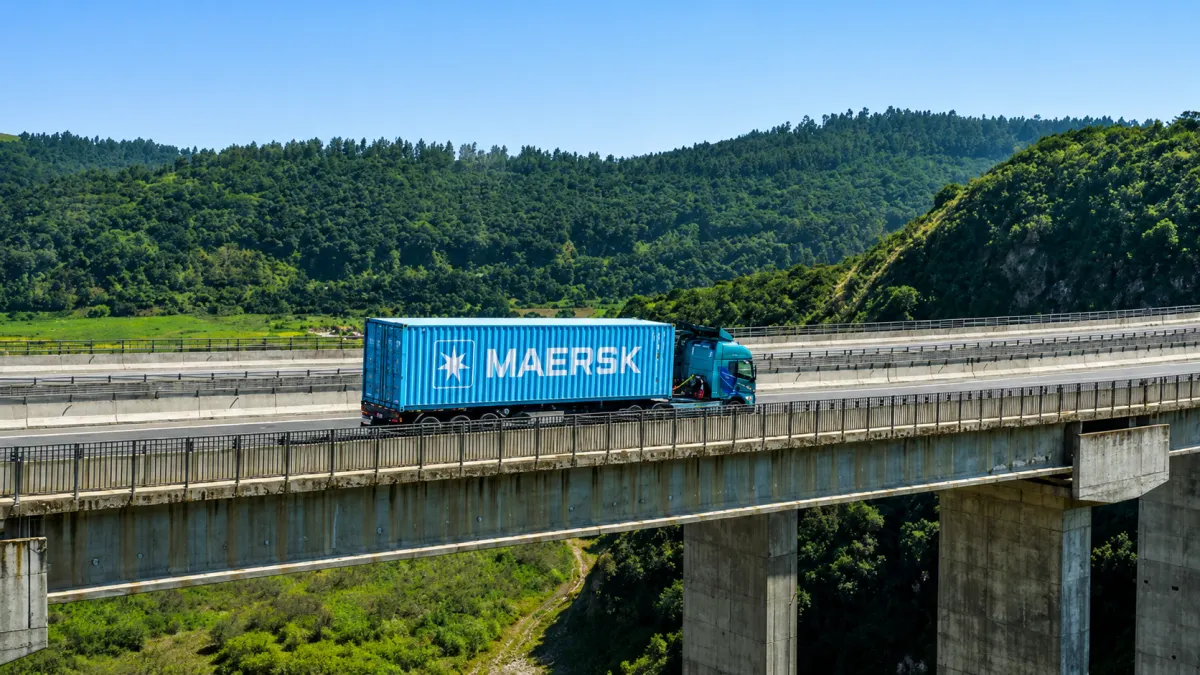
This segment includes warehousing and distribution, customs brokerage, cargo insurance, air freight, cold chain solutions, and last-mile delivery. Maersk has significantly expanded this business through strategic acquisitions:
- Hamburg Süd (2017) — Strengthened South American operations
- Performance Team (2020) — Expanded U.S. warehousing and distribution
- Senator International (2021) — Added global air freight capabilities
4. Air Freight
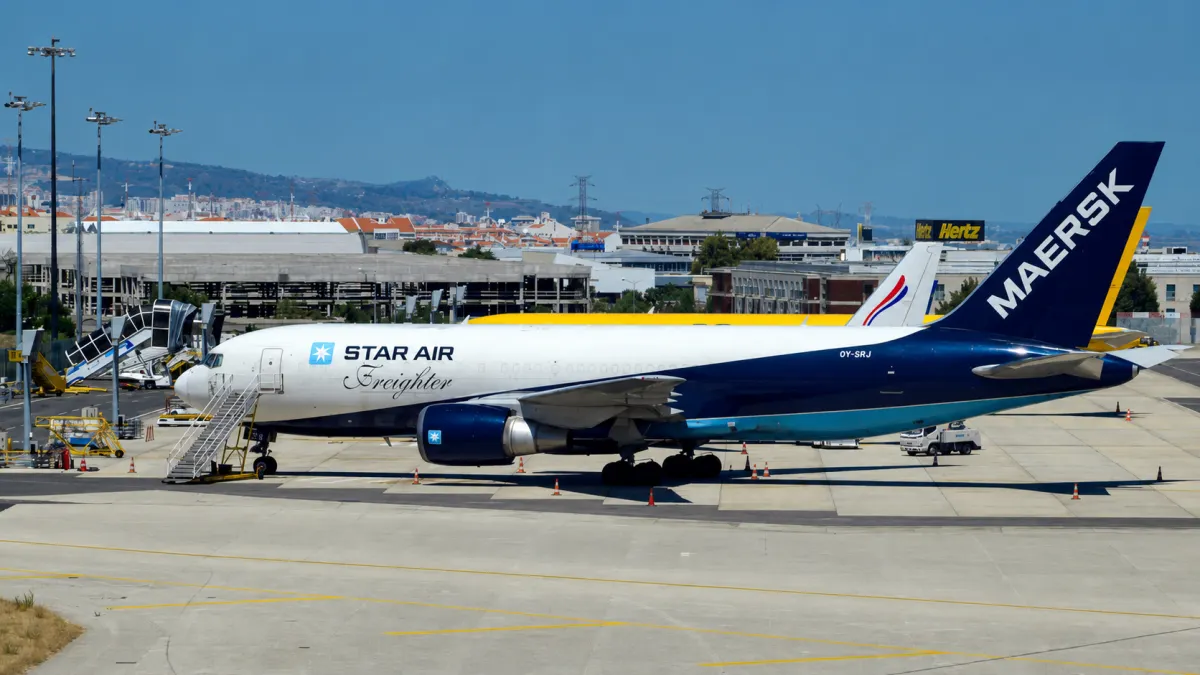
Through Senator International, Maersk offers time-sensitive air freight as a complement to its ocean and land services — a key part of its multi-modal, door-to-door positioning.
5. Digital Platforms
Maersk has invested heavily in supply chain visibility and digital tools:
- Maersk Flow — End-to-end digital supply chain management platform
- Maersk Spot — Real-time booking with guaranteed pricing and availability
- Transported by Maersk — Integrated multimodal logistics service combining ocean, land, and air under one contract
2025 Full-Year Results
Maersk closed 2025 with strong operational performance despite a challenging freight rate environment:
| Metric | 2025 | 2024 |
|---|---|---|
| Revenue | $54.0 billion | $55.5 billion |
| EBITDA | $9.5 billion | $12.1 billion |
| EBIT | $3.5 billion | $6.5 billion |
Results reached the top end of the company's financial guidance, supported by record Terminals performance, volume growth in Ocean, and continued improvement in Logistics & Services. The Ocean segment was pressured by a roughly 15% decline in average freight rates year-on-year, driven by overcapacity in the global container market.
Fleet Renewal and Decarbonization Strategy
Maersk is leading the maritime industry's shift toward zero-emission shipping. Its decarbonization roadmap is among the most ambitious in the sector:
Methanol-Powered Fleet
In May 2025, Maersk completed delivery of the Axel Maersk, finalizing the world's first series of large dual-fuel methanol container vessels — 18 ships with capacities of 16,200 and 17,000 TEU, delivered between 2024 and 2025. The series began with the Laura Maersk (2,100 TEU), christened in Copenhagen in September 2023 by European Commission President Ursula von der Leyen.
In June 2025, Maersk launched the Berlin Mærsk, the first of a new class of 17,480 TEU methanol dual-fuel vessels — the 14th dual-fuel newbuild to enter the fleet.
New Orders (2028–2030)
In December 2024, Maersk finalized orders for 20 additional dual-fuel vessels — both LNG and methanol — ranging from 9,000 to 17,000 TEU, with deliveries scheduled between 2028 and 2030. Together with planned charter additions, the program will bring approximately 800,000 TEU of new, lower-emission capacity into the fleet, while replacing older vessels on a like-for-like basis.
Net-Zero Target
Maersk aims to achieve net-zero CO₂ emissions by 2040 — one of the most aggressive targets in global shipping. The methanol fleet alone is projected to save approximately 1 million tonnes of CO₂ annually compared to conventional vessels.
Market Context and Challenges
The global container shipping industry faces persistent overcapacity as new vessel deliveries continue to outpace demand growth. Analysts project container volume growth of 2–4% through 2026, while fleet supply is growing at 4–5% — keeping sustained pressure on freight rates.
Maersk is also navigating continued disruption from the Red Sea closure, which has forced vessel rerouting around the Cape of Good Hope, effectively absorbing excess capacity and partially offsetting the rate pressure from new ship deliveries.
Strategic Priorities
Maersk's strategy through 2030 centers on four pillars:
- Integration — Delivering end-to-end supply chain solutions under a single Maersk contract
- Reliability — Targeting schedule reliability above 90% across its East-West ocean network
- Decarbonization — Fleet renewal with methanol and LNG dual-fuel vessels toward net zero by 2040
- Terminals as infrastructure — Expanding APM Terminals as both a proprietary logistics backbone and a standalone competitive asset
What does Maersk do?
Maersk is a global shipping and logistics company that provides container ocean freight, port terminal operations, warehousing, air freight, customs brokerage, and end-to-end digital supply chain management.
How big is Maersk's fleet in 2025?
Maersk operates approximately 717 vessels with a combined capacity of around 4.3 million TEU, making it one of the two largest container shipping companies in the world.
What was Maersk's revenue in 2025?
Maersk reported full-year 2025 revenue of $54.0 billion, with EBITDA of $9.5 billion — reaching the top end of its financial guidance despite lower ocean freight rates.
Does Maersk use methanol-powered ships?
Yes. As of May 2025, Maersk completed delivery of the world's first full series of large dual-fuel methanol container vessels — 18 ships capable of running on green methanol. The company has also ordered 20 additional dual-fuel vessels for delivery in 2028–2030.
What is Maersk's sustainability goal?
Maersk targets net-zero CO₂ emissions across its operations by 2040, making it one of the most ambitious decarbonization commitments in global shipping.
What is APM Terminals?
APM Terminals is the port and terminal operating arm of Maersk, managing 76 terminals worldwide. It generates approximately 63% of its revenue from non-Maersk customers and delivered record financial results in 2025.