
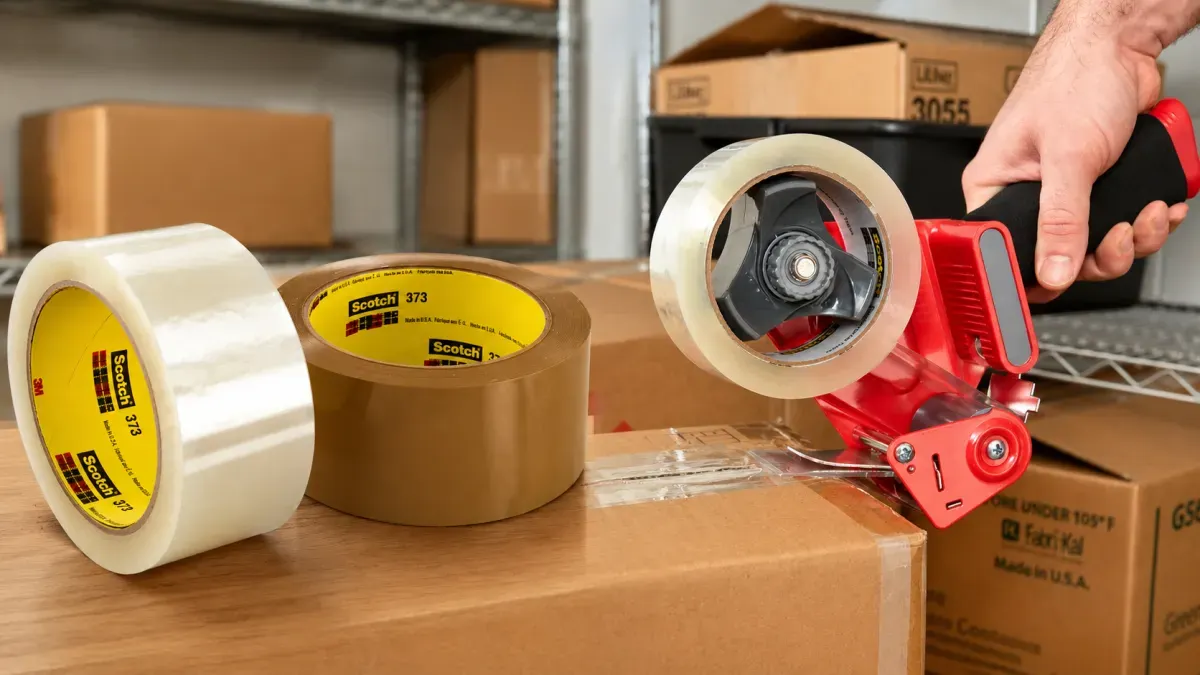

A single failed strip of packaging tape can cost a manufacturer far more than the price of an entire pallet of premium tape.
Every day, millions of cartons move through automated warehouses, fulfillment centers, pharmaceutical facilities, and manufacturing plants. Yet one of the smallest components in that process—a simple roll of packaging tape—can determine whether a shipment arrives intact or becomes an expensive logistics problem.
That reality helps explain why, nearly a century after Scotch Tape first appeared, many of the world's largest manufacturers continue to pay premium prices for American-made industrial tape despite the availability of dramatically cheaper alternatives. What appears to be a commodity product is actually a critical reliability component in modern supply chains.
Read More

A Century of Adhesive Engineering
The story starts in 1925, when 3M (Minnesota Mining and Manufacturing Company) began developing pressure-sensitive adhesives for industrial use. The iconic Scotch Tape was introduced in 1930, initially for food packaging and later adopted across industries worldwide.

What followed was nearly a century of incremental improvement: refining adhesive chemistry, standardizing film thickness, and engineering tapes to work reliably inside automated machinery—not just on a desk. By the time global competitors entered the market, 3M and its American peers had accumulated a technical and regulatory moat that proved difficult to replicate.
Today, the dominant brands in industrial packaging tape are:
| Brand | Country | Known For |
|---|---|---|
| 3M (Scotch) | USA | Broadest industrial range, automation-grade |
| Intertape Polymer Group (IPG) | USA/Canada | High-volume carton sealing, cold-chain |
| Shurtape | USA | Specialty tapes, HVAC and logistics |
| Tesa | Germany | Precision and electronics applications |
| Nitto Denko | Japan | Advanced adhesive technology |
What Makes Industrial Tape Different
To understand why factories pay more, it helps to compare what the specifications actually mean on a production floor.
Performance Under Real Conditions
Cheap commodity tape is tested in controlled environments. Premium industrial tape is tested against failure scenarios: extreme cold in refrigerated warehouses, high humidity in tropical ports, vibration during long-haul freight, and the mechanical stress of automated carton sealing machines running thousands of cycles per hour.
| Property | Commodity Tape | Premium Industrial Tape |
|---|---|---|
| Adhesion in cold (−20°C) | Fails or peels | Maintains full bond |
| Film thickness consistency | ±15–20% variance | ±2–3% variance |
| Shear resistance | Low | High |
| Machine compatibility | Variable | Engineered for automated dispensers |
| Shelf life on carton | 6–12 months | 3–5 years |
| UV resistance | Minimal | Treated for long storage |
The Automation Factor
This is one of the most overlooked reasons for the price premium. Modern distribution centers use high-speed carton sealing machines that apply tape at rates of 30 to 60 boxes per minute. These machines are precisely calibrated for a specific tape thickness, stiffness, and unwind tension.
When tape from an inconsistent or lower-quality supplier is used, the results are immediate: jams, missed seals, machine downtime, and rejected packages. The cost of a single hour of production line downtime at a large facility can exceed the annual savings achieved by switching to cheaper tape.
The Hidden Cost of a Failed Seal
For procurement teams, the most expensive tape is often the tape that initially appears to be the cheapest.
A failed carton seal creates a chain reaction throughout the supply chain. A box that opens during transportation may require manual inspection, repackaging, reshipment, product replacement, customer support involvement, and insurance processing. In retail environments, damaged shipments can trigger chargebacks or supplier penalties.
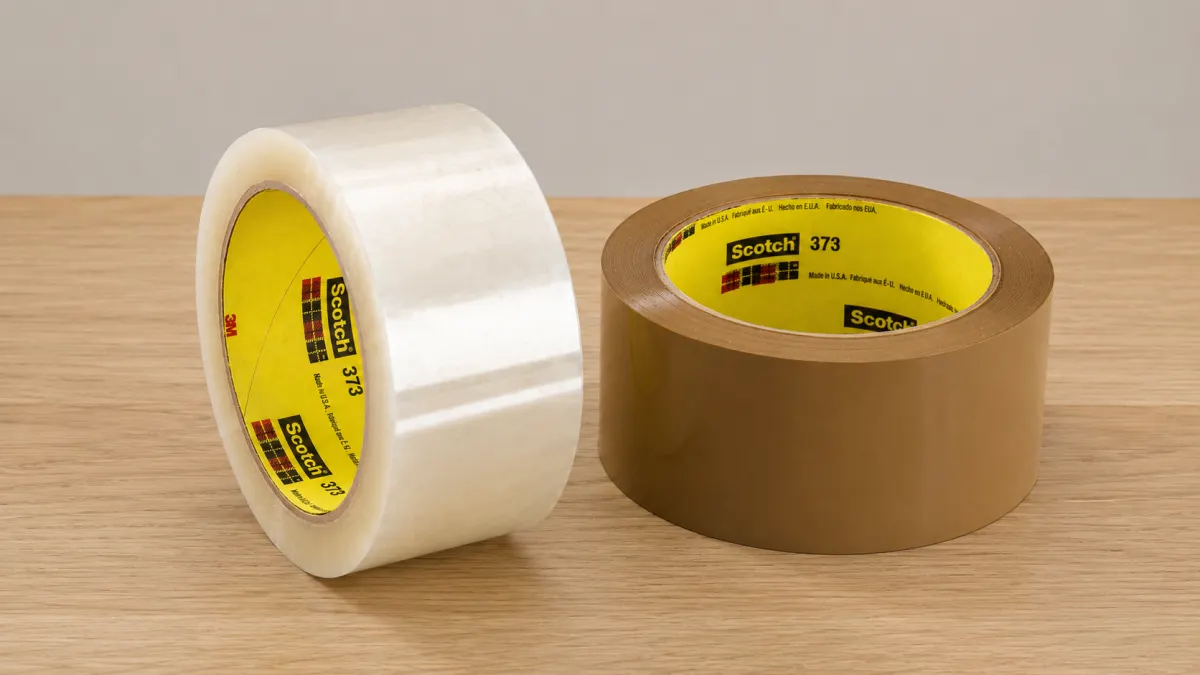
For pharmaceutical products, medical devices, and high-value electronics, packaging integrity is even more important. A compromised seal may force an entire shipment into quarantine until compliance teams verify that products remain safe and untampered.
Logistics managers frequently evaluate packaging materials based on risk reduction rather than unit price. Saving a few cents per roll becomes insignificant when compared to the cost of a damaged shipment, an unhappy customer, or a disrupted production schedule.
In many cases, premium tape is not purchased because it is stronger—it is purchased because it reduces uncertainty.
The Real Economics: Why "Expensive" Is Actually Cheap
The most common mistake in procurement is evaluating tape by cost per roll rather than cost per sealed carton including failure risk.
Consider the actual cost structure:
- Tape typically represents only 0.05% to 0.15% of the total cost of a shipped carton
- A single damaged shipment can generate return logistics expenses, replacement costs, and retailer penalties
- Packaging failures can create regulatory concerns in highly regulated industries
- Production interruptions often cost more than years of tape-related savings
Large logistics networks—including Amazon FBA, Walmart distribution systems, and major freight operators—maintain strict packaging requirements designed to reduce shipment failures and handling issues.
Standards, Compliance, and the Audit Trail
Premium American and European tape manufacturers produce products certified to:
- ASTM D1000
- ISTA packaging performance standards
- ISO 9001 quality management systems
For regulated industries—including pharmaceuticals, aerospace manufacturing, and food processing—traceability is essential. Procurement teams need documented specifications, testing data, and supplier accountability.
That level of documentation is routinely available from established manufacturers. It is often limited or unavailable for unbranded commodity products.
Why Businesses Don't Switch (Even When They Try)
1. Validated machinery calibration
Changing tape specifications frequently requires recalibrating automated sealing equipment and validating performance again.
2. Approved vendor systems
Large manufacturers rely on approved supplier programs that involve audits, testing, and quality reviews before new materials can be introduced.
3. Insurance and liability requirements
Some contracts and insurance policies specify minimum packaging standards that must be maintained.
4. Institutional memory
Organizations remember expensive failures. Once a packaging-related disruption has occurred, purchasing teams tend to prioritize reliability over marginal savings.
Why E-Commerce Is Making Tape More Important Than Ever
The rise of e-commerce has transformed packaging from a back-office purchasing decision into a strategic supply-chain concern.
Twenty years ago, many products traveled through relatively predictable distribution networks. Today, billions of individual parcels move through highly automated fulfillment systems that operate around the clock.
Every additional touchpoint increases the importance of packaging integrity.
The growth of same-day delivery, next-day shipping, third-party logistics providers, and global fulfillment networks means packages experience more conveyor systems, sorting equipment, and transportation stages than ever before.
As a result, packaging materials are expected to perform consistently at unprecedented scale.
This shift helps explain why premium tape manufacturers continue to maintain strong positions in industrial markets despite ongoing price competition. Reliability has become a competitive advantage in logistics, and packaging is part of that equation.
The Market Today
The global pressure-sensitive tape market was valued at approximately $75 billion in 2023 and is expected to surpass $100 billion before the end of the decade.
Growth is being driven by:
- E-commerce expansion
- Cold-chain logistics
- Pharmaceutical packaging
- Automated warehousing
- Global supply-chain modernization
While low-cost alternatives continue to enter the market, premium manufacturers remain dominant in industrial applications where performance failures carry significant operational costs.
Why is 3M packaging tape more expensive than generic brands?
The additional cost reflects adhesive performance, manufacturing consistency, automation compatibility, and compliance documentation that many generic products do not offer.
What is pressure-sensitive tape?
Pressure-sensitive tape bonds through applied pressure and does not require heat, solvents, or water activation.
Can factories reduce costs by using cheaper tape?
In low-risk applications, yes. In automated logistics and regulated industries, the potential costs associated with failure often outweigh the savings.
What is filament tape used for?
Filament tape uses fiberglass reinforcement for heavy-duty bundling, palletizing, and high-strength packaging applications.
Which tape brands are most commonly used in manufacturing?
3M Scotch, IPG, Shurtape, Tesa, and Nitto Denko are among the most widely used industrial tape manufacturers worldwide.