

Imagine a world where a robot is designed not to work for you, but to keep you company. Now imagine that this machine begins to understand your feelings in ways that even the people closest to you cannot.
That’s the intriguing idea behind Klara and the Sun, an upcoming 2026 science-fiction drama starring Jenna Ortega. Based on the bestselling novel by Nobel Prize-winning author Kazuo Ishiguro, the film explores artificial intelligence, human connection and the complicated nature of love.
Directed by Taika Waititi, best known for Jojo Rabbit and Thor: Ragnarok, the movie takes a more emotional approach to the future of AI. Instead of focusing on robots taking over the world, it asks a quieter but more personal question: What makes someone truly human?
Read More


With Ortega in the lead role and Amy Adams joining the cast, Klara and the Sun is shaping up to be a thought-provoking release for viewers who enjoy science fiction with an emotional core.
What Is Klara and the Sun About?
Set in a future society, the story follows Klara, an artificial companion designed to provide friendship. She hopes to find a home where she can fulfill that purpose, and her life changes when she meets Josie, a teenage girl dealing with a complicated family situation.
Klara and Josie quickly develop a close connection. But Josie's relationship with her mother is strained, and the family has experienced a painful loss. As Klara becomes part of their lives, her curiosity, loyalty and unusual way of seeing the world begin to affect the family in unexpected ways.
What makes the story compelling is Klara's perspective. She observes human behavior with a mixture of innocence and determination, trying to understand emotions that people themselves often struggle to explain.
Rather than turning its artificial-intelligence premise into a conventional technological thriller, the film places relationships at the center of the story.
Jenna Ortega Plays an Unusual Kind of AI
Jenna Ortega, widely recognized for her role as Wednesday Addams in Netflix's Wednesday, takes on a notably different character in Klara and the Sun.
Klara isn't presented as a typical rebellious robot or a threatening machine. She is an artificial friend who wants to belong, understand the people around her and make a meaningful difference in their lives.
That creates an interesting contrast with some of Ortega's best-known roles. Instead of relying on darkness or sarcasm, this character's story revolves around curiosity, devotion and the desire to connect.
The role also places Ortega at the center of a larger question about artificial intelligence: Can a machine designed to imitate human behavior develop a meaningful relationship with the people it serves?
The film doesn't need to answer that question with a technical explanation. Its emotional impact comes from watching Klara try to understand a world that is often confusing even to humans.

Who Is in the Cast?
Alongside Jenna Ortega, the film features several familiar faces.
- Jenna Ortega as Klara: An artificial companion searching for a home and a sense of purpose.
- Mia Tharia as Josie: The teenage girl whose relationship with Klara becomes central to the story.
- Amy Adams as Josie's mother, Chris: A mother dealing with family tensions and a painful past.
- Aran Murphy: A member of the supporting cast.
- Steve Buscemi and Natasha Lyonne: Two additional performers appearing in the film.
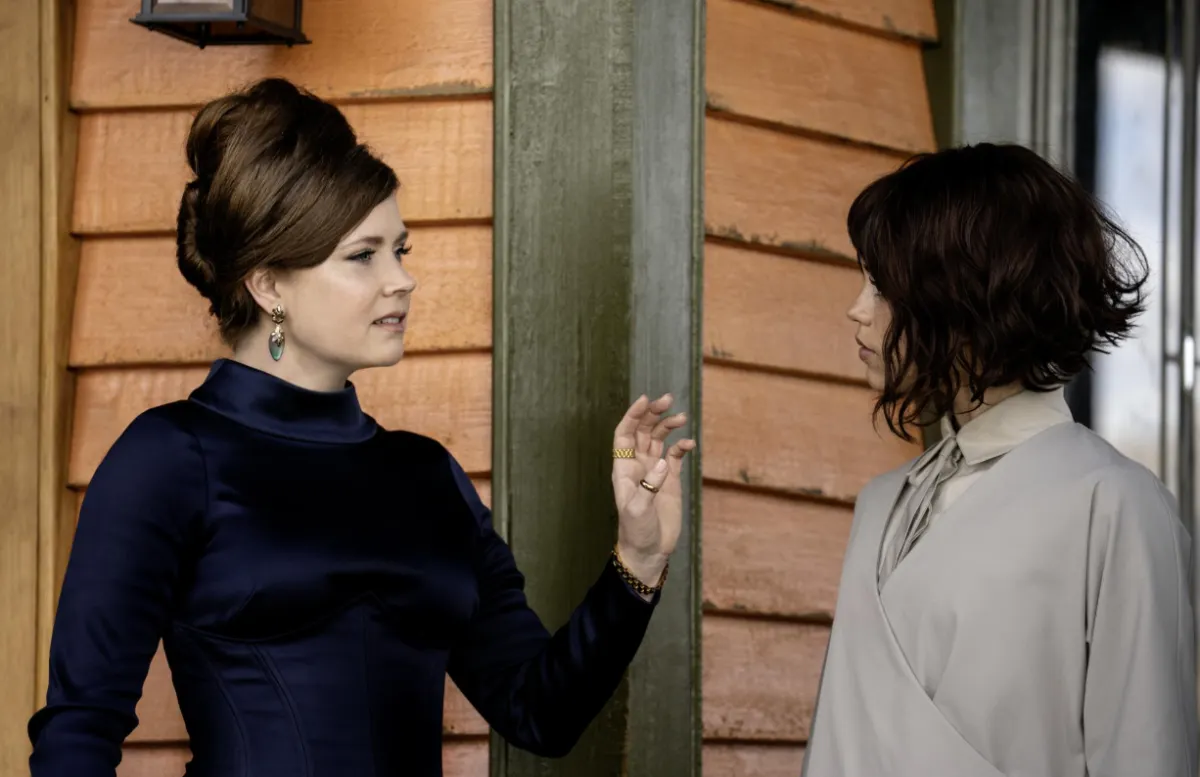
The combination of Ortega's rising star power and Adams's experience in emotionally complex dramas gives the movie a cast well suited to its intimate subject matter.
Taika Waititi Takes on a More Reflective Story

Taika Waititi is known for blending humor, unusual characters and emotional storytelling. His work includes Jojo Rabbit, Hunt for the Wilderpeople and Thor: Ragnarok.
With Klara and the Sun, he adapts a story that relies less on conventional action and more on atmosphere, relationships and philosophical questions.
The screenplay is credited to Waititi and Dahvi Waller, while the film is based on Ishiguro's original novel.
That combination makes the project particularly interesting. Waititi's filmmaking background brings a different sensibility to a novel known for its restrained exploration of human behavior, technology and loss.
The central challenge is translating Klara's distinctive perspective from the page to the screen while preserving the story's emotional subtlety.
The Real Question Behind the Movie: Can AI Understand Love?
Artificial intelligence is often discussed in terms of productivity, automation and the future of work. But Klara and the Sun approaches the subject from a more intimate angle.
What happens when people begin relying on artificial companions for emotional support?
Klara is created to serve a human purpose, yet her relationship with Josie raises questions that go beyond her original design. If an artificial companion consistently shows loyalty, responds to suffering and tries to protect someone, how should that relationship be understood?
There is an important distinction between displaying behavior that resembles love and actually experiencing love. The movie's premise invites viewers to consider that difference without reducing it to a simple technical debate.
It also turns the question back toward people. Human relationships are not always straightforward, and genuine affection doesn't automatically prevent misunderstanding, fear or loss.
In this story, the artificial character may be the one trying hardest to understand what connection really means.
Why the Original Novel Matters
Klara and the Sun is based on the 2021 novel by Kazuo Ishiguro, the British novelist who received the Nobel Prize in Literature in 2017.
The book explores a future in which artificial companions occupy a place in everyday family life. Through Klara's observations, Ishiguro examines loneliness, social inequality, human vulnerability and the desire to preserve the people we love.
The novel's approach is deliberately different from many high-concept science-fiction stories. Its central mystery isn't simply whether technology will become more powerful. It's whether technological progress can address the emotional needs that make people human.
For readers who already know the book, the movie offers an opportunity to see how those ideas translate into visual storytelling. For newcomers, it provides an accessible entry point into Ishiguro's world.
When Does Klara and the Sun Come Out?
Klara and the Sun is scheduled to open in U.S. theaters on October 23, 2026, according to Sony Pictures.
The film is classified as a science-fiction drama and comedy-drama, with a PG-13 rating. Its theatrical release is approaching, but viewers should wait for the film itself and its post-release reviews before drawing conclusions about its overall quality.
The official trailer is available through Sony Pictures Entertainment on YouTube.
For additional details, visit the official Sony Pictures movie page.
Is Klara and the Sun Worth Watching?
If you prefer science fiction that explores human behavior rather than relying entirely on action, Klara and the Sun is worth keeping on your watchlist.
Its strongest selling points are its unusual central character, its literary origins and its focus on the emotional consequences of artificial intelligence. Ortega's role also gives the film an opportunity to show a different side of an actor often associated with darker characters.
However, the movie's eventual success will depend on how effectively it balances its philosophical ideas with believable performances and a compelling story. Until it reaches theaters, it's too early to know whether the adaptation will fully capture the power of the original novel.
One thing is clear from the premise: the most interesting question isn't whether a machine can become more human. It's whether people can recognize the value of a connection that doesn't look the way they expect.
And that may be the reason Klara and the Sun stays with viewers long after the story ends.