
The Chalk Lines on Interstate 35
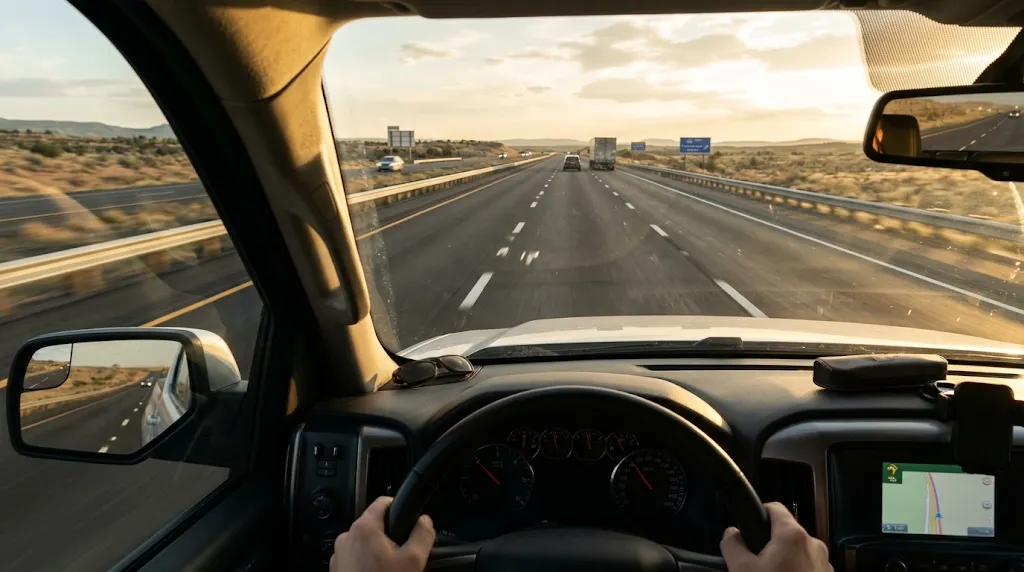
Driving down an open interstate at seventy miles an hour creates a curious optical illusion. Looking through the passenger window at the dashed white lines separating lanes, they seem small and brief.
Most motorists assume those painted dashes are about two feet long, roughly the size of a standard school desk ruler. They flick past the car hood so quickly that our eyes register them as tiny white dashes.
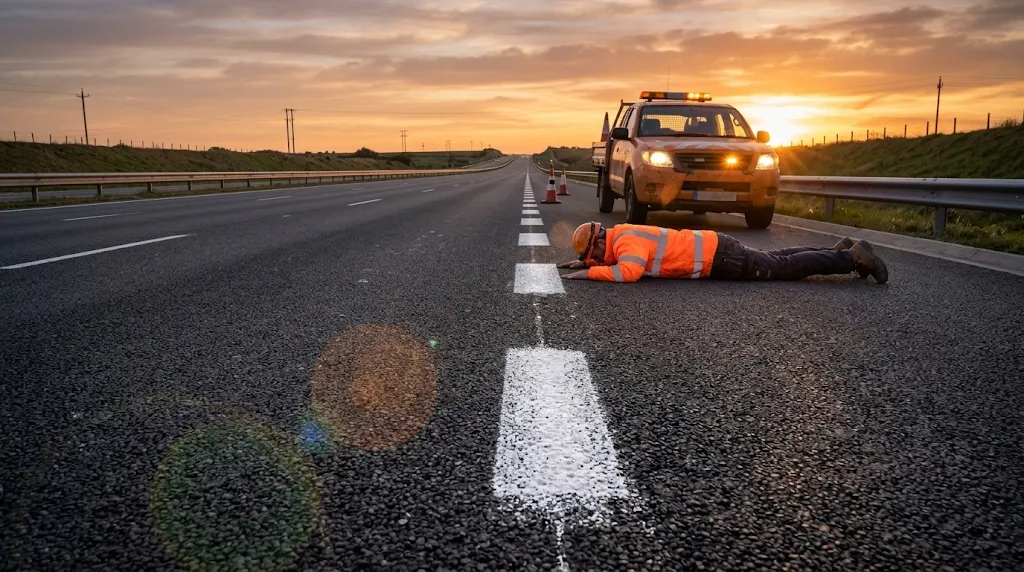
In reality, federal highway engineering standards mandate that every single white dash on an American highway is exactly ten feet long. The empty gap between each stripe measures another thirty feet.
Gas Stations Barely Make Money on Gas. The Real Profit Engine Is the Snack Aisle
The Physics of Speed and Perspective
The dramatic disconnect between how long a highway stripe looks and its actual physical size is caused by optical foreshortening and high-speed motion.
When sitting behind the steering wheel, you look forward at a shallow angle toward the horizon. This severe angle compresses the apparent length of objects lying flat on the pavement.
At seventy miles an hour, your vehicle travels over one hundred feet every single second. A ten-foot line flashes past your peripheral vision in less than a tenth of a second, leaving the brain with no time to gauge its true length.
How Short Lines Could Cause Deadly Crashes
Civil engineers did not choose ten-foot stripes by accident. If state highway departments painted actual two-foot lines on high-speed roads, driving would become dangerous and dizzying.
Tiny two-foot dashes passing at eighty miles an hour would create a blinding strobe-light effect. The rapid flickering of short marks causes severe visual fatigue and headaches for drivers.
Ten-foot marks provide the human brain with enough visual continuity to track lanes smoothly. The brain perceives a steady, calm guide rather than an aggressive blur of paint.
The 400-Degree Thermoplastic Recipe
Highway stripes are not painted with standard hardware store paint. Ordinary acrylic enamel would wear away under heavy truck tires within a few rainy weeks.
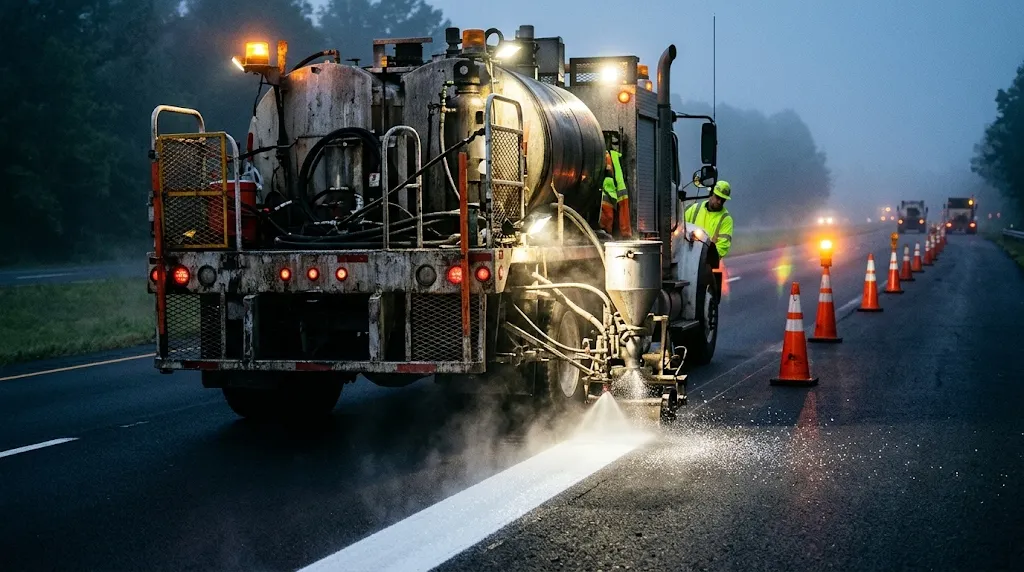
Highway crews apply a durable molten material called thermoplastic, heated inside tanker trucks to over four hundred degrees Fahrenheit. This molten liquid binds chemically to the asphalt pores.
As it cools within two minutes, the thermoplastic hardens into a rugged, rubberized plastic ridge that withstands snowplow blades, road salt, and thousands of eighteen-wheelers.
The Microscopic Glass Beads That Shine at Night
If you shine headlights onto pure white plastic at night, it reflects very little light back into your eyes. The beam simply bounces off the flat pavement into the night sky.
To make highway stripes glow brightly in the dark, automated sprayers dust millions of microscopic spherical glass beads directly into the wet thermoplastic.
Each glass bead acts as an optical retroreflector. Light from your car headlamps enters the bead, refracts inside the glass, bounces off the back surface, and shoots directly back into your eyes.
| Pavement Feature | Actual Dimension | Perceived Driver Scale | Engineering Purpose |
|---|---|---|---|
| White Center Dash | 10 feet (3.0 meters) | 2 to 3 feet | Provides lane tracking without strobe fatigue |
| Blank Inter-Stripe Gap | 30 feet (9.1 meters) | 10 to 12 feet | Allows safe vehicle spacing and visual timing |
| Retroreflective Beads | 100 to 800 microns | Continuous white glow | Bounces headlight beams directly back to drivers |
Using the Stripes as a Safe Following Guide
Understanding the true size of highway striping gives drivers a built-in safety tool for highway cruising. Many drivers struggle to judge whether they are tailgating the car ahead.
Because each stripe is ten feet and each gap is thirty feet, one complete cycle from the start of one line to the next represents exactly forty feet of asphalt.
At highway speeds, maintaining a safe three-second following distance requires keeping roughly six to eight painted stripe cycles between your front bumper and the vehicle ahead.
The Hidden Science Guiding Every Road Trip
The next time you cruise along an interstate highway, look closely at the white lines beside your car. That tiny white mark passing your door is as long as a full-size passenger sedan.
Highway engineers spent decades balancing optical illusions, chemistry, and vehicle speeds to make lanes effortless to navigate.
What looks like simple white chalk is actually an invisible ruler keeping millions of drivers safely centered in their lanes every single day.