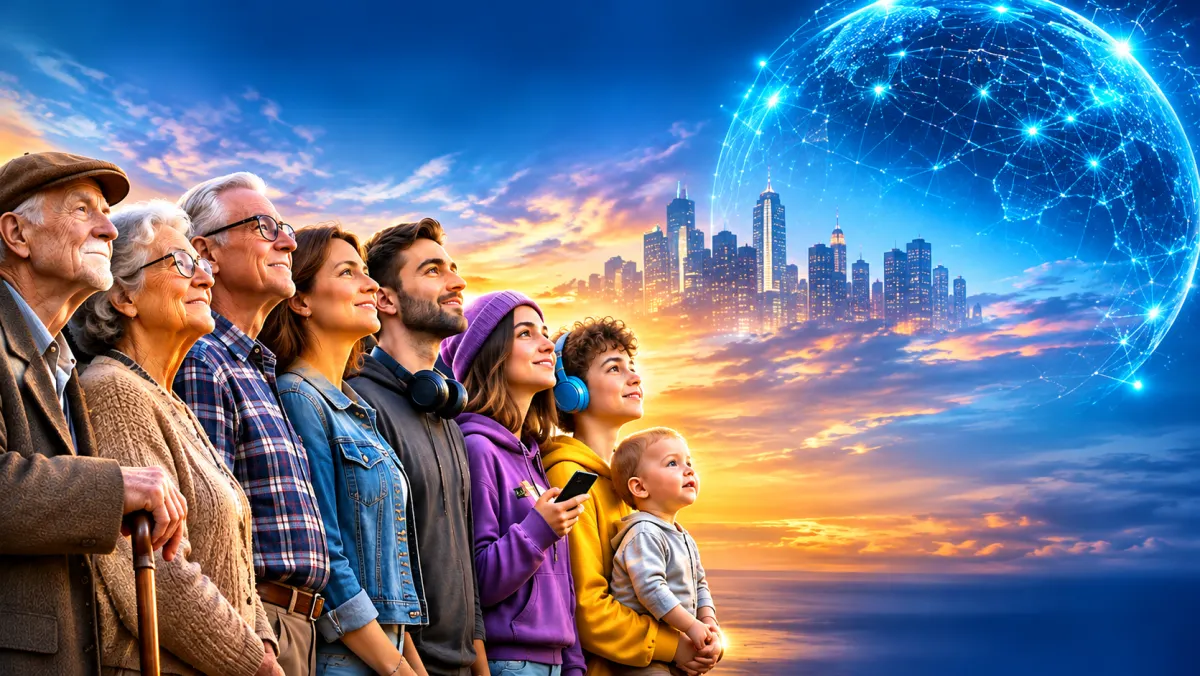

Have you ever wondered why grandparents, parents, and kids sometimes see the world in completely different ways? Why does one person prefer a phone call, while someone else would rather send a quick text? And why are babies born today likely to grow up with technology that older generations could never have imagined?
Part of the answer lies in the generation we were born into.
The 6:58 AM Phenomenon: How Your Body Wakes Itself Up Before the Buzzer Sounds
From people who grew up without the internet or smartphones to kids born in the age of AI, every generation has grown up in a different world shaped by history, society, and technology. These shared experiences can influence how people communicate, work, live, and think about the future.
But what exactly makes each generation different, and which one do you belong to?
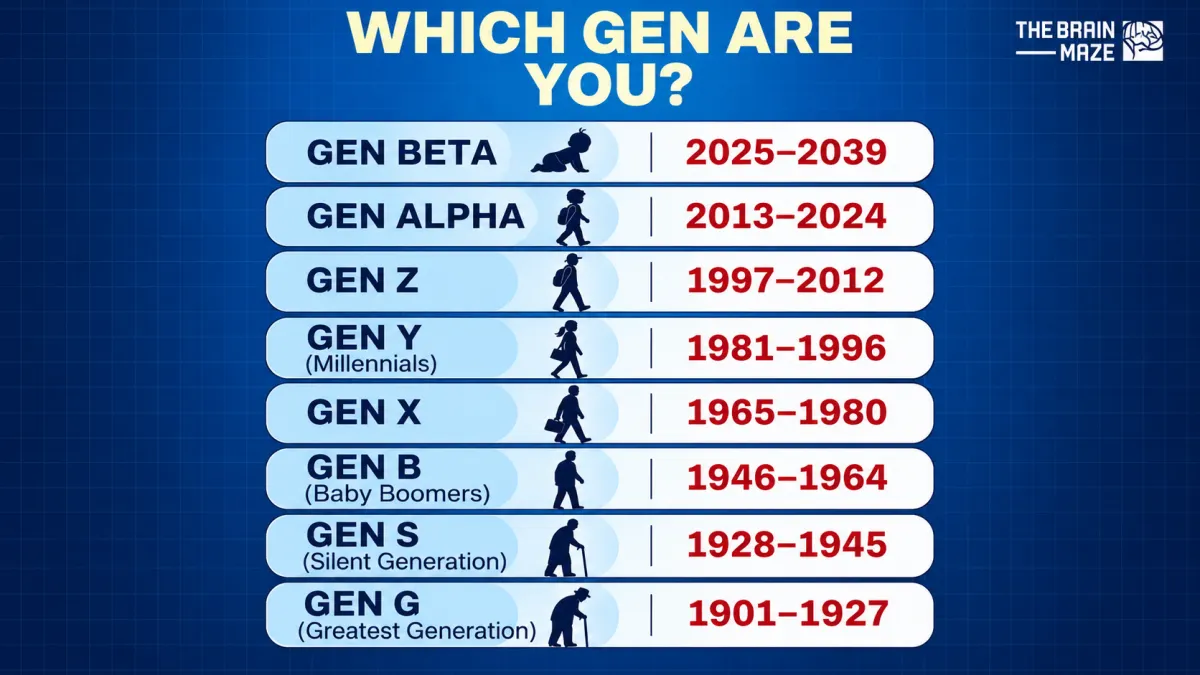
Generations at a Glance
| Generation | Birth Years |
|---|---|
| Generation Beta | 2025–2039 |
| Generation Alpha | 2013–2024 |
| Generation Z | 1997–2012 |
| Millennials (Gen Y) | 1981–1996 |
| Generation X | 1965–1980 |
| Baby Boomers | 1946–1964 |
| Silent Generation | 1928–1945 |
| Greatest Generation | 1901–1927 |
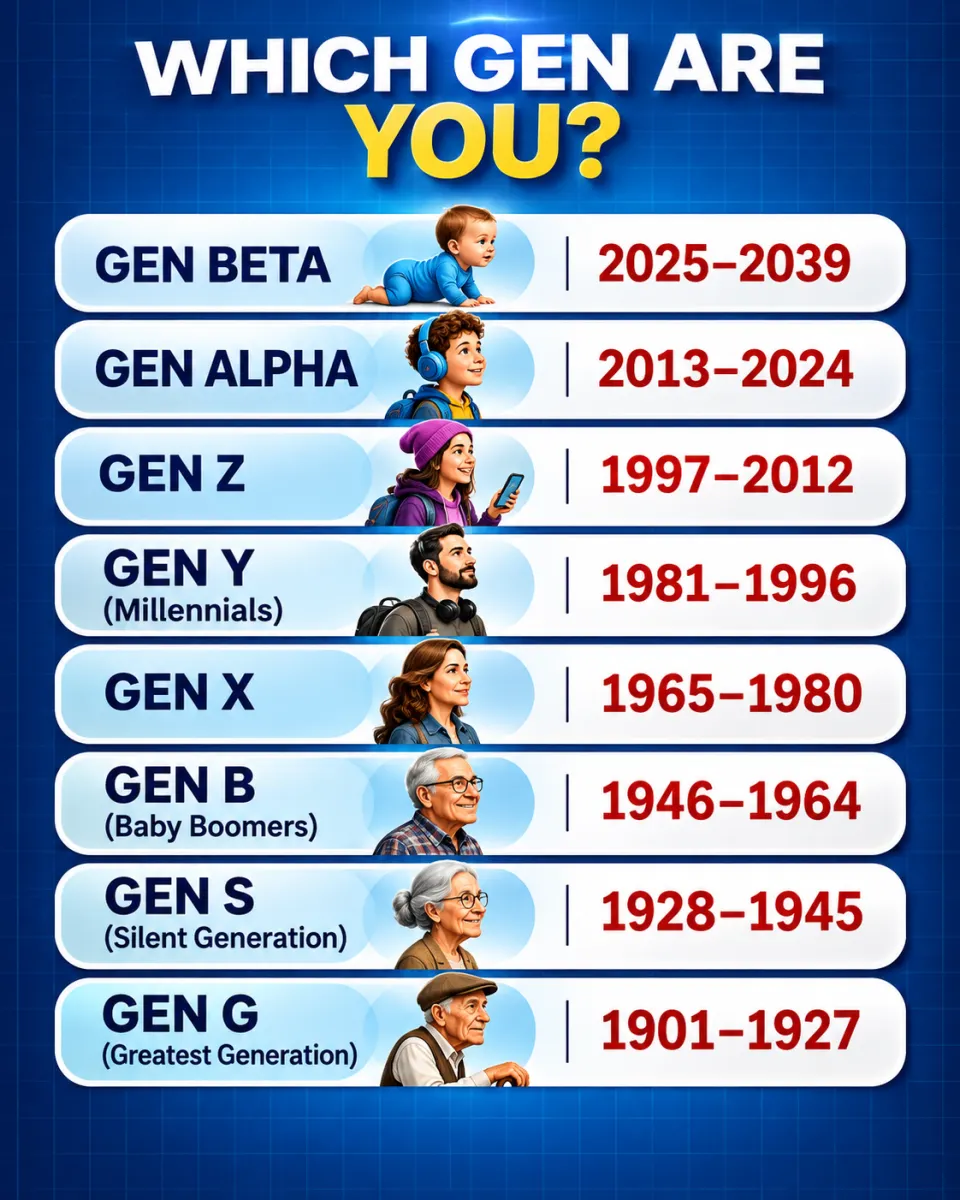
These dates follow the infographic above. Other sources may use slightly different birth-year ranges.
How Are Generations Defined?
Generations are groups of people born around the same period who may share similar historical, social, and cultural experiences. These categories help us understand how society changes over time, but their boundaries aren't set in stone. Your birth year alone doesn't define your personality.
1. Generation Beta: Born 2025–2039
Generation Beta is the newest generation on this list. These kids are expected to grow up in a world where AI, smart devices, and digital learning play an even bigger role in everyday life.
Still, it's too early to know exactly how these technologies will shape their lives.
Key trait: Growing up in a world of smart technology.
2. Generation Alpha: Born 2013–2024
Gen Alpha has grown up with smartphones, tablets, online videos, and educational apps from an early age. For many of these kids, digital technology is a normal part of learning and having fun.
However, growing up surrounded by screens can bring both opportunities and challenges.
Key trait: A childhood shaped by the digital world.
3. Generation Z: Born 1997–2012
Gen Z grew up as the internet, social media, and smartphones became part of everyday life. For many of them, the online world is a place to connect with friends, learn new things, have fun, and even make money.
At the same time, social media pressure and misleading information can be major challenges.
Key trait: Growing up alongside the rise of social media.
4. Millennials (Generation Y): Born 1981–1996
Millennials experienced the shift from a world without widespread internet access to one built around digital communication. Many remember landlines and traditional media but later adapted to the internet, social media, and smartphones.
Key trait: Experiencing life both before and after the internet became mainstream.
5. Generation X: Born 1965–1980
Gen X grew up when TV, radio, and landline phones were among the main ways to get information and stay in touch. Many later adapted to personal computers, the internet, and major changes in the workplace.
Key trait: Growing up before the internet and adapting to new technology.
6. Baby Boomers: Born 1946–1964
The name Baby Boomers comes from the sharp rise in birth rates after World War II. This generation grew up during major economic, cultural, and social changes, with much of their early lives taking place before digital technology became widespread.
Key trait: Growing up in the postwar era.
7. The Silent Generation: Born 1928–1945
The Silent Generation spent its childhood during a time when many parts of the world faced economic hardship and World War II. For some families, these experiences made stability, saving money, and security especially important.
Key trait: Growing up during major historical challenges.
8. The Greatest Generation: Born 1901–1927
The Greatest Generation lived through major events such as the Great Depression and World War II. Many played a role in the war effort, worked in essential industries, or supported their families during difficult times.
These experiences helped make hard work, teamwork, and saving money important values for many people in this generation.
Key trait: Living through some of the biggest historical events of the early 20th century.
Why Do Different Generations See the World Differently?
Economic conditions, technology, education, and social experiences can all shape how people see the world.
For example, one generation might prefer phone calls, while another finds messaging apps faster and more convenient. These differences can also show up at work, in education, and in everyday life.
Still, it's important not to judge people based only on their age. Personality and personal experiences matter, too.
Is the Newest Generation Smarter Than Older Generations?
The internet and digital learning tools have opened up more opportunities to learn, but that doesn't automatically mean younger generations are smarter.
Every generation has grown up with different opportunities and challenges and has developed its own skills. To compare generations fairly, we need to consider the world each one grew up in.
Which Generation Will Shape the Future?
Gen Beta will likely have a closer relationship with advanced technology and AI than any generation before it. But technology isn't the only thing that will shape the future. Education, the economy, the environment, and human relationships will all play a part.
At the end of the day, understanding generations should help us understand one another better, not put people into boxes. Every generation has its own story, and together, those stories show how much the world has changed.
Your turn: Which generation were you born into? Do you think your life experiences match the typical traits of your generation?