
A simple hairpin can do more than hold a hairstyle in place. In Japan, kanzashi transform everyday hairstyles into elegant works of art, combining delicate craftsmanship, seasonal symbolism, and centuries of tradition. From intricate cherry blossom designs worn by maiko to minimalist wooden hair sticks suited to modern outfits, these Japanese hair ornaments offer a timeless alternative to ordinary hair accessories.
Whether you're drawn to Japanese culture, looking for a distinctive bridal accessory, or searching for a graceful way to style a bun, kanzashi bring a touch of artistry to almost any hairstyle.
What Is Kanzashi?
Kanzashi are traditional Japanese hair ornaments used to decorate and secure hairstyles. They come in many forms, including decorative pins, combs, hair sticks, and elaborate floral arrangements. Depending on the design, they may be made from silk, metal, lacquered wood, tortoiseshell, or other materials, with embellishments such as pearls, gemstones, and delicate hanging chains.
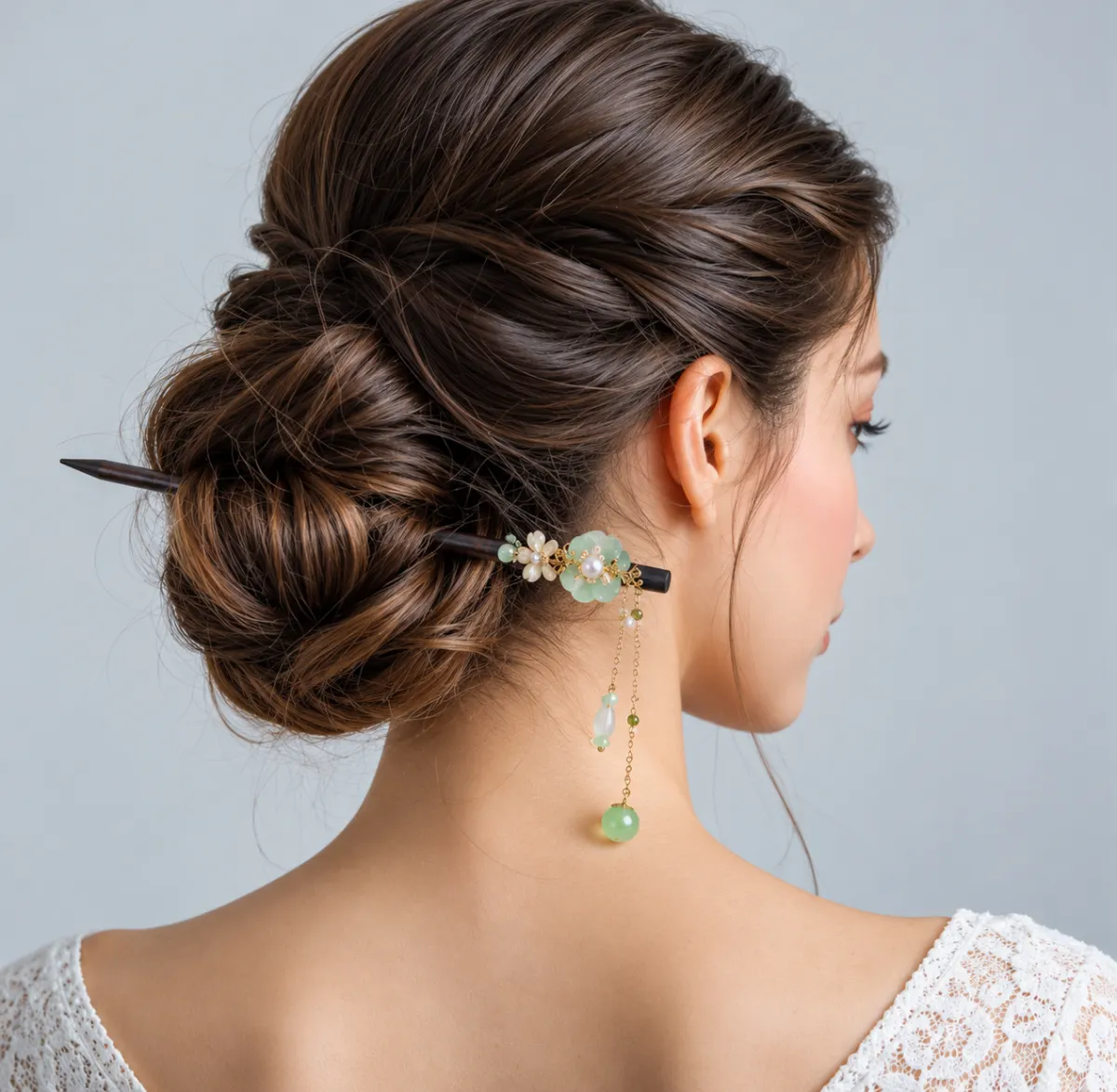
Some of the most recognizable examples feature flowers crafted from small pieces of folded fabric. This technique, known as tsumami zaiku, involves folding tiny squares of fabric into petals and arranging them into intricate floral patterns.
The result is an accessory that combines precision, patience, and artistic expression. Although traditional kanzashi are closely associated with Japanese formal hairstyles, contemporary designs range from understated everyday pieces to elaborate ornaments created for weddings and cultural celebrations.
The History Behind Japan's Traditional Hair Ornaments
The history of kanzashi reflects the changing fashions and customs of Japan. Early hair ornaments and hairpins served practical and symbolic purposes, while later designs became increasingly decorative.
During the Edo period (1603–1868), Japanese hairstyles grew more elaborate, particularly among women who wore carefully arranged updos. Hairpins, combs, and other ornaments became important elements of personal style, with their materials and designs sometimes reflecting social status and fashion trends.
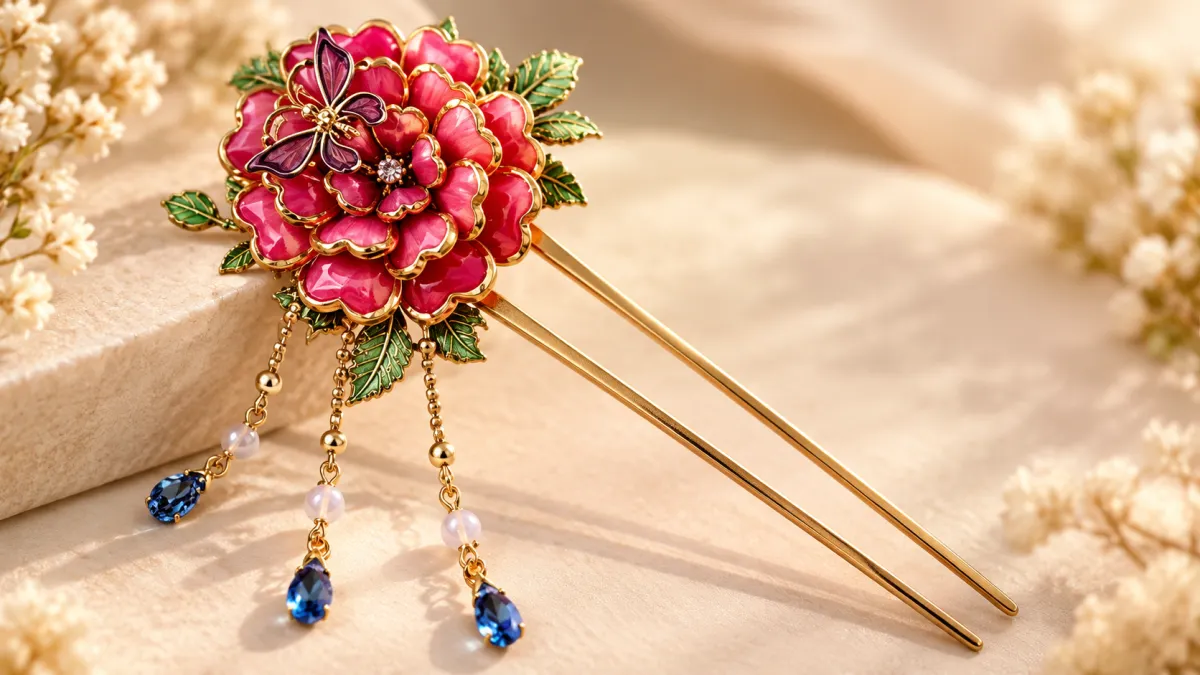
Kanzashi also developed a strong connection with traditional Japanese arts and seasonal aesthetics. Rather than serving as simple accessories, they became miniature expressions of craftsmanship, nature, and cultural identity.
Today, historical examples can be admired in museums and collections, while contemporary artisans continue to reinterpret traditional techniques for modern wearers.
When Are Kanzashi Worn?
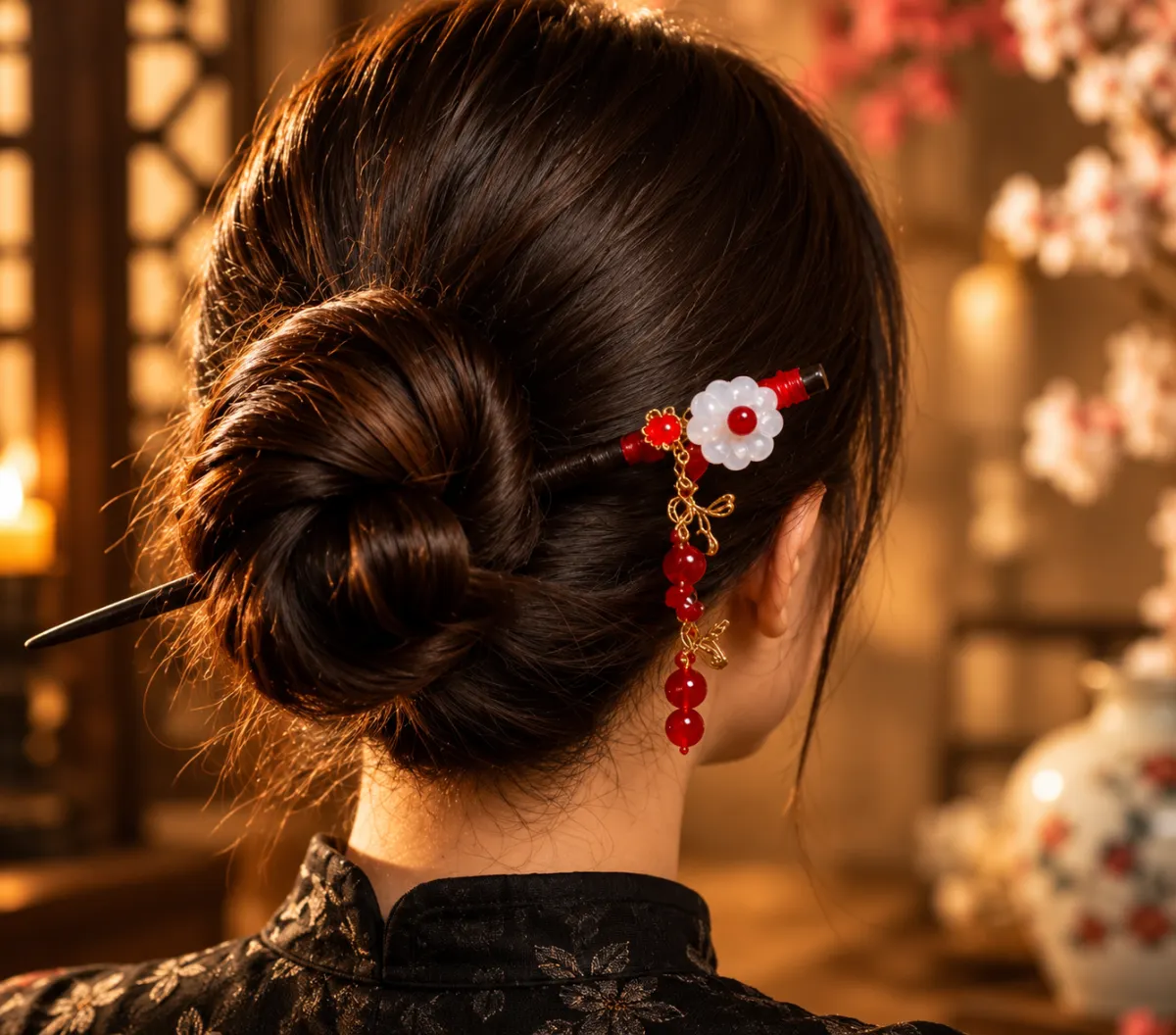
Traditionally, kanzashi are associated with kimono and other forms of Japanese formal dress. They remain particularly recognizable in the hairstyles of maiko, apprentice geisha, whose elaborate floral ornaments often change throughout the year.
Kanzashi are also used for weddings, tea ceremonies, festivals, and other special occasions. Certain designs are chosen to complement the wearer's hairstyle, clothing, age, or the formality of the event.
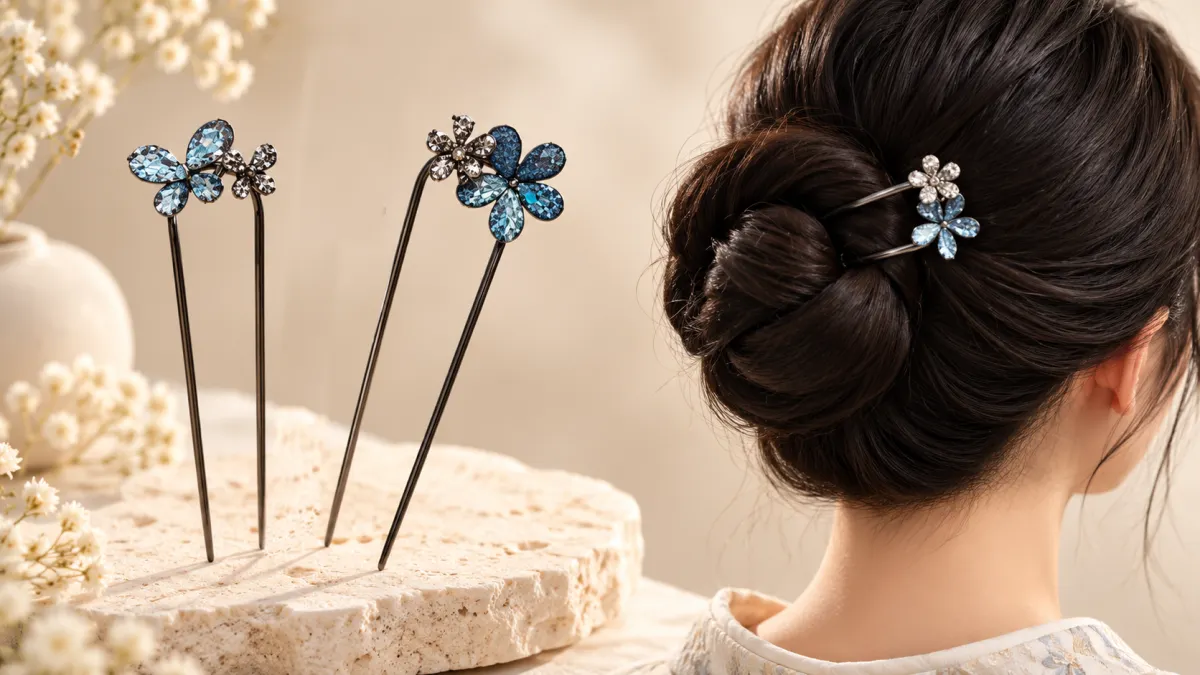
Modern versions, however, are not limited to traditional settings. A simple wooden hair stick can add elegance to a casual outfit, while a delicate floral pin can elevate a wedding guest's hairstyle or a romantic updo.
The key is choosing a design that complements both the hairstyle and the occasion.
How to Wear Kanzashi With Modern Hairstyles
One reason kanzashi remain appealing is their versatility. Although they are closely associated with traditional Japanese hairstyles, many designs work beautifully with contemporary looks.
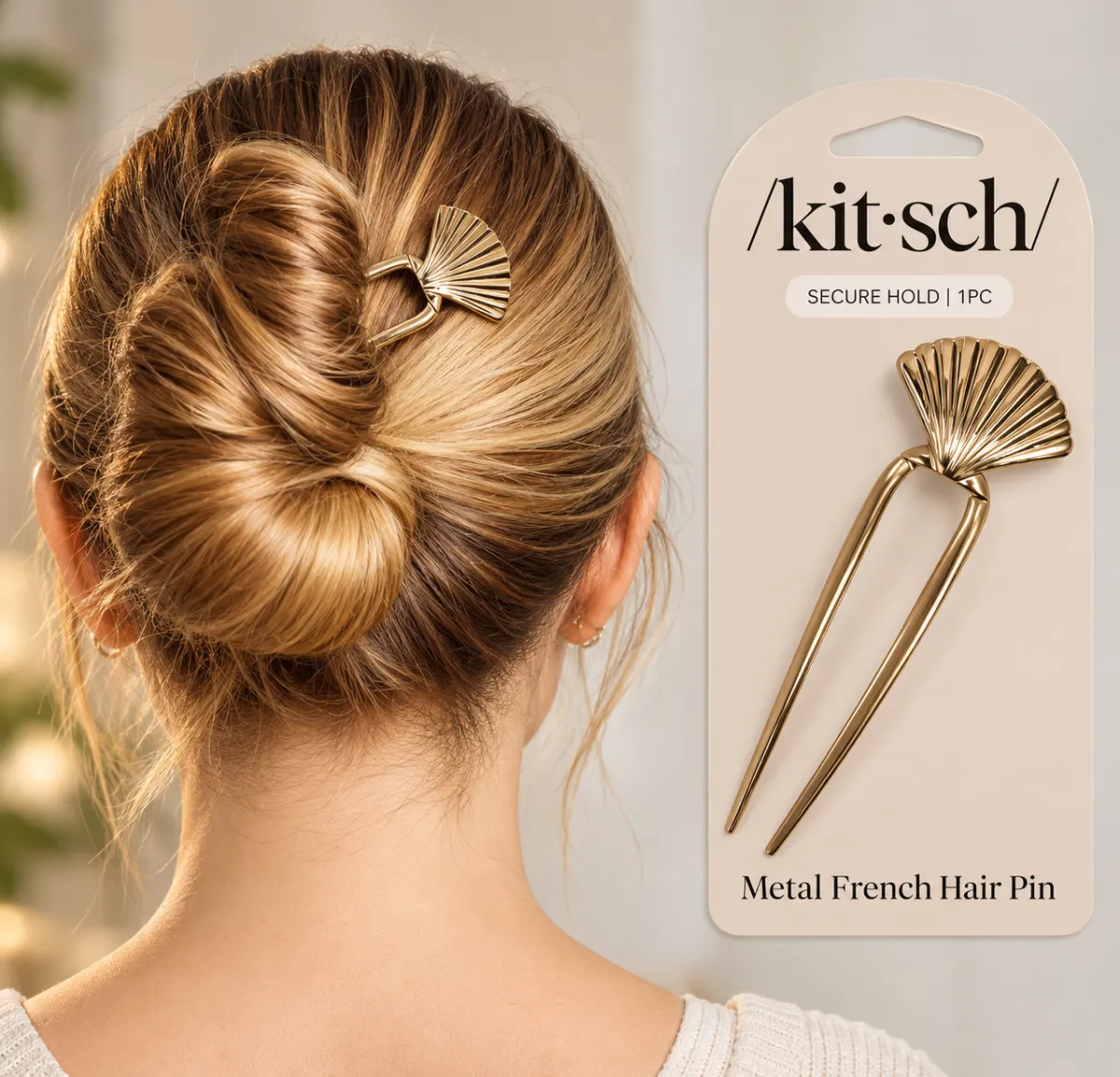
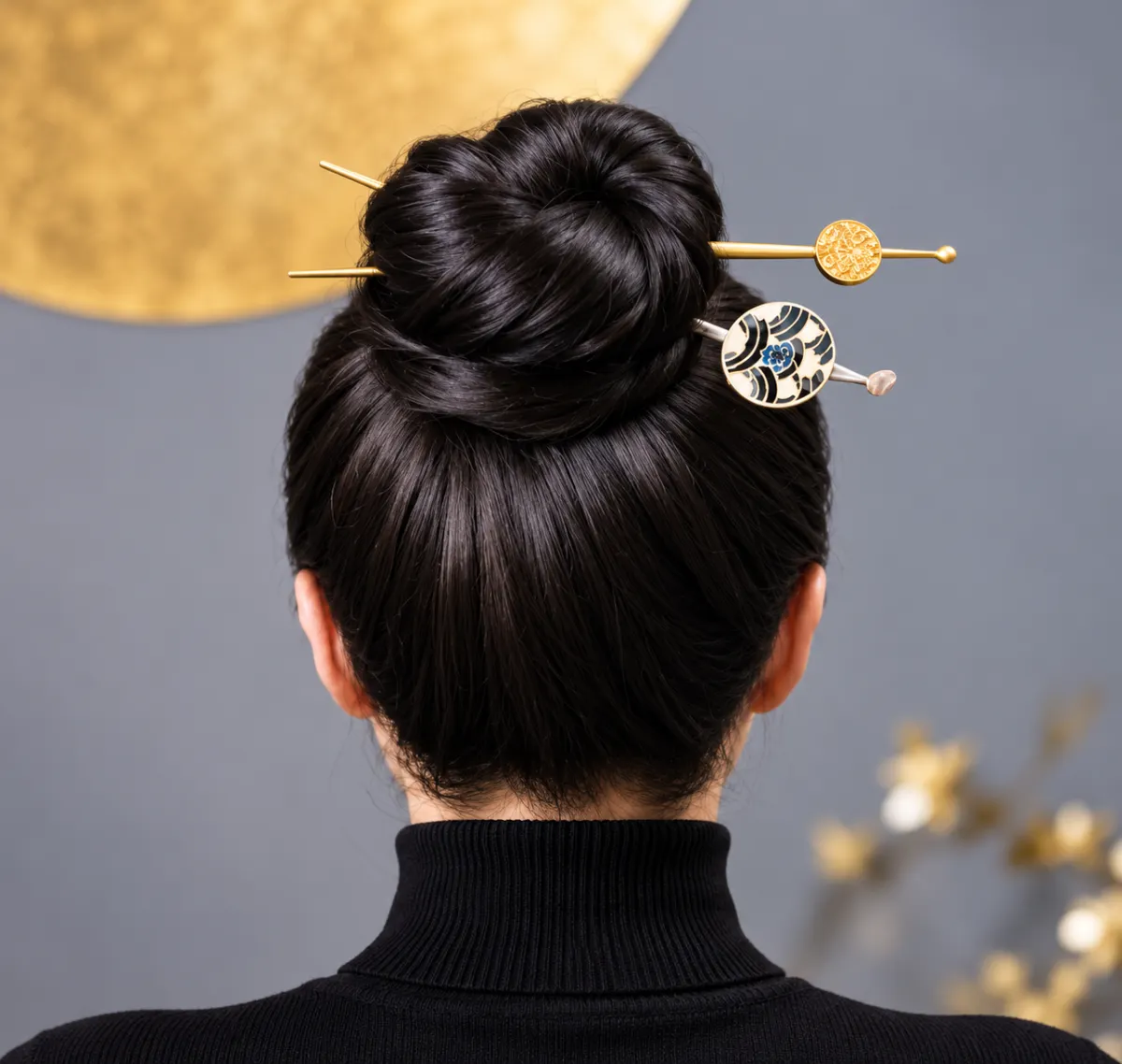
Classic bun: Insert a decorative hair stick into a low or high bun to create a polished finish. Wooden and metal designs are particularly suitable for understated styles.
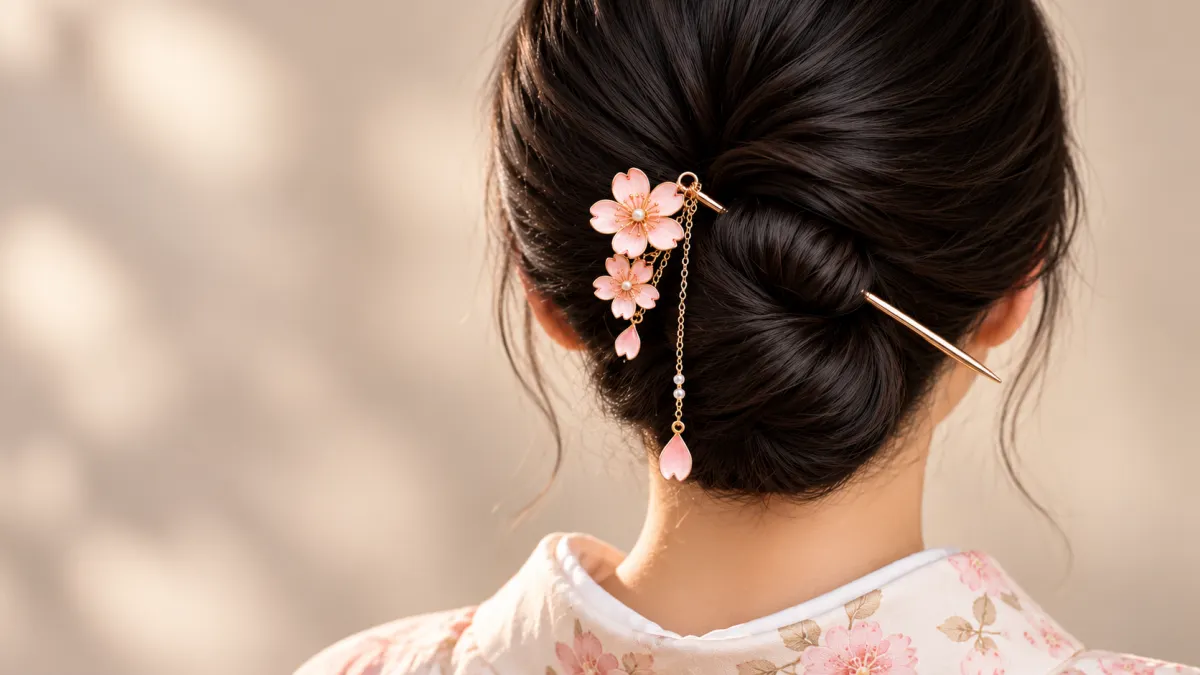
Romantic updo: Choose a floral kanzashi with delicate petals or dangling details to add movement and softness to an elegant hairstyle.
Half-up hairstyle: A small decorative pin can secure the upper section of the hair while adding a subtle Japanese-inspired accent.
Bridal hairstyle: Pearl, gold-tone, or floral kanzashi can complement a wedding updo, especially when paired with minimalist jewelry and a simple dress.
Traditional Japanese look: Pair an elaborate kanzashi with a kimono or yukata and a carefully arranged bun for a look inspired by Japanese aesthetics.
For heavier ornaments, make sure the hairstyle is securely pinned before inserting the accessory. Lightweight designs are generally easier to wear throughout the day.
The Beauty of Seasonal Kanzashi Designs
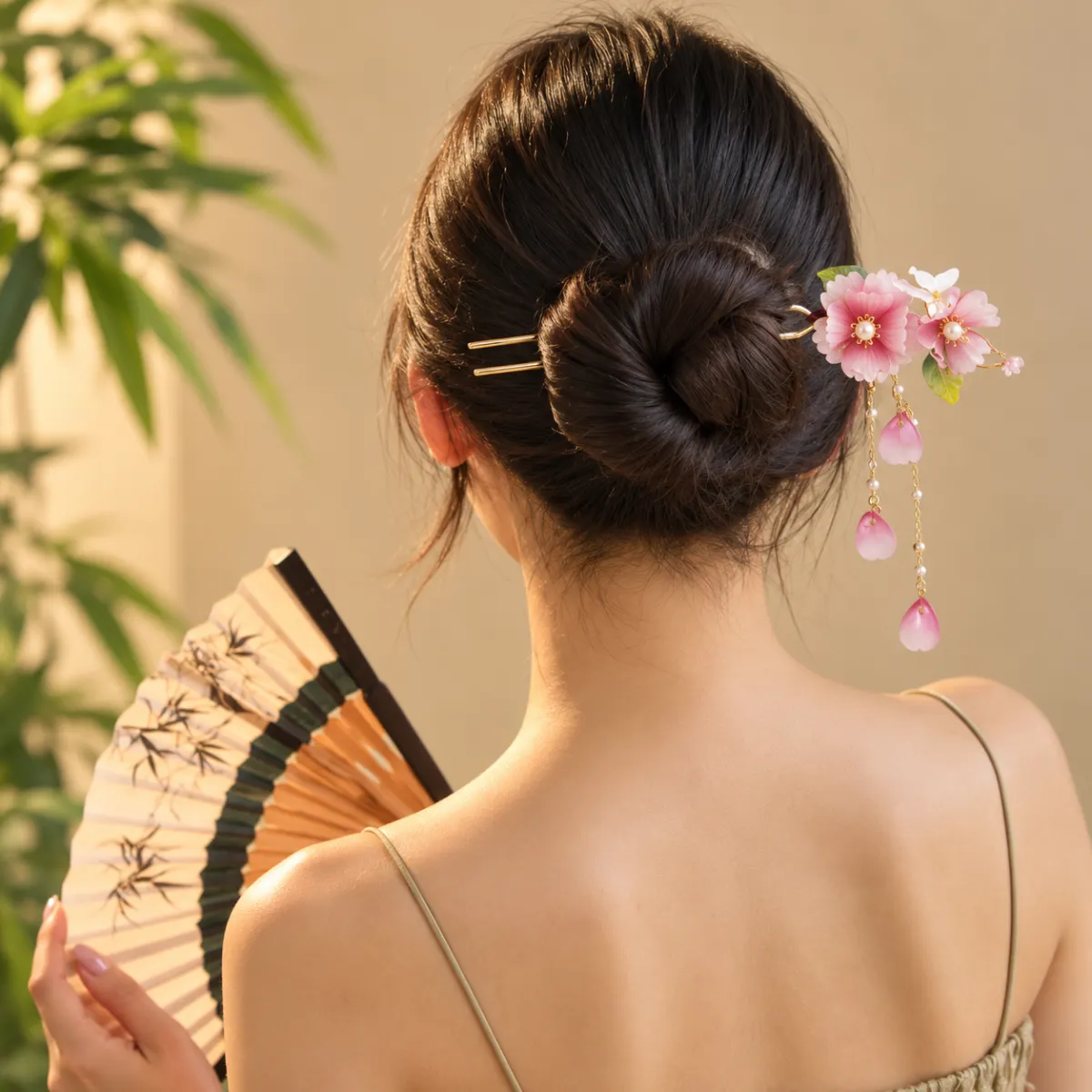
One of the most distinctive features of traditional kanzashi is the use of seasonal motifs. In Japanese aesthetics, flowers, leaves, and other natural elements often reflect the time of year, allowing an ornament to express more than personal style.
Spring: Cherry Blossoms and Fresh Colors
Summer: Hydrangeas, Fans, and Bright Colors
Summer designs may incorporate hydrangeas, lotus flowers, fans, and willow-inspired details. Blue, yellow, and other vivid shades can create a light, lively appearance suited to summer festivals and yukata.
Autumn: Maple Leaves and Chrysanthemums
Autumn kanzashi often draw inspiration from changing leaves, chrysanthemums, and other seasonal plants. Red, orange, gold, and deep yellow reflect the colors of autumn landscapes and create a richer, warmer look.
Winter: Camellias and Plum Blossoms
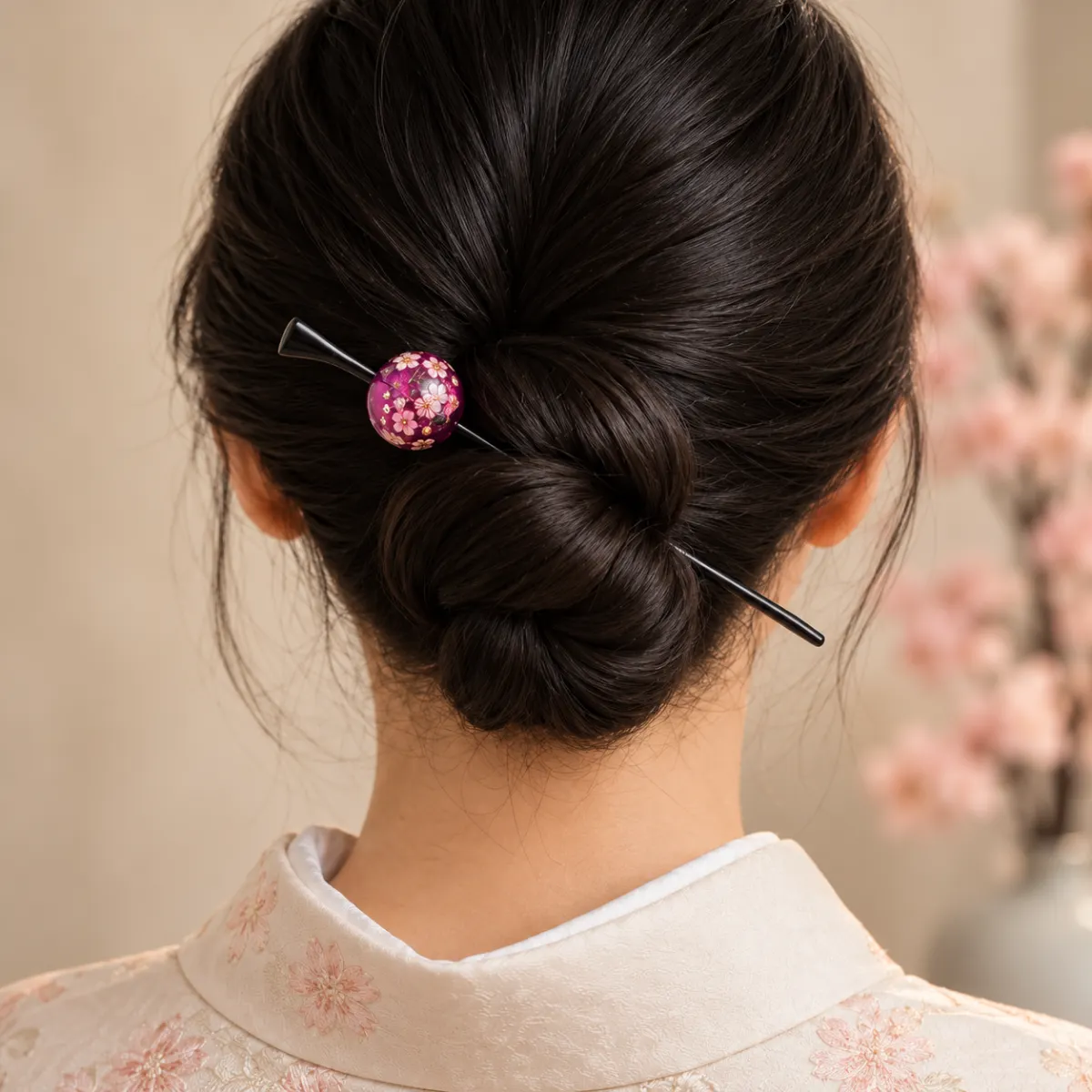
Winter ornaments may feature camellias, narcissus, and plum blossoms. Deep red, white, purple, and darker tones are common choices. The traditional shōchikubai motif combines pine, bamboo, and plum, plants associated with resilience and good fortune.
Seasonal designs are particularly important in traditional Japanese dress, although modern kanzashi can be worn throughout the year regardless of their motifs.
8 Types of Kanzashi You Should Know
Kanzashi encompass a wide variety of designs, from simple hair sticks to elaborate ornaments with intricate floral details. These are some of the best-known traditional styles.
1. Hana Kanzashi: Elaborate Floral Ornaments
Hana kanzashi are flower-shaped ornaments especially associated with maiko. Often made from silk petals, they may feature cascading flowers and delicate hanging elements. Their designs frequently reflect the season, making them among the most visually distinctive forms of traditional Japanese hair jewelry.
2. Tsumami Kanzashi: Flowers Made From Folded Fabric
Tsumami kanzashi are created using the tsumami zaiku technique, in which small pieces of fabric are folded and assembled into flowers, butterflies, and other shapes. Their intricate details make them popular with collectors and admirers of traditional Japanese craftsmanship.
3. Tama Kanzashi: Elegant Hair Sticks With Bead Finials
Tama kanzashi feature a slender stick topped with a decorative ball or bead. Their relatively simple silhouette makes them suitable for securing buns while adding a subtle accent. Depending on the design, the bead may be made from wood, lacquer, glass, or other materials.
4. Bira-bira Kanzashi: Ornaments That Move
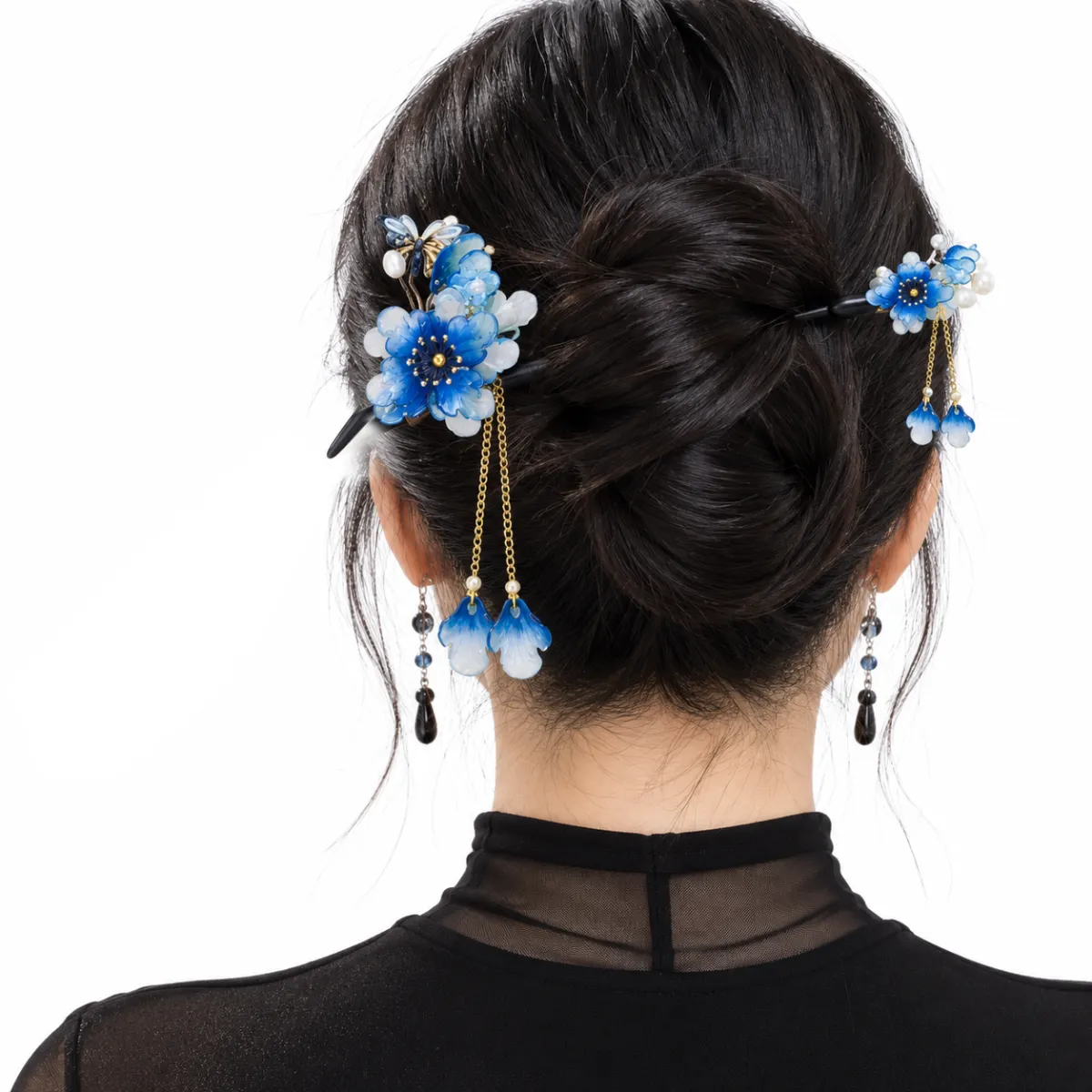
Bira-bira kanzashi are characterized by dangling metal elements or chains that move gently as the wearer moves. The movement adds sparkle and visual interest, particularly when paired with elaborate hairstyles.
5. Kogai Kanzashi: Traditional Decorative Hair Sticks
Kogai are elongated hair ornaments traditionally associated with Japanese hairstyles. Some designs have decorative ends and were historically paired with combs or other accessories. Their form is more understated than that of elaborate floral kanzashi.
6. Kushi Kanzashi: Decorative Japanese Hair Combs
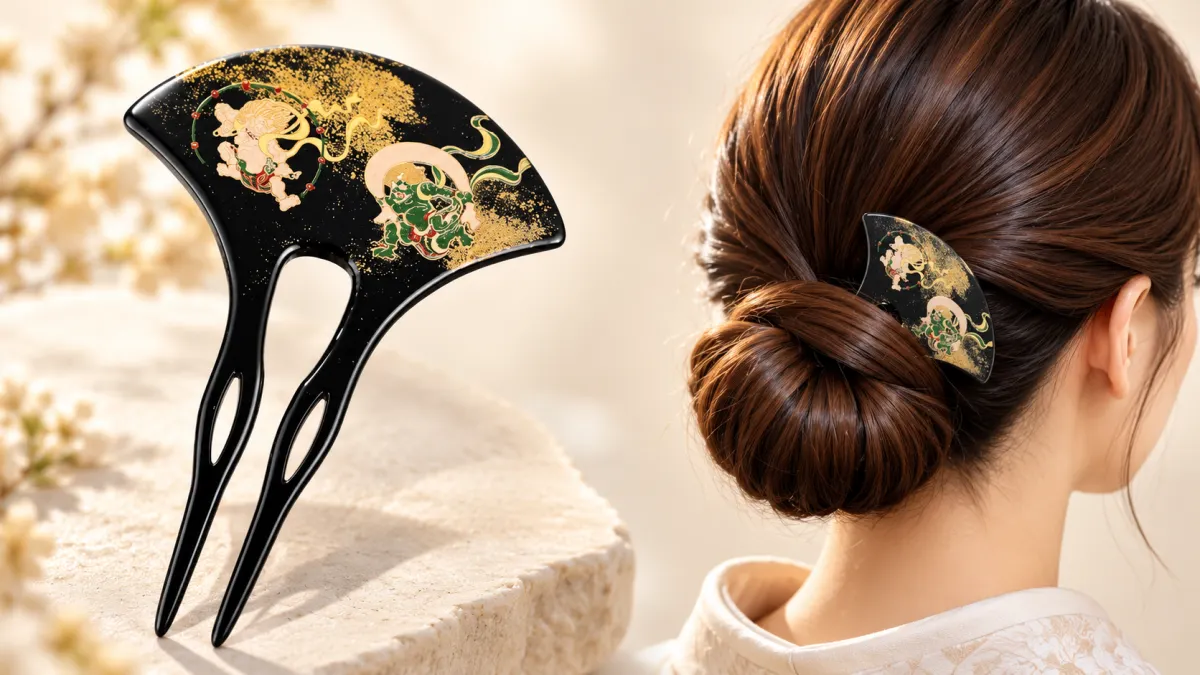
Kushi kanzashi are ornamental combs used to arrange and secure hair. They may be made from lacquered wood or other traditional materials and decorated with intricate patterns, gold details, or natural motifs.
7. Ogi Kanzashi: Fan-Shaped Hair Ornaments
Ogi kanzashi feature fan-shaped decorative elements and may include hanging details. They are associated with formal Japanese hairstyles, including those worn by maiko, although the exact design and use vary.
8. Dome Kanzashi: Ornate, Jewel-Like Decorations
Some elaborate kanzashi feature raised decorative surfaces, intricate metalwork, and stone-like embellishments. The term and classification can vary across historical and modern designs, so individual pieces are best understood by their specific construction and traditional use.
Read More

Kanzashi as a Modern Fashion Statement
Kanzashi demonstrate how traditional craftsmanship can remain relevant beyond its original cultural setting. Modern designers and independent artisans create versions that suit contemporary wardrobes, using clean lines, understated materials, and simplified floral designs.
For anyone who enjoys distinctive accessories, a kanzashi offers an alternative to conventional barrettes and hair clips. It can become the focal point of an elegant updo or provide a subtle finishing touch to an everyday hairstyle.
The most appealing designs balance decoration with practicality. A lightweight wooden pin may be ideal for regular use, while a detailed silk-flower ornament can be reserved for a wedding, celebration, or special evening.
Ultimately, the appeal of kanzashi lies in their ability to unite function, beauty, and cultural history in a single accessory.