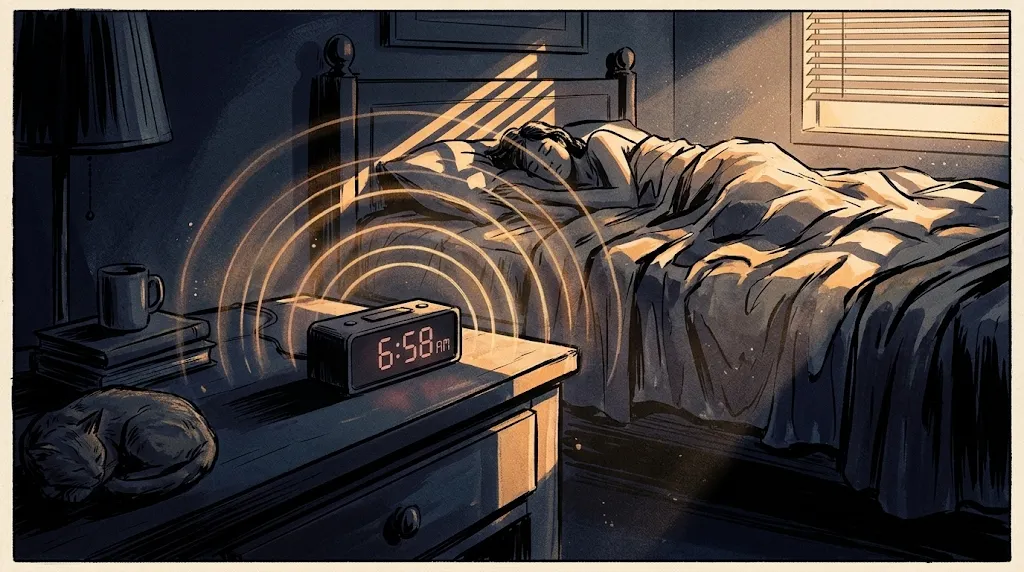

The Cold Glow on the Nightstand
I woke up at 6:58 AM on a cold Thursday morning last November in my apartment in Minneapolis. The bedroom was pitch-black, my wife was still sound asleep, and the house was dead quiet. My brain felt wide awake, my breathing was completely normal, and I didn't have that awful groggy haze that usually makes me hit the snooze button four times. I reached out from under the duvet, tapped my iPhone screen, and stared at the glowing numbers: exactly 120 seconds before my 7:00 AM alarm was set to go off.
Almost everyone has had this happen. You have an early morning flight out of Denver, you set three separate alarms on your phone, and then you snap awake at 5:58 AM staring at the ceiling fan before a single ringtone sounds.
The Primitive Survival Reflex Against the Digital Alarm
It feels like a psychic trick, but there is nothing mystical about it. It is actually a brutal survival reflex run by a tiny cluster of brain cells that hates your alarm clock as much as you do.
To your primitive nervous system, an iPhone marimba chime or a loud digital buzzer going off eighteen inches from your ear isn't a reminder to make coffee. To your ancient biology, a sudden screeching noise means a leopard just jumped into your cave.
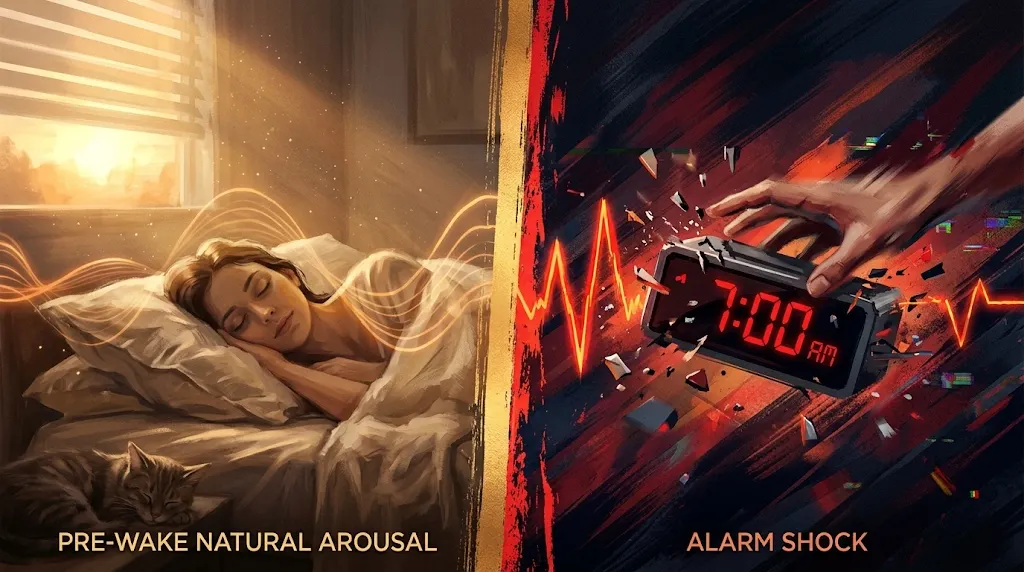
When an alarm jolts you awake from deep slumber, your heart rate shoots up twenty beats in three seconds. Adrenaline floods your arteries, your blood pressure spikes, and your brain enters acute shock. Sleep specialists call this sleep inertia—that sickening, nauseous hangover you feel when you get ripped out of a dream. Your nervous system despises that physical trauma, so it plans ahead to stop it from happening.
The Master Pacemaker Behind Your Optic Nerves
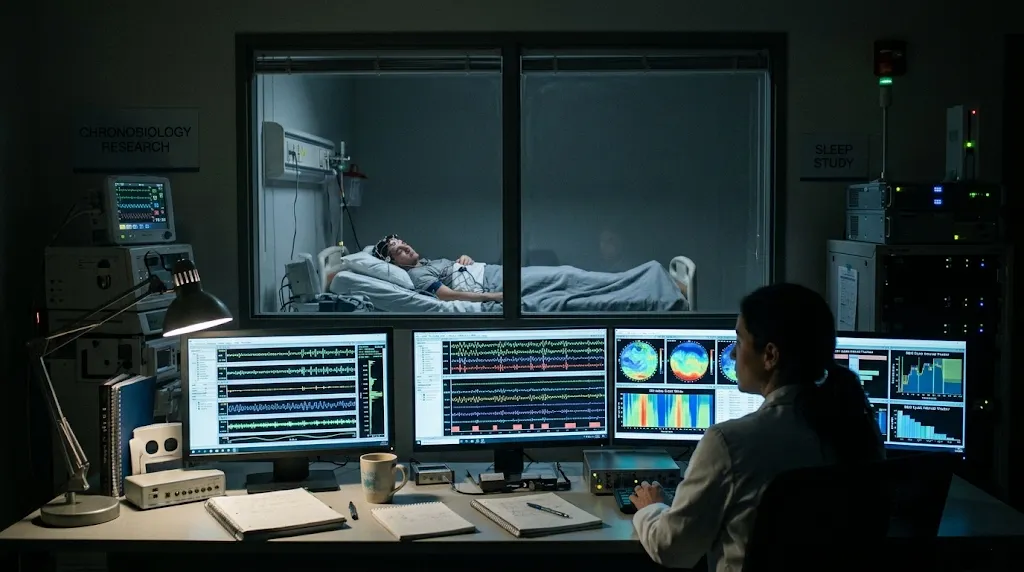
I spent a morning at a sleep clinic near Hennepin Avenue in Minneapolis talking with Dr. Marcus Vance, a neurologist who has spent eighteen years analyzing overnight EEG brainwave monitors. He showed me a patient's sleep chart on his dual-monitor workstation.
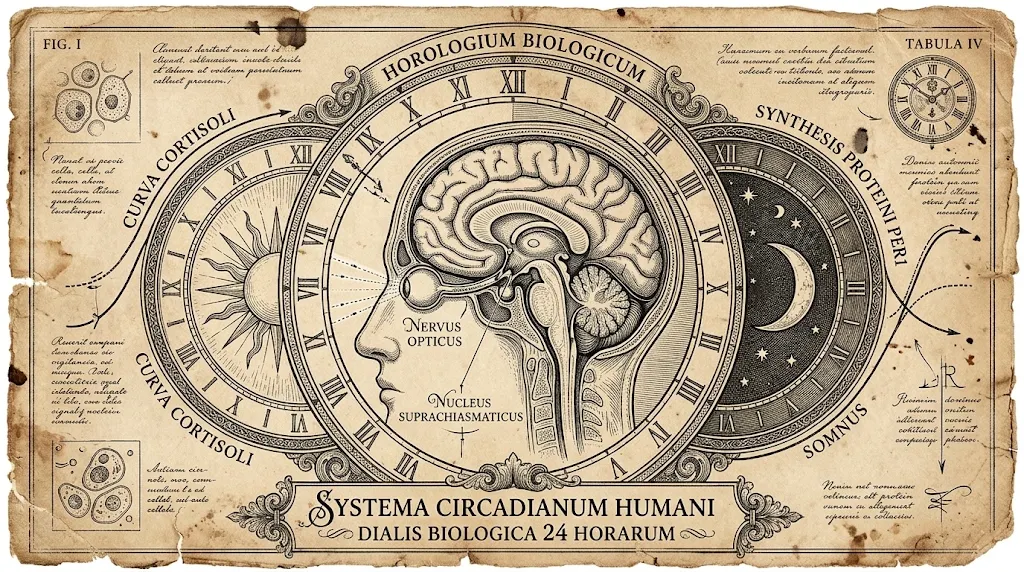
"People think sleep is like a light switch," Dr. Vance told me, pointing a pen at a colorful squiggly graph. "You don't just flip from off to on. Your brain has a master pacemaker called the suprachiasmatic nucleus sitting right behind your optic nerves. It contains twenty thousand nerve cells that keep time down to the minute. When you go to sleep around 11:00 PM every night, that pacemaker memorizes your routine."
"Your brain has a master clock behind your optic nerves that memorizes your routine to the second. It intentionally wakes you up at 6:58 AM to spare your heart the traumatic adrenaline shock of a 7:00 AM buzzer."
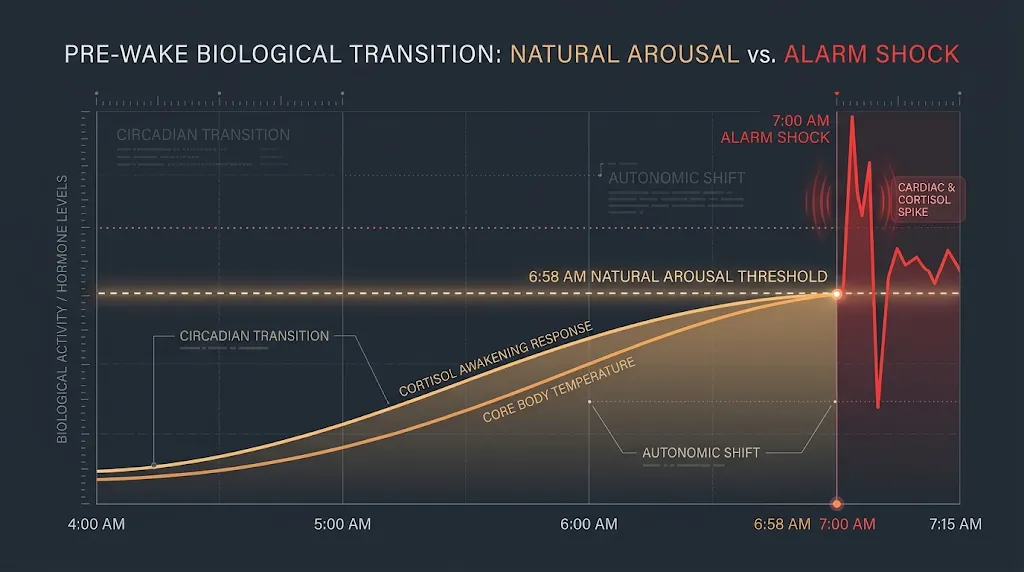
Around 5:00 in the morning, while you are dead asleep, that master clock begins an automated warm-up sequence. It tells your adrenal glands to start releasing a steady stream of cortisol and a clock protein called PER into your blood.
| Sleep Phase | Time Window | Core Body Temperature | Internal Chemical Driver |
|---|---|---|---|
| Deep Delta Slumber | 2:00 AM – 4:00 AM | 96.8°F (Lowest Daily) | High Melatonin & Growth Hormone |
| Pre-Awakening Warmup | 5:00 AM – 6:30 AM | Climbing 1 Full Degree | Steady Cortisol & PER Release |
| The 2-Minute Window | 6:56 AM – 6:58 AM | Normal Operating Temp | Blood Pressure & Heart Rate Ready |
| Alarm Ringing Event | 7:00 AM | Sudden Spike (if asleep) | Emergency Adrenaline Shock |
Why Rolling Over at 6:58 Destroys Your Morning
"Most folks think cortisol is just a bad stress hormone that makes you gain belly fat," Dr. Vance laughed. "In the early morning, cortisol is your body's ignition key. It raises your body temperature by a full degree, tightens your blood vessels to boost arterial pressure, and shifts your brain out of deep delta sleep into light REM. By 6:58 AM, your engine is already running at operating temperature. Your eyes open naturally because your brain intentionally woke you up early to spare your heart the shock of that 7:00 AM buzzer."
This is why you only beat the clock when your routine is consistent. If you sleep at 10:00 PM on Monday, 2:00 AM on Wednesday, and 4:00 AM on Friday, your pacemaker has zero baseline. The hormonal ramp gets confused, your adrenals misfire, and you wake up feeling like you were dragged behind a pickup truck.
"The worst mistake you can make when you wake up at 6:58 AM is rolling back over to steal those two extra minutes," Dr. Vance warned me before I left the clinic. "When you close your eyes after your brain already completed its wake-up ramp, you trick your neurons into starting a brand-new ninety-minute sleep cycle. When the phone buzzes ninety seconds later, it yanks you out of a fresh cycle, leaving you in a brain fog that takes four cups of coffee to shake off."
Re-Entraining the Circadian Pacemaker
Dr. Vance pulled up a file for a night-shift ER nurse named Rachel from St. Paul. "Look at what happens when someone works twelve-hour graveyard shifts," he told me, pointing his pen at a messy zig-zag line. "Her body had no clue when morning was. Her adrenals dumped cortisol at two in the afternoon while she was trying to sleep, and totally crashed at six in the evening right when she had to drive in to work. She couldn't beat her alarm because her internal clock gave up."
We put Rachel on a strict six-week routine: heavy blackout foil over her bedroom windows, dark sunglasses on her morning drive home from the hospital, and a rigid sleep schedule from 9:00 AM to 5:00 PM every single day, even on her weekends off. By the fourth week, Rachel called Dr. Vance laughing. She had started waking up at 4:58 PM on the dot, exactly two minutes before her phone buzzer went off, feeling wide awake for the first time in four years.
The next time you open your eyes in the pitch black and see 6:58 on your nightstand, don't curse at the clock. Smile and get out of bed. Your brain just did you a massive biological favor.
Dr. Vance gave me one last piece of advice before I packed up my recorder. "If you really want to train your internal clock to beat your alarm naturally," he said, "get outside and look at the morning sky for five minutes within thirty minutes of getting out of bed. Even through heavy cloud cover in Minnesota, natural morning light delivers ten thousand lux of blue-spectrum photons straight into your retinas. That single flash of light acts like an atomic clock reset for your suprachiasmatic nucleus. It tells your brain exactly when zero hour started, which guarantees your cortisol wave will arrive right on schedule tomorrow morning."