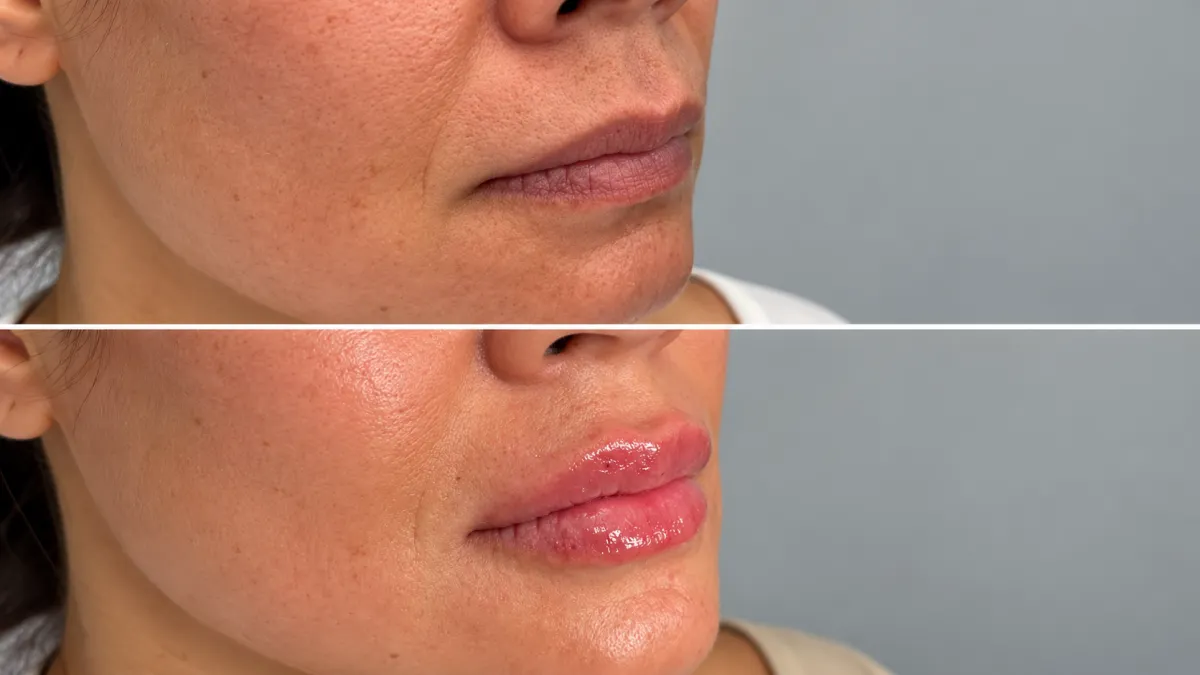

Lip fillers can add volume, improve lip shape, and create a fuller appearance. However, like any cosmetic procedure, they come with potential side effects. Swelling, bruising, and tenderness are common and usually temporary. More serious complications, such as blocked blood vessels, tissue damage, and severe infections, are rare but can require urgent medical treatment.
5 Small Home Office Upgrades That Actually Fix Bad Posture and Fatigue
Most early side effects improve within a few days to two weeks. However, some complications can last longer or cause permanent damage.
In this guide, we explain 10 important lip filler side effects, how long they may last, and which warning signs you should never ignore.
Lip Filler Side Effects at a Glance
| Side Effect | How Common Is It? | Typical Recovery Time | Temporary or Long-Lasting? |
|---|---|---|---|
| Swelling | Common | A few days to 2 weeks | Usually temporary |
| Lip firmness or small lumps | Fairly common | A few days to 2 weeks or longer | Usually temporary |
| Bruising | Common | A few days to around 2 weeks | Usually temporary |
| Tenderness | Common | A few days to 1 week | Usually temporary |
| Redness and itching | May occur | Usually a few days | Usually temporary |
| Pain after injection | May occur | Usually a few days | Severe pain is a warning sign |
| Infection or abscess | Rare | Depends on severity and treatment | May cause lasting problems |
| Blocked blood vessels | Rare but serious | Depends on severity and treatment | May cause permanent damage |
| Skin tissue damage (necrosis) | Rare but serious | Depends on the extent of damage | Scarring may occur |
| Delayed inflammation or granulomas | Rare | Varies | May last a long time |
| Vision problems | Extremely rare but serious | Varies | Permanent vision loss is possible |
Important: The likelihood and recovery time of each side effect depend on the filler, the amount injected, the injection technique, and individual factors. The table provides general guidance rather than exact predictions.
Temporary and Common Lip Filler Side Effects
Many symptoms after lip filler injections are part of the body's normal response to the needle and the injected product. They usually appear within the first few hours or days and gradually improve.
1. Lip Swelling
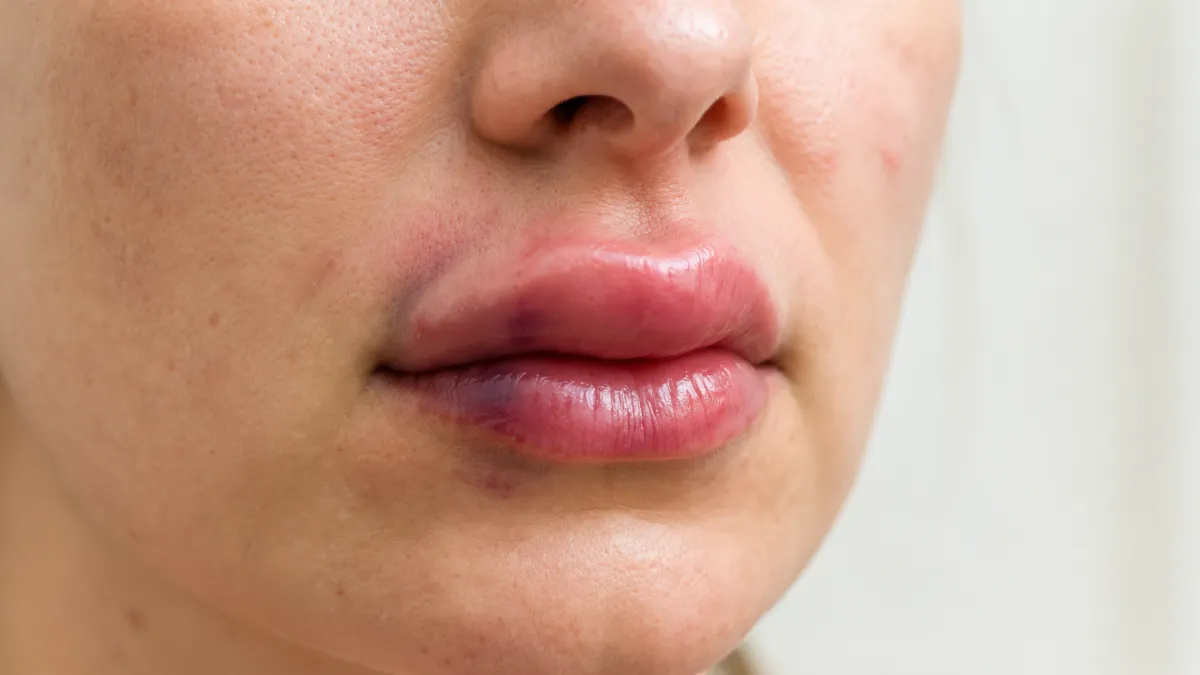
Swelling is one of the most common side effects of lip fillers. It often starts immediately or within a few hours of the injection. The lips may look larger than expected during the first few days, so the initial appearance may not reflect the final result.
Swelling usually improves within several days, although it can sometimes last up to two weeks.
What can help?
- Use a gentle cold compress if your injector recommends it.
- Avoid pressing or massaging your lips unless your healthcare provider advises you to do so.
- Follow the aftercare instructions you receive.
Seek medical attention if swelling becomes severe, continues to worsen, or occurs with unusual pain or changes in skin color.
Suggested image: Natural lip swelling on the first day after filler injections.
2. Bruising
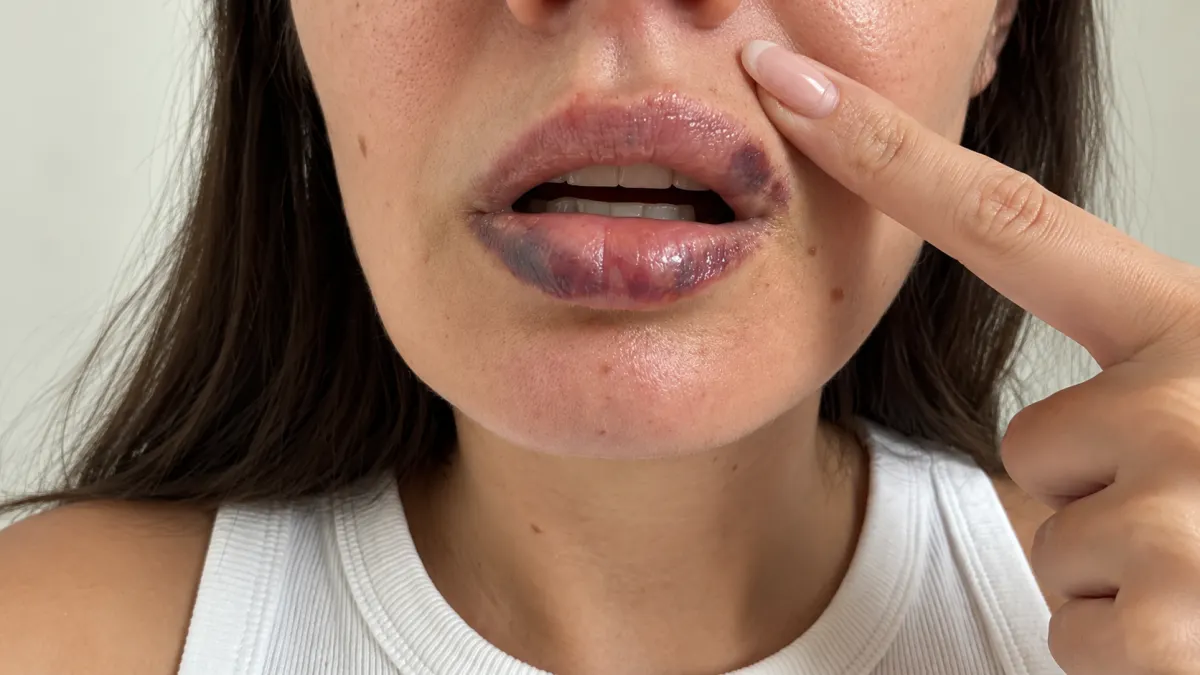
Bruising happens when the needle damages small blood vessels beneath the skin, allowing a small amount of blood to collect in the surrounding tissue.
You may notice small purple or blue marks around your lips. Most bruises gradually fade within a few days to about two weeks.
Mild bruising is usually harmless. However, unusual skin discoloration combined with severe pain, pale patches, or cold skin may indicate a blood flow problem rather than ordinary bruising.
Suggested image: Mild bruising around the lips after filler treatment.
3. Firm Lips or Small Lumps
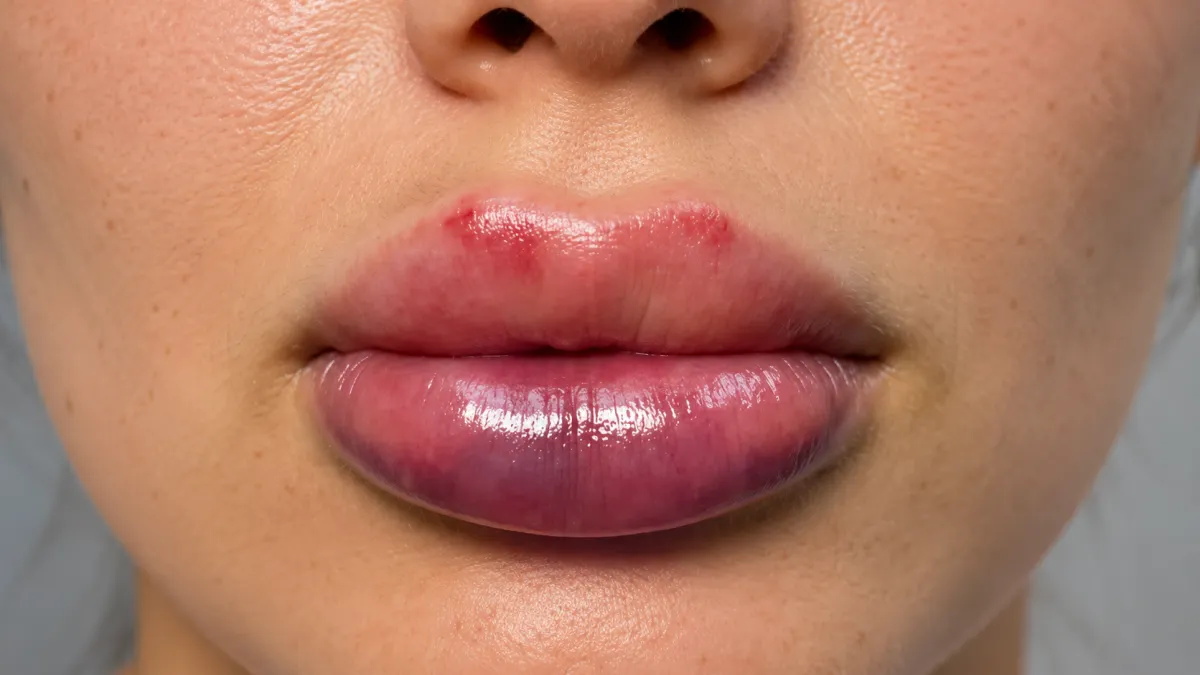
Your lips may feel firm or slightly uneven after an injection. This can happen because of swelling, early inflammation, or the way the filler sits in the tissue.
Small irregularities may improve as the swelling goes down. However, lumps that remain, grow larger, or become painful should be checked by a healthcare professional.
Not every lump is caused by the filler itself. Infection and other tissue reactions can sometimes create similar symptoms.
4. Tenderness and Mild Pain
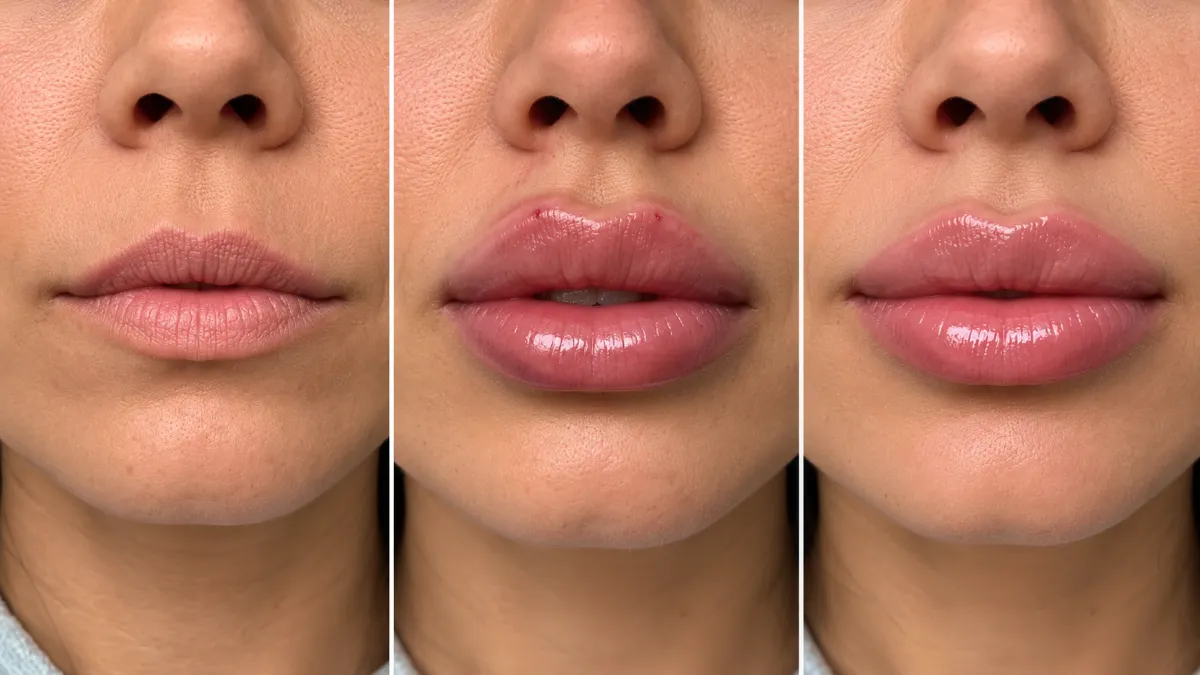
Some tenderness, stinging, or mild pain around the injection sites is common during the first few days.
The discomfort should generally improve as the initial inflammation settles. Avoid putting unnecessary pressure on your lips, and follow your provider's advice about pain relief.
Severe or worsening pain is not something to ignore. If it occurs with unusual skin discoloration or cold skin, seek urgent medical attention because it could be a sign of reduced blood flow.
5. Redness and Itching
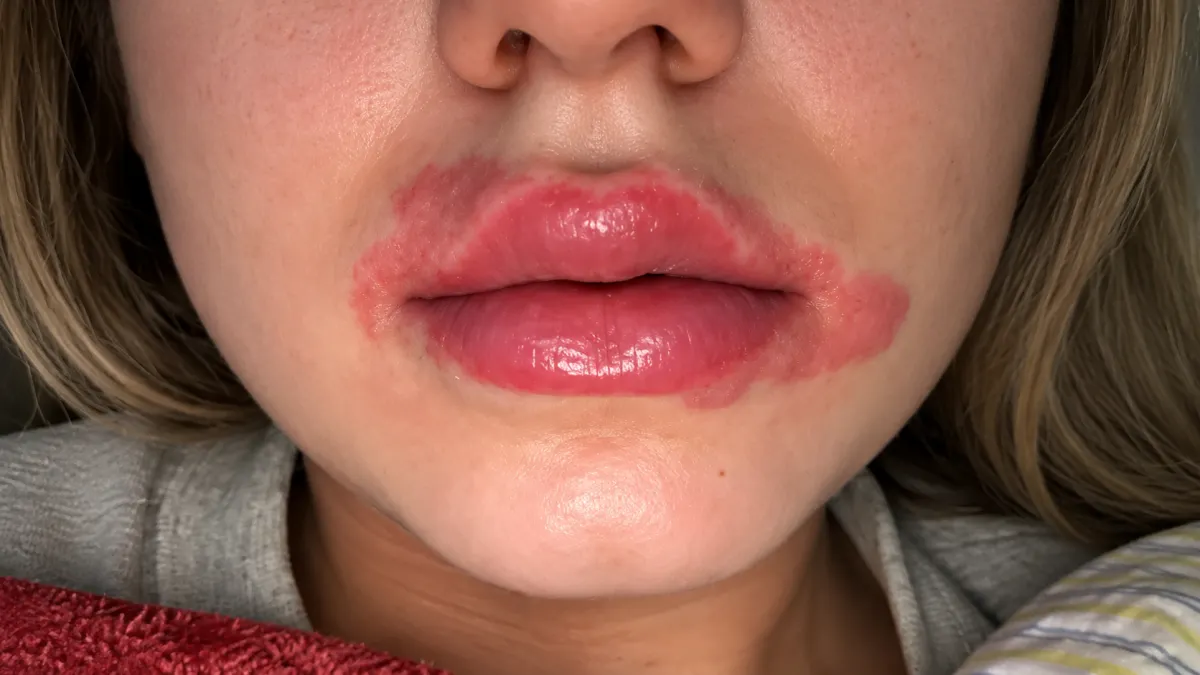
Mild redness or itching may occur because the skin has been irritated by the needle or is reacting to the injection.
These symptoms usually settle within a few days. However, increasing redness, warmth, worsening pain, or pus may indicate an infection.
Sudden swelling of the tongue or throat, widespread hives, or difficulty breathing may signal a serious allergic reaction. Seek emergency medical help if these symptoms occur.
Serious Lip Filler Complications
Serious complications are uncommon, but knowing the warning signs can help you get treatment quickly.
6. Blocked Blood Vessels
A blocked blood vessel is one of the most serious possible complications of dermal fillers. It can happen when filler enters a blood vessel or interferes with normal blood flow.
When blood cannot reach the surrounding tissue properly, the affected area may not receive enough oxygen.
Possible warning signs include:
- Severe or unusual pain
- Pale or unusually discolored skin
- White, blue, or gray patches
- Skin that feels unusually cold
These symptoms require urgent medical assessment. Do not wait for them to disappear on their own.
7. Skin Tissue Damage (Necrosis)
Necrosis occurs when tissue dies because it does not receive enough blood and oxygen. In some cases, a blocked blood vessel caused by filler can lead to this complication.
Early warning signs may include unusual pain, skin discoloration, or blisters. If the damage progresses, open sores or permanent scars may develop.
Necrosis is rare, but early recognition and treatment are important for limiting tissue damage.
8. Infection and Abscesses
An infection may develop because of contamination or other factors related to the injection procedure.
Possible symptoms include:
- Increasing redness and warmth
- Worsening pain or swelling
- Pus or other unusual discharge
- A painful lump
- Fever or feeling generally unwell
Contact a healthcare professional if these symptoms develop, especially if they appear after the initial swelling has started to improve.
Do not try to drain a lump yourself or take antibiotics without medical advice.
9. Granulomas and Delayed Inflammation
In some cases, the body develops an inflammatory reaction to the injected material. This can lead to firm lumps called granulomas, which may appear weeks or months after treatment.
Not every lump is a granuloma. Filler buildup, infection, and other tissue reactions can cause similar changes.
Treatment depends on the underlying cause and may involve medication or other medical procedures. A healthcare professional should assess persistent lumps before treatment begins.
10. Vision Problems
In extremely rare cases, filler can enter the bloodstream and interfere with blood flow to vessels connected to the eyes. This can lead to vision problems and, in severe cases, permanent blindness.
This complication is more widely associated with filler injections in certain areas of the face, but it remains an important risk to understand when considering dermal fillers.
Sudden blurred vision, double vision, or any loss of vision after a filler injection is a medical emergency. Seek emergency care immediately rather than waiting for a routine appointment.
Can Lip Filler Side Effects Be Permanent?
Most early side effects, including swelling, bruising, and tenderness, are temporary. However, some complications can cause lasting damage.
For example, severe tissue damage caused by reduced blood flow may leave scars. Some inflammatory reactions can also persist for an extended period or require additional treatment.
The outcome depends on the type of complication, its severity, and how quickly appropriate treatment begins. Lip fillers should not be considered completely risk-free, even when a reputable product is used.
Can Lip Filler Side Effects Appear Years Later?
Most common side effects appear during the first few days or weeks after treatment. However, some delayed problems may develop months or even years later.
These may include:
- Persistent inflammation
- New or recurring lumps
- Filler movement or changes in lip shape
- Delayed infections or other tissue reactions
Hyaluronic acid fillers are gradually broken down by the body, but the process varies depending on the product, injection site, and individual factors. The disappearance of the initial swelling does not guarantee that delayed complications cannot occur.
If you develop a new lump, pain, swelling, or an unexplained change in lip shape long after treatment, arrange a medical assessment.
Can Low-Quality Lip Fillers Cause More Side Effects?
The quality and authenticity of the product matter. Counterfeit fillers, products with unknown ingredients, and products that do not meet appropriate safety standards may increase the risk of contamination, inflammation, infection, and unpredictable results.
Brands such as Juvéderm, Restylane, and Belotero are well-known names in the hyaluronic acid filler market. However, a familiar brand name does not automatically guarantee that every product is approved for every use.
Before treatment, ask your provider for the exact product name and information about its authenticity and regulatory approval. The injector's training, technique, and ability to manage complications are also important factors in safety.
How to Reduce the Risk of Lip Filler Side Effects
Although no procedure is completely risk-free, several steps can help reduce the chance of complications.
- Choose a qualified medical professional. Your provider should understand facial anatomy and know how to recognize and manage filler complications.
- Check the product. Ask for the exact product name and verify its authenticity and relevant approvals.
- Discuss your medical history. Tell your provider about allergies, medications, and any relevant medical conditions before treatment.
- Delay treatment when necessary. Active infections or inflammation around the injection area may require treatment before fillers can be used.
- Follow aftercare instructions. Avoid unapproved massage, pressure, or medication, and follow the advice provided by your healthcare professional.
- Know the warning signs. Severe pain, unusual skin discoloration, or vision changes require urgent medical attention.
If you are comparing providers, look at their qualifications, experience, and approach to patient safety. Before-and-after photos can help you understand their aesthetic style, but they cannot guarantee that a procedure is safe.
Can Hyaluronidase Dissolve Lip Fillers?
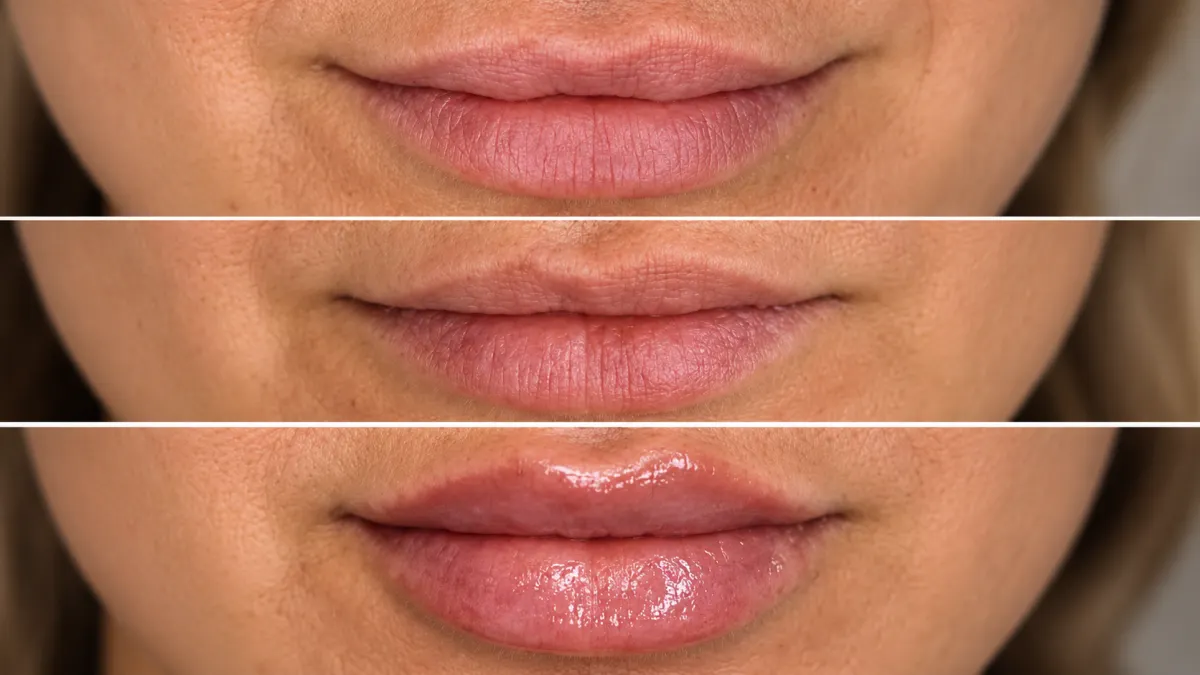
Hyaluronidase is an enzyme that breaks down hyaluronic acid. Healthcare professionals may use it to reduce or dissolve certain hyaluronic acid fillers when there is an unwanted result, a persistent lump, or another appropriate medical reason.
However, hyaluronidase does not work on every type of filler, and it cannot treat every possible complication. It may also cause side effects, including allergic reactions.
If a blocked blood vessel is suspected, urgent treatment by a trained professional is essential. Vision changes require immediate emergency assessment and should never be managed by waiting for a routine filler-dissolving appointment.
If you are unhappy with your results or notice a persistent lump, have the area assessed before deciding on treatment.