

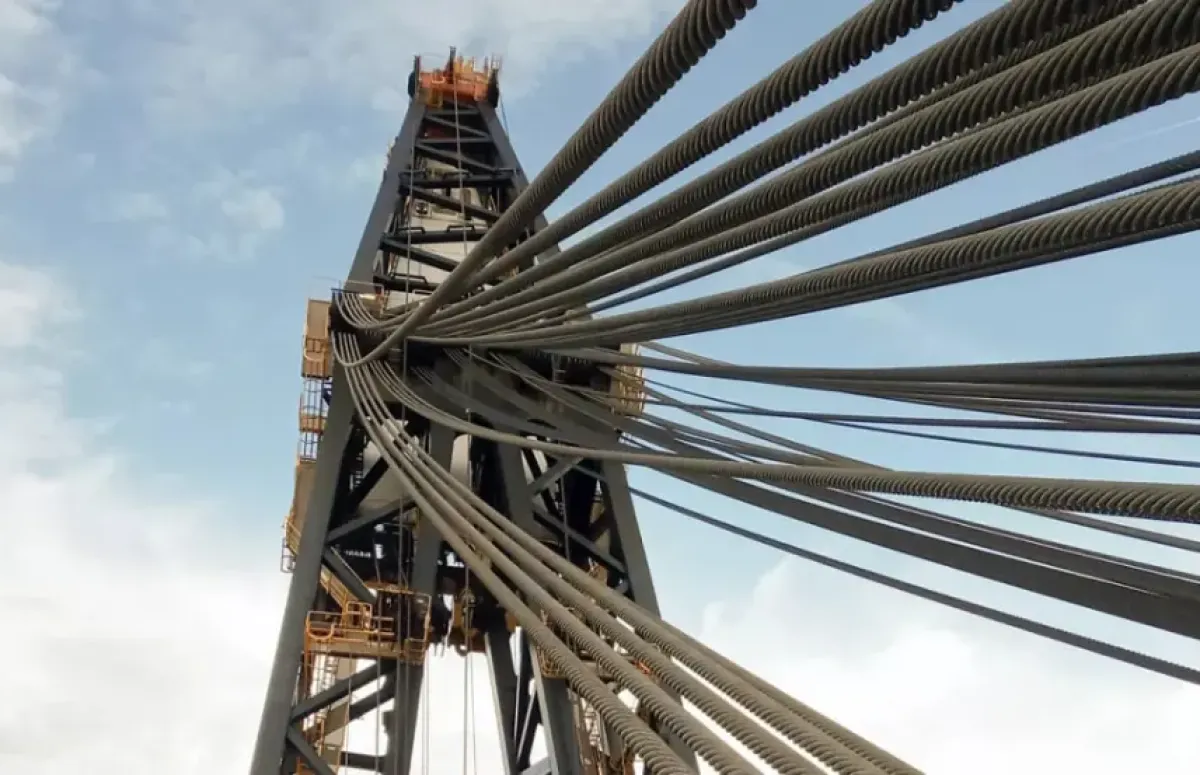
Tower cranes are among the most impressive machines on any construction site. Watching a massive crane suspend dozens of tons of steel and concrete hundreds of feet above the ground raises an obvious question: how can a steel cable no thicker than a human wrist withstand such enormous forces without breaking?
The answer lies in a remarkable combination of advanced metallurgy, intelligent engineering, and strict safety standards. Far from being a single piece of steel, a tower crane wire rope is a highly sophisticated structure designed to distribute extreme loads while maintaining flexibility and durability.
1. The Hidden Geometry That Distributes Massive Loads
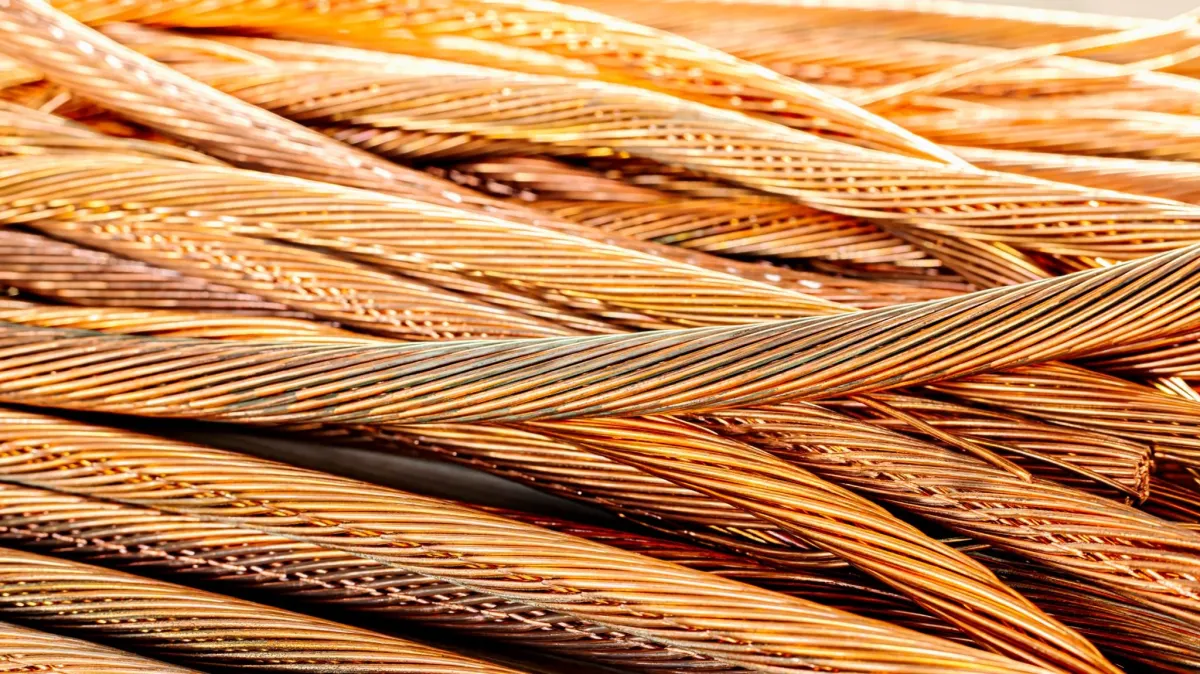
Cut open a tower crane cable and you'll discover a surprisingly complex internal structure. A modern wire rope consists of three primary components:
- Wires: Thin, high-strength steel filaments that form the basic building blocks of the rope.
- Strands: Groups of wires twisted together in a helical pattern.
- Core: The central support structure, made from either steel or synthetic materials, around which the strands are wrapped.
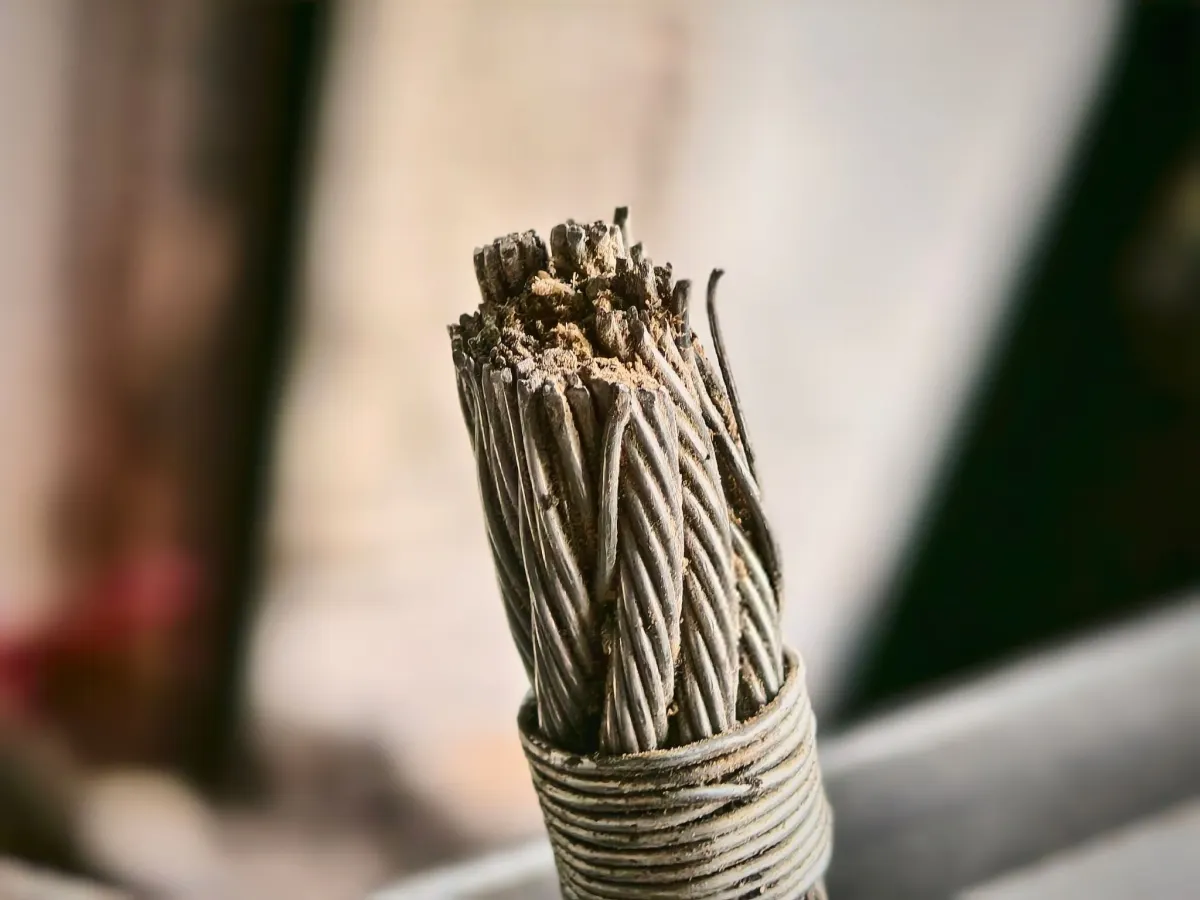
This layered design allows tensile forces to be distributed across thousands of individual steel wires rather than concentrating stress in a single component. When a heavy load is lifted, every strand shares part of the force, dramatically reducing the risk of localized failure.
The result is an exceptionally strong yet flexible lifting system capable of handling enormous weights safely.
2. High-Carbon Steel and the Power of Cold Drawing
The steel used in crane cables is very different from ordinary construction steel.
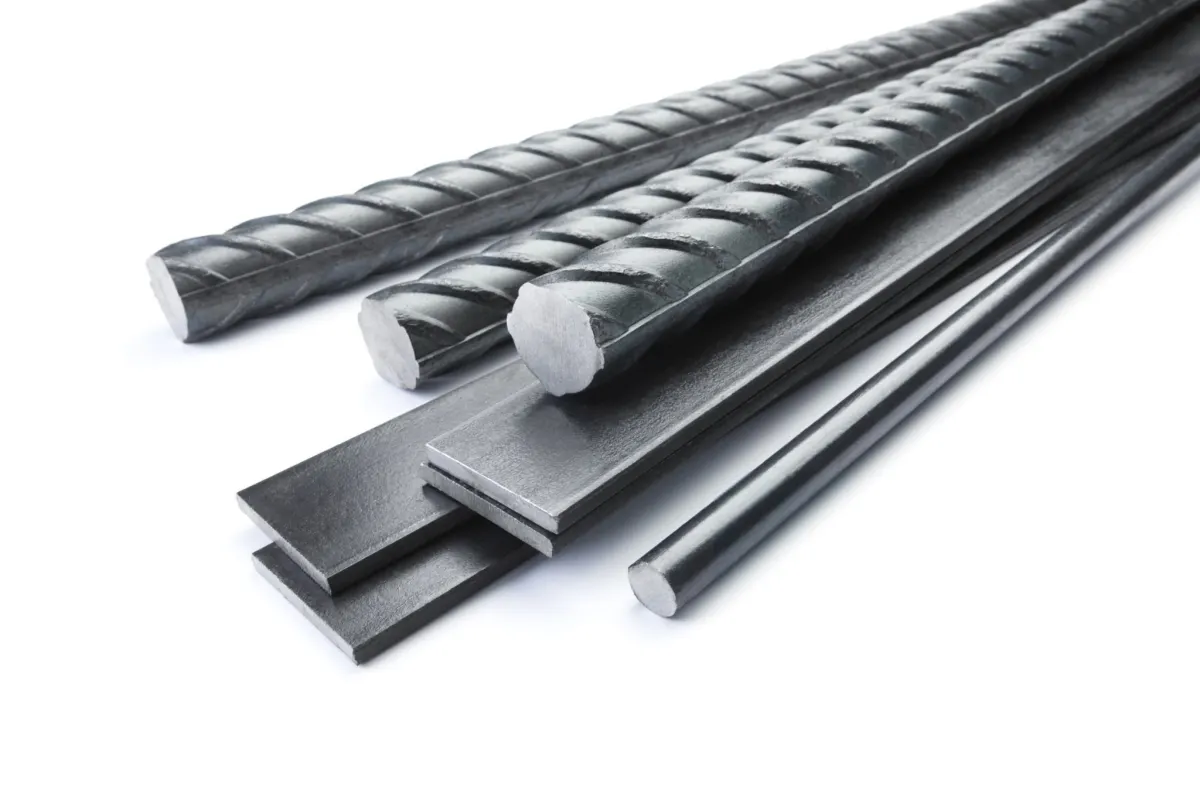
Most tower crane wire ropes are manufactured from high-carbon steel, typically containing between 0.4% and 0.95% carbon. This material undergoes a specialized manufacturing process known as cold drawing, where steel wires are pulled through progressively smaller dies at room temperature.
This process:
- Refines the steel's internal crystal structure.
- Increases tensile strength through work hardening.
- Improves resistance to wear and fatigue.
As a result, modern crane cables can achieve tensile strengths ranging from approximately 1,770 to 2,160 megapascals (MPa)—several times stronger than conventional structural steel used in buildings.
Read More
3. The Anti-Rotation Design That Prevents Twisting Failures
One of the biggest challenges in crane operations is rotational force.
A standard cable can twist under heavy loads, causing instability and increasing the risk of structural damage. To solve this problem, tower cranes often use rotation-resistant wire ropes.
These cables are engineered with multiple layers of strands wound in opposite directions:
- Inner layers are twisted clockwise.
- Outer layers are twisted counterclockwise.
When the cable is loaded, the opposing rotational forces cancel each other out. This dramatically reduces twisting, keeps loads stable in the air, and prevents the rope from unraveling under stress.
4. Why Tower Crane Cables Rarely Fail Suddenly
Contrary to popular belief, crane cables are not operated anywhere near their breaking limits.
Several safety mechanisms protect against sudden failure:
High Safety Factors
Engineering standards typically require significant safety margins. In many lifting applications, a wire rope may be designed to withstand loads several times greater than its rated working capacity.
Ductile Failure Characteristics
Steel does not usually fail without warning. Before breaking, the rope begins to stretch and individual outer wires may fracture gradually. These visible signs provide valuable warning that the cable is approaching the end of its service life.
Continuous Inspection and Testing
Modern crane operators routinely inspect wire ropes using visual inspections and advanced non-destructive testing (NDT) techniques, including magnetic rope testing. Even tiny internal defects can be detected long before they become dangerous.
The Engineering Marvel Above Our Heads
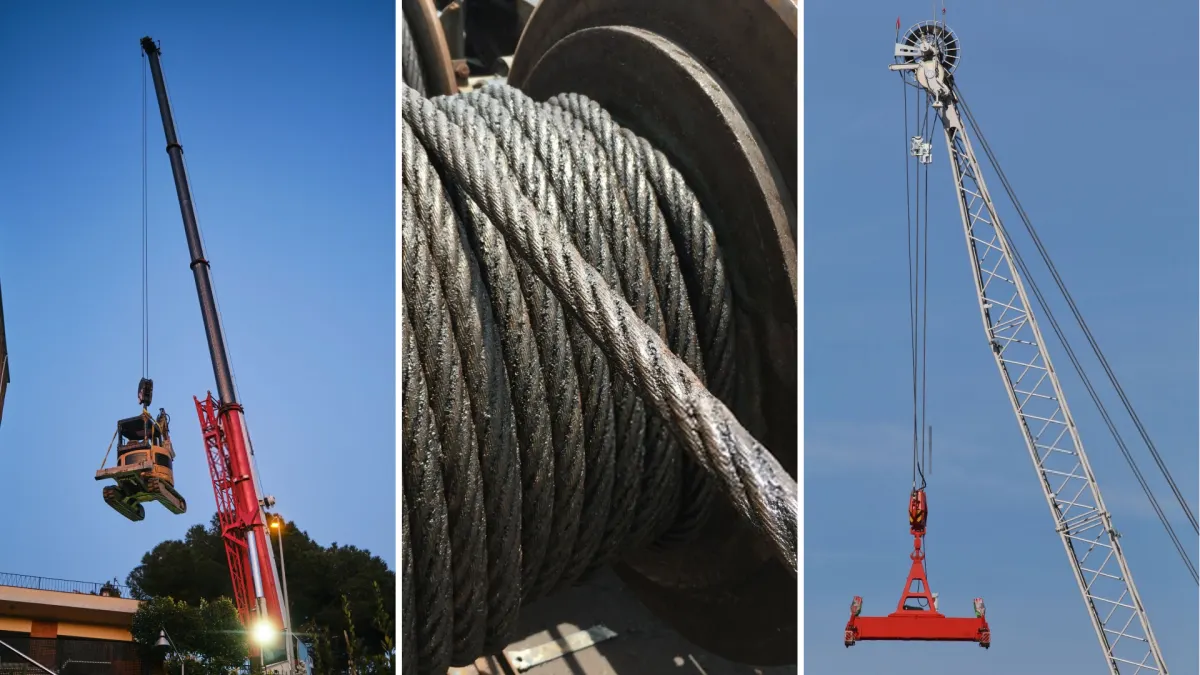
Tower crane cables don't stay intact by chance. Their extraordinary strength comes from a combination of high-carbon steel, cold-drawn wire technology, load-sharing geometry, anti-rotation engineering, and rigorous safety standards.
What appears to be a simple steel rope is actually one of modern engineering's most sophisticated load-bearing systems. These cables act as the invisible lifelines of skyscraper construction, safely supporting immense loads high above our cities every day.