
When a wind turbine blade stretches more than 80 meters, or a transformer weighs several hundred tons, standard shipping containers and conventional logistics simply will not do. This is the world of heavy or bulky cargo — a specialized segment of global freight that powers some of the largest and most consequential industries on earth.
From offshore oil platforms and power generation equipment to massive construction cranes and aerospace components, heavy and bulky cargo forms the backbone of infrastructure development worldwide. Yet moving these loads demands a level of planning, engineering, and regulatory coordination that sets it apart from all other freight categories.
This guide explains what heavy or bulky cargo is, how it differs from related categories, the equipment and vessel types used, the industries that depend on it, and the major challenges shippers and logistics providers face.
Read More


What Is Heavy or Bulky Cargo?
Heavy or bulky cargo — also referred to as heavy lift cargo, project cargo, or out of gauge (OOG) cargo — refers to freight that is too large, too heavy, or too irregularly shaped to be transported using standard shipping containers, pallets, or conventional road vehicles.
There is no single universal threshold, but industry practice generally defines cargo as heavy or oversized when it exceeds the following limits for road transport:
| Dimension / Factor | Standard Limit |
|---|---|
| Weight | Over 25 tonnes |
| Width | Over 2.54 meters |
| Length | Over 13.5 meters |
| Height | Over 2.7 meters |
For sea freight in standard containers, the threshold is typically cargo that exceeds 12 meters in length or 3 meters in height or width.
When cargo exceeds these parameters, it is classified as out of gauge, and specialized handling, equipment, and transport solutions are required from origin to destination.
Heavy Cargo vs. Bulky Cargo: Is There a Difference?
While the two terms are often used interchangeably, a technical distinction exists:
- Heavy cargo refers primarily to freight that exceeds weight limits — for example, a steel transformer or an industrial press that is compact in shape but extraordinarily dense.
- Bulky cargo (also called volumetric or dimensional cargo) refers to freight whose volume is disproportionately large relative to its actual weight — such as a large but lightweight plastic module or prefabricated building section.

In both cases, the result is the same: standard transport solutions are insufficient, and specialized handling is necessary. In practice, many shipments are both heavy and bulky simultaneously.
A related concept is dimensional weight (also called volumetric weight): when an item's volume generates a higher calculated weight than its actual mass, freight charges are based on the larger figure.
Types of Heavy and Bulky Cargo
1. Out of Gauge (OOG) Cargo
Out of gauge cargo is any shipment that exceeds the internal or external dimensions of a standard ISO shipping container. OOG cargo may still be transported by sea using specialized container equipment such as flat rack containers, open-top containers, or platform containers, as long as the dimensions are manageable.
2. Heavy Lift Cargo
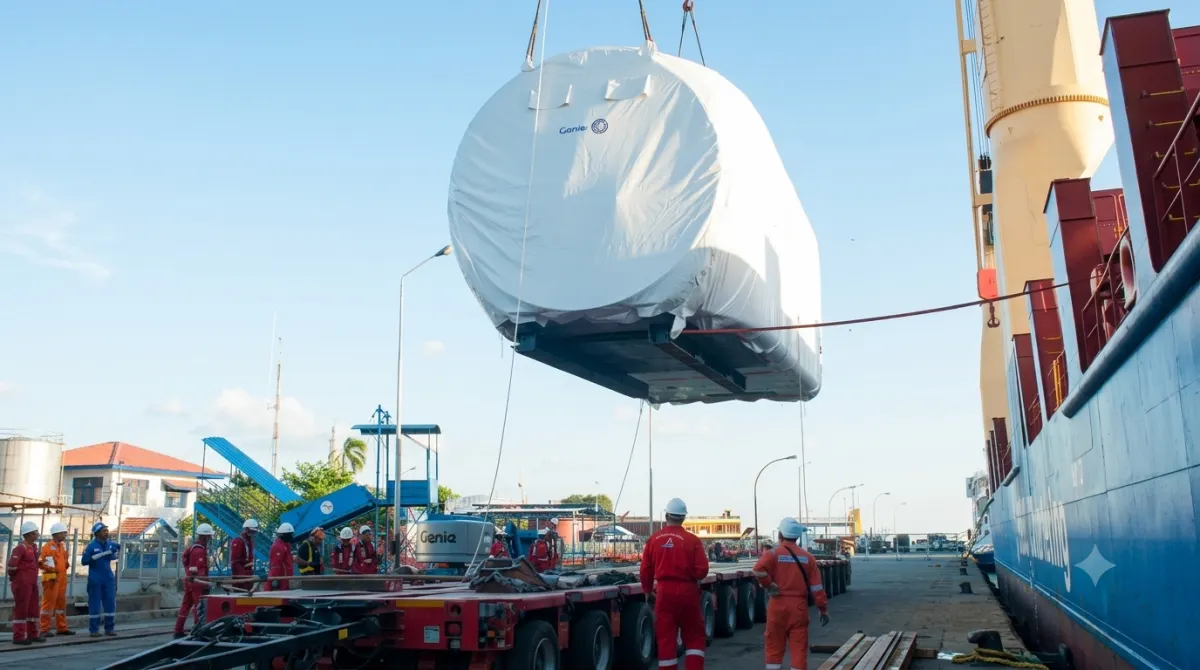
Heavy lift cargo specifically refers to individual pieces of freight that are exceptionally heavy — often requiring cranes, gantry systems, or hydraulic lifting platforms to load and unload. A single piece of heavy lift cargo may weigh thousands of tonnes. Examples include reactor vessels, large generators, and offshore production modules.
3. Project Cargo
Project cargo is a broader term covering coordinated multi-shipment movements associated with a large-scale industrial project. A single project cargo operation may involve hundreds of individual shipments — including both standard containers and oversized components — transported to a single destination such as a power plant, refinery, or offshore facility.
4. Breakbulk Cargo
Breakbulk refers to cargo that is too large or awkward to fit in standard containers and is therefore loaded individually into the hold or on the deck of a vessel. Steel coils, timber, and large machinery components are common examples. Breakbulk was the dominant form of cargo shipping before containerization and remains essential for certain freight types.
5. RoRo (Roll-On/Roll-Off) Cargo
RoRo refers to wheeled or tracked cargo — vehicles, construction equipment, or self-propelled machinery — that is driven or towed directly onto a vessel via a ramp. This eliminates the need for craning and is widely used for heavy construction machinery and military equipment.
Common Examples of Heavy or Bulky Cargo
The following categories of goods account for the majority of heavy and bulky cargo movements globally:
- Energy sector equipment: Wind turbine towers and blades, offshore oil and gas modules, gas turbines, transformers, generators, reactor pressure vessels
- Construction and civil engineering: Bridge sections, prefabricated modular units, steel structural components, gantry cranes
- Mining and resources: Mining shovels, large conveyor systems, processing plant modules, drill rigs
- Industrial manufacturing: Industrial presses, boilers, heat exchangers, distillation columns
- Transportation infrastructure: Locomotives, large maritime vessels, military equipment
- Aerospace and defense: Aircraft fuselage sections, launch vehicle components, satellite ground equipment
Read More


Transport Modes for Heavy and Bulky Cargo
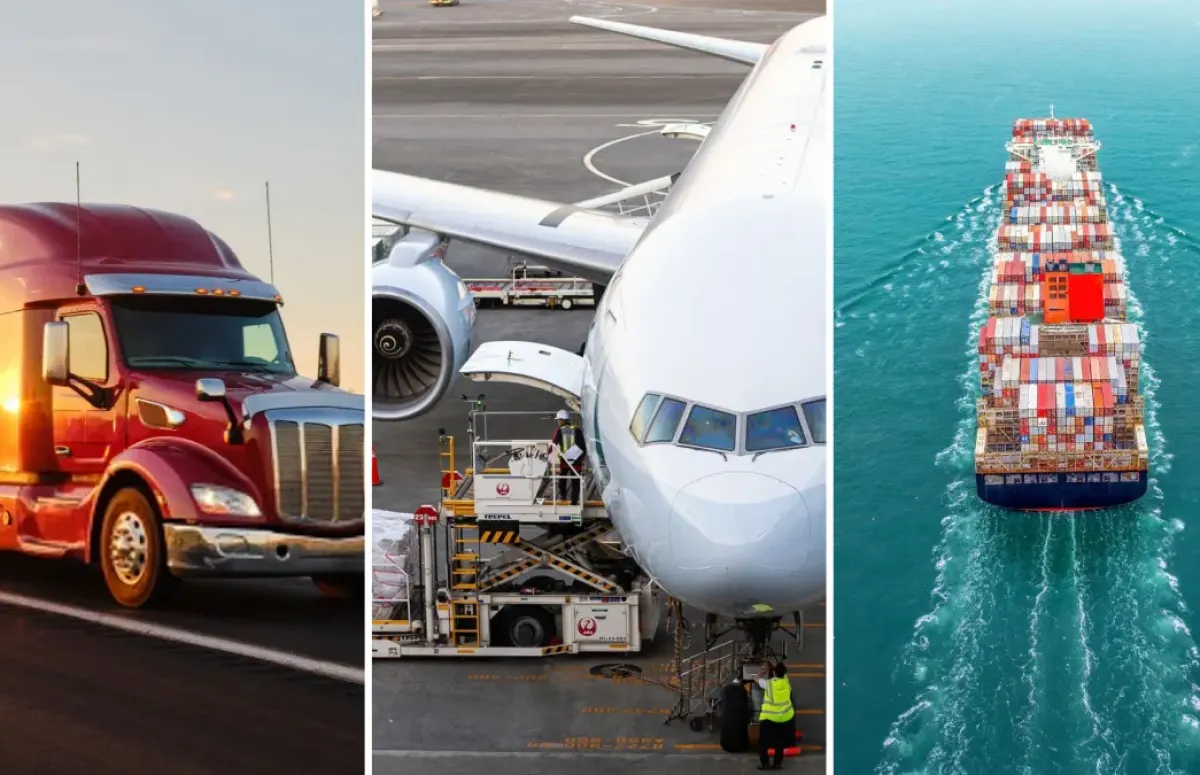
Because no single transport mode can accommodate every oversized shipment, heavy and bulky cargo typically moves via a combination of methods — a model known as multimodal transport.
Road Transport
Road transport is the most common method for the first and last mile of any heavy cargo movement. Specialized vehicles include:
- Lowbed (lowboy) trailers: Low-slung platforms designed to reduce the overall height of tall loads
- Modular trailers (SPMT — Self-Propelled Modular Transporters): Computer-controlled multi-axle platforms that can carry thousands of tonnes and navigate tight turns
- Flatbed trailers: Used for moderately oversized loads that do not require extreme height reduction
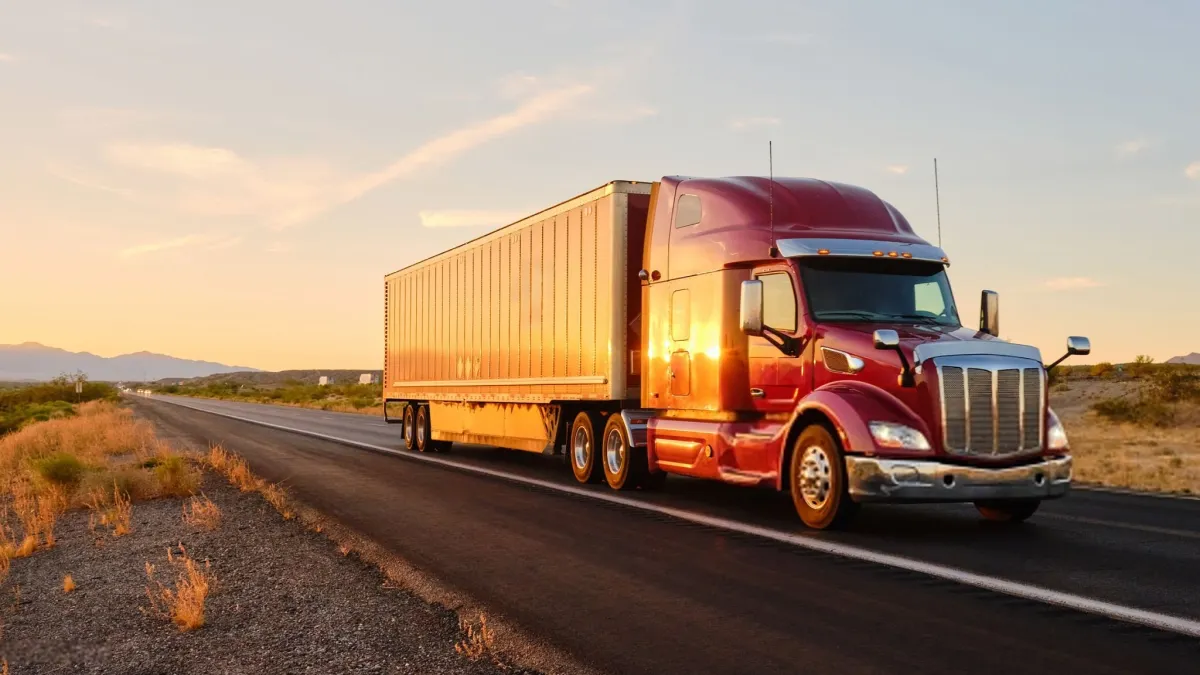
Road transport of heavy cargo requires advance route surveys to identify height restrictions, bridge load limits, overhead cables, and narrow passages. Local authority permits are mandatory, and police escorts or pilot vehicles are often required.
Sea Freight
For international movements, sea freight is the primary solution. Several vessel types are purpose-built for heavy and bulky cargo:
| Vessel Type | Best Use |
|---|---|
| Heavy lift vessels | Single pieces of extreme weight; offshore structures |
| Semi-submersible vessels | Ultra-large cargo; offshore platforms and rigs |
| Breakbulk vessels | General oversized cargo loaded individually |
| RoRo vessels | Wheeled and tracked cargo |
| Flat rack / open top containers | OOG cargo within manageable dimensions |
In 2025, significant new capacity entered the heavy-lift vessel market. In December 2025, Shanghai Zhenhua Heavy Industries (ZPMC) began construction of the Zhenhua 39, a 50,000-DWT heavy-lift deck carrier designed specifically for oversized industrial equipment including offshore wind components and large infrastructure parts.
Rail Transport
Rail is particularly suited to inland movements of very heavy individual components — such as large transformers or turbine parts — when road access is limited or road weight restrictions prohibit overland movement. Cargo may be transported on standard flatcar wagons, specialized depressed-center cars, or heavy-duty multi-axle platforms.
Air Freight
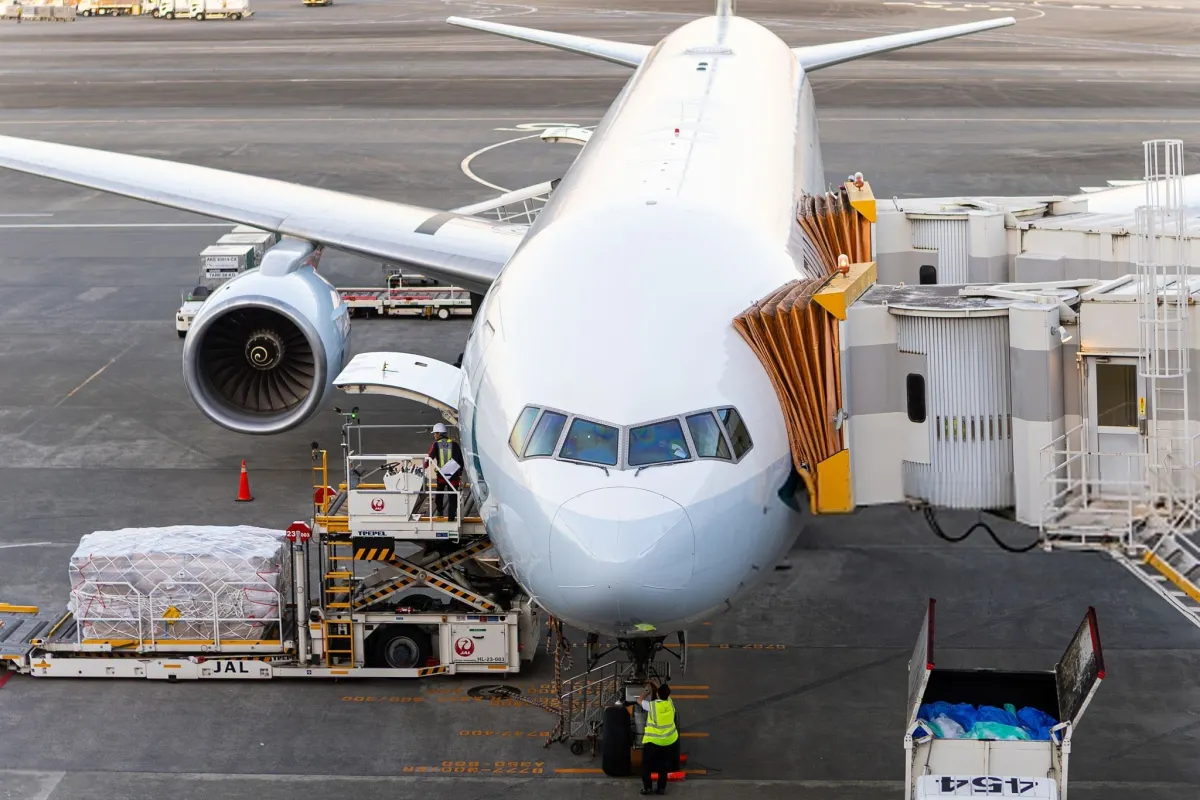
Air freight is reserved for urgent, high-value, or time-critical heavy cargo components. Purpose-built freighter aircraft including large-format cargo planes are capable of handling oversized items. Given its high cost, air freight is used only when transit time is critical.
Key Industries That Rely on Heavy Cargo Logistics
Energy and Power Generation
The energy transition is one of the primary growth drivers for heavy cargo logistics. Offshore wind farms require the transport of increasingly large monopiles, nacelles, and rotor blades — components that continue to grow in size as turbine technology advances. The heavy-lift and project cargo maritime transportation market is projected to grow at a 4.0% compound annual growth rate from 2025 to 2035, driven in large part by offshore wind and infrastructure investment in the Middle East, Asia-Pacific, and Africa.
Oil and gas projects similarly depend on heavy lift logistics for subsea production systems, floating production units, and large process modules.
Construction and Infrastructure
Major public and private infrastructure projects — power plants, bridges, airports, railways, seaports — require the transport of components that cannot be manufactured on-site. Governments across Asia-Pacific, the Middle East, and Africa are investing heavily in mega-infrastructure initiatives, generating sustained demand for project cargo solutions.
Mining
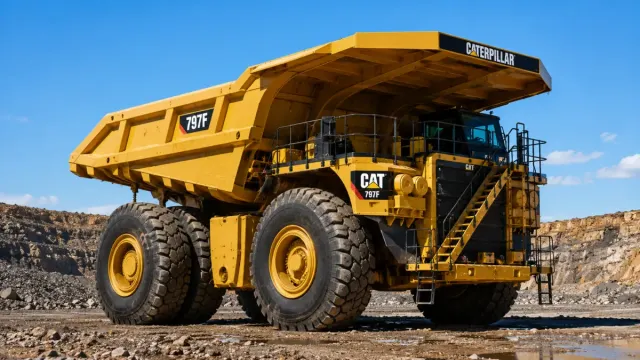
Large-scale mining operations involve some of the heaviest single cargo items in existence, including giant mining shovels, conveyor frames, and mineral processing equipment. Remote mine sites often present additional challenges due to limited road infrastructure.
Defense and Aerospace
Military equipment and aerospace components require heavy cargo expertise combined with heightened security coordination and compliance with export control regulations.
Specialized Equipment and Handling
Transporting heavy or bulky cargo requires engineering-grade equipment at every stage:
- Hydraulic gantry cranes and crawler cranes: For lifting extreme weights at port or on-site
- SPMT modular transporters: For moving large loads across short distances with precision
- Lifting frames and cradles: Custom-engineered support structures designed around the specific shape of each cargo piece
- Seafastening systems: Chains, brackets, and welded restraints used to secure cargo on vessel decks during transit
- Load-spreading mats and pads: To distribute weight evenly and protect road and port surfaces
Regulatory and Permit Requirements
Every heavy or bulky cargo movement involves a layer of regulatory compliance that varies by country, region, and transport mode:
- Oversize load permits: Required in virtually every jurisdiction for road transport of loads exceeding standard legal dimensions
- Bridge and road load studies: Engineering assessments confirming that infrastructure can bear the load
- Port authority approvals: For non-standard vessel calls or use of specialized port equipment
- Customs and export documentation: Including commodity classifications, shipping specifications, and certificates of origin
- Insurance: Given the high value and irreplaceable nature of many heavy cargo items, specialized freight insurance covering total loss and damage is essential
Challenges in Heavy and Bulky Cargo Logistics
Route Complexity
Planning a viable route for an oversized load requires detailed survey work that accounts for bridge clearances, road surface load limits, overhead obstructions, turning radii, and populated areas. A single route restriction can require a detour of hundreds of kilometers.
Port Limitations
Not all ports have the crane capacity, berth depth, or yard space to handle extremely large or heavy cargo. Port selection is a critical planning step for international shipments.
Weather and Environmental Conditions
Severe weather can halt heavy cargo operations at sea or on land. Wave height limits, wind speed restrictions, and seasonal considerations must be incorporated into scheduling.
Coordination Complexity
Project cargo often involves dozens of vendors, contractors, transport providers, and government bodies across multiple countries. Coordination failures at any point can cause costly delays.
Cost Calculation
Unlike standard freight, heavy and bulky cargo costs are calculated based on a combination of actual weight, dimensional weight, special equipment requirements, permit fees, insurance, and the unique characteristics of each shipment. There is no standard rate — each movement is individually priced.
Comparison: Heavy Cargo vs. Related Freight Categories
| Category | Weight | Size | Primary Challenge | Typical Equipment |
|---|---|---|---|---|
| Heavy lift cargo | Very high (hundreds of tonnes+) | Often oversized | Weight limits and crane capacity | Heavy lift vessels, SPMTs |
| Out of gauge (OOG) | Variable | Exceeds container dimensions | Container incompatibility | Flat rack, open top, breakbulk |
| Project cargo | Variable | Variable | Coordination across multiple shipments | Multi-modal combination |
| Breakbulk | Variable | Too large for containers | Individual loading and stowage | Breakbulk vessels |
| Dry bulk | High (aggregate) | Unpackaged | Volume and flow management | Bulk carriers |
| General cargo | Standard | Standard | None specific | Standard containers |
Frequently Asked Questions (FAQ)
What is the difference between heavy lift cargo and project cargo?
Heavy lift cargo refers specifically to the transport of individual items that are exceptionally heavy or oversized. Project cargo refers to the coordinated movement of multiple shipments associated with a large industrial project. Many project cargo operations include heavy lift components.
What does «out of gauge» (OOG) mean in shipping?
Out of gauge describes cargo that exceeds the standard dimensions of a shipping container in height, width, or length. OOG cargo requires specialized container equipment such as flat racks or open tops, or must be shipped via breakbulk vessels.
What permits are required for transporting oversized cargo by road?
Requirements vary by country and region, but typically include oversize load permits from the relevant transport authority, structural assessments of bridges and roads on the planned route, and arrangements for police escorts or pilot vehicles.
What vessels are used for heavy lift cargo at sea?
The main vessel types include heavy lift ships, semi-submersible vessels, breakbulk carriers, and roll-on/roll-off (RoRo) vessels. The choice depends on the weight, dimensions, and destination of the cargo.
How is the cost of heavy or bulky cargo calculated?
There is no standard rate. Costs are based on a combination of actual weight, dimensional weight, the specialized equipment required, permit fees, route surveys, port handling, and insurance. Each shipment is individually assessed and priced.
Which industries use heavy lift logistics most frequently?
The energy sector (especially offshore wind and oil and gas), construction, mining, defense, and aerospace industries are the largest users of heavy and bulky cargo logistics services.
What is a semi-submersible vessel?
A semi-submersible vessel is a specialized heavy transport ship that can ballast down (partially submerge) to allow extremely large or tall cargo to float over its deck, then de-ballast to lift the cargo out of the water. These vessels are used for offshore oil platforms, large yachts, and ultra-heavy industrial structures.