
On extremely hot summer days, many homeowners notice that their air conditioner seems to run constantly while indoor temperatures remain stubbornly high. In many cases, the issue is not a malfunctioning AC system but the intense heat surrounding the outdoor condenser unit. When outdoor temperatures soar, the air conditioner must work much harder to release heat, reducing efficiency and increasing electricity consumption.
This situation is common in cities with hot, dry climates where individual outdoor AC units are mounted on houses and apartment buildings. Examples can be found in places such as Phoenix in the United States, Riyadh in Saudi Arabia, Dubai in the United Arab Emirates, Perth in Australia, and Seville in Spain. During peak summer afternoons, outdoor temperatures can become so high that AC systems struggle to operate at their best.
Why Air Conditioners Lose Efficiency in Extreme Heat
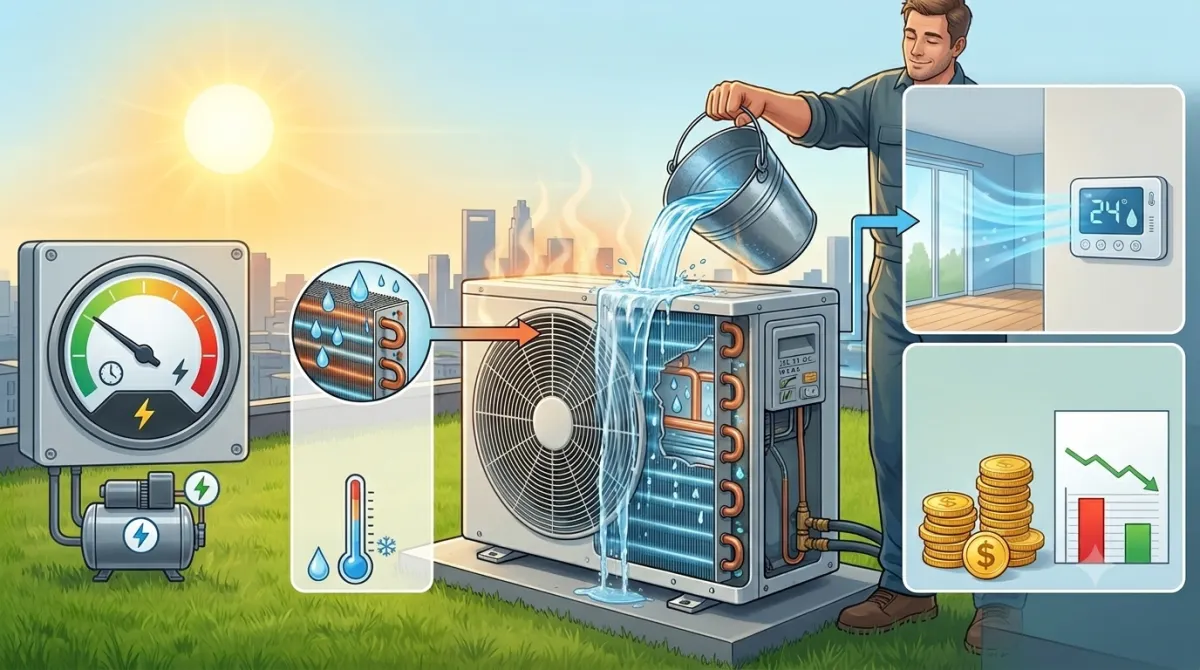
An air conditioner removes heat from inside a building and releases it outdoors through the condenser unit. When the outside air is already extremely hot, the temperature difference between the condenser coils and the surrounding air becomes smaller. As a result, heat transfer slows down, cooling performance drops, and the system consumes more energy to maintain the desired indoor temperature.
This is why an AC that performs well in the morning may appear less effective during the hottest hours of the day. The unit is not necessarily faulty—it is simply working against challenging environmental conditions.
Read More

How Water Can Temporarily Help
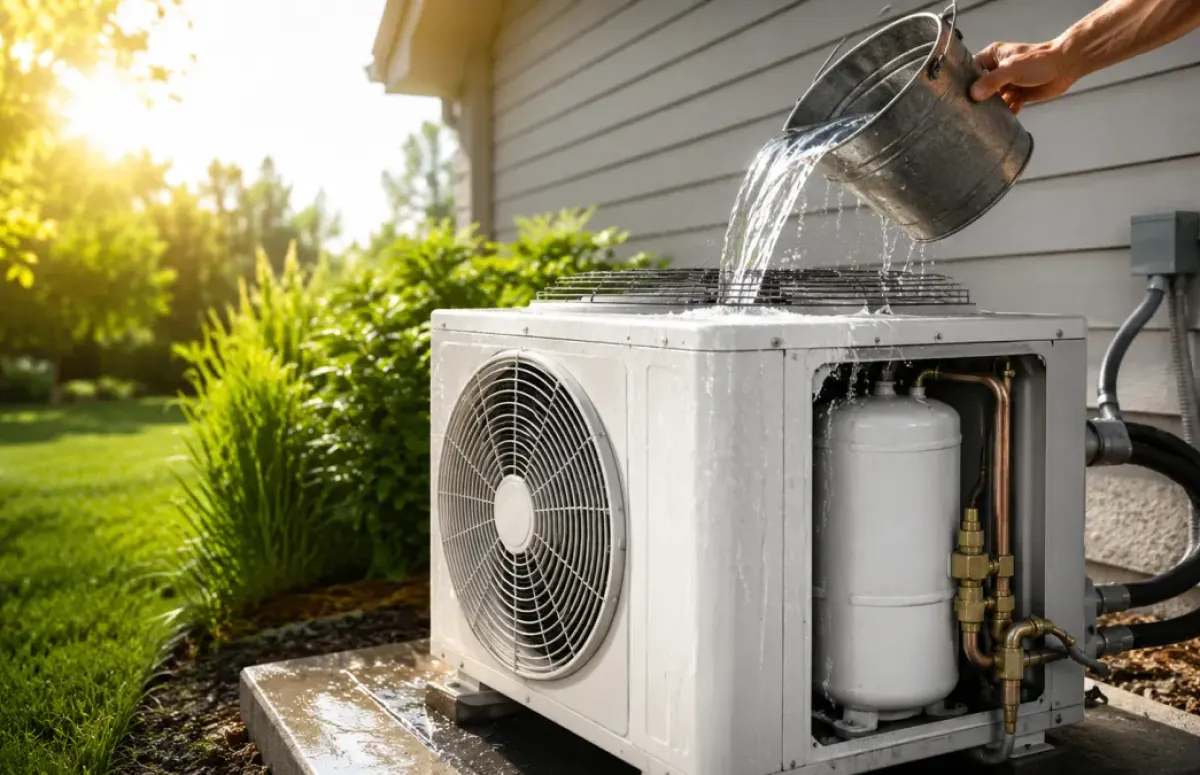
Pouring a bucket of water over the exterior coils of the outdoor condenser can create a temporary cooling effect. As the water evaporates, it absorbs heat from the metal surfaces and the surrounding air. This process lowers the temperature around the condenser, helping it release heat more efficiently for a short period.
Many homeowners report that cooling performance improves for several minutes after the condenser is cooled with water. In dry climates, where evaporation happens quickly, the effect can be more noticeable. In humid regions, however, the benefit is usually smaller because moisture already saturates the air, reducing the rate of evaporation.
It is important to understand that this is only a temporary measure. Once the water evaporates, the condenser returns to operating in the same hot conditions as before.
How to Do It Safely
The outdoor condenser is designed to withstand rain and normal weather exposure, but caution is still necessary.
- Turn the air conditioner off completely before applying water.
- Use a bucket or a garden hose with a gentle spray setting.
- Avoid pressure washers or powerful water jets.
- Never spray directly into electrical compartments or exposed wiring.
- Do not bend the delicate aluminum fins, as restricted airflow can reduce efficiency.
A gentle rinse can help remove dust and cool the condenser surface without causing damage. For long-term performance, regular maintenance and keeping the condenser clean remain far more effective than any temporary cooling trick.