

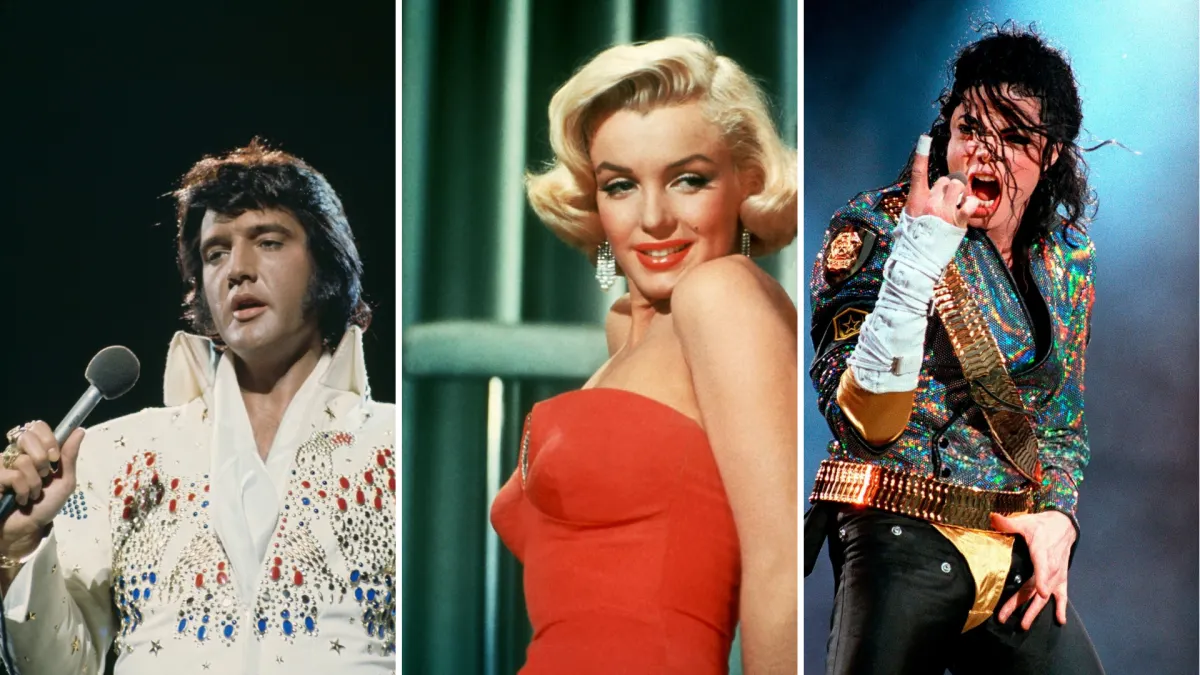
They are no longer alive. But their names, faces, and catalogues generate hundreds of millions of dollars every year — sometimes more than they ever earned while living. Welcome to the posthumous brand economy, one of the most unusual and rapidly growing segments of global intellectual property business.
Forbes has tracked the earnings of deceased celebrity estates since 2001. In the quarter-century since, a clear picture has emerged: death is not the end of a brand — in many cases, it is the beginning of its most profitable chapter.
How Much Do Dead Celebrities Actually Earn?
In 2024 alone, the eight highest-earning deceased celebrities combined to generate $1.1 billion in revenue. That figure is not a historical total — it represents a single year of posthumous income.
The leader by an enormous margin is Michael Jackson. His estate earned $600 million in 2024, largely driven by a court-approved sale of a 50% stake in his publishing and master recording catalogues to Sony. Since his death in June 2009, Jackson's estate has accumulated an estimated $3.5 billion in total earnings — a number that dwarfs every other deceased celebrity on record.
As one high-profile estate attorney told Forbes: «When it comes to estate earnings… It's MJ, then an enormous canyon, then everybody else.»
The Top Three: A Comparative Analysis
Michael Jackson — $3.5 Billion Since Death
Michael Jackson died on June 25, 2009, at age 50. Within months, his estate was generating revenue at a pace that surprised even entertainment industry insiders.
The financial engine behind Jackson's posthumous wealth is multi-layered:
- Music catalogue ownership: Jackson held his own publishing rights and master recordings. In 2024, a 50% stake in these assets was sold to Sony for approximately $600 million — with the estate retaining rights to global royalties on the remaining 50%.
- ATV catalogue: Jackson owned a 50% stake in the Sony/ATV publishing catalogue, which includes hundreds of Beatles compositions. In 2016, the estate sold that stake for $750 million.
- Live entertainment: The Cirque du Soleil residency Michael Jackson ONE has been running at Mandalay Bay in Las Vegas since 2013. The Broadway production MJ: The Musical generated over $149 million in its first two years on stage.
- Film: The posthumous concert film This Is It (2009) grossed $267 million at the global box office.
In 2025, Jackson topped Forbes' list again with $105 million in annual earnings — without any blockbuster catalogue deal, simply from ongoing royalties, licensing, and entertainment income.
Elvis Presley — $1.2 Billion Since 2001
Elvis Presley died in August 1977 — more than three decades before Forbes began tracking posthumous earnings. Yet he appeared on the very first Forbes list in 2001 and has remained on every edition since, accumulating over $1.2 billion in tracked earnings over 25 years.
Key revenue streams for the Presley estate include:
- Graceland tourism: The Memphis mansion attracts more than 500,000 visitors annually and is one of the five most visited home tours in the United States. The broader Presley estate — including Graceland, brand licensing, and entertainment partnerships — is valued at an estimated $400–500 million as of late 2025.
- Music catalogue: Publishing royalties from Presley's song catalogue average approximately $12 million per year, according to Billboard estimates.
- Brand licensing: In 2013, Authentic Brands Group (ABG) acquired Elvis's intellectual property rights, managing global licensing of his name, image, and likeness across merchandise, fashion, hospitality, and media.
- The 2022 Baz Luhrmann biopic: The Elvis film drove a major spike in estate earnings, pushing annual income to $50 million in 2024 and $110 million in 2023.
By 2025, annual earnings had normalized to $17 million, reflecting the typical post-film cycle pattern common to celebrity estate economics.
Marilyn Monroe — $13–15 Million Annually
Marilyn Monroe died in August 1962. She left behind a net worth of approximately $1.6 million — a fraction of what a single Warhol painting of her face would fetch six decades later. (Andy Warhol's Shot Sage Blue Marilyn sold at Christie's in May 2022 for $195 million, the most expensive American artwork ever auctioned.)
Monroe's posthumous brand story is among the most legally complex in entertainment history:
- In her will, Monroe left 75% of her intellectual property to her acting coach Lee Strasberg. After his death in 1982, his wife Anna Strasberg inherited the stake, established Marilyn Monroe LLC, and began aggressive global licensing — generating over $7.5 million in just four years between 1996 and 2000.
- In 2011, Anna Strasberg sold her 75% stake to Authentic Brands Group for an estimated $20–30 million.
- Today, ABG licenses the Monroe image across more than 40 product categories — including beauty, fashion, advertising, and film — generating an estimated $13–15 million annually.
Monroe's likeness has appeared posthumously in campaigns for Chanel, Dior, Snickers, Chrysler, and Coca-Cola. The brand's endurance is built not on music catalogue but on pure iconographic power: a face, a silhouette, a signature that remains among the most recognized on earth.
The Comparative Numbers at a Glance
| Celebrity | Year of Death | Est. Total Posthumous Earnings | Annual Earnings (2025) | Primary Revenue Engine |
|---|---|---|---|---|
| Michael Jackson | 2009 | $3.5 billion | $105 million | Catalogue, Broadway, Las Vegas |
| Elvis Presley | 1977 | $1.2 billion (since 2001) | $17 million | Graceland tourism, licensing |
| Marilyn Monroe | 1962 | N/A (pre-tracking) | $13–15 million | Image licensing (ABG) |
| Freddie Mercury | 1991 | N/A | $250 million (2024 peak) | Queen catalogue sale to Sony |
| The Notorious B.I.G. | 1997 | N/A | $80 million (2025) | Music catalogue, merchandising |
| Bob Marley | 1981 | N/A | $13 million | House of Marley brand, streaming |
What Makes a Posthumous Brand Durable?
Not every celebrity estate generates lasting income. The ones that do share identifiable structural characteristics:
1. Catalogue ownership Artists who owned their master recordings and publishing rights in life created the most valuable posthumous assets. Jackson's deliberate acquisition of the ATV catalogue — including Beatles songs — and retention of his own masters is the single largest factor in his post-death dominance.
2. A physical landmark Graceland is not just a museum — it is an anchor for an entire tourism ecosystem in Memphis, Tennessee. Physical sites create recurring foot traffic that sustains brand relevance across generations without requiring new content.
3. Corporate brand management The transition from personal estate to professional brand management is almost always a turning point. Authentic Brands Group, which now manages Monroe, Elvis, and Muhammad Ali among others, brings systematic licensing infrastructure that individual heirs rarely replicate alone.
4. Cultural universality Brands that transcend a single era, nationality, or genre perform best over time. Monroe's face sells products in markets where her films were never widely seen. Jackson's music crosses every language barrier. These icons function more like logos than individuals.
5. Periodic reactivation Films, musicals, anniversary campaigns, and auction events periodically spike awareness and revenue. The 2022 Elvis biopic, the MJ Broadway musical, and the Christie's Warhol auction all functioned as reactivation events that refreshed brand relevance for new audiences.
The Role of Authentic Brands Group
No single company has done more to institutionalize posthumous brand management than Authentic Brands Group (ABG). Founded in 2010, ABG now manages the estates of Marilyn Monroe, Elvis Presley, Muhammad Ali, David Bowie, and dozens of other deceased figures alongside living celebrities and consumer brands.
The company's model is built on acquiring intellectual property rights — typically image, name, and likeness — and deploying them through global licensing networks across fashion, beauty, entertainment, and hospitality. ABG's own valuation reached approximately $4–4.5 billion by 2019, with BlackRock acquiring a 30% stake.
The firm's success has formalized what was previously an ad hoc process: families making licensing decisions without industry expertise, inconsistent enforcement of image rights, and underutilized brand equity. ABG turned celebrity legacy into a repeatable financial product.
A New Asset Class
The posthumous brand economy represents something genuinely new in the history of intellectual property: a category of asset that appreciates rather than depreciates after the death of its source. Traditional wisdom held that a celebrity's commercial value peaked in their lifetime. The evidence from Forbes' 25 years of tracking suggests otherwise.
What the data describes is not nostalgia monetization — it is a mature asset class with valuations, acquisition markets, licensing structures, legal jurisdictions, and professional management firms. The question of who owns a dead person's face, voice, and name has become one of the more consequential questions in global intellectual property law.
Jackson, Elvis, and Monroe did not design this system. But they became its most instructive examples — proof that, with the right assets and the right management, a brand can outlive a person by decades, and generate wealth on a scale its original owner never approached in life.
Who is the highest-earning dead celebrity of all time?
Michael Jackson, whose estate has earned an estimated $3.5 billion since his death in 2009 — more than any other deceased celebrity tracked by Forbes since 2001.
How much does Marilyn Monroe's estate earn per year?
Authentic Brands Group, which manages Monroe's name, image, and likeness, reports annual licensing revenue of approximately $13–15 million across more than 40 product categories.
Who owns Elvis Presley's intellectual property?
Authentic Brands Group acquired Elvis's intellectual property rights in 2013 and manages global licensing. Graceland itself is owned by The Promenade Trust under trustee Riley Keough, Elvis's granddaughter.
What makes a posthumous celebrity brand valuable?
The most durable factors are catalogue ownership (master recordings and publishing rights), a physical landmark, professional brand management, and cultural universality that allows the brand to remain relevant across generations and geographies.
How does Forbes calculate posthumous celebrity earnings?
Forbes tracks earnings from music royalties, merchandise, licensing deals, catalogue sales, film and theatrical productions, and real estate tourism, using a combination of public filings, industry sources, and estate disclosures. The list has been published annually since 2001.
Can a celebrity's estate earnings exceed what they earned in life?
Yes. Michael Jackson earned approximately $500 million during his lifetime; his estate has earned seven times that since his death. Marilyn Monroe earned the equivalent of roughly $16 million in inflation-adjusted terms across her career; her image now generates nearly that amount annually.