
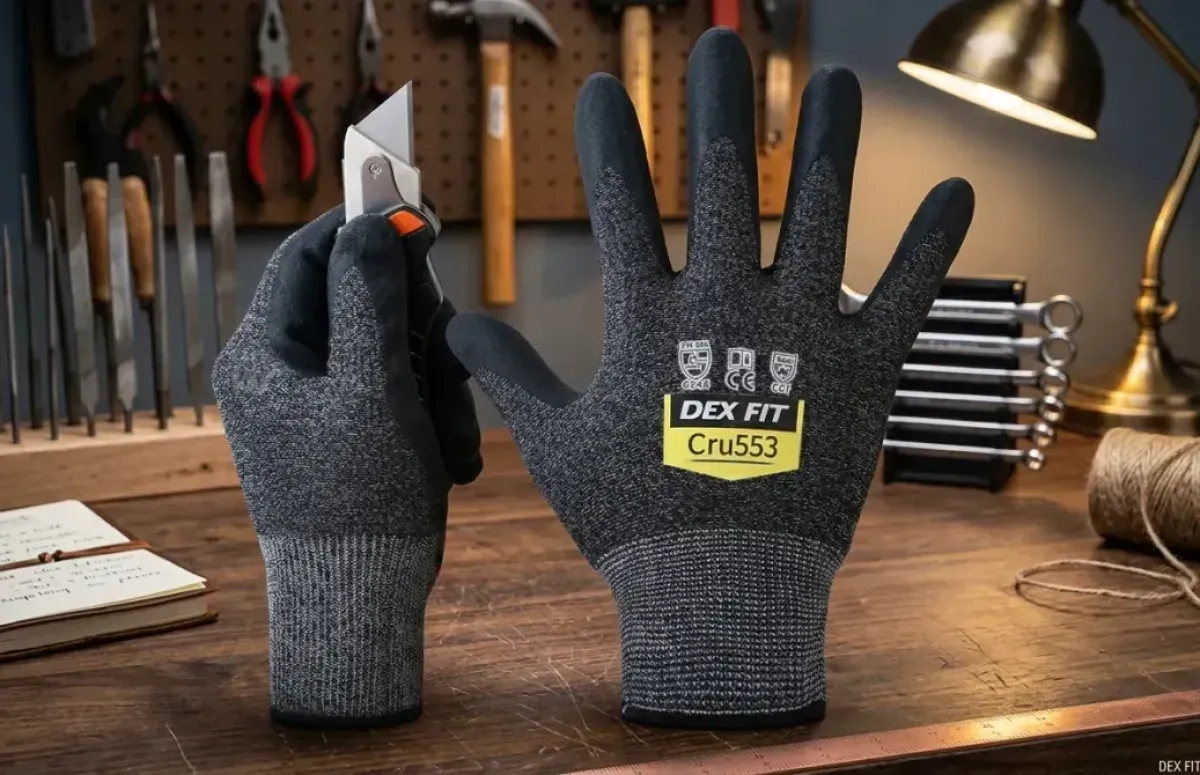
Next-generation cut-resistant and acid-proof gloves are advanced pieces of personal protective equipment. In these products, the term «nano» refers to two distinct engineering breakthroughs:
- Nano-Scale Fiber Engineering: Protective microparticles are embedded directly into the polymer chain during manufacturing, rather than being applied as a surface coating.
- Nano-Thin Coatings: Micron-scale chemical barrier layers block corrosive substances while maintaining maximum tactile sensitivity and dexterity.
Core Technology & Molecular Architecture
1. UHMWPE and Dyneema
The primary structural material in high-performance gloves is Ultra-High-Molecular-Weight Polyethylene (UHMWPE), commercially known as Dyneema. Its molecular chains extend up to 2 to 6 million molecular weight units. This ultra-long structure creates exceptionally strong intermolecular bonds, delivering an extraordinary strength-to-weight ratio that is significantly stronger than steel.
2. Dyneema Diamond 3.0 Technology
In the latest generation of this technology, engineered microparticles are spun directly into the polymer during extrusion.
- The Advantage: This eliminates the need for traditional reinforcement materials like fiberglass or steel wire, which frequently break and cause skin irritation.
- Performance: It makes gloves up to 40% lighter and delivers 6 times higher cut resistance than generic HPPE fibers. Additionally, its high thermal conductivity draws heat away from the skin to prevent sweat accumulation.
3. The Multi-Layer Chemical Barrier
To protect against sharp edges and corrosive liquids simultaneously, a liquid-impervious polymeric shell is bonded to the fiber liner using a layered construction:
- Inner Liner: The UHMWPE/Dyneema structure provides core cut resistance.
- Bonding Layer: A soft nitrile or water-based polyurethane emulsion penetrates the weave to anchor the layers while maintaining flexibility.
- Outer Shell: A cured nitrile layer blocks chemical penetration from acids, oils, and solvents.
Read More

International Performance Standards
Chemical Resistance: EN 374
Chemical protection is certified under the European EN 374 standard, which tests gloves against aggressive chemicals like 96% sulfuric acid and 65% nitric acid. Premium gloves achieve a Type A certification, meaning they successfully block at least 8 standardized chemicals.
Cut Resistance: The ANSI System
The ANSI/ISEA 105 standard rates cut resistance on a scale from A1 to A9 based on the grams of force required for a blade to cut through the material:
| ANSI Level | Force Threshold | Typical Applications |
| A1 – A3 | Light | Food preparation, packaging, general handling |
| A4 – A6 | Moderate | Glass handling, sheet metal fabrication, HVAC, construction |
| A7 – A8 | High | Automotive assembly, heavy manufacturing, meat processing |
| A9 | Maximum ($6,000+$ g) | Extreme industrial hazards, heavy-duty blade exposure |
At the high-performance end, the economics are stark: A9-level gloves can cost up to 300% more than standard alternatives. This pricing premium limits adoption among smaller enterprises — a challenge the industry is actively working to address through manufacturing advances that reduce cost without sacrificing protection level.
Material Comparison: What Each Fiber Offers
| Material | Cut Resistance | Weight | Dexterity | Chemical Resistance | Relative Cost |
|---|---|---|---|---|---|
| Steel Mesh | Very High | Heavy | Low | None | Moderate |
| Kevlar / Aramid | High | Moderate | Moderate | Partial (heat) | Moderate |
| Standard HPPE | Moderate | Light | High | None | Low |
| Dyneema Diamond 3.0 | Very High | Very Light | High | None (needs coating) | High |
| Nitrile-Coated UHMWPE | High–Very High | Light–Moderate | Moderate–High | High (acid/chemical) | High |
| Graphene-Infused (emerging) | Very High | Light | High | Under development | Very High |
What is the difference between cut-resistant and cut-proof gloves?
No glove is fully cut-proof. Cut-resistant gloves are rated on the ANSI A1–A9 scale based on the force required to cut through the material under standardized test conditions. Higher levels offer greater protection but cannot guarantee complete cut prevention under all circumstances.
Can one glove protect against both cuts and acid?
Yes. Combination gloves pair a cut-resistant fiber liner (UHMWPE or Dyneema) with an acid- and chemical-resistant outer coating, typically nitrile rubber certified under EN 374 standards.
What does Dyneema Diamond Technology actually do differently?
It embeds specially engineered microparticles directly into the polymer fiber at the manufacturing stage — not as a surface coating — more than doubling the cut resistance of the yarn compared to standard Dyneema fiber, while maintaining a thinner, lighter glove profile.
What ANSI level do I need for kitchen or food prep work?
For professional food preparation involving sharp knives or mandolin slicers, ANSI A4–A6 is the recommended range. Home kitchen use may be adequately protected at A3–A4.
Are these gloves washable and reusable?
Most high-quality HPPE and Dyneema gloves are machine-washable and reusable. Nitrile-coated models should be air-dried rather than tumble-dried to preserve the chemical barrier layer.
How long do cut-resistant gloves last?
Service life depends on the application intensity and washing frequency. Under regular industrial use, most manufacturers recommend replacing gloves every three to six months or whenever visible degradation of the fiber structure or coating is observed.
Why do these gloves cost $50–$150 when standard work gloves cost $5?
The cost reflects the engineered fiber technology (UHMWPE production, Dyneema Diamond microparticle integration), multi-layer construction, laboratory certification testing, and the significant reduction in workplace hand injury costs they deliver. High-cut-level gloves (A7–A9) can cost three times more than standard alternatives but represent a fraction of the cost of a single hand laceration requiring medical treatment.