
NASA's New Small Satellites Are Testing Technologies for the Future of Space
A spacecraft does not have to be enormous to carry out important scientific work. NASA's latest small-satellite missions are a good example of how compact spacecraft are being used to test technologies that could influence future space exploration.
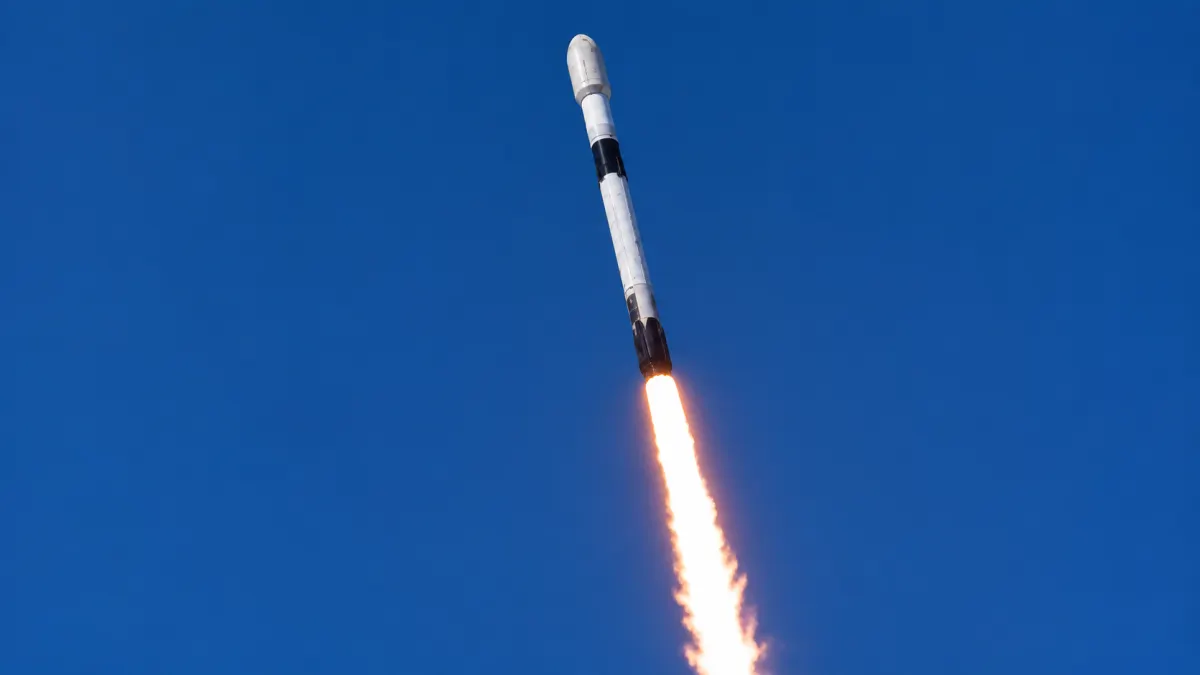
On October 1, three NASA-supported spacecraft launched aboard a SpaceX Falcon 9 from Vandenberg Space Force Base in California as part of the Transporter-18 rideshare mission. The missions have three very different objectives: testing propulsion, studying the movement of radiation and dust through galaxies, and inspecting inactive satellites in orbit.
Read More

One of the spacecraft, called ASCENT Propulsion Dual Mode CubeSat, will test two different propulsion systems using the same low-toxicity propellant. NASA says the system combines a chemical thruster for higher-power maneuvers with four electrospray thrusters designed for lower-power operations.
Another spacecraft, SPRITE, is designed for astrophysics. Although the CubeSat is roughly the size of a shoebox, it carries sensitive instruments capable of detecting a range of ultraviolet light that cannot be observed from the ground.
That capability could help scientists investigate how gas, dust and high-energy radiation move through galaxies. NASA also expects the mission to provide information about the early universe and the processes that allowed light to travel more freely through space.
The third mission addresses a problem much closer to Earth: what to do with inactive satellites.
The SSPICY mission will use an Otter spacecraft developed by Starfish Space to approach and inspect up to four inoperable satellites in low Earth orbit. Its technology includes autonomous navigation and computer vision designed to help the spacecraft safely approach objects that are no longer functioning.
This type of technology could become increasingly important as Earth's orbital environment becomes more crowded. Future spacecraft may need to inspect, repair or help remove objects that are no longer useful.
The missions also demonstrate why small satellites are becoming attractive research platforms. Commercial rideshare launches allow multiple spacecraft to share a rocket, reducing the barrier to putting experimental technology into orbit.
NASA's latest launch shows that the future of space technology may not depend only on bigger rockets and larger spacecraft. Some of the most useful experiments may come from small satellites testing very specific ideas.