
The Vanishing Giants of the Countryside
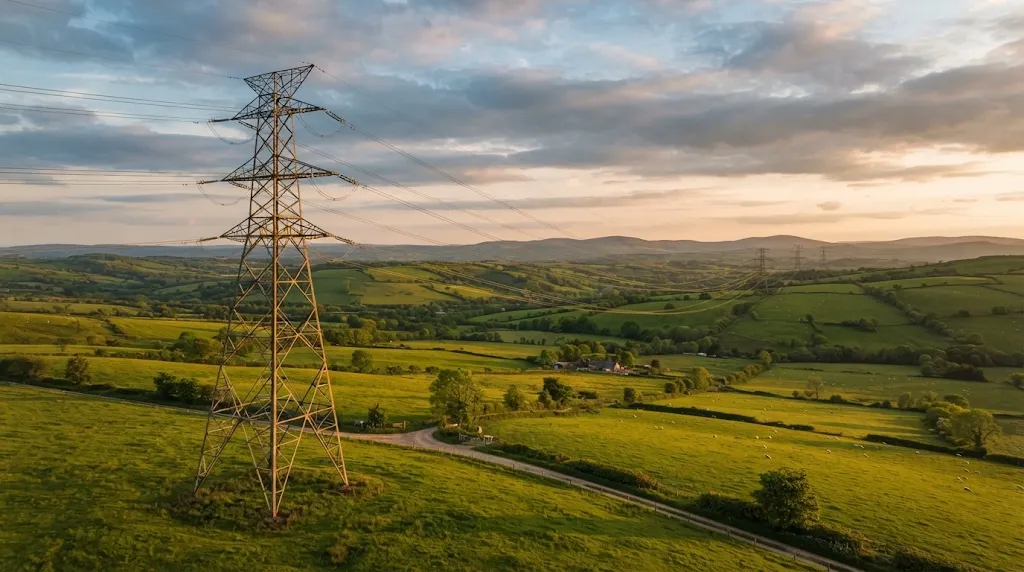
Take a drive through almost any rural valley or look out of a high-speed train window, and you will see them. Enormous steel lattices, towering hundreds of feet into the air, marching in endless straight lines across green pastures and forested hills. For nearly a century, these giant metal electricity pylons have been the quiet workhorses of modern civilization. They carry buzzing high-voltage power from remote generating stations straight into the bustling hearts of our cities.
Read More


Yet across Europe and North America, a quiet revolution is taking place that could soon erase these metal giants from the horizon forever. Governments and regional planning departments are increasingly passing strict policies to ban the construction of new overhead electricity towers. Instead, electrical grid operators are being instructed to do something that once sounded impossible: dig massive trenches and bury every single high-voltage wire directly beneath the earth.
At first glance, burying power cables seems like an obvious choice that everyone should celebrate. Overhead lines are widely considered an eyesore that ruins scenic rural landscapes and lowers neighborhood property values. During severe autumn storms and freezing winter blizzards, overhead lines can snap under the weight of ice or topple over when high winds strike. But beneath this simple visual cleanup sits a fascinating engineering puzzle that costs billions of dollars and pushes modern physics to its outer limits.
The Staggering Cost of Going Underground
To understand why energy companies did not simply bury all power lines decades ago, you only need to look at a utility construction budget. Hanging bare aluminum wires high up in the open air is extraordinarily cheap and mechanically straightforward. The surrounding air acts as a natural, free insulator that keeps electricity from jumping to the ground, while constant breezes cool the wires down as heavy electrical currents heat them up.
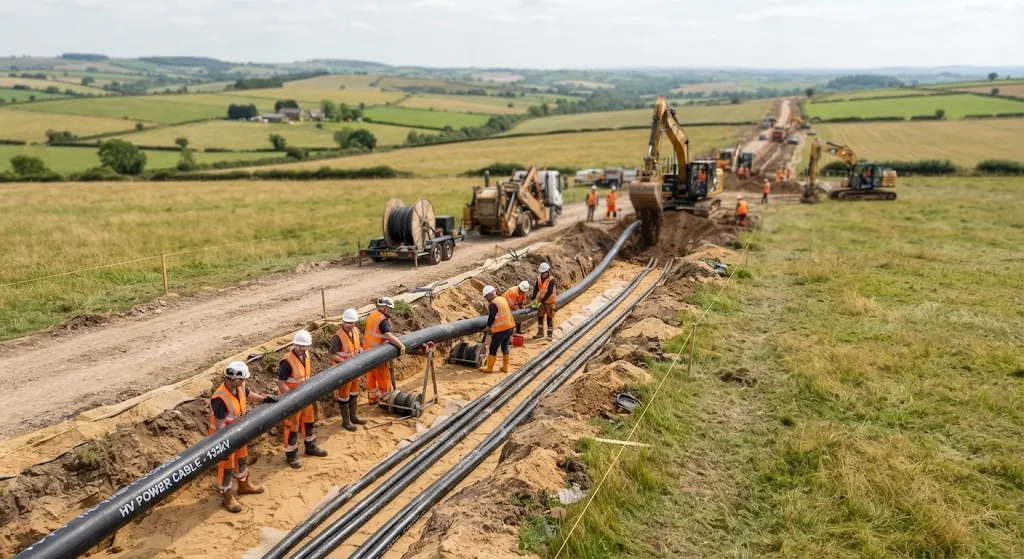
Once you decide to put high-voltage electricity underground, that free air cooling vanishes completely. Cables buried inside the earth must be wrapped in multiple thick layers of specialized plastic, synthetic rubber, and metallic water barriers to stop moisture from seeping inside. Because dirt traps heat like a heavy winter blanket, underground cables must be much thicker and spaced wide apart in deep gravel trenches so they do not melt their own insulation.
Recent infrastructure reviews reveal that laying high-voltage underground cables can cost anywhere from six to ten times more per mile than erecting a traditional metal tower line. When a major transmission corridor stretches for fifty or a hundred miles across rocky hills and rivers, that price difference adds hundreds of millions of dollars to the final bill. In most countries, every dollar spent on grid construction is eventually paid back through higher monthly electric bills for ordinary households.
Yet despite the eye-watering financial price tag, governments are deciding that the benefits outweigh the costs. The explosive growth of offshore wind farms, solar fields, and massive artificial intelligence computer centers requires a gigantic expansion of regional power capacity. In many communities, local residents and conservation groups have spent years fighting in court to block new steel pylons. Burying the wires underground is often the only way projects ever receive planning permission.
Surviving Extreme Weather and Wildfires
Beyond natural beauty and preserving open views, safety and climate resilience have become driving forces behind the push to tear down overhead lines. In dry, drought-prone regions like California and southern Europe, high-voltage overhead lines running through mountain canyons have sparked catastrophic forest fires when strong winds blew branches into active wires or snapped aging crossarms.
Burying cables beneath deep layers of soil and compacted gravel completely removes this danger. Underground power lines cannot ignite dry forest underbrush, and they cannot be knocked over by falling pine trees during violent midnight thunderstorms. In coastal areas where powerful hurricanes and tropical storms make landfall, communities powered by underground feeder lines often keep their lights on while surrounding neighborhoods suffer days of total darkness.
However, underground cables come with their own unique operational challenges that utility technicians know all too well. When an overhead wire snaps or an insulator cracks, a repair crew can drive along the road, spot the damage with simple binoculars, and hoist a repair basket into the air within an hour. Finding a microscopic insulation breakdown along an underground line buried five feet beneath concrete requires specialized radio-frequency sensors and heavy excavators to dig up the road.
What the Future Grid Means for Your Home
As old coal-fired generating plants close down and clean energy hubs move to remote coastlines and windy plateaus, the invisible web of power connecting our society is undergoing its most radical transformation since the days of Thomas Edison. Electrical engineers are developing next-generation superconducting cables that use liquid cooling to carry five times more current through a pipe no wider than a dinner plate.
For families living in quiet country villages and suburban neighborhoods, the disappearance of giant steel towers will mean clearer skies, protected wildlife corridors for migrating birds, and a countryside that looks much closer to its natural state. Decades from now, children looking at vintage photographs may wonder why anyone ever built giant metal skeletons across the hills just to keep the kitchen toaster running.
The journey to rebuild our power grid beneath our feet will not happen overnight, and it will require patience, smart engineering, and substantial public investment. But every mile of heavy wire laid beneath the grass brings us one step closer to an energy system that is both cleaner to look at and tough enough to withstand whatever extreme weather the future brings. Progress rarely moves in a straight line, but sometimes the best way to move forward is to build quietly underground.
Engineers are also exploring hybrid approaches to ease the transition between surface towers and underground conduits. In many coastal regions, transmission lines stay underground as they cross sensitive wetlands and nature preserves, before rising back onto low-profile composite poles along commercial highway corridors. This flexibility allows utilities to protect the most vulnerable ecosystems without forcing regional governments to double their long-term infrastructure debt.
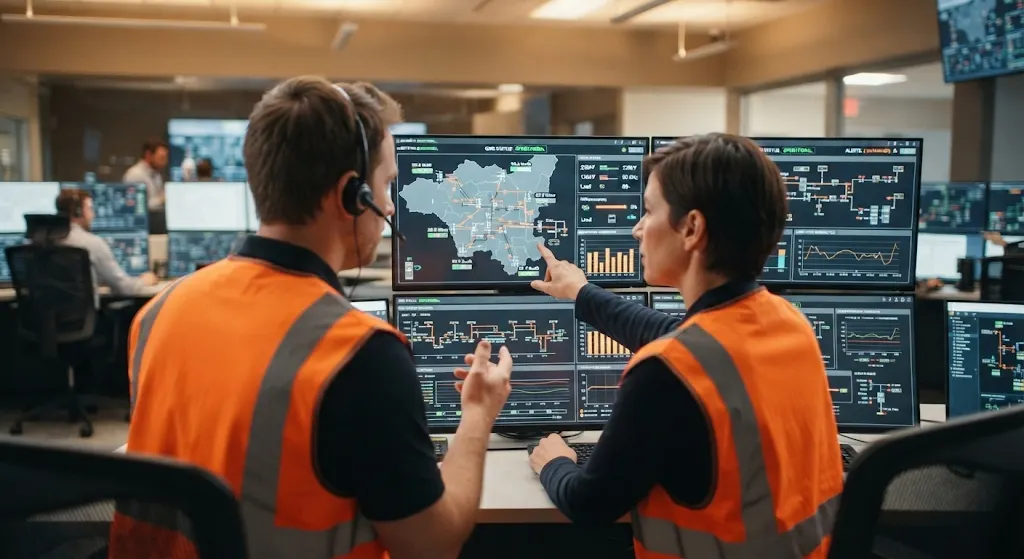
Every time a high-voltage underground link goes live, digital monitoring sensors embedded directly along the cable casing report real-time temperature and load data back to the central operations desk. If a sudden surge in consumer demand causes a subterranean segment to warm up, automated software immediately balances the load across alternative substations. This level of granular, minute-by-minute control ensures that the power grid operating silently beneath our lawns is not only invisible, but considerably more intelligent than the metal lattice towers it is slowly replacing.