
The Monday Morning Accident That Shattered the Laws of Nature
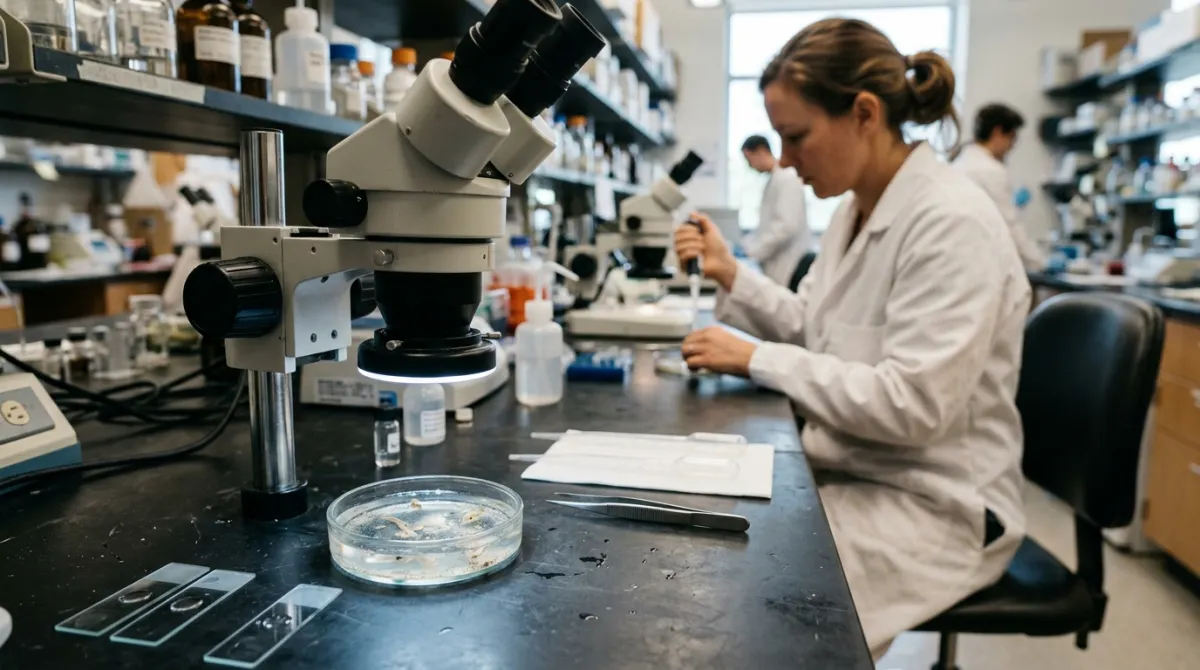
It is a quiet Monday morning in an Italian university laboratory in 1992. A young marine biologist walks up to an aquarium tank expecting to scoop out dead specimens after accidentally forgetting to feed them over a scorching weekend. Instead of finding lifeless remains floating on the water, he discovers something that should be biologically impossible. The adult creatures had not died. They had vanished, leaving behind tiny, healthy infant colonies budding across the glass.
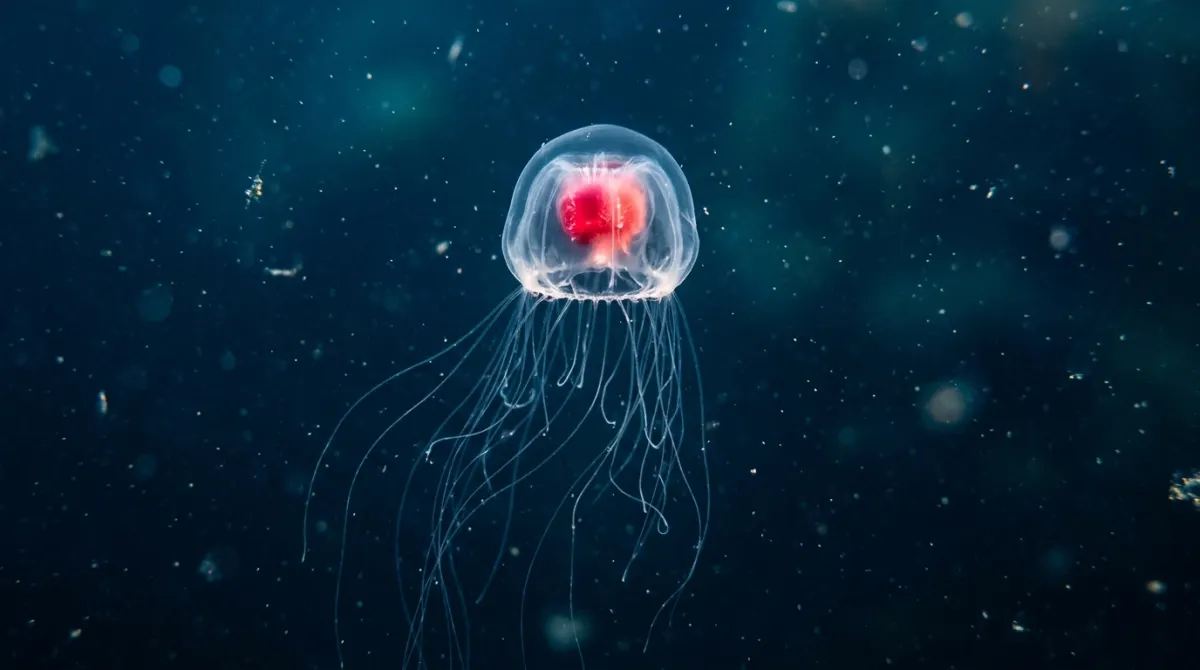
That creature was Turritopsis dohrnii, a translucent organism no larger than a pinky fingernail, now widely celebrated as the "immortal jellyfish." While every other known animal on Earth moves steadily along a one-way conveyor belt from birth to decay, this ocean dweller holds the unique ability to hit biological rewind. Whenever it faces starvation, physical trauma, or sudden temperature swings, it transforms its adult cells back into primeval stem cells and starts its entire life cycle over again from scratch.
Now, geneticists and cellular oncologists from Johns Hopkins to Texas A&M are mapping the creature's genetic code. Their ultimate goal is not science fiction or turning human octogenarians into babies. Instead, they want to pinpoint the precise molecular switch that triggers cellular rejuvenation to repair human heart attack scars, reverse nerve degeneration, and treat diseases of old age.
The Weekend Mistake That Broke the Rules of Biology
For centuries, biology treated ageing as an ironclad law: complex cells grow, mature, specialize, and eventually perish. Once an embryonic stem cell transforms into a beating heart muscle, a brain neuron, or skin tissue, it loses its flexibility. It remains locked in that specific role until cellular senescence sets in and the organism dies.
The immortal jellyfish quietly shattered that foundational assumption. Following that initial 1992 lab accident in Italy, marine biologist Stefano Piraino at the University of Salento began systematic tests. What he discovered sounded like pure science fiction. Under extreme stress, an adult bell-shaped jellyfish—known as a medusa—stops swimming and sinks straight to the sea floor.
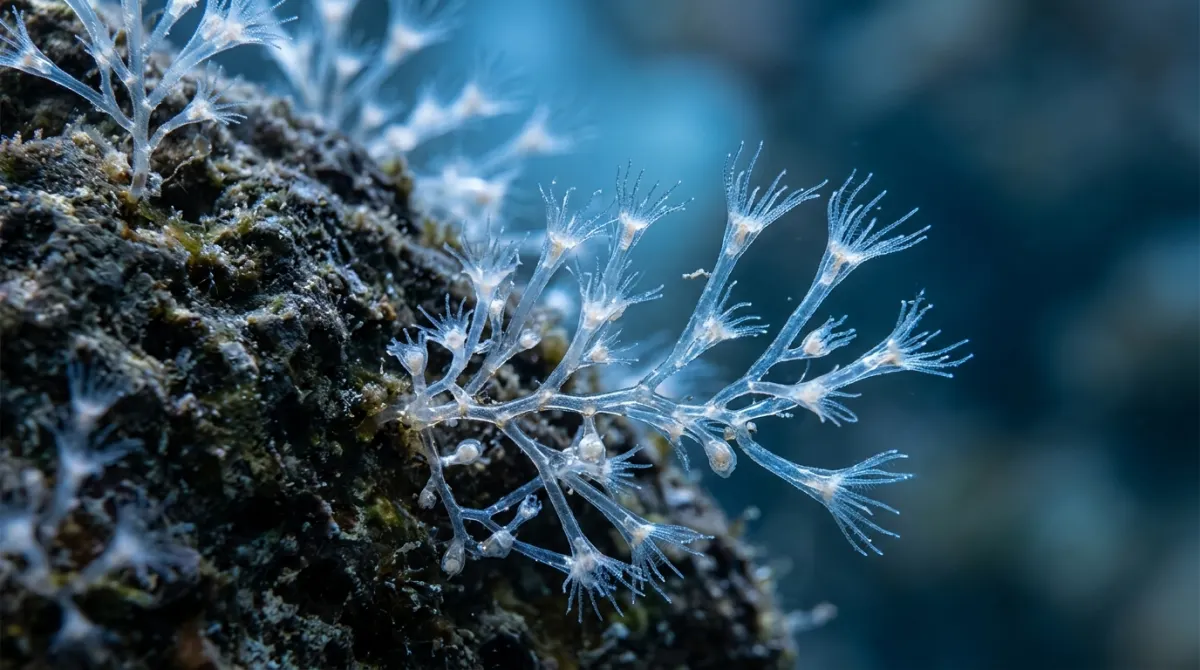
Within hours, its pulsing umbrella and stinging tentacles collapse into an unorganized clump of generic cells. Over the next forty-eight to seventy-two hours, that blob reorganizes itself into a polyp—the infant stalk stage that normally precedes adulthood. From that single rejuvenated polyp, a brand-new branching colony emerges, capable of sprouting hundreds of genetically identical, youthful jellyfish.
Transdifferentiation: How Cells Travel Backwards in Time
How does a creature with specialized muscles and nerves revert to an embryonic state? The answer lies in an extraordinarily rare biological process called transdifferentiation.
In typical animal regeneration—like a salamander regrowing an amputated limb—dormant cells at the wound site divide to reconstruct missing tissue. But Turritopsis dohrnii does something far more radical. Its mature muscle and nerve cells actively strip away their specialized identities, reverting into unspecialized stem-like cells. Those reprogrammed cells then re-specialize into whatever completely different tissues the new juvenile body requires.
It is the biological equivalent of dismantling an entire finished brick house, turning the fired bricks back into soft wet clay, and reshaping that clay into an entirely new foundation. Marine biologist Maria Miglietta of Texas A&M University at Galveston has subjected these creatures to astonishing extremes: cutting them in half, starving them, boiling water temperatures, and sudden salinity shocks. Time after time, the animals activate transdifferentiation and restart their life clock.
| Biological Trait | Standard Marine Organisms | Immortal Jellyfish (T. dohrnii) | Human Biology |
|---|---|---|---|
| Aging Trajectory | Strictly linear (Birth to Mortality) | Reversible biological loop | Linear progressive senescence |
| Cellular Plasticity | Limited localized scar formation | Complete systemic transdifferentiation | Strictly locked differentiated cells |
| Response to Lethal Stress | Systemic organ collapse | Reverts into juvenile polyp stalk | Irreversible fibrosis & necrosis |
| Maximum Theoretical Lifespan | Species-specific genetic lifespan | Potentially infinite cycles | ~120-year cellular threshold |
What Ocean Rejuvenation Teaches Human Medicine
Human beings will never transform into embryos and restart their lifespans from infancy. Yet at the tissue and organ level, unlocking the molecular triggers inside the jellyfish could revolutionize modern medicine.
Consider what happens during a severe heart attack or a stroke. Millions of specialized muscle or brain cells suffocate and die from lack of oxygen. The human body cannot regenerate these tissues; instead, it fills the damaged void with rigid, non-functioning scar tissue that permanently weakens heart pump efficiency or impairs cognitive function.
If physicians could safely trigger localized transdifferentiation, surrounding cells could temporarily revert, multiply, and transform directly into healthy new heart muscle or neural circuits. Researchers like Dr. Michael Koldobskiy at Johns Hopkins are examining the comparative epigenetics between Turritopsis dohrnii and mammalian cells. Understanding which genetic pathways silence aging markers and reactivate cellular repair could lead to therapies for conditions that currently have no cure:
- Cardiac repair: Coaxing post-infarction fibrous scar tissue into functioning cardiomyocytes that pump blood normally.
- Neurodegenerative reversal: Restoring lost neuronal connections in patients battling Alzheimer's disease or Parkinson's.
- Ocular regeneration: Reversing retinal pigment decay responsible for age-related macular blindness.
The Obstacles Standing in the Way
Translating marine wonders into human clinical trials remains an immense challenge. The primary obstacle is cancer. In human biology, cells that forget their specialized roles and multiply unchecked are the very definition of a malignant tumor. Nature tightly locks human cells into their designated roles precisely to prevent runaway oncogenesis.
Before any jellyfish-inspired therapy could ever touch a clinical trial, scientists must identify the biological "brake pedal" that allows the jellyfish to reprogram its cells without triggering uncontrolled tumorous growth. Marine genomes are notoriously complex, containing vast stretches of non-coding regulatory sequences that researchers are only beginning to decode.
Furthermore, Turritopsis dohrnii is extraordinarily delicate to cultivate in captivity, requiring precise live plankton diets and micro-filtered oceanic currents to survive long enough for genomic sequencing.
A New Window Into Living Longer
For generations, humanity viewed aging as a cosmic certainty—an unavoidable mechanical breakdown driven by the laws of physics and wear and tear. The tiny immortal jellyfish proves that on a molecular level, aging is not an absolute mathematical law. It is a biological program, and programs can, under the right conditions, be rewritten.
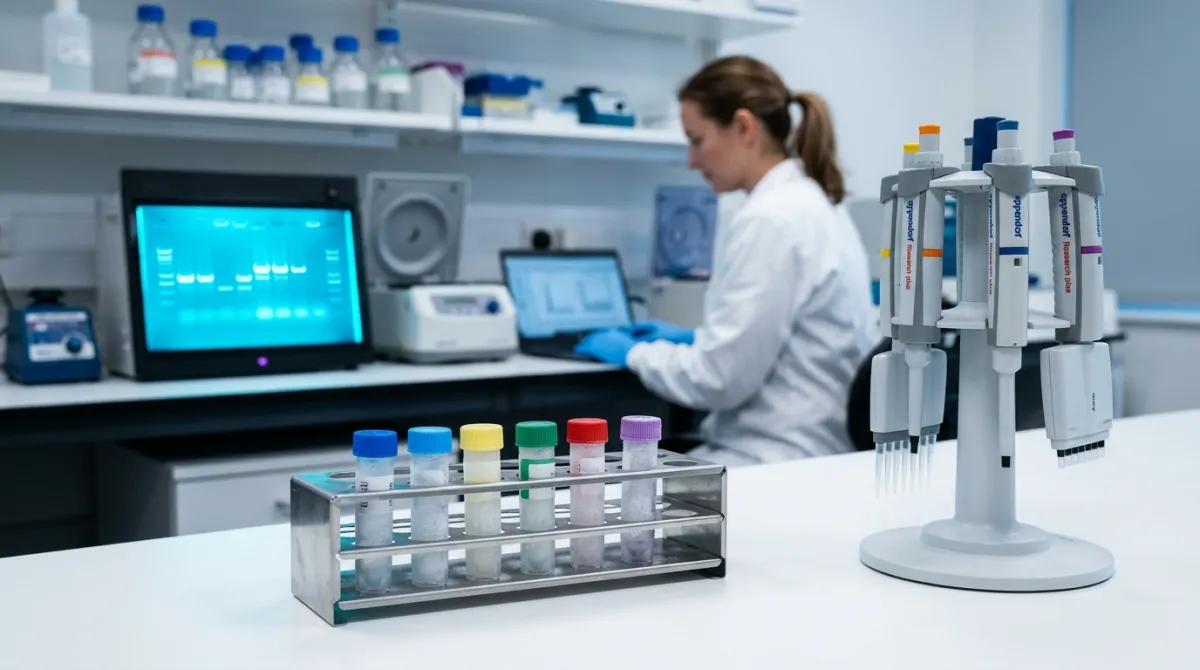
As genetic sequencing tools become exponentially faster and cheaper, the secrets locked inside this translucent ocean drifter are moving out of the realm of folklore and into rigorous laboratory testing. We may not live forever like the jellyfish, but learning how it cheats death could ensure that our own final decades are lived with healthy, self-repairing bodies.