
 20 November 2026
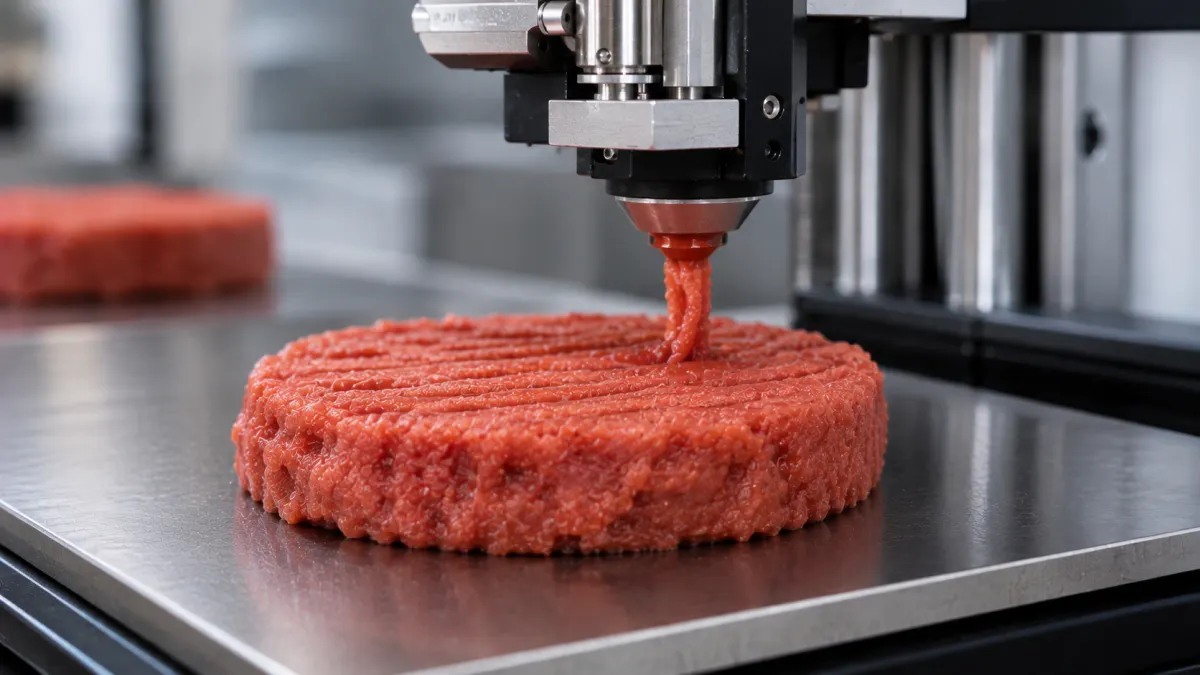
3D printed meat is an emerging food technology that uses additive manufacturing to create meat-like products with controlled shapes, textures, and compositions.
From plant-based alternatives to cultivated animal cells, this approach could change how food manufacturers produce and develop alternative proteins.
11 Key Things to Know About 3D Printed Meat
How Dubai Became the World's Most Powerful Logistics industry
 Inside the List
11 Items
Cost and Commercial Scaling Remain Challenges
Main Purpose: Commercial food production
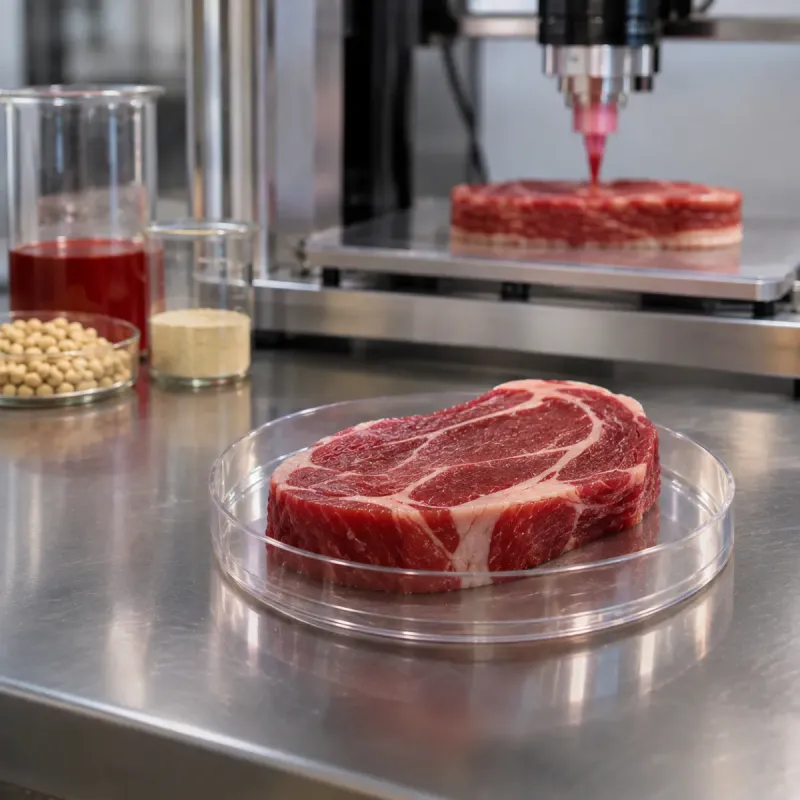
3D printed meat is still developing, and its benefits depend on the ingredients and production method. Cost, scale, food safety, regulation, and consumer acceptance remain important considerations.
- Reduces production costs
- Ensures food safety
- Supports market acceptance
Products Can Be Customized for Different Applications
Main Purpose: Product customization
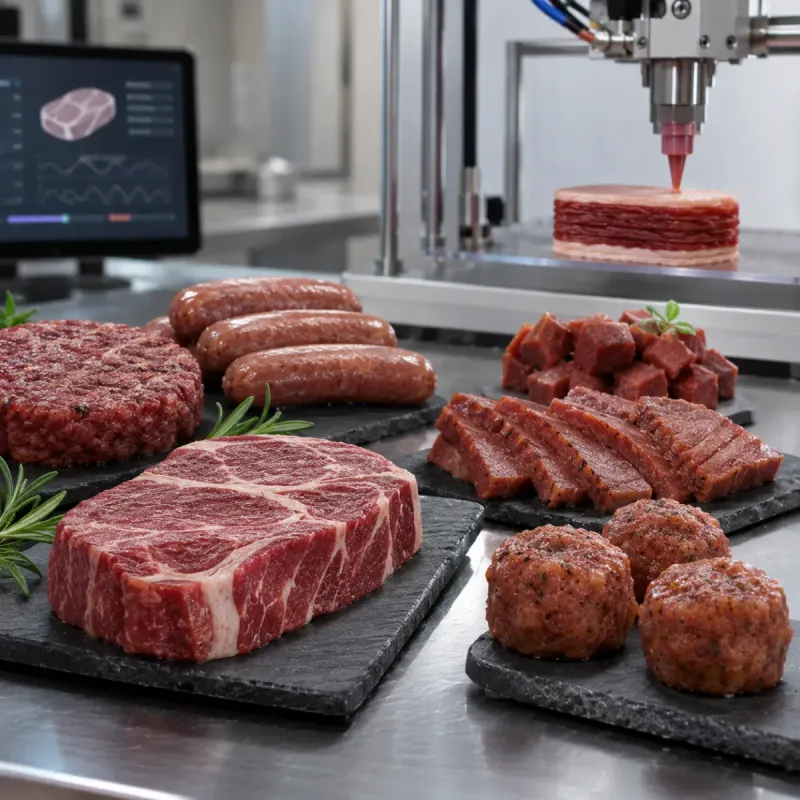
3D printed meat can be customized in shape, texture, and ingredient composition. This flexibility may help food makers develop products for different dishes, customers, and production needs.
- Creates custom shapes
- Varies textures
- Enables flexible production
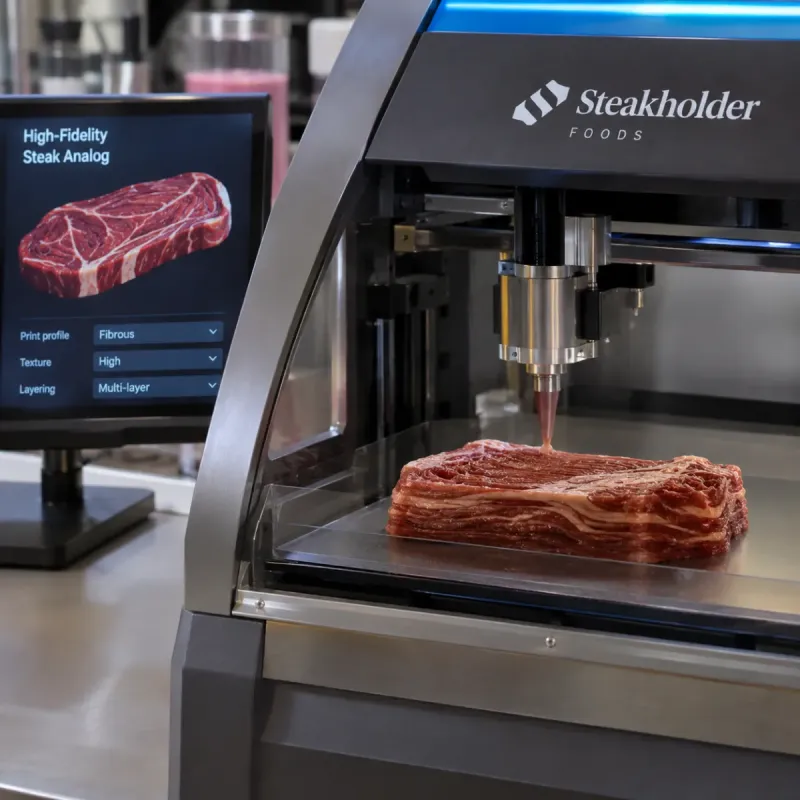
Specialized Printers Produce Different Textures
Main Purpose: Structured protein production
Specialized food printers are designed for different textures. Steakholder Foods describes systems for fibrous meat analogues and flaky fish alternatives that use tailored printing methods.
- Creates fibrous textures
- Forms flaky structures
- Supports industrial printing
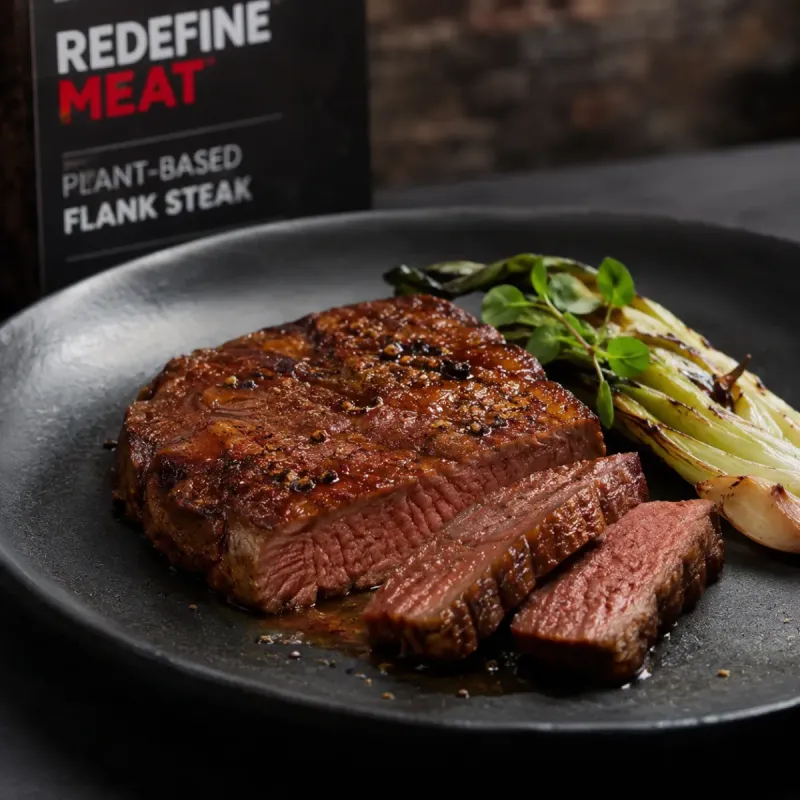
Whole-Cut Alternatives Can Be 3D Printed
Main Purpose: Whole-cut alternatives
Plant-based 3D printing can create whole-cut alternatives, not just burgers or nuggets. Redefine Meat, for example, introduced printed beef- and lamb-style cuts to selected restaurants.
- Offers steak alternatives
- Produces lamb-style cuts
- Supports restaurant use
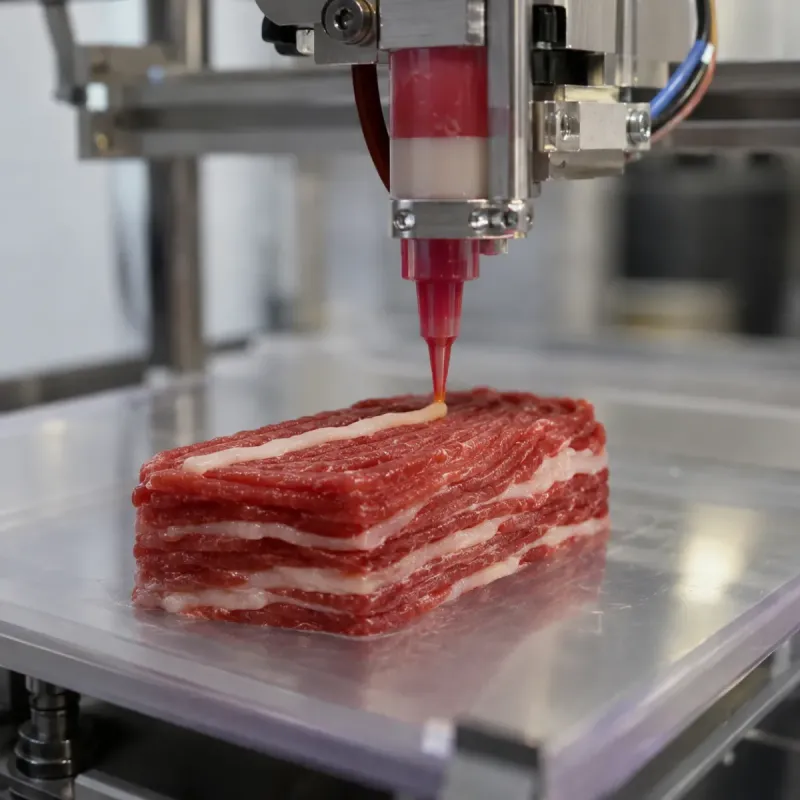
Layering Helps Recreate Meat Texture
Main Purpose: Texture replication
Layer-by-layer deposition gradually builds the food structure. By changing the placement and composition of each layer, manufacturers can imitate the fibers and marbling found in meat.
- Deposits material in layers
- Builds fiber structure
- Controls fat distribution
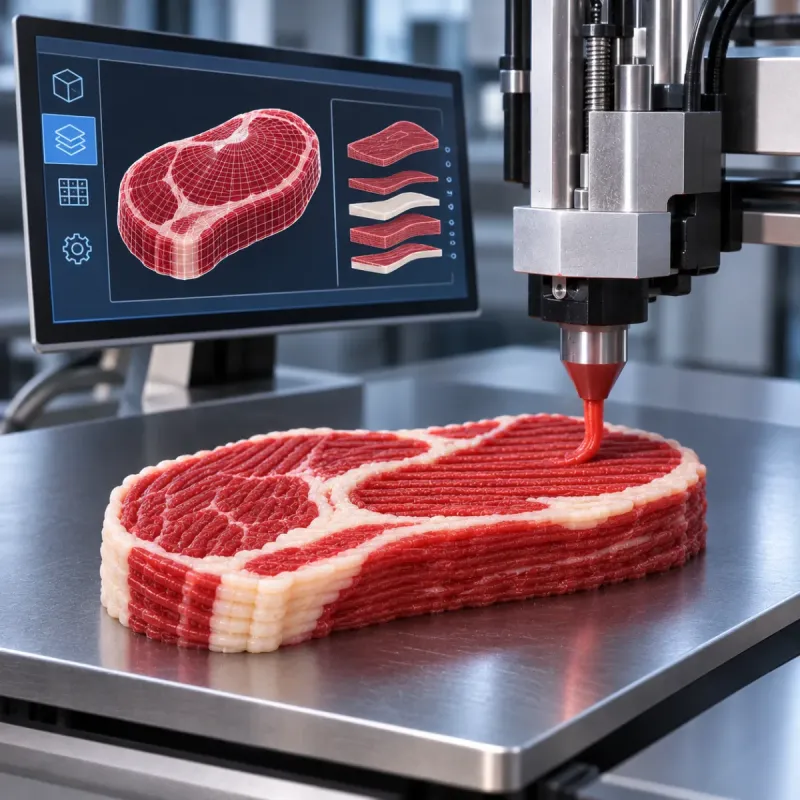
Digital Models Control the Printing Process
Main Purpose: Precise food shaping
Digital models guide the printer's nozzle along a programmed path, placing ingredients in selected locations. This lets producers control a product's shape and arrange different textures.
- Uses CAD models
- Controls nozzle movement
- Enables digital production
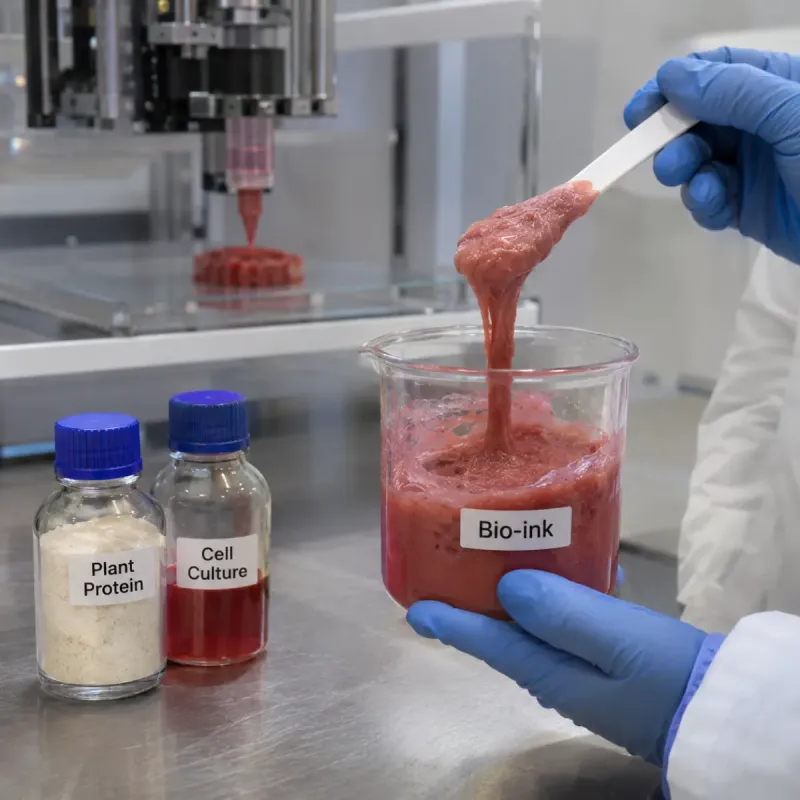
Bio-Inks Help Create Meat-Like Structures
Main Purpose: Printable food structures
Bio-inks are printable mixtures that carry plant ingredients or cultured cells. Their consistency must allow smooth extrusion while helping the printed material keep its intended shape.
- Uses printable mixtures
- Maintains consistent texture
- Retains shape
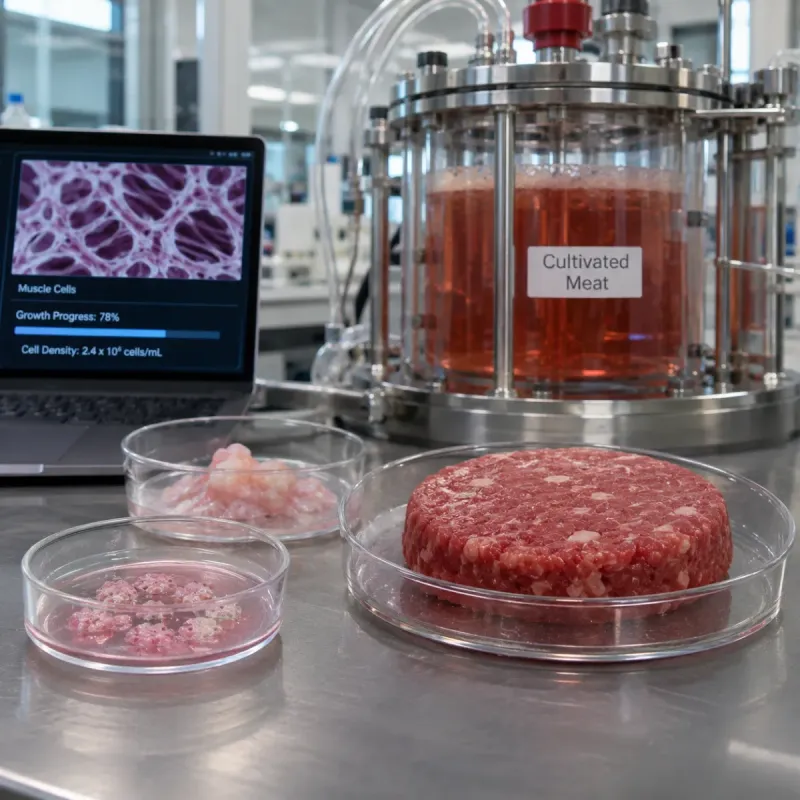
Cultivated Meat Uses Real Animal Cells
Main Purpose: Animal-cell meat production
Cultivated meat starts with animal cells that multiply in nutrient-rich conditions inside bioreactors. The resulting muscle and fat cells can then be formed into edible structures.
- Cultivates animal cells
- Uses bioreactor growth
- Develops muscle tissue
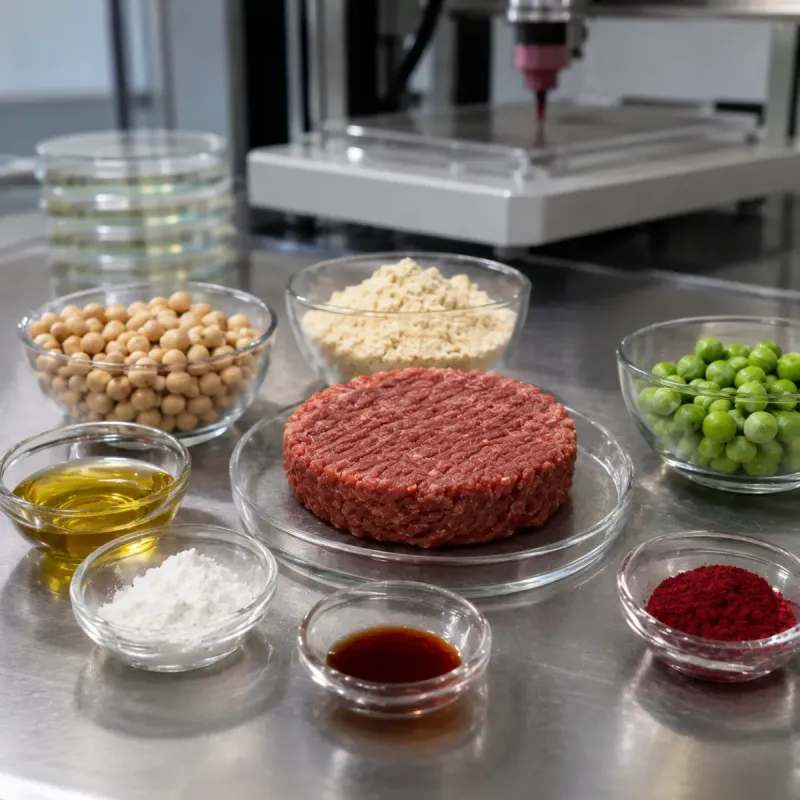
Plant Proteins Are Common Ingredients
Main Purpose: Meat substitutes
Plant-based prints often combine proteins such as soy or pea with fats, binders, flavorings, and color ingredients to recreate the overall structure and eating qualities of meat.
- Uses soy protein
- Includes pea protein
- Contains natural ingredients
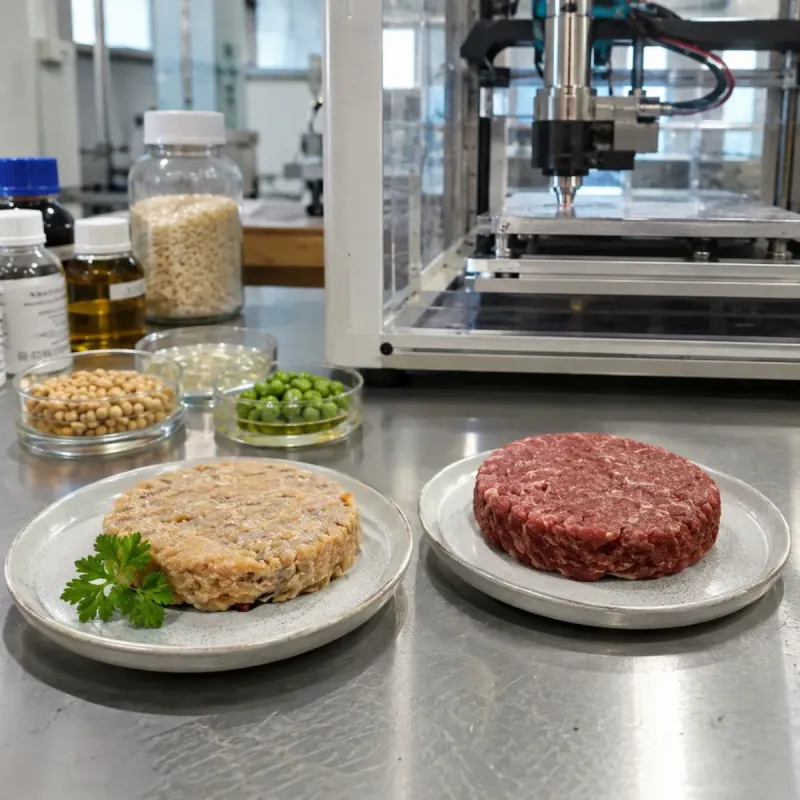
It Can Be Plant-Based or Cell-Cultivated
Main Purpose: Meat alternatives
Not every 3D printed meat product is cultivated meat. Some use plant proteins and fats, while others aim to print animal cells grown in controlled laboratory conditions and bioreactors.
- Uses plant-based ingredients
- Grows cultured cells
- Enables animal-free production
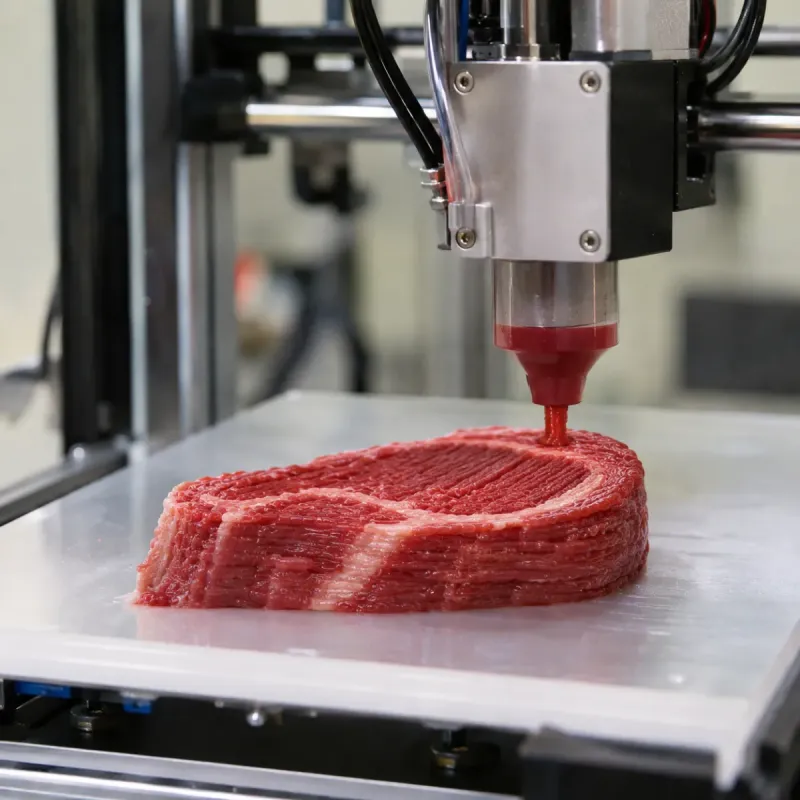
3D Printed Meat Uses Additive Manufacturing
Main Purpose: Meat production
3D printed meat uses additive manufacturing to arrange edible materials in layers, creating products designed to resemble the shape, texture, and appearance of conventional meat.
- Uses layered construction
- Applies digital design
- Controls surface texture