
The Gilded Cannon Ports of Stockholm Harbor
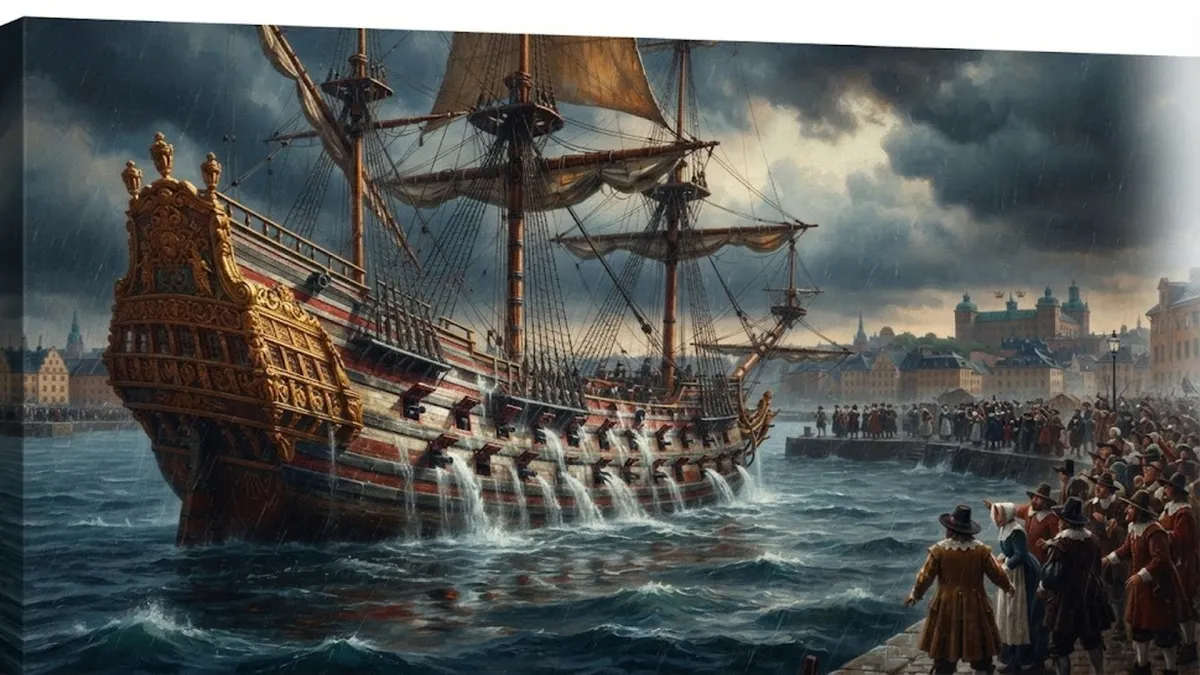
On a bright Sunday afternoon in August 1628, tens of thousands of cheering citizens packed the quays and rocky cliffs around Stockholm harbor. Floating off the royal naval yard was the *Vasa*, the most heavily armed warship in northern Europe. Commissioned by King Gustavus Adolphus to dominate the Baltic Sea during the Thirty Years' War, the massive 226-foot galleon was decorated with hundreds of gilded mythological sculptures and bristled with sixty-four heavy bronze cannons.
As trumpets sounded from the royal palace, Captain Severin Hansson ordered four sails hoisted to catch the light offshore breeze. The majestic warship began gliding past the waterfront, firing an eight-gun ceremonial salute from its double gun decks. But barely fifteen hundred yards into open water, a sudden gust of wind swept across the harbor channel. The ship heeled hard over to port.
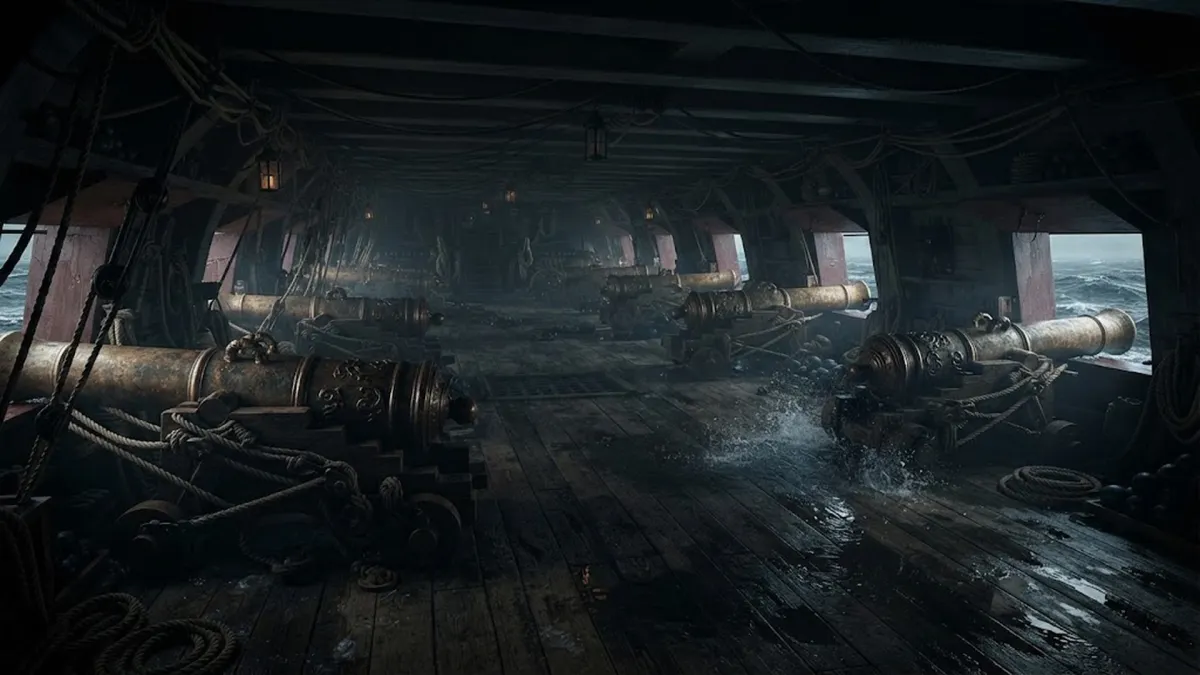
Hansson shouted frantic orders to swing the rudder and ease the sheets. The warship sluggishly righted itself for a moment. Then a second, stronger gust caught the towering rigging. The *Vasa* tilted violently to the left. Sea water rushed over the lower gun ports, which had been left pinned open for the celebratory salute. Within twenty minutes, in front of a horrified crowd of royal dignitaries and foreign ambassadors, Sweden's multimillion-dollar naval pride vanished straight to the muddy seabed.
Operation Acoustic Kitty: How the CIA Spent Millions Turning Cats into Cold War Spies
The Royal Interference in the Shipbuilding Yard
I spoke with maritime archaeologist and naval architecture analyst Fredrick Vance, who spent fifteen years examining the preserved wooden hull inside the Vasa Museum in Stockholm. Vance unrolled historical timber blueprints drafted during the naval inquiry of September 1628.
"The disaster of the *Vasa* is the premier historical case study of executive micromanagement overwhelming engineering reality," Vance told me, pointing to the ship's center of gravity measurements. "King Gustavus Adolphus was fighting a bloody war in Poland and demanded unprecedented naval firepower. When master shipwright Henrik Hybertsson began construction, the king kept changing the specifications."
The king insisted on adding an entire second enclosed gun deck to accommodate extra heavy twenty-four-pounder bronze cannons. To make matters worse, Hybertsson died of illness during construction, leaving the shipyard in the hands of his less experienced assistant, Hein Jacobsson. Nobody in the yard had ever built a two-deck gunship of that scale, and nobody dared tell the king that his orders violated basic nautical stability.
| Design Parameter | Vasa Specifications (1628) | Safe Contemporary Galleon | Engineering Defect |
|---|---|---|---|
| Upper Gun Deck Armament | 64 heavy bronze 24-pounder cannons | Single deck with 32 lighter guns | Added massive overhead weight high above waterline |
| Center of Gravity | Dangerously close to water line | Deeply submerged below metacentric height | Insufficient righting arm against wind gusts |
| Stone Ballast Volume | 120 metric tons of granite | Over 300 metric tons required | Hull was too narrow to hold required counterweight |
| Lower Gun Port Sills | Barely 4.5 feet above water | Over 6.5 to 8 feet above surface | Any heel angle greater than 10° flooded ship |
The Ignored Stability Test on the Quay
What makes the sinking extraordinary is that the Swedish admiralty knew the ship was fatally unstable weeks before it set sail. In June 1628, Vice Admiral Klas Fleming conducted a standard nautical stability test known as the lurch test at the Skeppsgården shipyard.
"Fleming had thirty sailors run back and forth across the upper deck in unison to see how the ship rolled," Vance recounted. "On their third run across the deck, the *Vasa* heeled over so far that the deck almost slipped underwater. Fleming had to shout for them to stop immediately to prevent the warship from capsizing right at the pier."
Despite witnessing the test failure with his own eyes, Fleming never reported the results to the king. Gustavus Adolphus was sending impatient dispatches from Prussia demanding the ship join the Baltic fleet without delay. Subordinates were simply too terrified of royal anger to halt the launch.
The Royal Inquiry of 1628
During the formal inquest following the sinking, the Court of the Realm attempted to charge the builders with negligence or treason. Shipwright Hein Jacobsson produced the original shipyard contracts, proving under oath that every beam, cannon port, and deck specification was built exactly to the king's signed royal orders. The inquiry was quietly closed without a single person convicted.
The Cold Mud That Saved the Ship
The *Vasa* remained buried in fifty feet of pitch-black brackish water for 333 years. Because the Baltic Sea has low salinity and lacks the destructive shipworm (*Teredo navalis*) that eats wooden shipwrecks in warmer oceans, the oak timbers remained 98 percent intact.
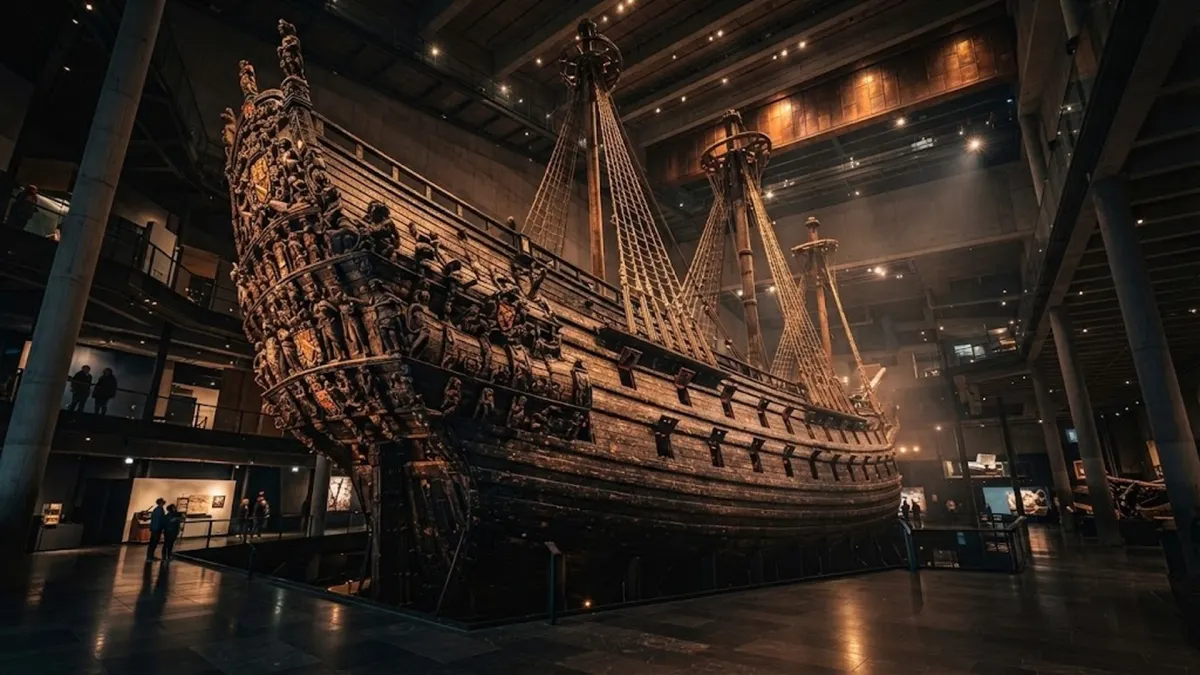
In 1961, naval engineer Anders Franzén and Swedish navy divers managed to slip thousands of feet of steel cables beneath the hull, gently lifting the ship to the surface in one piece. Today, fully restored in its climate-controlled museum, it stands as the best-preserved seventeenth-century galleon on Earth.
Engineering Takeaway
The tragedy of the *Vasa* proves that no amount of political authority or royal willpower can overrule the laws of buoyancy and metacentric height. It remains the ultimate warning against feature creep in project management.