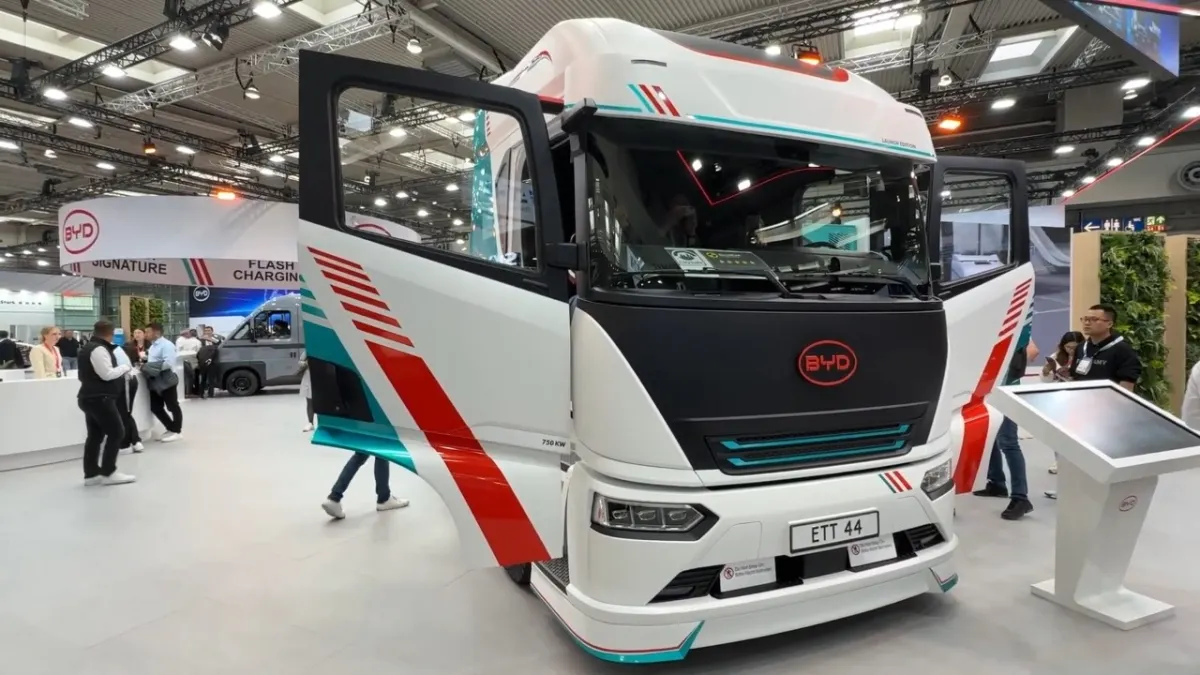

BYD is entering one of Europe's toughest truck markets with a new electric truck called the ETT 44. The Chinese company is taking on well-known brands like Mercedes-Benz, MAN, and Scania with a truck that packs a 651-kWh battery, offers a claimed range of nearly 600 km, and supports ultra-fast charging.
But this is about more than battery range or engine power. Trucking companies also care about running costs, charging time, battery life, and how easy it is to get repairs when something goes wrong. If BYD can deliver on these points, European truck makers could face a new challenge as more transport companies consider switching to electric trucks.
One of the ETT 44's biggest selling points is its charging speed. BYD says the battery can go from 20% to 80% in around 20 minutes when using a megawatt charging system. If this works as expected in real-world conditions, it could help reduce one of the biggest headaches for electric heavy trucks: long charging stops.
What Is the BYD ETT 44?
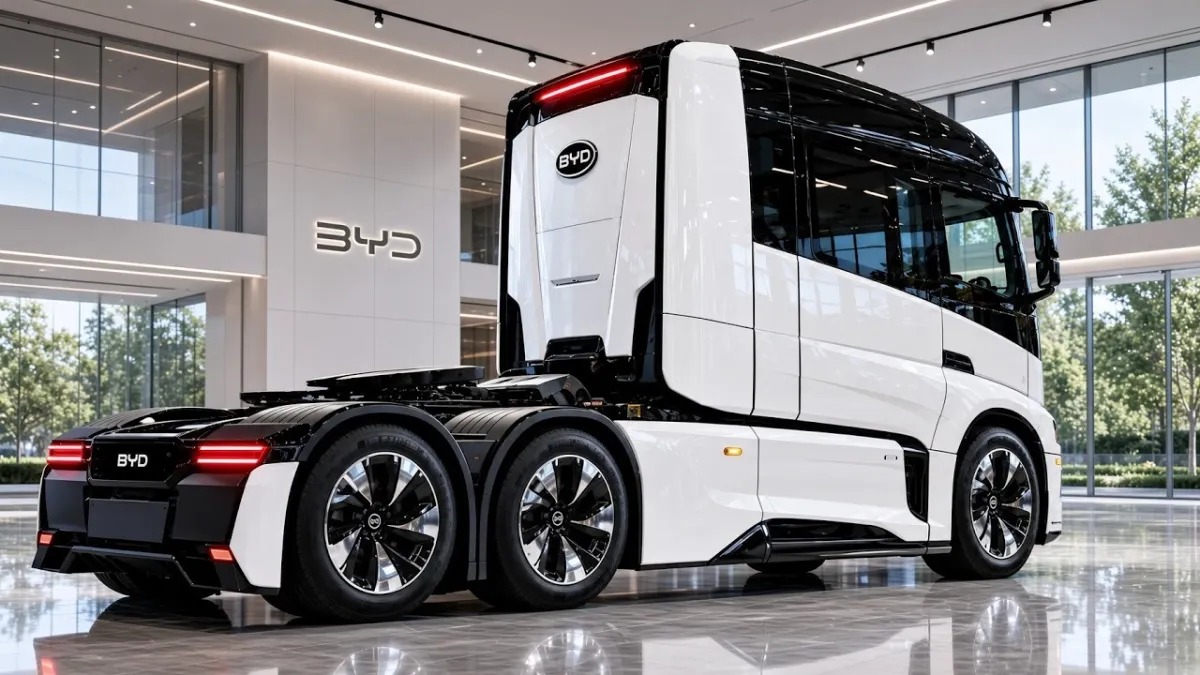
The BYD ETT 44 is a fully electric truck tractor designed for Europe's heavy transport market. It was introduced at the IAA Transportation 2026 show in Hanover, Germany, as part of BYD's growing range of commercial vehicles.
The version covered in the initial reports is designed for a gross combination weight of up to 44 tonnes. That means the total weight of the truck, trailer, and cargo can reach 44 tonnes. It is not the weight of the truck alone.
BYD says the ETT 44 uses a 651-kWh battery and can travel nearly 600 km on a charge. This could make it an option for some regional and longer-distance transport jobs, depending on the route, load, and availability of charging stations.
Still, the claimed range should not be treated as a guarantee. Actual performance will depend on driving speed, road conditions, weather, and how much weight the truck is carrying.
BYD ETT 44: Key Specifications
| Specification | Details |
|---|---|
| Model | BYD ETT 44 |
| Vehicle type | Fully electric truck tractor |
| Axle layout | 4x2 |
| Gross combination weight | Up to 44 tonnes in the version covered by the initial report |
| Battery capacity | 651 kWh |
| Battery technology | Blade LFP battery |
| Claimed range | Nearly 600 km |
| Reported power output | 743 hp |
| Reported maximum power | Up to 1,000 hp |
| Reported unladen weight | Around 10.95–11.14 tonnes |
| Megawatt charging power | More than 1.5 MW |
| Charging time, 20% to 80% | Around 20 minutes with MCS |
| Charging time with a 420-kW CCS2 charger | Around 60 minutes |
| Reported battery warranty | 10 years or 1.2 million km |
These figures are based on the initial reports about the truck. Final specifications should be checked against the official technical sheet for the exact version being offered.
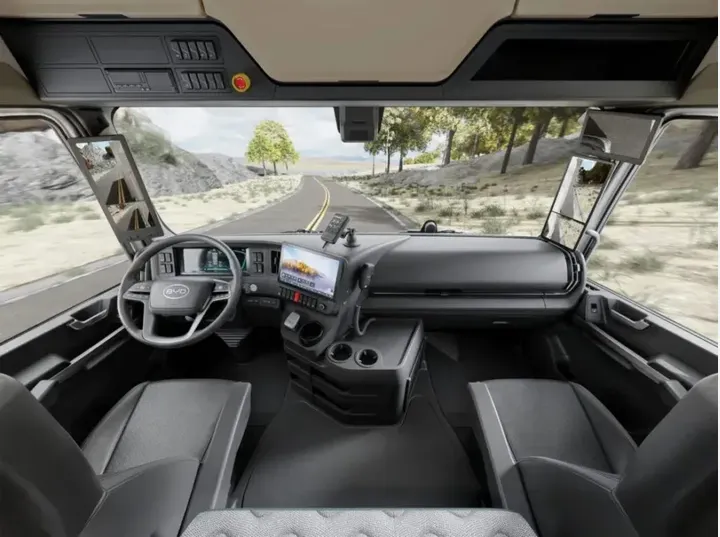
Why 20-Minute Charging Could Be a Big Deal
For trucking companies, time is money. A truck that spends hours charging may lose some of the benefits of going electric, especially when deliveries need to arrive on time.
According to the initial reports, the ETT 44 can charge from 20% to 80% in around 60 minutes using a 420-kW CCS2 charger.
With a megawatt charging system, that time drops to around 20 minutes. BYD also says the truck can gain enough energy for nearly 400 km of driving during that charging stop.
That could make a real difference for companies running busy transport schedules. For example, if a truck can charge while the driver is already taking a planned break, the company may be able to reduce extra stops.
But there is a catch. The truck needs access to compatible high-power charging stations, and those stations need enough electrical capacity to deliver that much power.
Without the right charging network, ultra-fast charging may look impressive on paper but offer fewer benefits in everyday use.
What Does the 651-kWh Battery Mean for Driving Range?
Battery size is one of the main factors affecting how far an electric truck can travel. But it is not the only one.
Energy use depends on the weight of the load, driving speed, road gradients, weather, tire condition, and the use of equipment such as heating and air conditioning.
BYD claims a range of nearly 600 km for the 651-kWh version of the ETT 44. If the truck can deliver a useful range under real working conditions, it could make electric heavy transport more practical for some routes.
However, transport companies should look beyond the headline number. They need real-world energy consumption figures, information about payload, and a clear idea of where they can charge along their routes.
Companies running fixed routes may find it easier to plan charging stops. Fleets covering changing routes or traveling through areas with limited charging infrastructure may face more challenges.
The Battery Warranty Could Matter More Than You Think
One of the other details reported for the ETT 44 is its battery warranty: 10 years or 1.2 million km.
The battery is one of the most expensive parts of an electric truck. Over time, battery wear can affect driving range, daily schedules, and resale value.
A long warranty could help ease some concerns for companies thinking about buying electric trucks. But buyers should check exactly what the warranty covers, including any limits or conditions.
A long warranty also does not mean the battery will keep all of its original capacity throughout that period. Real-world fleet data will help show how well it holds up after years of heavy use.
Is 1,000 Horsepower Really Necessary?
The initial reports list 743 hp of power and a maximum output of up to 1,000 hp for the ETT 44.
Those numbers are impressive, but maximum power is only one part of the story.
For a heavy truck, buyers also need to know how well it handles a full load, climbs steep roads, manages heat, and uses energy over long distances.
A transport company is not simply looking for the truck with the biggest power figure. It needs a vehicle that can move heavy loads reliably without using too much energy or spending too much time off the road.
That is why real-world road tests and energy-use figures can be more useful than headline power numbers alone.
BYD Is Going Beyond Heavy Trucks
The ETT 44 is part of BYD's wider push into Europe's commercial vehicle market.
Alongside the heavy truck, the company has presented other electric commercial vehicles, including 26-tonne trucks designed for different jobs. These include versions with interchangeable bodies and hook-lift systems, which can be useful for logistics and industrial work.
BYD also offers the E-Vali electric van for lighter commercial duties, including city deliveries and moving goods over shorter distances.
Together, the van, medium-duty trucks, and heavy truck show that BYD wants to compete in several parts of the commercial vehicle market, rather than relying on a single model.
This could give the company more ways to attract businesses that want to switch some of their transport operations from diesel to electric power.
BYD vs. Mercedes-Benz, MAN, and Scania: What's at Stake?
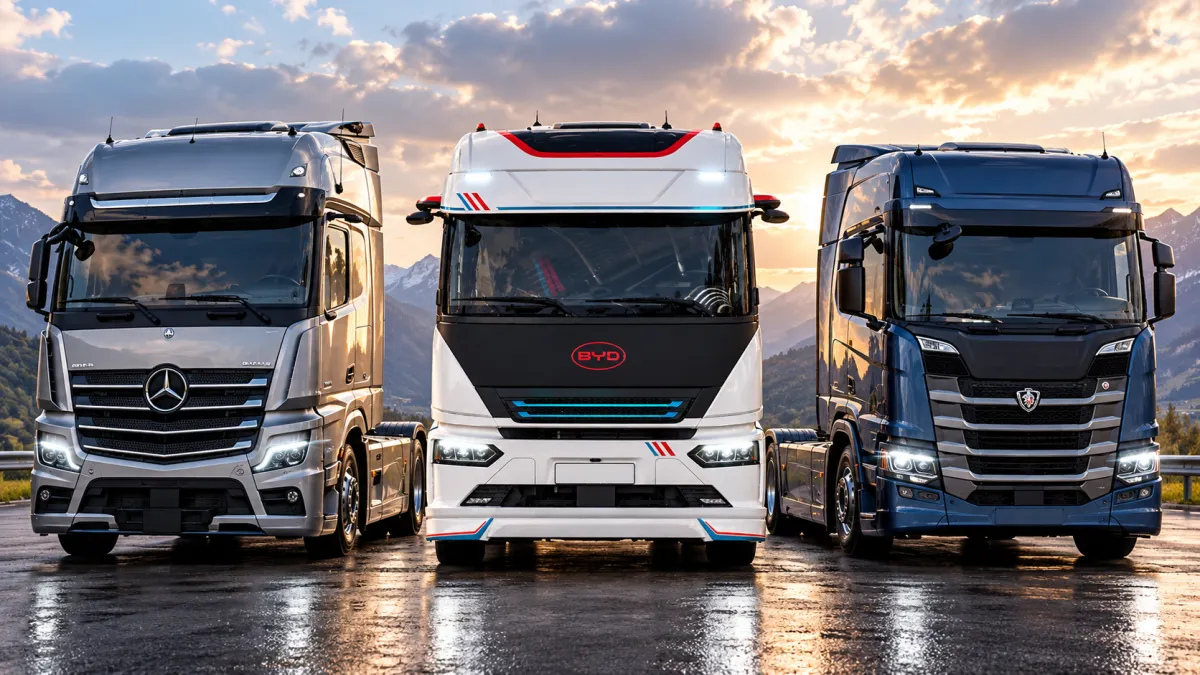
The ETT 44 is entering a market where Europe's established truck makers are already investing in electric vehicles.
Mercedes-Benz, MAN, and Scania have years of experience in commercial transport, along with established customer relationships and service networks.
But the competition is not just about technical specifications. Transport companies also care about spare parts, repair services, reliability, financing, and resale value.
BYD will need to build trust in these areas if it wants European fleets to choose its trucks over familiar alternatives.
Fast charging and a large battery can be useful advantages, but only if the overall cost of running the truck makes sense. Electricity prices, charging infrastructure, maintenance, and downtime all affect the final bill.
So it is too early to say that the ETT 44 will cause large numbers of customers to leave European brands. Still, its arrival adds another competitor to a market that is becoming more crowded.
Will the BYD ETT 44 Also Come to the US?
The fact that BYD has introduced the ETT 44 in Europe does not mean it will also be sold in the United States.
The US market has different rules, technical requirements, and trade barriers. Chinese-made vehicles also face major commercial hurdles, including tariffs and restrictions affecting some connected-car technologies.
As of October 2026, no official US launch for the ETT 44 has been confirmed. For now, the truck's announced market focus is Europe.
Even if BYD considers other markets in the future, the timing and specifications of any new version would need to be confirmed separately.
Could the BYD ETT 44 Change Europe's Heavy Truck Market?
The ETT 44 brings together three features that could attract attention: a 651-kWh battery, a claimed range of nearly 600 km, and megawatt charging that can take the battery from 20% to 80% in around 20 minutes.
These features could make it an interesting option for transport companies looking to reduce their use of diesel.
But the numbers on a specification sheet tell only part of the story. The purchase price, cost of electricity, charging network, battery life, payload, and after-sales support will all help determine whether the truck makes financial sense.
Mercedes-Benz, MAN, and Scania have established customer relationships and service networks. BYD, meanwhile, is trying to win a place in the same market with its battery technology, fast-charging capabilities, and wider range of electric commercial vehicles.
The real test will come when transport companies start using the trucks regularly. Their experience over the coming years will help show whether the ETT 44 can compete on both performance and running costs.