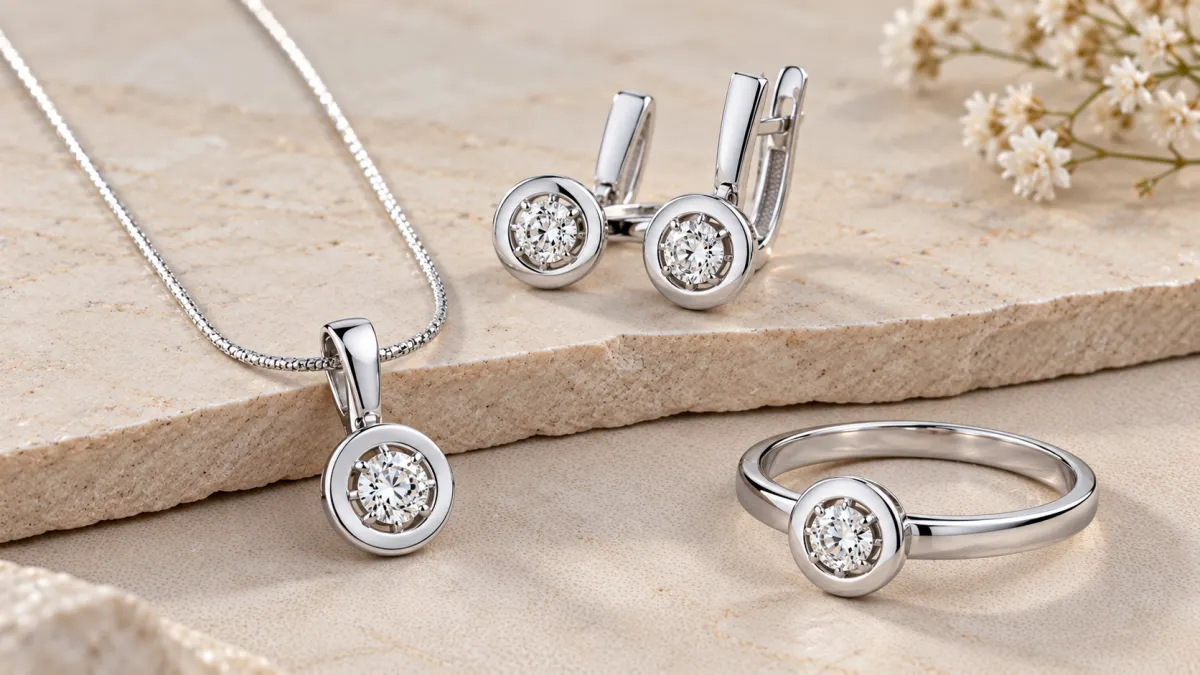

White gold has become one of the most popular choices for engagement rings, wedding bands, earrings, necklaces, and other fine jewelry. Its bright, silvery appearance gives it a modern look, while its gold content gives it the value associated with traditional gold jewelry.
But what exactly is white gold? Is it naturally white? How is it different from platinum or sterling silver? And does a white gold ring require more maintenance than yellow gold?
Understanding these details can make it much easier to compare jewelry before buying, particularly when shopping in the U.S. or Europe.
What Is White Gold?
White gold is not a separate element or naturally occurring type of gold. It is a gold alloy, meaning pure gold is mixed with other metals to change its color, hardness, durability, and other properties.
Pure gold is naturally yellow and relatively soft. Because 24-karat gold is too soft for many everyday jewelry applications, manufacturers combine it with other metals.
White gold alloys can contain metals such as nickel, palladium, silver, copper, zinc, or combinations of these materials. The exact formula varies between manufacturers and jewelry collections.
According to the Gemological Institute of America (GIA), 14K and 18K are among the most common white gold choices for jewelry.
How Is White Gold Made?
The manufacturing process starts with gold of the required purity. The gold is then melted and combined with carefully selected alloying metals.
The mixture is designed to achieve a particular balance between:
- Gold purity
- Color
- Hardness
- Durability
- Workability
- Cost
The resulting metal usually has a soft grayish or slightly yellow-white appearance rather than the extremely bright white finish many shoppers associate with white gold jewelry.
That bright, mirror-like appearance often comes from another step: rhodium plating.
What Is Rhodium Plating?
Rhodium is a rare metal from the platinum group. Jewelry manufacturers and jewelers often apply a very thin layer of rhodium over white gold to create a brighter, whiter surface.
Rhodium plating can give white gold jewelry its distinctive high-shine appearance and provides a hard surface finish. However, it is not permanent.
With regular wear, particularly on rings, the rhodium layer gradually becomes thinner. The warmer-colored white gold underneath may eventually become visible, especially around areas that experience frequent contact and friction.
This does not necessarily mean the jewelry is damaged. In many cases, the piece simply needs professional cleaning and, if desired, a new rhodium coating.
The GIA notes that rhodium plating can wear away over time and that white gold rings may require replating.
Nickel White Gold vs. Palladium White Gold
Not all white gold is made from the same alloy.
Nickel-Based White Gold
Nickel can make white gold relatively hard and is widely used in some jewelry alloys. However, nickel is also a well-known cause of contact allergy in some people.
If you have previously reacted to inexpensive jewelry, watch straps, belt buckles, or other metal products, ask the jeweler whether the white gold contains nickel before purchasing.
Palladium-Based White Gold
Palladium is another metal used in white gold alloys. It belongs to the platinum group and can produce a different combination of color, hardness, and manufacturing characteristics.
However, it is better not to describe every palladium-containing alloy as automatically «hypoallergenic.» Individual reactions can vary, and the complete alloy composition matters.
For people with known metal allergies, asking the retailer for the exact alloy information is a more reliable approach than relying only on terms such as «hypoallergenic.»
In the European market, nickel exposure from jewelry that comes into prolonged contact with the skin is subject to specific restrictions under EU chemical regulations.
What Do 14K, 18K, 585, and 750 Mean?
The karat number tells you how much pure gold is contained in the alloy.
Pure gold is 24K.
| Mark | Approx. Gold Content | Common Market Use |
|---|---|---|
| 9K | 37.5% | Common in parts of Europe and the UK |
| 10K | 41.7% | Common in the U.S. |
| 14K | 58.3% | Very common in the U.S. and widely available elsewhere |
| 18K | 75.0% | Popular in Europe and higher-end jewelry |
| 22K | 91.7% | More common for high-gold-content jewelry |
| 24K | 99.9%+ | Nearly pure gold, generally too soft for many jewelry designs |
You may also see numbers instead of karat markings.
For example:
- 585 generally indicates 58.5 parts per thousand gold and is commonly associated with 14K gold.
- 750 indicates 75% gold and corresponds to 18K gold.
- 417 corresponds to 10K gold.
- 375 corresponds to 9K gold.
The exact marking and hallmarking system can vary by country. GIA notes that 18K gold may be marked 750, while 14K may appear as 583 or 585 depending on the market and marking system.
In the United States, consumers should also pay attention to the manufacturer's or seller's trademark associated with a karat mark. The FTC recommends checking the quality mark and the responsible party's mark when buying gold jewelry.
Is White Gold More Expensive Than Yellow Gold?
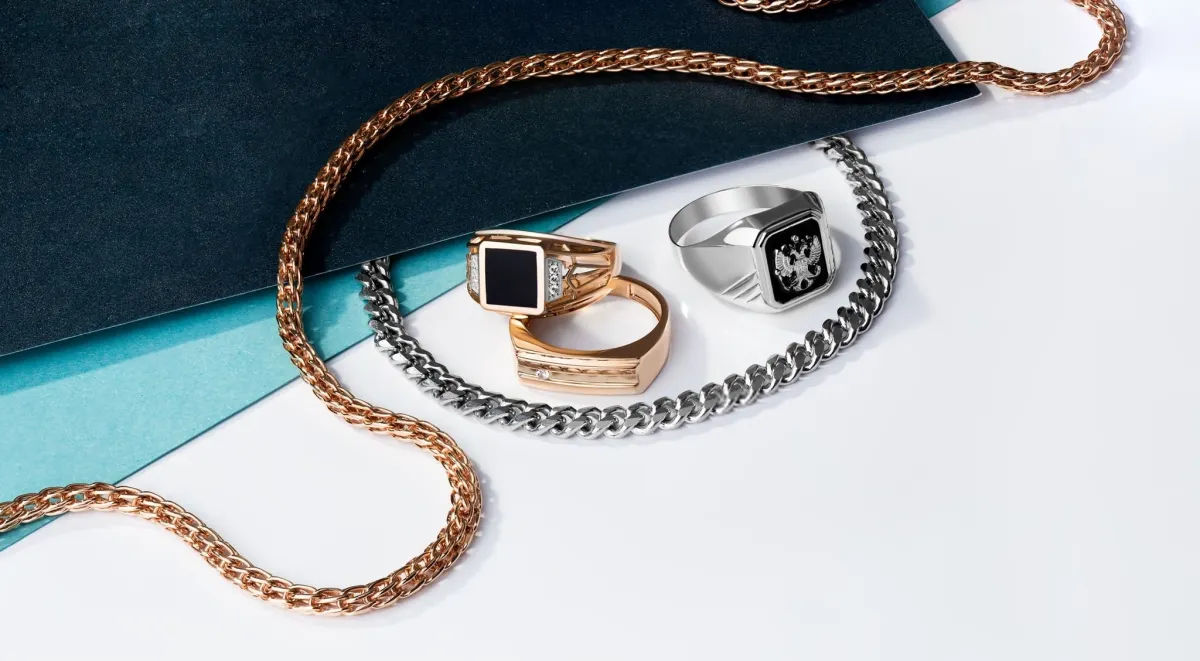
Not necessarily.
If two pieces contain the same amount of gold and have the same karat purity, the intrinsic gold content is broadly comparable regardless of whether the gold is white, yellow, or rose.
However, the retail price can be very different.
The final price of a piece of jewelry can depend on:
- The amount of gold used
- Karat purity
- Alloy composition
- Design complexity
- Brand
- Craftsmanship
- Gemstones
- Rhodium plating
- Retailer markup
- Labor and finishing costs
For this reason, saying that white gold is simply «more expensive than yellow gold» is too broad.
A plain 18K white gold ring from one retailer could cost less than a highly detailed 14K yellow gold designer ring from another.
White Gold vs. Yellow Gold vs. Platinum vs. Sterling Silver
The four metals can look surprisingly similar at first glance, but they are fundamentally different materials.
| Feature | White Gold | Yellow Gold | Platinum | Sterling Silver |
|---|---|---|---|---|
| What it is | Gold alloy | Gold alloy | Platinum alloy | Silver alloy |
| Typical purity | 9K–18K+ | 9K–24K | Often 95% platinum or higher | 92.5% silver |
| Natural color | Grayish-white/yellow-white | Yellow | Naturally grayish-white | White/bright silver |
| Rhodium plating | Common | Not normally needed | Usually not necessary | Sometimes used |
| Tarnishing | Generally resistant | Generally resistant | Highly resistant | Can tarnish |
| Nickel concern | Depends on alloy | Depends on alloy | Depends on alloy | Depends on alloy |
| Typical use | Rings and fine jewelry | All types of jewelry | Premium jewelry and rings | Affordable jewelry |
Sterling silver is normally 92.5% silver, with other metals used to improve durability. A 925 mark therefore refers to sterling silver, not white gold.
Platinum is different again. In the U.S., an item described simply as «platinum» generally needs to meet specific platinum-content requirements, and platinum jewelry can itself be alloyed with other platinum-group or base metals.
How to Care for White Gold Jewelry
White gold is durable enough for everyday jewelry, but proper care can help preserve its appearance.
How Often Does White Gold Need Rhodium Plating?
There is no universal schedule.
A ring worn every day may show signs of plating wear sooner than an occasional-wear necklace or pair of earrings.
Instead of following a fixed 12- or 18-month rule, look at the jewelry itself.
If you notice:
- A yellowish or warmer tone appearing
- Uneven color
- Loss of the bright white finish
- Scratches or visible wear
it may be time to have the piece inspected by a professional jeweler.
The frequency depends on how often the jewelry is worn, how much friction it experiences, the wearer's habits, and the thickness and quality of the plating.
How to Clean White Gold at Home
For routine cleaning, a simple approach is usually safest.
Use:
- Lukewarm water
- A small amount of mild dish soap
- A very soft brush or soft cloth
Gently clean the surface, rinse thoroughly, and dry with a soft, lint-free cloth.
Avoid aggressive polishing methods that can unnecessarily wear the surface or plating.
For valuable pieces, pieces containing delicate gemstones, or jewelry with loose stones, professional cleaning may be the safer option.
What Can Damage White Gold?
Several everyday activities can accelerate wear.
Try to remove white gold rings before:
- Swimming in chlorinated pools
- Using household cleaning chemicals
- Gardening or heavy manual work
- Applying lotions or other products directly to the jewelry
- Exercising when the jewelry is exposed to repeated friction
Perfume, cosmetics, chlorine, and household chemicals can contribute to surface buildup or damage depending on the materials involved.
Most importantly, do not assume that a rhodium finish is permanent. It is a surface treatment and will eventually wear with use.
Is White Gold a Good Investment?
White gold jewelry should generally be viewed first as jewelry, rather than as a pure investment product.
When you buy a finished ring or necklace, you are paying for much more than its gold content. The price may include design, craftsmanship, gemstones, branding, retail costs, and other services.
When you later sell the piece, the buyer may not reimburse all of those costs.
This is why the purchase price of a jewelry item should not be confused with its resale value.
The same principle applies across the U.S. and Europe, although taxes, consumer protections, dealer practices, and resale markets differ from one country to another.
If your primary objective is owning gold as a financial asset, compare products specifically designed for that purpose rather than assuming that a piece of white gold jewelry will behave like investment-grade bullion.
If your primary objective is wearing a beautiful ring, celebrating an engagement, buying a wedding band, or owning a meaningful piece of jewelry, those non-financial benefits may be the main reason to choose white gold.
Common Mistakes When Buying White Gold
1. Assuming All White Gold Looks the Same
Different alloys can have noticeably different natural colors.
Some white gold looks cooler and grayer, while other alloys have a warmer tone beneath the rhodium.
2. Assuming "White" Means "Platinum"
White gold and platinum are different metals.
A white gold ring should not be priced or represented as platinum simply because both have a white appearance.
3. Ignoring the Alloy Composition
If you have sensitive skin or a known nickel allergy, ask about the alloy before purchasing.
4. Forgetting About Rhodium Maintenance
A newly plated white gold ring can look dramatically different from the same ring after years of everyday wear.
Ask the jeweler whether the piece is rhodium plated and what maintenance they recommend.
5. Looking Only at the Karat Number
Karat tells you the gold content, but it does not tell you everything about a piece of jewelry.
Two 14K white gold rings can have different designs, alloy compositions, finishes, gemstones, craftsmanship, and prices.
6. Assuming the Retail Price Equals the Gold Value
A jewelry item's retail price includes many components beyond its precious-metal content.
Before buying an expensive piece, ask what you are actually paying for.
What Should You Check Before Buying White Gold?
Whether you are shopping in New York, London, Paris, Berlin, or elsewhere, a few basic questions can make the purchase easier to evaluate:
- What is the gold karat or fineness?
- Is the piece rhodium plated?
- What metals are included in the alloy?
- Does it contain nickel?
- Is there a recognized quality mark or hallmark?
- Who is responsible for the quality mark?
- Are gemstones included, and what are their specifications?
- What maintenance does the retailer recommend?
- Does the retailer offer rhodium replating?
- What is the return or exchange policy?
- Is there a warranty?
- How does the retailer determine the resale or trade-in value?
The FTC specifically advises jewelry buyers to research sellers, understand quality markings, and review return policies before making a purchase.