
For years, the global manufacturing industry has been dealing with a difficult combination of weak demand, supply chain disruptions, labor shortages and rising production costs. Now, the picture is beginning to change.
Global manufacturing activity strengthened sharply in September 2026, with the global Manufacturing Purchasing Managers’ Index (PMI) reaching 53.0 — its highest level since February 2022. Factory production recorded its strongest growth since July 2021, while new orders and international trade also accelerated.
But there is another change happening inside factories that may be even more important: manufacturers are increasingly turning to artificial intelligence, robotics and automation to produce more with fewer delays and greater flexibility.
The result could be the beginning of a new era for industrial manufacturing.
Why Global Manufacturing Is Picking Up Again
The latest manufacturing data suggests that factories around the world are experiencing a stronger business environment than they have seen in several years.
According to S&P Global, the September global manufacturing PMI reached 53.0, while global production was growing at an annualized rate of almost 4%. New orders also increased at their fastest pace since early 2022, while export orders showed their strongest growth since July 2021.
Several forces are contributing to this improvement.
Investment in artificial intelligence infrastructure is creating demand for everything from electrical equipment and semiconductors to cooling systems and industrial machinery. At the same time, increased defense spending and efforts to rebuild inventories are supporting demand for manufactured goods.
However, manufacturers are not simply returning to the old way of doing business.
They are changing how factories operate.
AI Is Moving From the Office to the Factory Floor
Artificial intelligence is often associated with chatbots, software and digital services. In manufacturing, however, its role is becoming much more physical.
AI systems can analyze production data, identify unusual machine behavior, improve quality control and help manufacturers predict when equipment is likely to fail.
That matters because a factory can lose thousands of dollars — or considerably more — when a critical machine suddenly stops working.
Instead of waiting for a breakdown, manufacturers can use sensors and AI-powered systems to detect changes in temperature, vibration, pressure or performance and identify potential problems before they become major failures.
The U.S. National Institute of Standards and Technology's 2026 roadmap for AI and machine learning in smart manufacturing highlights industrial data analytics, advanced sensing, autonomous systems, digital twins, robotics and supply-chain optimization as important areas where AI is already creating new capabilities.
In other words, AI is becoming part of the machinery behind modern production.
Robots Are Not Just Replacing Workers
The rise of industrial automation is sometimes described as a simple story about robots taking jobs.
The reality is more complicated.
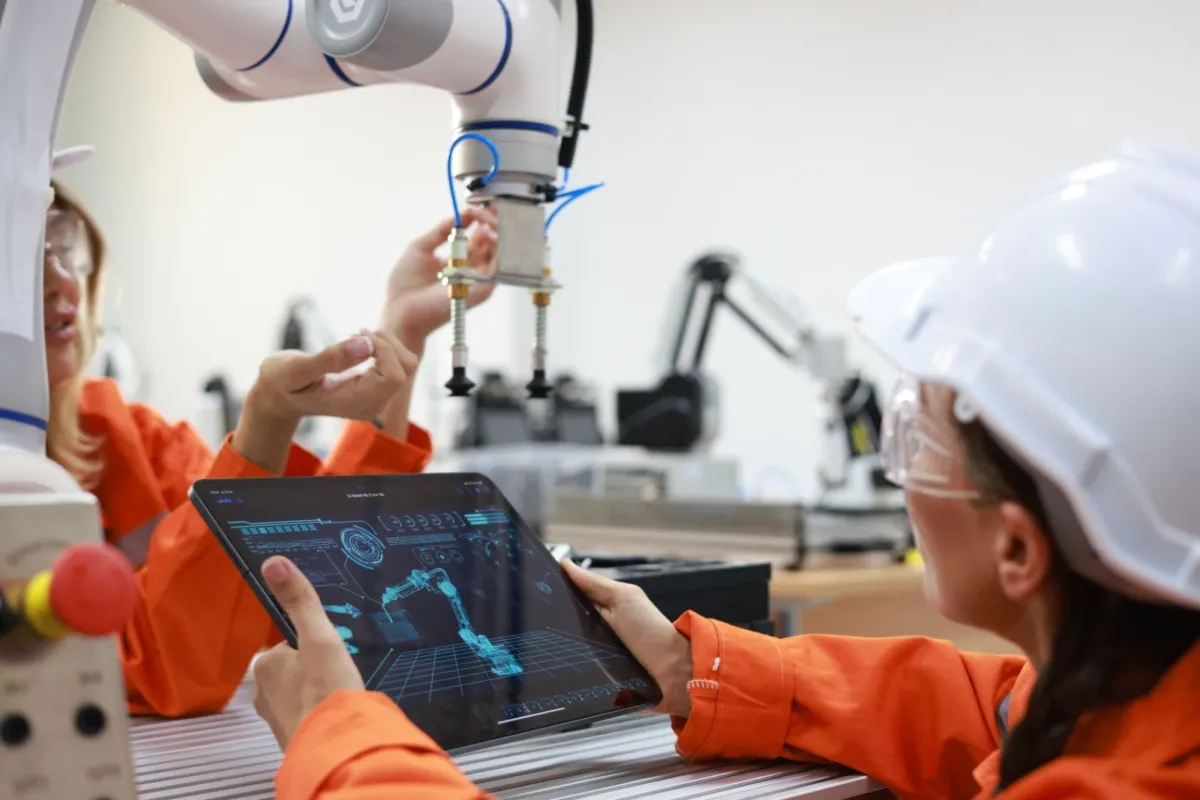
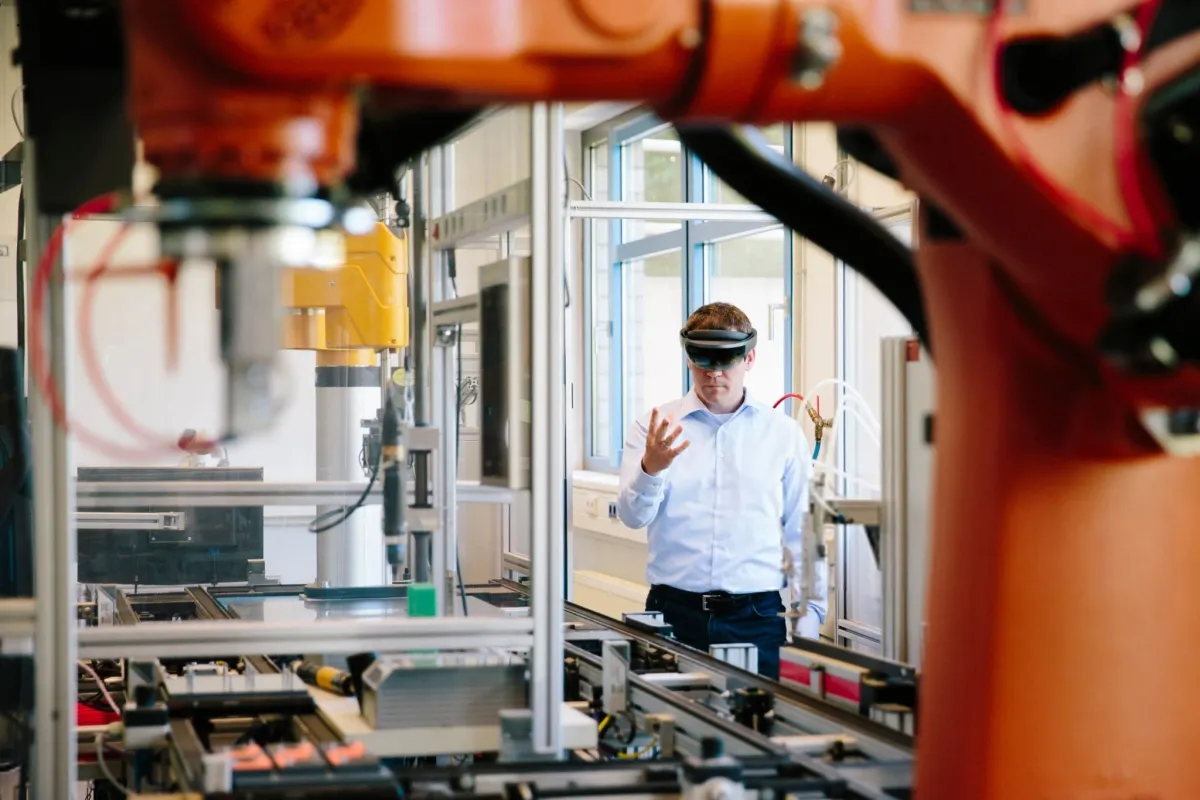
Manufacturers are increasingly using robots because many factories are struggling to find enough workers with the right technical skills. Automation can handle repetitive, dangerous or highly precise tasks while human workers focus on supervision, maintenance, engineering, problem-solving and other higher-value activities.
Recent industry discussions at IMTS 2026 in Chicago highlighted AI, robotics and automation as some of the biggest forces shaping manufacturing. Industry experts also pointed to severe demand for automation as manufacturers attempt to deal with labor shortages and improve productivity.
This is particularly important for countries where aging populations and shrinking workforces are creating long-term labor challenges.
A factory that once needed hundreds of workers for repetitive processes may increasingly rely on a combination of people, robots and intelligent software.
The Rise of the Microfactory
One of the more interesting developments is the emergence of smaller, highly automated manufacturing facilities.
Traditional factories are often enormous operations designed to produce huge quantities of standardized products. But new technologies are making it easier to build smaller and more flexible production facilities.
These so-called microfactories can combine robotics, additive manufacturing and other advanced technologies to produce parts closer to where they are needed.
This can reduce transportation requirements and shorten production lead times.
It could also change the economics of manufacturing.
Instead of producing everything in one enormous factory on the other side of the world, companies may increasingly operate networks of smaller, highly automated facilities located closer to customers.
That does not mean traditional mega-factories are disappearing. Rather, the future could involve a combination of large-scale production and smaller specialized facilities.
Automation Is Accelerating Faster Than Many Companies Expected
The transformation may be bigger than simply installing a few robots.
A PwC survey of 443 senior executives across 24 territories found that the median share of industrial manufacturers expecting highly automated processes is projected to increase from 18% to 50% by 2030. Among companies identified as more «future-fit,» the figure could reach 65%.
That suggests automation is moving from an optional investment to a strategic priority.
The companies gaining the most from this shift may not necessarily be those that buy the most advanced machines.
Instead, the winners could be manufacturers that successfully connect their machines, software, data and employees into one system.
The Factory of the Future Will Be Connected
Imagine a factory where machines continuously communicate with one another.
A production line detects that a component is beginning to wear out. Sensors send the information to an AI system. The system compares the data with historical performance and predicts that the component may fail within several days.
Maintenance is scheduled before the breakdown.
At the same time, another AI system notices that a particular batch of products has a slightly higher defect rate. Cameras and sensors identify the source of the problem, while production software adjusts the process.
Managers do not have to wait for a monthly report to discover what happened.
They can see what is happening almost in real time.
This is the concept behind the increasingly connected «smart factory.»
The World Economic Forum's 2026 outlook describes this shift as a move from traditional automation toward intelligent, connected and increasingly autonomous industrial systems.
There Is Still a Problem: Costs Are Rising
The manufacturing recovery does not mean everything is becoming easier.
The latest PMI data also shows renewed pressure on manufacturers.
Global demand is increasing faster than supply in some areas, while factory input costs remain elevated. Supplier delivery times have also lengthened as manufacturers face raw-material constraints and shipping delays.
That creates an interesting situation.
Factories are receiving more orders, but producing those goods can also become more expensive.
Energy, transportation, raw materials and labor all influence the final cost of a product.
This is one reason automation is becoming so attractive.
If manufacturers can increase productivity without increasing labor and operating costs at the same rate, they may be able to protect their margins while meeting stronger demand.
What Happens Next?
The next phase of manufacturing is unlikely to be defined by one technology.
AI alone will not transform a factory.
Robots alone will not transform it either.
The bigger change comes when artificial intelligence, robotics, sensors, industrial software, digital twins, advanced materials and automated logistics begin working together.
That could create factories capable of responding to changing demand much faster than traditional production systems.
A factory might produce one product in the morning and switch to another product later in the day with minimal downtime.
That flexibility could become increasingly valuable as companies attempt to shorten supply chains and bring production closer to their customers.
The Bigger Picture
The global manufacturing industry appears to be entering an important transition.
On one side, demand is recovering. On the other, manufacturers are facing higher costs, labor shortages and increasingly complex supply chains.
Technology offers a possible answer.
AI can help factories make better decisions. Robotics can handle repetitive work. Sensors can identify problems earlier. Digital twins can help companies simulate production environments. Automated logistics can move materials through factories more efficiently.
Together, these technologies are changing what a factory can be.
The most important manufacturing story of the coming years may therefore not be about whether robots will replace humans.
It may be about something more fundamental:
How much more can a factory produce when humans and intelligent machines work together?
That question could define the next generation of global manufacturing.