
The Razor-Thin Margins on the Forecourt
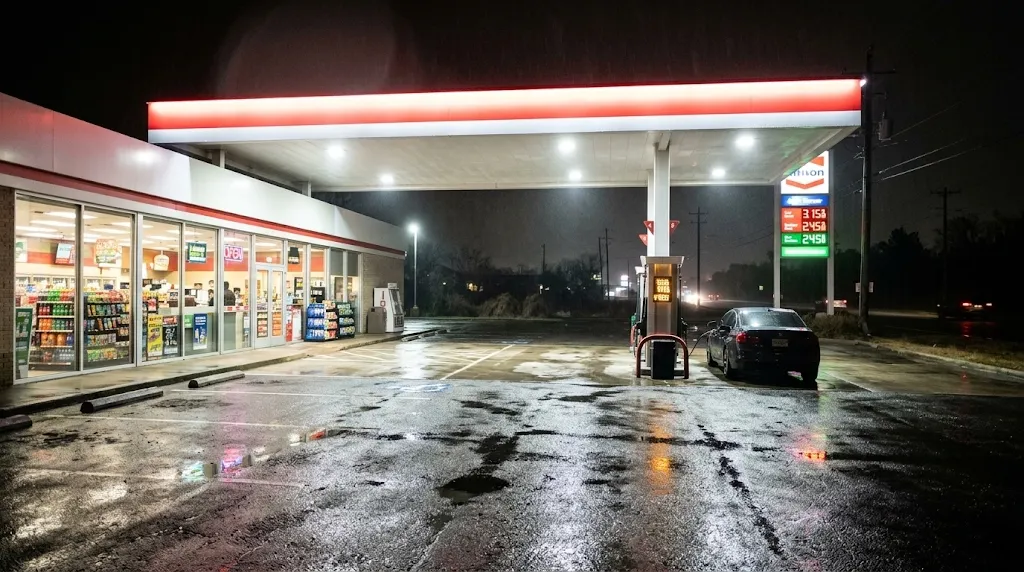
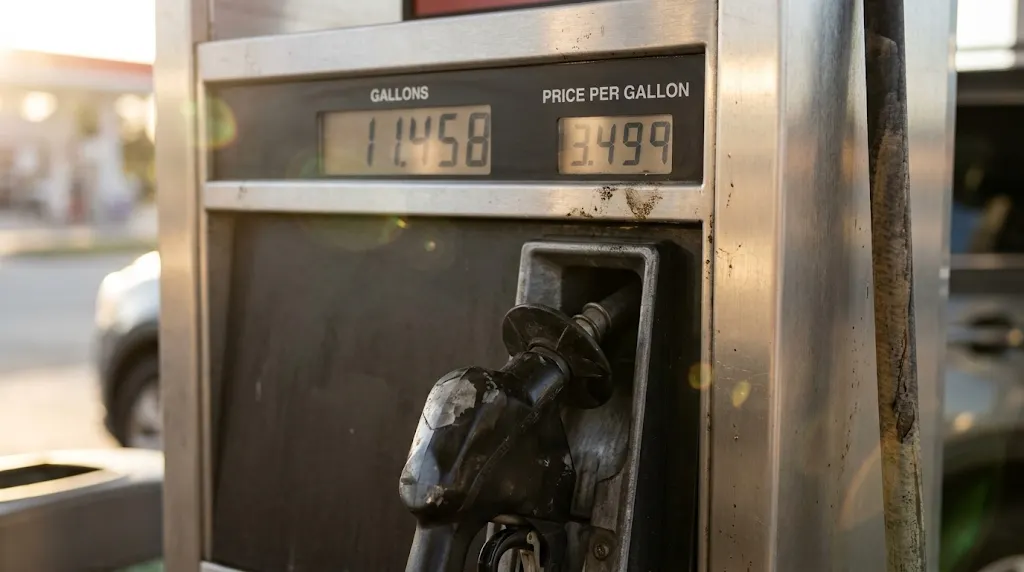
If you want to understand how roadside commerce actually survives, ignore the glowing green dollar sign on the four-story highway marquee. A modern gas station owner makes roughly five to seven cents on a gallon of fuel—barely enough to cover credit card swipe fees and pump maintenance.
Drivers pull off the interstate seething over high pump prices, assuming the business owner is walking away with pockets full of cash. In reality, retail fuel is a high-volume loss leader designed to achieve exactly one objective: pull moving automobiles off the highway asphalt and coax drivers through the glass front doors of the convenience store.
The Anatomy of a $3.50 Gallon
When you swipe your card and pump forty dollars of unleaded into your vehicle, where does that cash actually go? According to annual breakdown data from the National Association of Convenience Stores (NACS), roughly fifty-five percent flows directly back to crude oil producers. Another fourteen percent covers refinery operations, while federal, state, and local taxes consume an average of eighteen percent.
How Starlink Became the High-Stakes Cash Cow Powering SpaceX
By the time wholesale pipeline distribution costs and credit card processing merchant fees are subtracted, the local retailer is left fighting over pennies. If a customer pays with a rewards credit card that charges a 2.5 percent merchant fee, that processing fee alone can wipe out more than half of the station's entire retail margin on the fuel transaction.
The Real Profit Engine Behind the Glass Doors
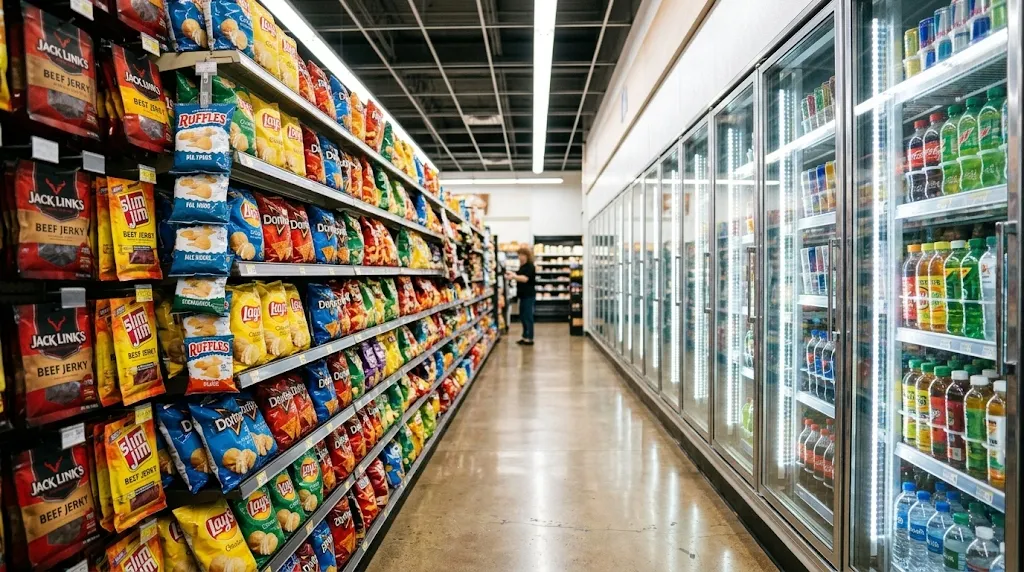
Step inside past the automated sliding doors and the economic equation flips upside down. The merchandise sitting on convenience store gondolas operates on gross profit margins that would make high-end department stores envious.
"Fuel pays the refinery and keeps the streetlights on. But the thirty-two-ounce fountain soda, the bag of beef jerky, and the automated car wash are what actually pay the business owner's mortgage."
A fountain soda that sells for $1.99 costs the station operator roughly twelve to fifteen cents in syrup, carbonated water, plastic cup, and straw. That represents an astonishing eighty-five percent gross margin. Packaged salty snacks, energy drinks, and candy bars routinely generate forty to fifty percent margins. While fuel accounts for seventy to eighty percent of total top-line revenue at a typical location, in-store retail sales generate over seventy percent of the station's total gross profit dollars.
| Product Category | Share of Revenue | Gross Profit Margin | Typical Net Profit Per Sale |
|---|---|---|---|
| Retail Gasoline (Forecourt) | 70% – 80% | 1.5% – 3.0% (Net) | $0.05 – $0.08 per gallon |
| Fountain Drinks & Coffee | 4% – 6% | 75% – 85% | $1.40 – $1.80 per cup |
| Packaged Snacks & Jerky | 8% – 12% | 40% – 50% | $1.20 – $2.50 per item |
| Automated Car Wash | 2% – 4% | 60% – 70% | $4.00 – $7.00 per cycle |
The Psychology of the Impulse Corridor
Station architecture is deliberately engineered to maximize dwell time and foot traffic conversion. Pumps are spaced far enough from the building to prevent congestion, but the entrance doors are lined up directly with the central checkout counter. Refrigerated beverage vaults are almost universally positioned along the back wall, forcing customers who just want a cold water or iced tea to walk past hundreds of high-margin impulse items.
Promotional bundles like 'Buy two energy drinks for $4.50' or 'Add a candy bar for $1.00 with any coffee' are carefully negotiated with direct-store-delivery distributors. Manufacturers pay slotting allowances and co-op advertising dollars to secure premium endcap displays right at eye level.
The Rise of the Mega-Travel Plaza
As electric vehicles and hybrid powertrains gradually alter consumer refueling habits, the line between gas station and destination retailer is blurring completely. Regional powerhouse chains like Buc-ee's, Wawa, and Sheetz have abandoned the traditional dingy four-pump corner footprint in favor of fifty-thousand-square-foot travel centers featuring artisan bakeries, made-to-order barbecue, and rows of pristine restrooms.
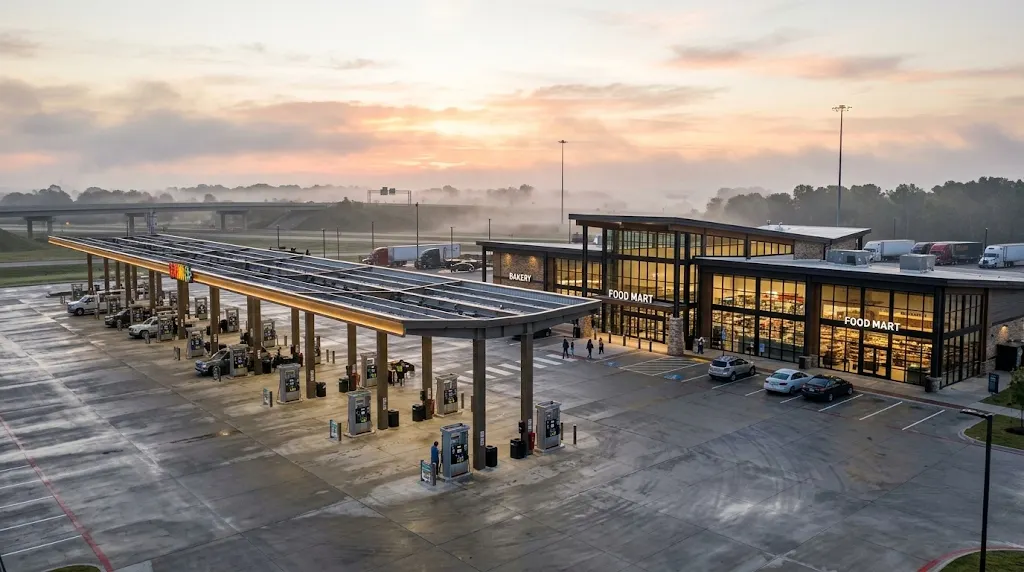
These operators understand what convenience retail really sells: speed, predictability, and creature comforts. The pumps outside may display the brand logo and draw thousands of motorists off the turnpike every single day, but the cash register inside the snack aisle remains the true economic heartbeat of the American highway.