
The Real Reason Supermarkets Spray Your Greens
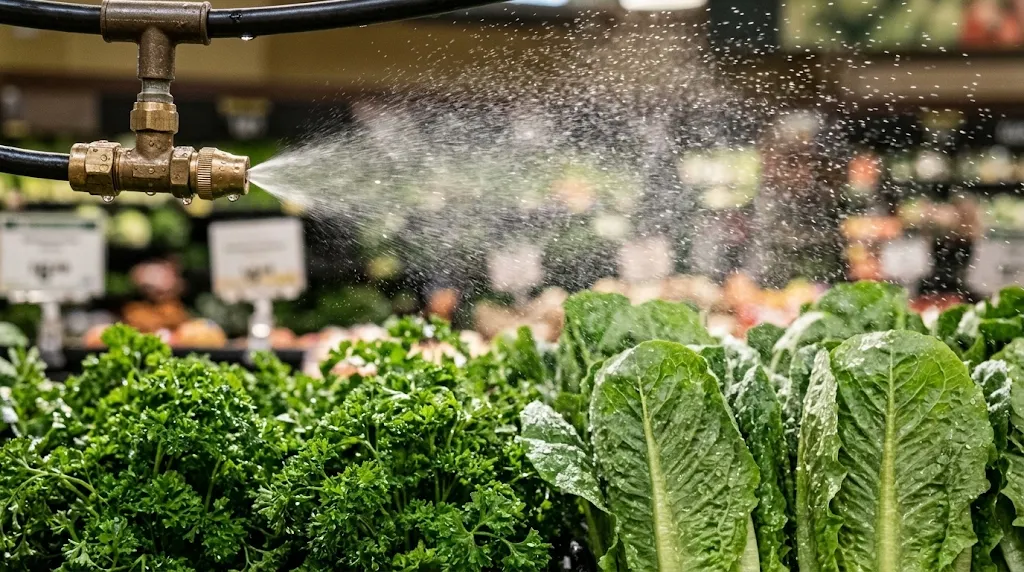
Next time you walk through the produce section, you will probably hear that fake thunder sound right before tiny nozzles spray water all over the lettuce and broccoli. Most of us think the store is just keeping the vegetables fresh and cold for us.
The truth is pretty simple: water is heavy, and produce is sold by the pound. Trapping all that water in the leaves adds quick weight at the checkout scale, and it actually makes your greens turn into brown slime in your fridge a lot faster.
Gas Stations Barely Make Money on Gas. The Real Profit Engine Is the Snack Aisle
The Free Profit Hiding on the Digital Scale
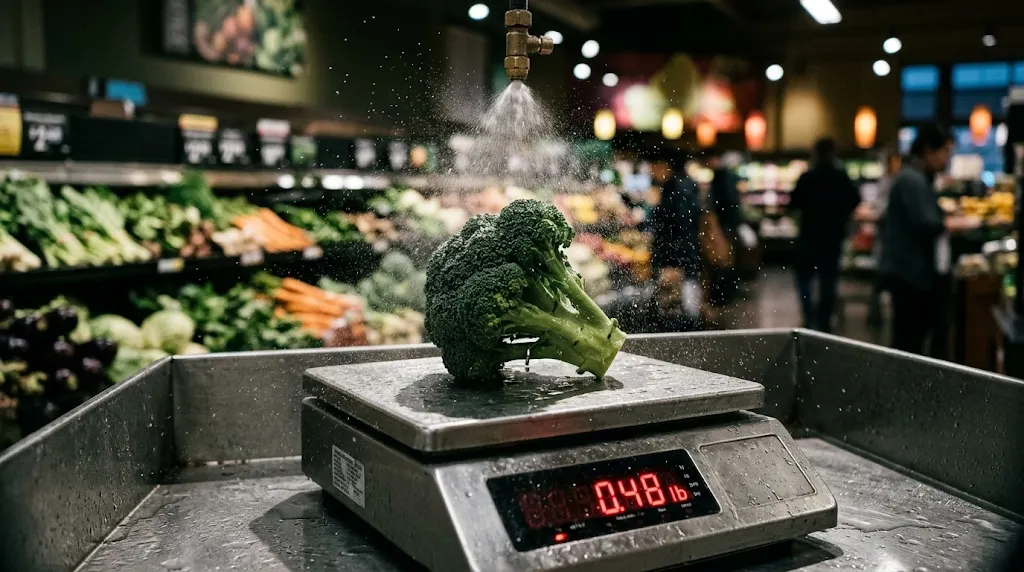
If you take a dry head of broccoli fresh out of a cardboard shipping crate and put it on a digital scale, it weighs right around 16 ounces—one clean pound. But if you hold that same broccoli under a store sprayer for just five seconds and shake it off, the scale jumps to nearly 18 ounces. That ten percent jump is nothing but ordinary tap water caught inside the tight green flowerets.
If broccoli is selling for $2.99 a pound, the customer is paying roughly thirty cents of pure profit for a few spoonfuls of municipal water. When you multiply that tiny surcharge across twelve thousand heads of broccoli, bunches of parsley, and stalks of celery every week, a busy supermarket pulls in tens of thousands of dollars each year in pure water sales.
Why Standing Water Turns Leaves Into Slime
The financial incentive makes it impossible for grocery stores to turn off the sprayers. But the real penalty gets paid at home in your refrigerator crisper drawer three or four days later. Plant cells need oxygen to stay crisp. When wet romaine or spinach gets packed into a tight plastic bag in a cold fridge, you create an artificial swamp.
Harmless surface bacteria like Pseudomonas thrive in standing moisture at forty degrees. They start eating away at the thin plant cell walls, turning crunchy leaves into that smelly brown liquid at the bottom of the crisper drawer. If stores kept the shelves cold and dry, your greens would easily last twice as long without losing their crunch.
| Produce Item | Dry Crate Weight | Misted Shelf Weight | Added Water Ratio | Hidden Water Cost at Scale |
|---|---|---|---|---|
| Crown of Broccoli | 16.0 oz (1.00 lb) | 17.6 oz (1.10 lb) | +10.0% Water | +$0.30 at $2.99/lb |
| Curly Parsley Bunch | 6.4 oz (0.40 lb) | 7.4 oz (0.46 lb) | +15.6% Water | +$0.20 at $1.99/lb |
| Romaine Lettuce | 14.0 oz (0.87 lb) | 15.4 oz (0.96 lb) | +10.0% Water | +$0.27 at $2.69/lb |
| Stalk of Celery | 20.0 oz (1.25 lb) | 21.4 oz (1.33 lb) | +7.0% Water | +$0.21 at $2.49/lb |
The Lighting Trick That Fools Our Eyes
Why not just sell dry vegetables if wet ones spoil so fast? The answer comes down to store psychology. Under bright supermarket fluorescent lights, dry leafy greens look dull, matte, and slightly dusty. Tiny water droplets act like microscopic mirrors, catching overhead light and making the vegetables look sparkling, crisp, and fresh out of the soil.
"Shoppers instinctively reach for glistening vegetables because our brains equate wet leaves with morning garden dew. In reality, that surface water is simply an optical trick that makes old greens look fresh while speeding up bacterial decay."
The Asparagus Sponge Secret
Take a closer look next time you pass the chilled display where pencil asparagus stands upright in plastic trays. Beneath the stalks sits a three-inch foam pad soaked in ice-cold water. Asparagus stalks have hollow vascular bundles that act just like drinking straws.
If you leave asparagus standing in wet trays for twelve hours, the stalks drink up nearly fifteen percent of their own weight in water. While it keeps the spears pointing straight up, it also means that when you buy two pounds of asparagus, you are easily paying more than a dollar just for the tap water sitting in the bottom of the tray.
How to Beat the Produce Aisle Trick at Home
You do not have to accept soggy greens or pay for free tap water. Store workers know the secret, and it only takes two simple habits to make your vegetables last two full weeks at home:
- The Cart Shake: Before dropping any bunch of greens or broccoli into your cart, grab the stems and shake it firmly over the ice shelf three or four times. You will knock off one to two ounces of loose water right there on the spot.
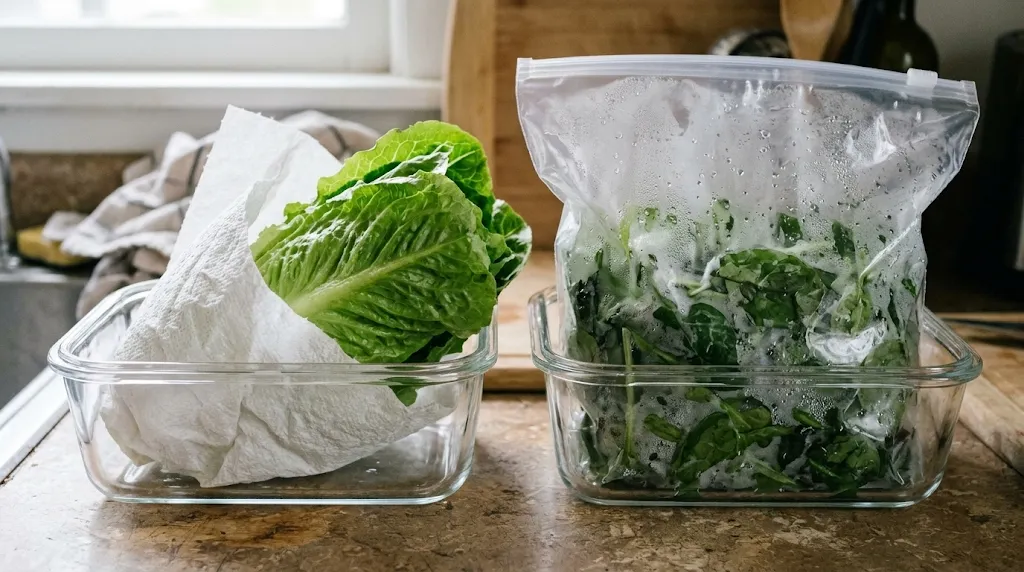
- The Paper Towel Wrap: As soon as you unpack your groceries at home, take your greens out of the store plastic bag. Wrap the base and leaves in a clean, dry paper towel before putting them into a sealed container. The paper towel absorbs the moisture, stops bacterial rot, and keeps the leaves crunchy for up to fourteen days.
Next time you hear that thunderstorm sound over the grocery store speakers, you do not have to fall for the trap. Give the mist nozzles a knowing smile, shake your greens over the shelf, and stop paying grocery prices for municipal tap water.