
The Broken Flask That Refused to Fall Apart
In the autumn of 1903, a French chemist named Edouard Benedictus climbed a wooden library ladder in his Paris laboratory to grab a bottle of reagents off a top shelf. As he reached up with one hand, his elbow accidentally clipped a glass flask sitting on the edge of the shelf. The heavy glass container tumbled fifteen feet down to the hard stone floor below.
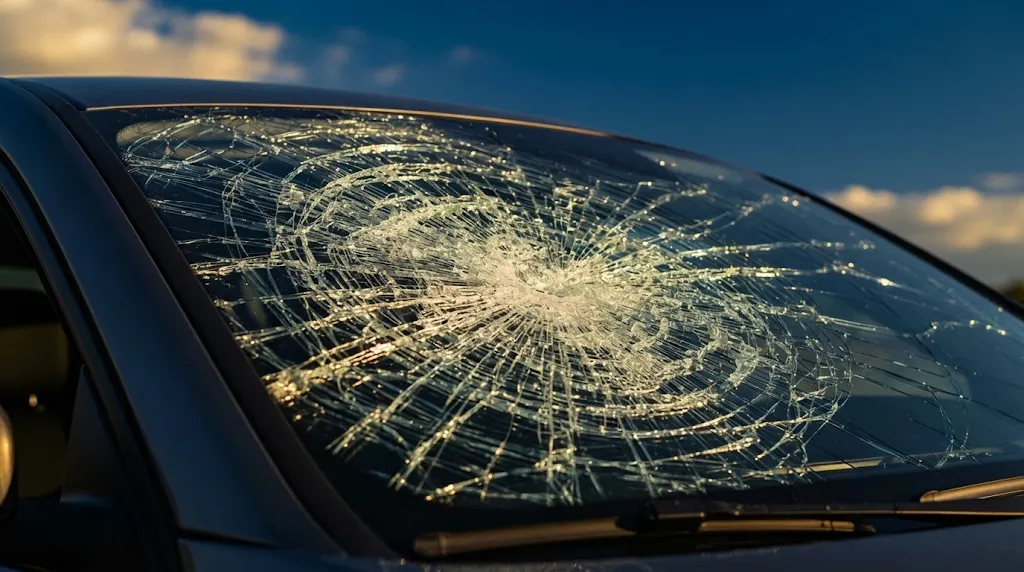
Benedictus flinched and looked down, expecting to find shattered shards of glass scattered across the entire room. Instead, he found the flask sitting upright on the flagstones. The glass had shattered into thousands of tiny spiderweb cracks, but every single piece was still locked firmly in place.
The bottle had completely kept its hollow shape, like an intact transparent eggshell.
The Supermarket Vegetable Spritz: Why Grocery Aisles Make Produce Rot Faster on Purpose
Benedictus climbed down the ladder and picked up the broken flask in his bare hands. He rubbed his fingers along the cracked surface without getting a single scratch.
He soon remembered that fifteen days earlier, he had mixed a solution of liquid cellulose nitrate inside that very container. The volatile solvent had slowly evaporated over two weeks, leaving behind an invisible, feather-light plastic enamel film bonded to the interior glass wall.
Benedictus grabbed a label, wrote 'Broken Flask Laboratory Curiosity,' and set it back on a shelf, forgetting about it for several months.
How a Paris Traffic Crisis Sparked an Invention
During a freezing week in Paris that winter, Benedictus read a series of graphic front-page newspaper articles about motor car accidents along the Champs-Elysees. In the early 1900s, automobiles had windshields made of plain window glass.
Whenever a car bumped into a carriage or stopped abruptly, the fragile glass shattered into heavy daggers that flew into drivers' faces, causing horrific injuries and blindness.
Benedictus remembered his dropped flask. He locked himself in his workshop for three straight days with a manual bookbinding press, sheets of gelatin, and celluloid plastic.
By laminating a thin, elastic sheet of clear plastic between two outer layers of glass under high mechanical pressure, he created the world's very first sheet of shatterproof safety glass. When struck by a hammer, the glass cracked into spiderwebs, but the flexible plastic core held the sharp fragments together, stopping shards from flying through the air.
From Battlefield Biplanes to the Ford Model A
At first, European automobile makers refused to buy his invention because safety glass cost three times as much as ordinary plate glass. Car companies considered passenger safety a luxury rather than a necessity.
The turning point came during World War I, when the French military began fitting Benedictus's laminated glass into the eyepiece lenses of gas masks and the windscreens of early biplanes, saving thousands of soldiers from flying shrapnel.
By 1919, American automaker Henry Ford saw the technology and made laminated safety glass standard equipment on every Ford Model A, effectively wiping out flying glass injuries on American roads overnight.
| Glass Type | Manufacturing Process | Fracture Behavior | Primary Automotive Role |
|---|---|---|---|
| Tempered Glass | Heated to 1,200°F and blast-quenched with cold air | Shatters into thousands of blunt, harmless pebbles | Side cabin windows and rear passenger glass |
| Laminated Safety Glass | Two glass sheets fused to a PVB core under high heat & pressure | Cracks into spiderweb patterns while remaining fully intact | Front windshield and roof structural panels |
The Anatomy of Modern Windshields
Inside a commercial automotive glass replacement shop, master technicians replace dozens of windshields every single day. On a padded work trestle sits a damaged windshield struck by a jagged stone at highway speeds.
That rock hits with enough force to crack a brick in half, leaving a white star-shaped crater. Yet running a finger along the inside cabin glass reveals a completely smooth surface.
The outside glass broke, the inside glass held its shape, and a thin sheet of polyvinyl butyral (PVB) plastic in the middle absorbed the shockwave like a rubber trampoline. Without that plastic core, flying debris would penetrate directly into the vehicle cabin.
Tempered Side Windows vs. Laminated Shields
Many drivers assume all automotive glass is the same, but vehicle windows serve completely different safety roles. Side windows are made of tempered glass, baked in a high-heat furnace so they shatter into tiny blunt pebbles during a crash, allowing quick escape.
The front windshield, however, acts as a critical structural shield. In modern passenger vehicles, the laminated windshield supports up to forty percent of the entire roof strength during a rollover, keeping the cabin from collapsing.
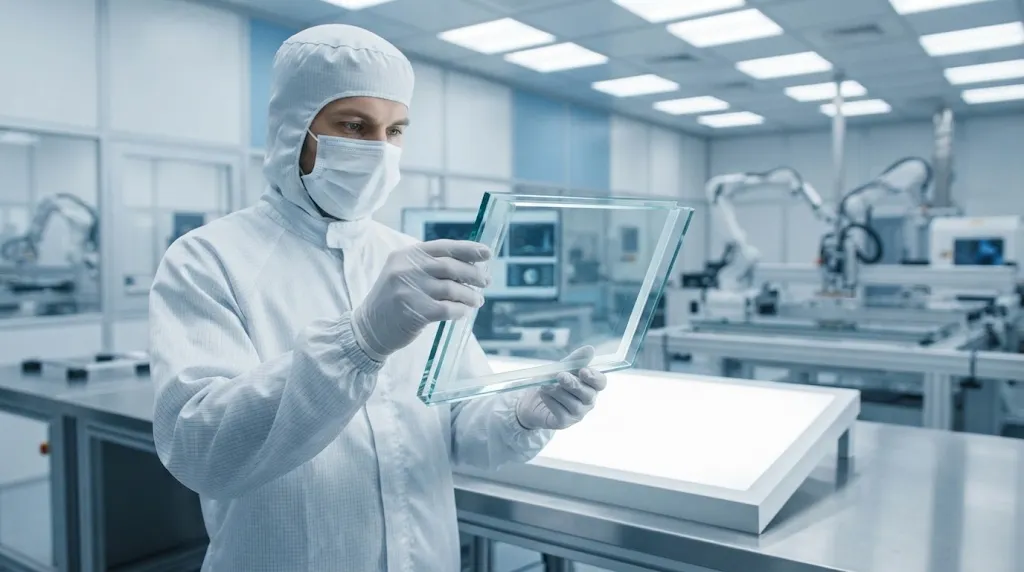
To manufacture this glass sandwich, two curved glass sheets and the central PVB layer enter an autoclave oven at two hundred degrees Fahrenheit under fourteen atmospheres of pressure. That immense heat and pressure purge every microscopic air bubble, fusing them into a crystal-clear pane that never delaminates.
Why Small Chips Need Immediate Repair
When a stray road pebble chips your glass, waiting weeks to fix it often turns a minor issue into a major replacement. Wiper fluid, summer road dust, and winter salt quickly seep into the microscopic fissure.
The moment overnight temperatures drop below freezing, trapped moisture expands into ice, fracturing the outer glass layer. A simple resin patch that takes fifteen minutes suddenly turns into a full windshield replacement.
The next time a stray rock strikes your windshield with a loud crack, take a moment to look at the mark. That spiderweb crater is over a century of life-saving chemical engineering doing its job.