
Bearded Barbet: A Small African Bird That Is Hard to Miss
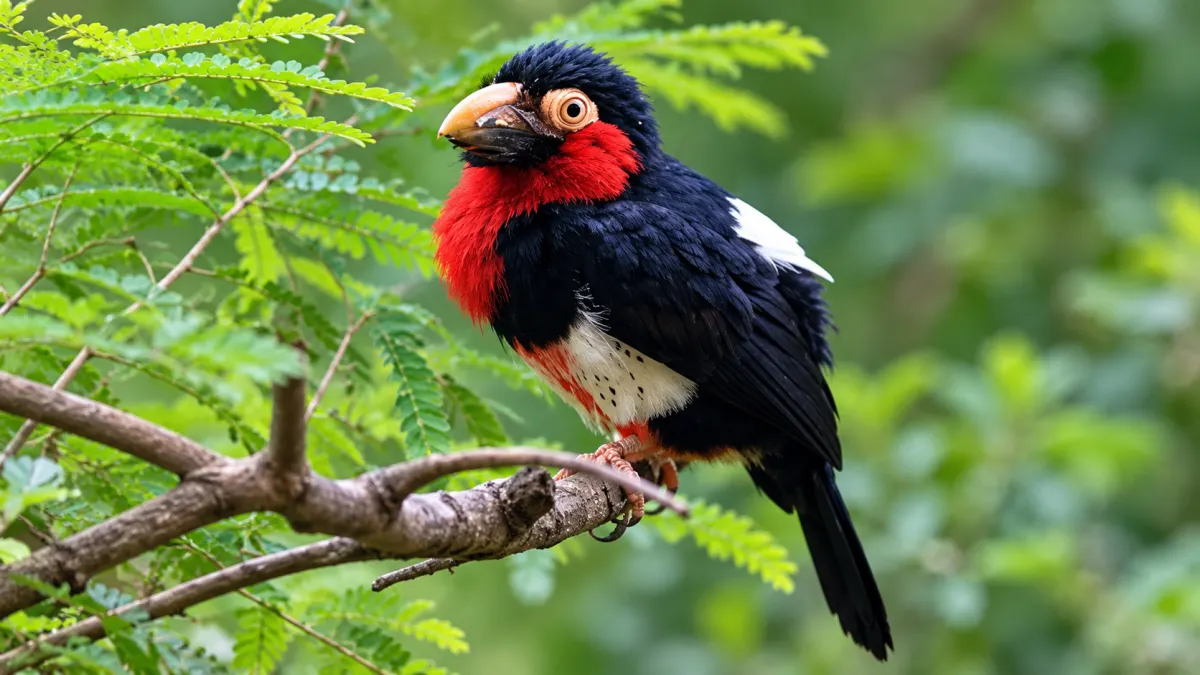
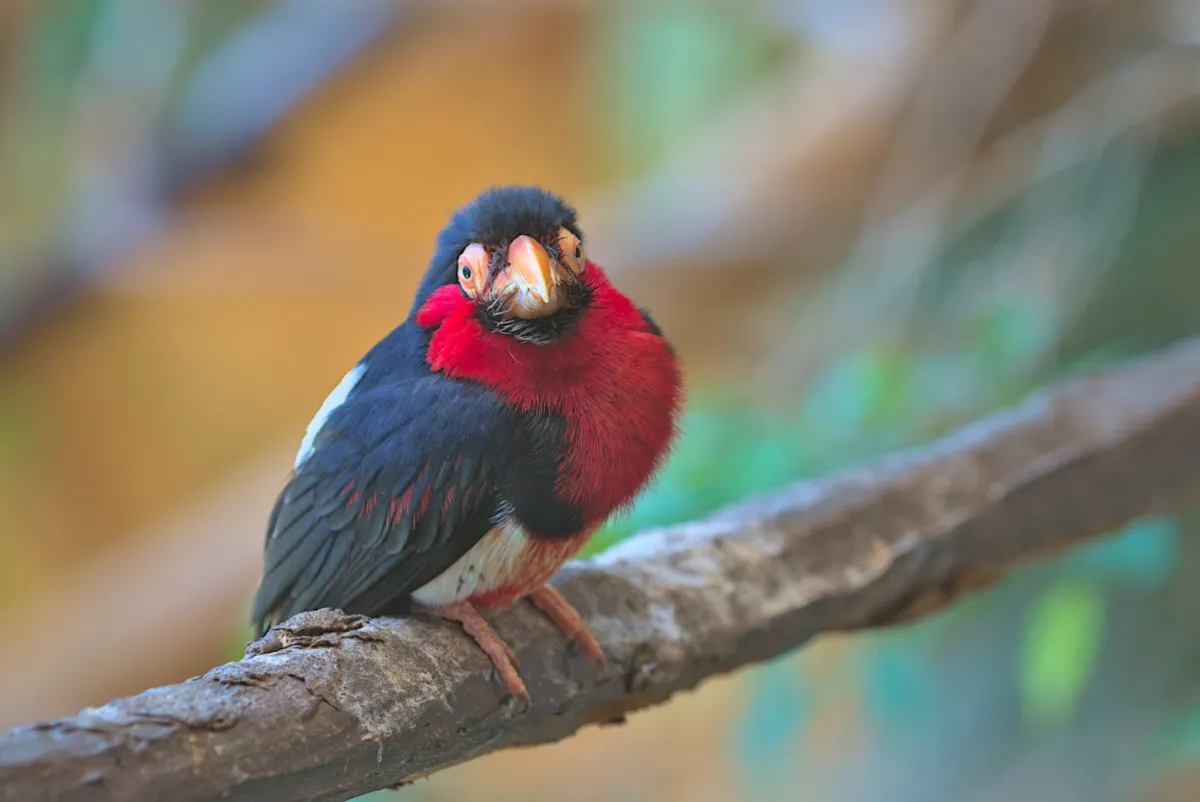
At first glance, the Bearded Barbet looks almost as if it were designed rather than evolved. Its glossy black plumage contrasts sharply with a bright red throat and belly, while a pale eye patch and oversized ivory-colored bill give it an unmistakable appearance.
Known scientifically as Pogonornis dubius, the Bearded Barbet is an African member of the barbet family, Lybiidae. It lives mainly in tropical parts of West Africa, where it can be found in woodland, savanna, gardens, thickets, and areas containing fruiting trees.
But its appearance is only part of the story. This unusual bird has a powerful bill that helps it deal with tough fruit and excavate nesting cavities in trees.
What Does a Bearded Barbet Look Like?
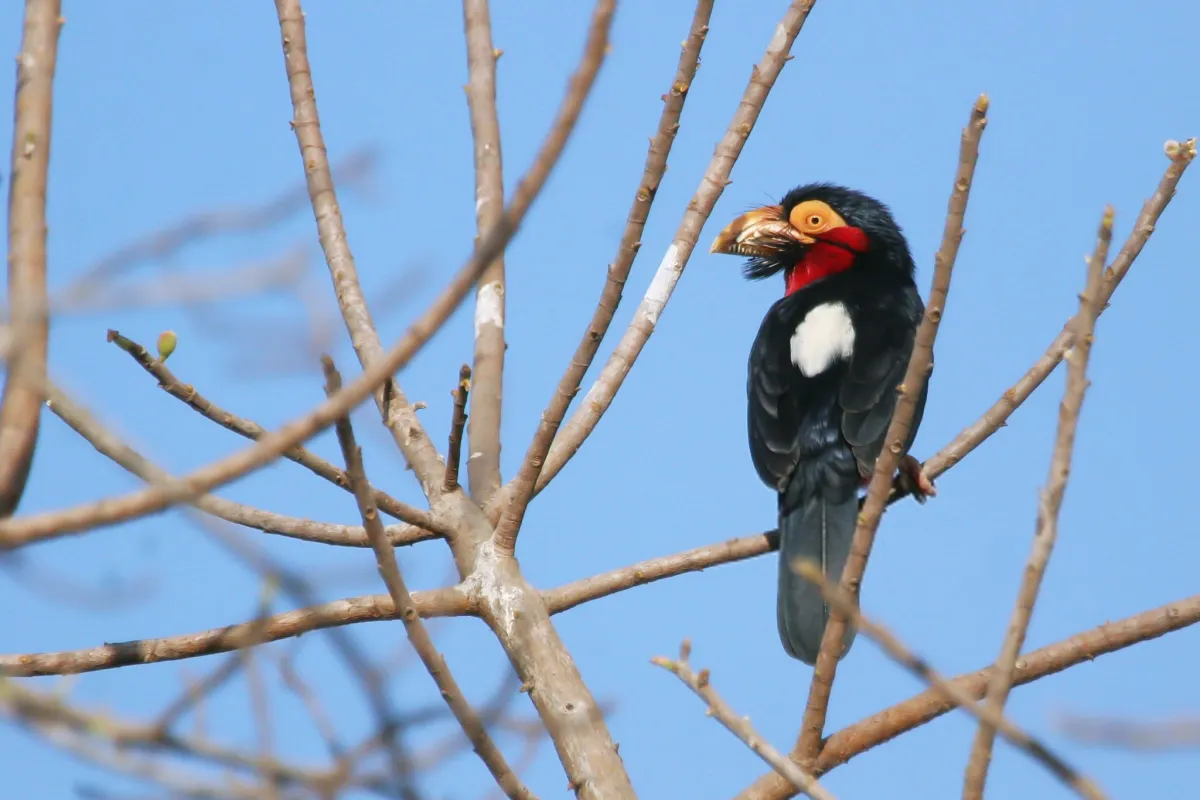
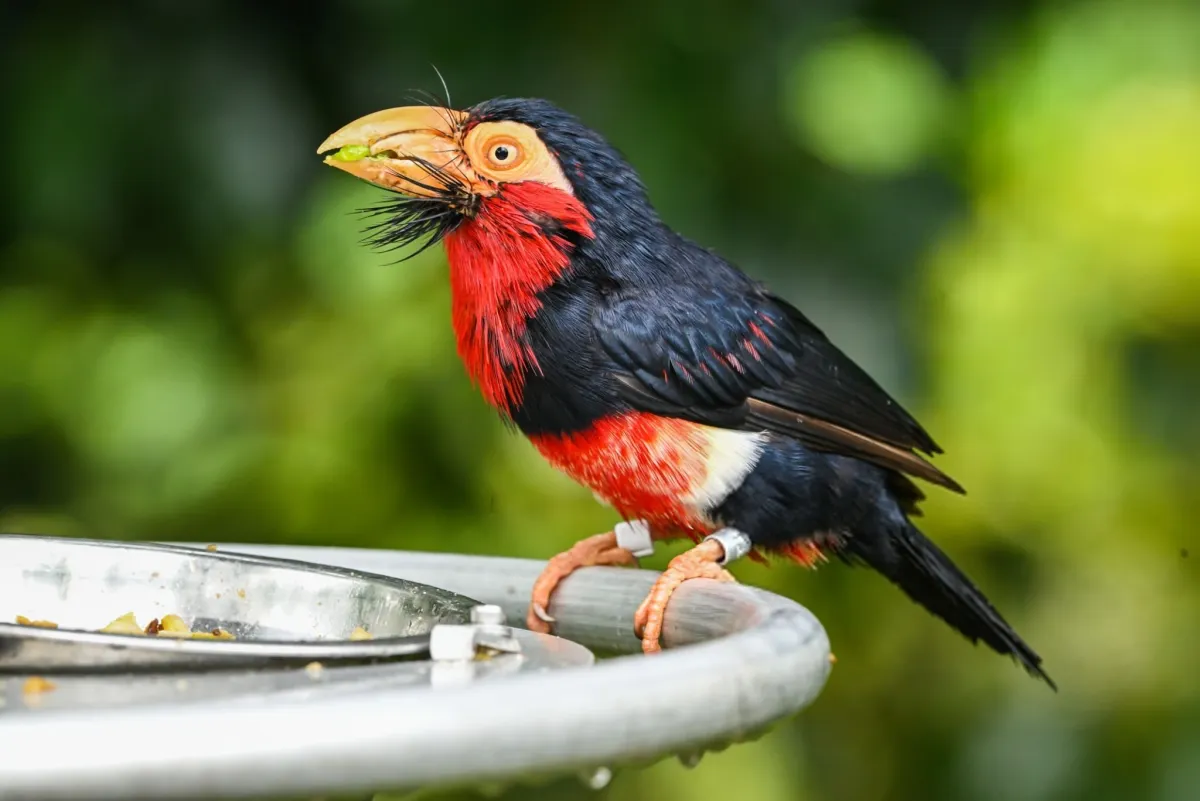
The Bearded Barbet is a relatively large and stocky barbet, measuring around 26 centimeters (10 inches) in length. Its body is dominated by black feathers, but several bright markings make the species easy to recognize.
The adult typically has:
- A black crown, back and tail
- A vivid red throat and upper breast
- A broad black band across the chest
- A pale or yellowish area around the eye
- A white rump
- A large pale yellow or ivory-colored bill
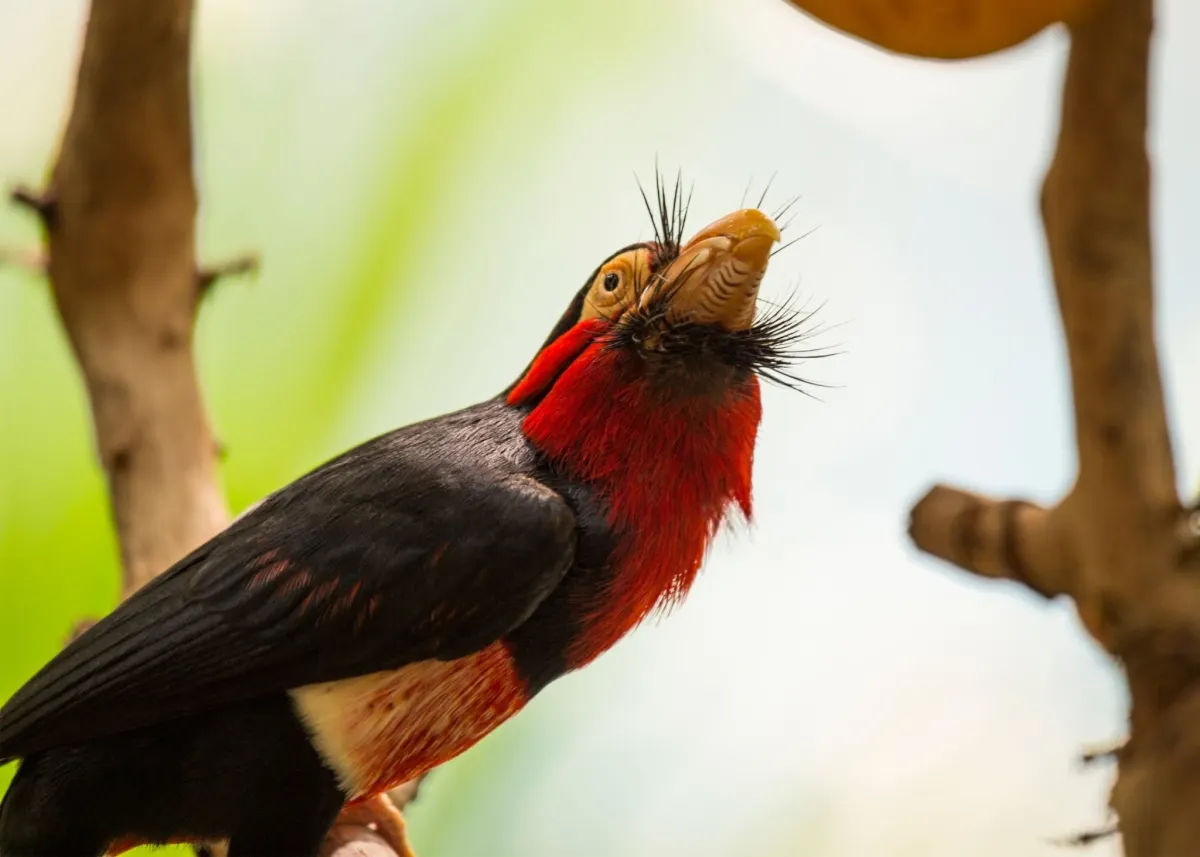
- Bristle-like feathers around the base of the bill
Those bristles are the reason behind the bird's common name, «Bearded Barbet.»
Read More

The combination of red, black, white and yellow makes it particularly striking when photographed against green vegetation.
Why Does the Bearded Barbet Have a "Beard"?
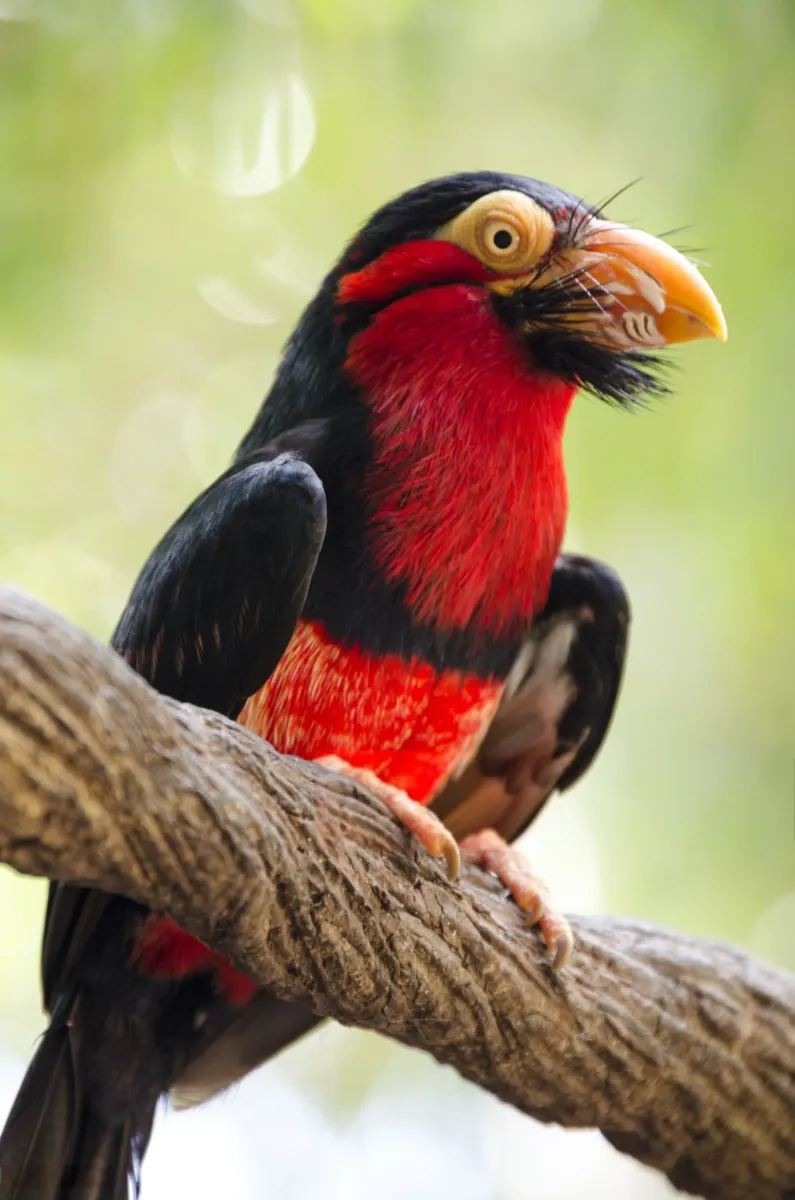
The most unusual feature is right around the bird's bill.
Unlike an ordinary smooth-faced bird, the Bearded Barbet has a noticeable cluster of stiff, hair-like feathers surrounding the base of its large bill. These feathers give the bird its distinctive bearded appearance.
Its bill is also more than just a feeding tool. Barbets have powerful bills adapted for handling fruit and working on wood. The Bearded Barbet can use its bill to excavate cavities in trees, which can later serve as nesting or roosting sites.
Where Does the Bearded Barbet Live?
The Bearded Barbet is a resident bird of tropical West Africa rather than a long-distance migrant.
It occurs across parts of the region, using several types of habitats. It is particularly associated with wooded areas, savanna, gardens, thickets and fruit-bearing trees. Figs are especially important in places where the species occurs.
Interestingly, the bird does not necessarily need untouched forest. It can also make use of gardens and areas of secondary vegetation when suitable trees and food are available.
That adaptability helps explain why the species can be encountered in landscapes that have been modified by people.
What Does the Bearded Barbet Eat?
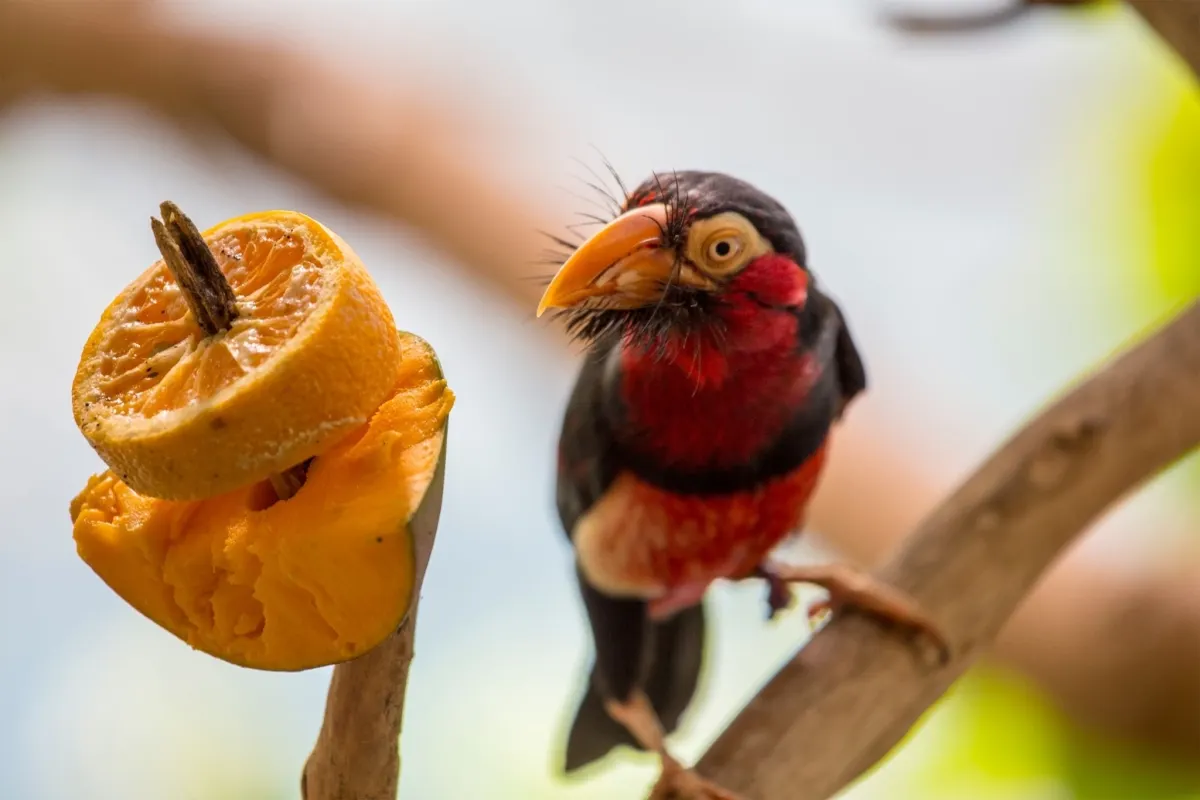
Fruit makes up a major part of the Bearded Barbet's diet.
Figs are particularly important, although the bird can also take fruit from other trees. It may visit gardens where fruiting plants provide an easy source of food.
Young birds, however, have different nutritional needs. Adults feed nestlings insects, providing them with a richer source of protein while they are growing.
This makes the species more than simply a fruit-eating bird. Its feeding habits change according to its stage of life.
A Bird That Helps Spread Seeds
There is another reason fruit-eating barbets are interesting.
When birds eat fruit, they can move seeds away from the parent plant. The Bearded Barbet therefore participates in the natural movement of seeds through its habitat.
The Saint Louis Zoo specifically identifies Bearded Barbets as important seed dispersers, while also noting their strong association with figs and other fruits.
In other words, a bird searching for its next meal can also be helping new plants appear elsewhere.
How Does the Bearded Barbet Make Its Nest?
One of the most fascinating things about this bird is that it does not simply build a conventional nest among leaves and branches.
Instead, Bearded Barbets excavate cavities in trees. Suitable nesting locations can include dead branches or tree stubs, and their powerful bills allow them to work into relatively soft or decaying wood.
A typical clutch consists of two white eggs.
Available observations indicate that incubation lasts roughly 15–16 days, while young birds may remain in the nest for around 40 days before leaving.
Bearded Barbets Are Often Seen in Small Groups
Although seeing one Bearded Barbet is already enough to attract attention, these birds are not always solitary.
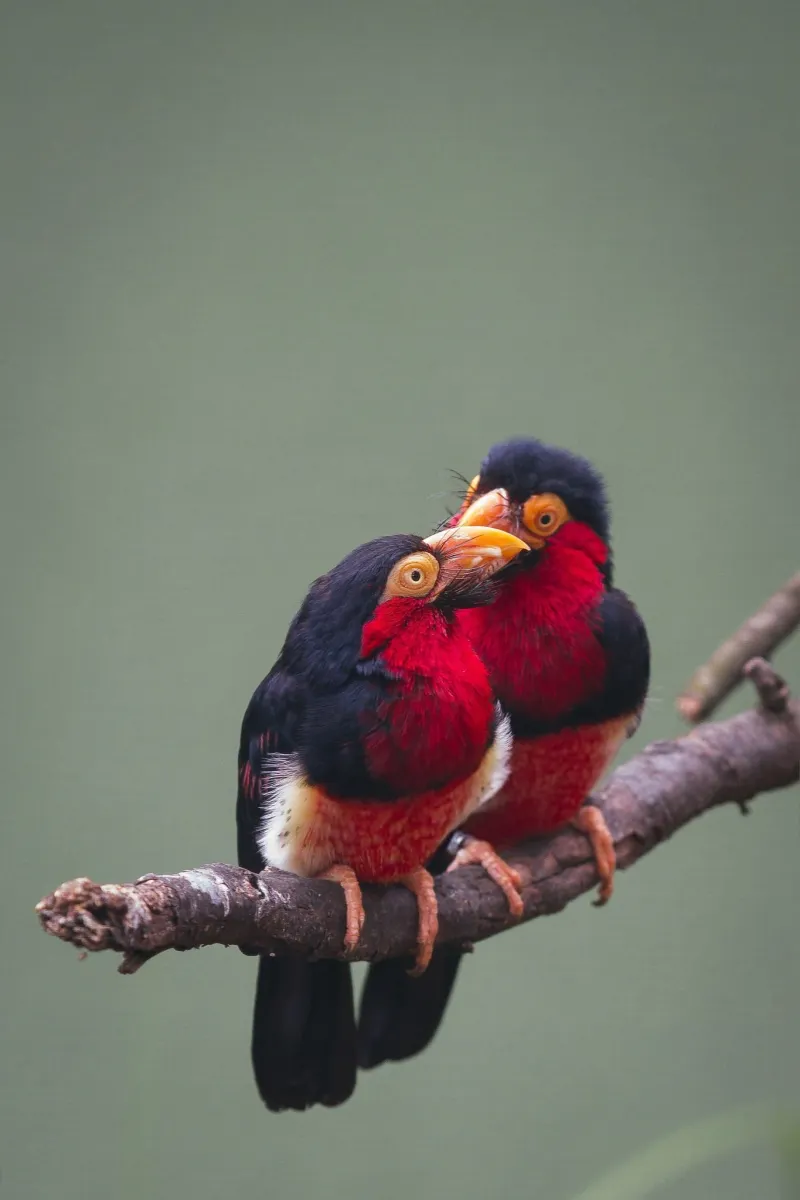
They are frequently observed in pairs or small groups, particularly around areas with abundant food. eBird describes them as most often occurring in pairs or small groups.
Some sources have also reported groups of several birds sharing roosting areas in tree cavities.
This social behavior becomes especially interesting when several colorful birds gather around a fruiting tree.
What Does a Bearded Barbet Sound Like?
The Bearded Barbet may be visually striking, but its voice is considerably less delicate.
Its call has been described as a rough, growling or explosive sound. eBird describes a characteristic rough “rwauk” call that can be repeated slowly.
This is useful for birdwatchers because dense vegetation can make the bird difficult to spot. Sometimes the sound can reveal that a Bearded Barbet is nearby before the bird itself becomes visible.
The Bearded Barbet's Powerful Bill Is More Important Than It Looks
The enormous bill is perhaps the feature that immediately catches the eye, but it is also an important adaptation.
The bill can be used for handling fruit and working into wood. According to the Saint Louis Zoo, barbets have tooth-like adaptations along their bills that help them deal with tough fruit and excavate cavities in rotten trees.
That means the same basic tool serves several purposes:
Finding food → processing fruit → excavating wood → creating a nesting cavity
For such a colorful bird, its lifestyle is surprisingly practical.
Where Can You Find the Bearded Barbet?
The species occurs in tropical West Africa, with records across a number of countries in the region. It is associated with wooded landscapes, savanna, gardens, thickets and areas containing fruiting trees.
Rather than being restricted to one tiny habitat, it can use a variety of landscapes as long as appropriate food and nesting resources are available.
This flexibility is particularly interesting for a bird whose preferred foods include figs and other fruit.
Is the Bearded Barbet Endangered?
The Bearded Barbet is currently classified as Least Concern.
BirdLife records the species as Least Concern, and current species information from zoological institutions likewise lists the same conservation category.
That does not mean that every population or habitat is free from pressure. Local habitat changes can still affect birds by reducing the availability of fruiting trees and suitable nesting sites.
For the Bearded Barbet, protecting wooded habitats and mature or dead trees can therefore be relevant to maintaining the resources it needs.
Bearded Barbet at a Glance
| Feature | Details |
|---|---|
| Common name | Bearded Barbet |
| Scientific name | Pogonornis dubius |
| Family | Lybiidae |
| Length | About 26 cm |
| Main range | Tropical West Africa |
| Habitat | Woodland, savanna, gardens, thickets |
| Main food | Fruit, especially figs |
| Food for young | Insects |
| Nesting site | Tree cavities |
| Typical clutch | 2 white eggs |
| Social behavior | Pairs and small groups |
| Conservation status | Least Concern |
Why This African Bird Is So Photogenic
The Bearded Barbet is almost perfectly suited to wildlife photography.
Its dark plumage creates a dramatic contrast with the brilliant red throat, while the enormous pale bill immediately draws attention to the face. Put the bird on a natural branch surrounded by green leaves and the result is an unusually colorful wildlife subject.
Its relatively compact body also makes it possible to capture several details in a single photograph: the beard-like bristles, eye patch, bill, red throat, white markings and dark tail.