

The Fragile Lifeline in the Night Sky
When artillery bombardments and cruise missiles obliterate cellular transmission towers, fiber-optic exchanges, and electrical power grids, modern armies and civilian defense networks are instantly thrown into technological darkness. Without communications, field hospitals cannot request critical medical supplies, regional commanders cannot coordinate troop movements, and emergency rescue workers cannot locate survivors trapped beneath collapsed concrete. In twenty-first-century warfare, high-speed digital communications are just as vital as ammunition.
Read More


Over the past four years, that communications blackout was miraculously prevented across Eastern Europe not by state defense ministries or multinational alliances, but by thousands of pizza-box-sized white satellite dishes scattered across rural ditches, trench lines, and municipal bunkers. Powered by car batteries and pointing silently toward the night sky, these rugged commercial terminals restored high-speed broadband connections within seconds, linking frontline units directly to overhead swarms of low Earth orbit satellites.
Yet this technological miracle has exposed a chilling vulnerability in international statecraft. Because the entire satellite constellation, ground relay architecture, and encrypted control software are privately owned, critical decisions about national defense and battlefield operational zones rest not with elected heads of state, but with the personal judgment of a single corporate executive. When geopolitical strategy is decided by one private individual's ethical instincts or commercial calculations, traditional military sovereignty is turned on its head.
Defense analysts point out that never before in modern history has a single private corporation held de facto veto power over a sovereign nation's tactical offensives. While defense contractors have supplied weapons and communications equipment to governments for centuries, physical munitions once purchased belong entirely to the state. Satellite megaconstellations, by contrast, operate under software-defined geofences that can be instantly deactivated or restricted with a few lines of code executed half a world away.
This dynamic creates an unprecedented tension between private corporate policy and military operational necessity. Commercial tech leaders frequently operate under their own philosophical views about warfare, escalation, and conflict resolution. When those personal viewpoints clash with the strategic objectives of sovereign nations defending their borders, military planners suddenly discover that their high-tech communication network comes with invisible strings attached.
The Geofence Dilemma: When Software Overrules Generals
The true fragility of this reliance became undeniable during high-stakes naval operations along contested coastlines. As uncrewed maritime drone vessels laden with explosives sped across dark open waters toward hostile naval warships, their encrypted broadband data links suddenly vanished. The remote video feeds cut to black, navigation controls went dead, and the multimillion-pound strike drones drifted harmlessly onto rocky shorelines. The satellite network had not suffered a technical glitch; the provider had simply declined to extend coverage over that specific geographic coordinate.
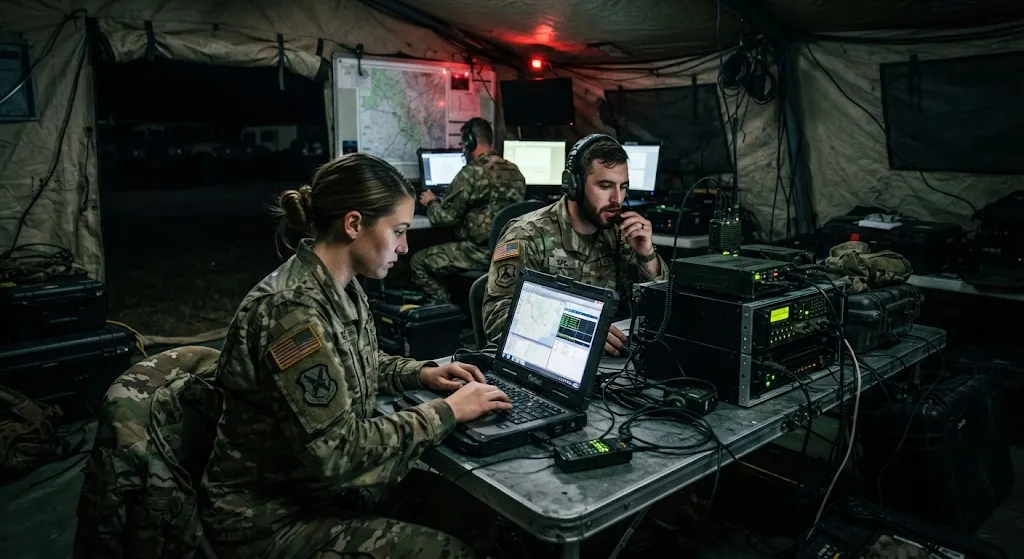
The corporate reasoning was straightforward: the provider stated that its commercial terms of service strictly prohibited its consumer communications equipment from being converted into weaponized offensive guidance systems, fearing direct international escalation. But to military commanders risking their lives in field command tents, the sudden deactivation felt like an arbitrary betrayal that crippled a decisive tactical counteroffensive in real time.
This incident sparked intense closed-door debates in defense ministries from Washington to Brussels and Tokyo. National security leaders realized that modern digital warfare had created an unprecedented dependency. Sovereign nations had outsourced their most sensitive tactical communications backbone to a civilian tech enterprise that was not bound by military treaties, parliamentary oversight, or mutual defense pacts. If a billionaire disagrees with a foreign government's tactical maneuvers, that government can find itself abruptly blinded on the battlefield.
The operational risks extend far beyond offensive operations. Field doctors attempting to coordinate emergency telemedicine across blackout zones have found connections throttled, while civilian humanitarian corridors have had their digital lifelines abruptly curtailed whenever local geofence boundaries shifted without warning. The sheer unpredictability has forced frontline commanders to maintain cumbersome backup radio networks that were supposed to be obsolete decades ago.
Furthermore, reliance on a single corporate network makes frontline communications vulnerable to sudden pricing changes, unilateral billing disputes, and technical terms-of-service revisions. During an active conflict, an army cannot pause military operations to renegotiate bandwidth tiers or dispute contract clauses. The asymmetry of power between a private provider and a nation fighting for its survival illustrates how profoundly commercial space technology has disrupted traditional geopolitical power structures.

The Scramble for Sovereign Skies
Faced with the alarming reality of single-provider vulnerability, governments around the globe are rushing to build sovereign, state-controlled satellite constellations. The European Union has committed billions of euros to develop its own sovereign low Earth orbit telecommunications swarm, designated IRIS², explicitly designed to guarantee secure military and governmental connectivity completely independent of American commercial tech tycoons.
Meanwhile, the United States Department of Defense has moved quickly to establish dedicated military-specific procurement contracts. Rather than relying on commercial consumer subscriptions that can be altered or curtailed at will, defense departments are commissioning dedicated militarized satellite tiers with guaranteed, non-negotiable operational uptime and sovereign control over geographic coverage boundaries.
Yet launching thousands of sophisticated satellites into low Earth orbit requires immense industrial capital, specialized aerospace manufacturing lines, and reusable rocket booster fleets that very few nations on Earth currently possess. Building sovereign alternatives will take the better part of a decade and cost tens of billions of taxpayer dollars. Until those government constellations are fully deployed and operational, world leaders navigating high-stakes geopolitical conflicts will remain uncomfortably tethered to private Silicon Valley boardrooms for their most critical lifeline to the world.
As space becomes the ultimate high ground for twenty-first-century security, the boundary between private commerce and national defense is disappearing. The lessons learned in today's battlefields are clear: a nation that does not control its own digital communications does not truly control its own destiny. The global race to launch independent satellite fleets is not just about faster internet speed—it is a desperate struggle to ensure that no single tech executive ever holds the power to turn off an entire war zone again.