

Rumors have been spreading rapidly across the internet and social media in recent days: a young laboratory worker in Siberia reportedly died after developing an illness suspected to be plague, while Russian authorities placed people who had been in contact with her under medical observation amid fears of a wider outbreak.
But the facts remain far less clear than the rumors suggest.
Conflicting reports have circulated over the worker’s identity, age, cause of death and even whether she had actually contracted plague. Russian health authorities have so far stopped short of confirming a plague infection.
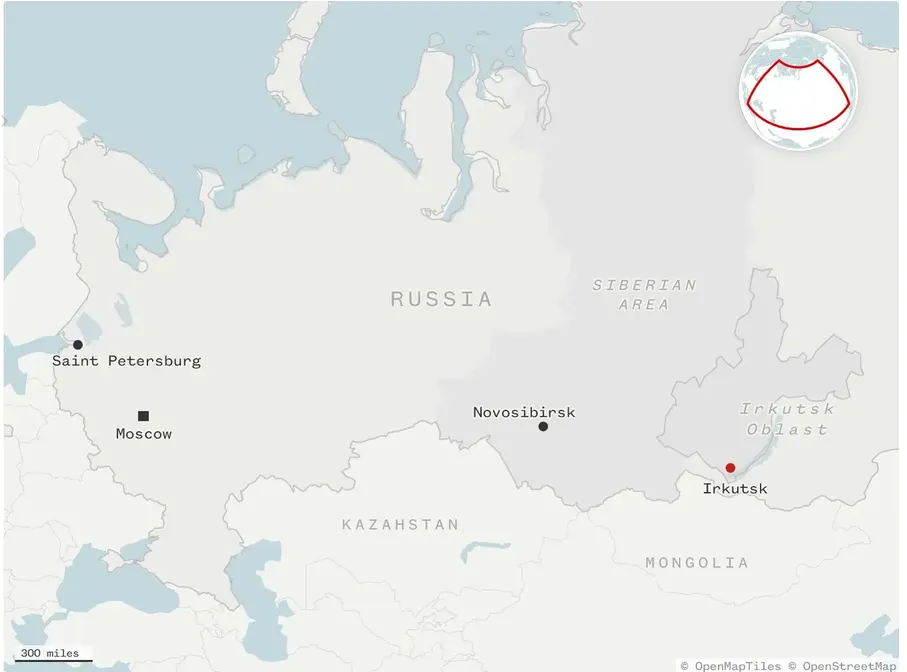
Russia’s consumer and public health watchdog, Rospotrebnadzor, said an employee of the Irkutsk Anti-Plague Research Institute of Siberia and the Far East had developed “pneumonia of unknown etiology.” The agency said tests had found no microorganisms linked to the woman’s professional activities.
The uncertainty has nevertheless fueled speculation, particularly after several contradictory statements by regional officials and the reported deletion of some social media posts concerning the incident.
The Kremlin has urged people to rely on official information rather than speculation.
So, what actually happened in Irkutsk—and how serious is the threat?
The Official Story
Russian authorities have not publicly confirmed that the laboratory worker died from plague.
Rospotrebnadzor said the woman had been diagnosed with pneumonia of unknown origin and that expanded testing had failed to identify microorganisms associated with her professional work. The agency also said that people who had been in contact with her were being monitored and that none had shown changes in health consistent with an infectious disease.
The watchdog also inspected the Irkutsk anti-plague institute to assess compliance with biological safety requirements. According to the agency, investigators found no emergency involving pathogenic microorganisms.
The institute conducts research on several dangerous infectious diseases, including plague.
Plague is caused by the bacterium Yersinia pestis. Despite its association with the Middle Ages and the Black Death, the disease has not disappeared. Human cases still occur in parts of the world, particularly in regions where the bacterium circulates naturally among small mammals and their fleas.
The good news is that plague is treatable with antibiotics when diagnosed and treated promptly. The World Health Organization says early treatment can be highly effective, while the CDC recommends starting appropriate antimicrobial therapy as soon as plague is suspected rather than waiting for final laboratory confirmation.
Rospotrebnadzor has described the sanitary and epidemiological situation in the Irkutsk region as stable.
Conflicting Statements Fuel the Rumors
The first signs of a potentially serious incident emerged on Friday, when Irkutsk regional Governor Igor Kobzev said he had held an emergency meeting with Russia's chief sanitary doctor over what officials described as a suspected case of a particularly dangerous infection.
Kobzev said that people who had been in contact with the patient had been placed under medical observation. According to later statements, none of those contacts had developed symptoms and laboratory tests had not identified dangerous infectious pathogens.
Officials in the nearby city of Shelekhov also acknowledged growing concern among residents. Reports indicated that parts of a local hospital were temporarily closed as precautionary measures were introduced.
The most striking statement came from Alexei Tsydenov, governor of neighboring Buryatia. He initially wrote that a woman in the Irkutsk region had “died of plague.” The wording was later changed to say that she had “possibly” died of plague.
That change quickly became one of the main reasons speculation exploded online.
Officials in Baikalsk, a town roughly 80 kilometers from Irkutsk, also reportedly warned residents against traveling to Shelekhov, citing unofficial information about a possible plague case. The post was later deleted.
Several Russian media reports concerning the incident were also reportedly removed or edited, adding to public suspicion.
However, the disappearance of posts does not by itself prove that a laboratory accident or plague outbreak occurred.
What Are the Rumors Saying?
Local and independent Russian media have painted a more alarming picture than the official statements.
Reports identified the deceased worker as 28-year-old Darya Shipilova, a laboratory technician at the Irkutsk Anti-Plague Research Institute. She reportedly became ill on September 30 and died on October 2 after being hospitalized in Shelekhov. Russian authorities have not publicly confirmed all details surrounding her illness.
One widely circulated claim suggested that the worker may have accidentally broken a laboratory vial containing infectious material and subsequently become infected.
That claim, however, has not been independently verified.
Other versions of the story have circulated online, including claims that she became ill after traveling outside the region. There is currently no reliable public evidence establishing any of these explanations.
This distinction is important: a suspected laboratory accident is not the same thing as a confirmed laboratory leak.
At this point, neither Russian authorities nor international health agencies have confirmed that Yersinia pestis escaped from the facility.
Why Were People Quarantined?
The precautionary measures have understandably attracted attention.
Reports indicated that roughly 200 people who may have had contact with the deceased woman were placed under medical observation. Several healthcare facilities in the Irkutsk area were also reportedly subjected to temporary quarantine measures.
Such measures do not necessarily mean that an outbreak has been confirmed.
When a potentially serious infectious disease is suspected—particularly pneumonic plague—health authorities may monitor close contacts while laboratory testing is underway.
The WHO recommends identifying and monitoring close contacts of people with pneumonic plague because this form of the disease can spread through respiratory particles.
In this case, however, authorities have reported that people who were being monitored had not developed signs of the disease.
Should We Be Worried?
For now, there is no evidence that Russia is experiencing a confirmed plague outbreak.
The World Health Organization said on October 6 that Russian authorities had reported no confirmed plague cases in Irkutsk and that people who had been in contact with the deceased worker had tested negative for dangerous infectious pathogens. WHO assessed the risk of international spread as very low.
The U.S. government has also said it is monitoring the situation.
The U.S. State Department told media outlets that it was following reports of the suspected case in coordination with the Centers for Disease Control and Prevention and other agencies, while urging Russian authorities to provide accurate information quickly and openly.
The situation is also very different from the early days of COVID-19.
Plague is caused by a bacterium, not a virus, and it has established antibiotic treatments. Pneumonic plague can be extremely serious and can spread from person to person through respiratory particles, but early diagnosis and treatment dramatically improve the chances of survival.
According to the latest WHO assessment, the risk to the wider population remains low.
What We Know—and What We Don't
At this stage, several facts are relatively clear:
- A laboratory worker at an anti-plague research institute in the Irkutsk region died on October 2.
- Russian authorities have described the illness as pneumonia of unknown etiology, not confirmed plague.
- People who had contact with the woman were placed under medical observation as a precaution.
- No confirmed plague cases have been reported in Irkutsk, according to information provided by Russian authorities to WHO.
- Claims that a laboratory accident caused the infection remain unverified.
- WHO currently considers the risk of the disease spreading beyond Russia to be very low.
What remains unknown is equally important: what caused the woman's illness, whether she was infected with Yersinia pestis, and whether any laboratory incident actually occurred.
Until those questions are answered by laboratory evidence, reports of a confirmed plague outbreak or a laboratory leak should be treated with caution.