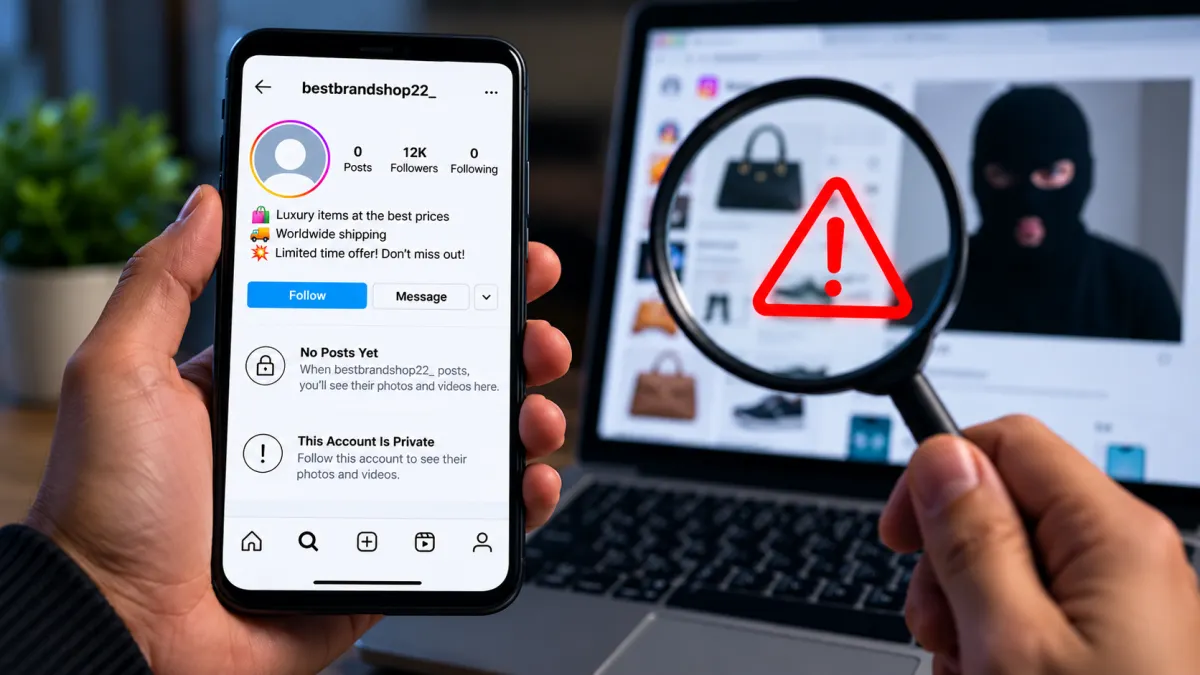

Instagram has become a major platform for shopping, advertising, creators, and small businesses. People now use it to discover products, contact sellers, book services, and even make business deals. But as Instagram commerce has grown, so have fake accounts, impersonation scams, and fraudulent online stores.
Some scam accounts look surprisingly professional. They may have thousands of followers, polished photos, copied branding, and attractive offers designed to make people act quickly. That is why checking an Instagram account before making a purchase or sharing personal information is so important.
A few minutes of research can help you avoid losing money, giving away sensitive information, or dealing with a seller who disappears after receiving your payment.
How North Korea Funds Its Military and Nuclear Program Despite Global Sanctions
What Is a Fake Instagram Account?
A fake Instagram account is a profile created with false, misleading, or stolen information. Some are designed to impersonate real people or businesses, while others exist mainly to attract victims, promote fraudulent products, collect personal information, or artificially increase followers and engagement.
Not every unfamiliar account is a scam. Some legitimate small businesses and new creators may have limited information or a short history. The important thing is to look at several warning signs together rather than judging an account by a single detail.
Fake Personal Accounts
These accounts may use a fake name, stolen profile photo, or copied biography. They can be used to send spam, promote suspicious offers, impersonate someone you know, or attempt to start a conversation that eventually leads to a scam.
Brand Impersonation Accounts
Scammers often copy the name, logo, photos, and overall appearance of a legitimate company.
Sometimes the difference is extremely small. The username may contain an extra character, a period, an underscore, or a slightly different spelling.
Before purchasing from a brand's Instagram page, compare the username and profile with the company's official website and other verified social media accounts.
Fake Online Stores
Fake stores are particularly risky because they are designed to look like legitimate businesses.
They may advertise popular products at unusually low prices, promote limited-time deals, or claim that only a few items are left in stock. After receiving payment, the seller may never ship anything, send a counterfeit product, or disappear completely.
A lack of business information, a suspicious payment method, no clear return policy, and pressure to pay immediately are all reasons to slow down and investigate further.
Why Do People Create Fake Instagram Accounts?
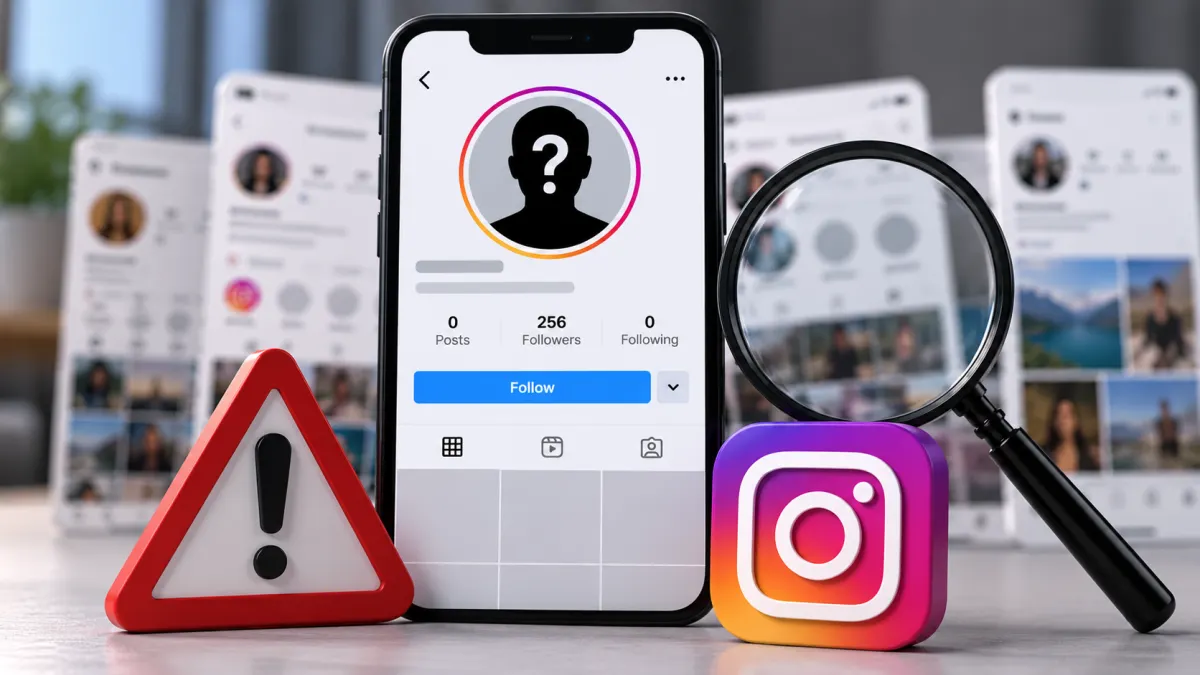
Fake accounts can be created for many different reasons. Some are used for direct financial scams, while others are designed to collect personal information, spread misleading advertisements, manipulate engagement, or redirect users to suspicious websites.
Understanding the most common motives makes suspicious accounts easier to recognize.
Financial Scams
One of the most common goals is to take money from users.
Scammers may advertise expensive products at unbelievably low prices or create a sense of urgency with phrases such as «today only» or «last few items.»
After receiving payment, they may stop responding, block the customer, or delete the account.
Personal Information Theft
Some fake accounts are designed to collect sensitive information.
A scammer may ask for your phone number, account password, verification code, payment information, home address, or other personal details.
They may also send a link that appears to lead to Instagram, a bank, a delivery company, or another familiar service. The link may actually lead to a phishing website designed to steal your login information.
Never share a verification code or password with someone who contacts you unexpectedly.
Fake Advertising and Artificial Engagement
Not every fake account is directly trying to steal money.
Some accounts are created to artificially increase followers, likes, comments, or views. Others promote questionable products, services, websites, or investment opportunities.
Even when no immediate financial loss occurs, fake engagement and misleading advertising can make an account appear much more trustworthy or popular than it really is.
How to Spot a Fake Instagram Account
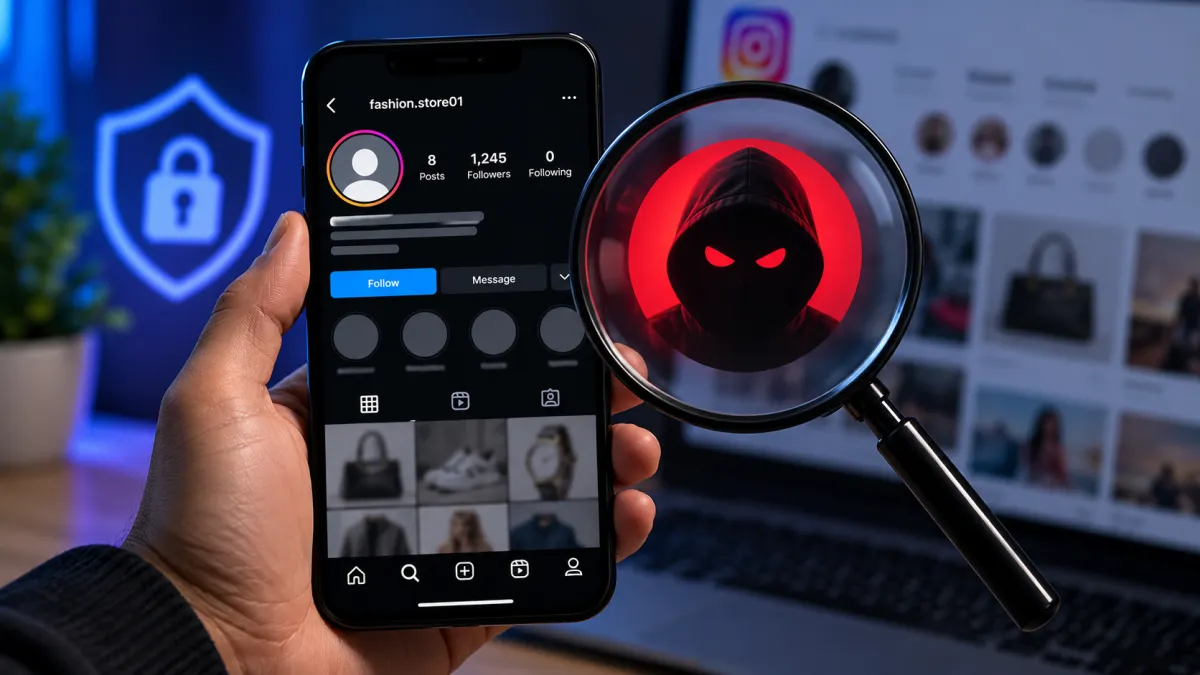
Fake accounts are not always easy to identify. Some scammers put considerable effort into making their profiles look professional.
The good news is that several details can help you evaluate an account before you decide to trust it.
Check How Long the Account Has Been Active
Start by looking at the account's history.
A recently created account is not automatically suspicious, but a brand-new profile making expensive offers deserves additional attention.
Look for:
- A long and consistent posting history
- Older posts with genuine engagement
- Consistent content over time
- A history that matches the business or person being represented
Instagram's About This Account section can also provide useful information. Depending on the account and Instagram's current features, you may be able to see details such as when the account joined Instagram and whether it has changed usernames.
Frequent username changes or a very recent account creation date do not prove that an account is fraudulent, but they can be useful warning signs when combined with other suspicious behavior.
Compare Followers With Engagement
A large follower count does not automatically mean an account is legitimate.
Look at the relationship between followers and actual engagement.
Be cautious when you see:
- Tens of thousands of followers but very few likes
- Large numbers of generic or repetitive comments
- Sudden unexplained follower growth
- Comments that do not seem related to the post
- Followers that appear to be mostly inactive or suspicious accounts
For example, an account with 100,000 followers but only a handful of likes and repetitive comments may have purchased followers or used artificial engagement.
This is not proof of fraud, but it is a reason to investigate further.
Examine the Content
Content quality and consistency can reveal a lot about an account.
A legitimate business will usually have content that makes sense for its products, services, location, and audience.
Suspicious accounts may rely heavily on:
- Photos copied from other websites or social media accounts
- Repeated images or captions
- Stock photos presented as original product photos
- Very little original video
- Generic or copied product descriptions
- No photos showing the actual business or products
If you suspect that an image has been copied, use a reverse image search to see whether the same photo appears elsewhere online.
Check the Contact Information
Legitimate businesses generally make it reasonably easy for customers to contact them.
Depending on the type of business, look for:
- A business email address
- A phone number
- A physical location or service area
- An official website
- Customer service information
- Clear shipping and return information
A missing website does not automatically mean an Instagram account is fake. Many legitimate small businesses operate primarily through social media.
However, if an account claims to be a large established company but provides almost no verifiable business information, that should raise questions.
Look at Customer Reviews
Before buying, search for experiences from other customers.
Do not rely only on testimonials posted by the seller. Look for independent reviews on search engines, review platforms, Reddit, consumer forums, or other reputable sources.
Pay attention to:
- Detailed customer experiences
- Different customers describing similar positive experiences
- How the business responds to complaints
- Whether negative reviews appear to be addressed
- Reviews outside Instagram
Be cautious if every comment looks identical, comments are consistently disabled, or the only available reviews are screenshots posted by the seller.
Search for the Business on Google
One of the simplest ways to investigate an Instagram account is to search for its name outside Instagram.
Search for:
- The business name
- The Instagram username
- The company's website
- Customer reviews
- Complaints or scam reports
- News or consumer warnings
- The company's official social media accounts
For businesses operating in the United States or Canada, you can also check relevant local business directories and consumer-protection resources when appropriate.
A few minutes of independent research can sometimes prevent a much larger financial loss.
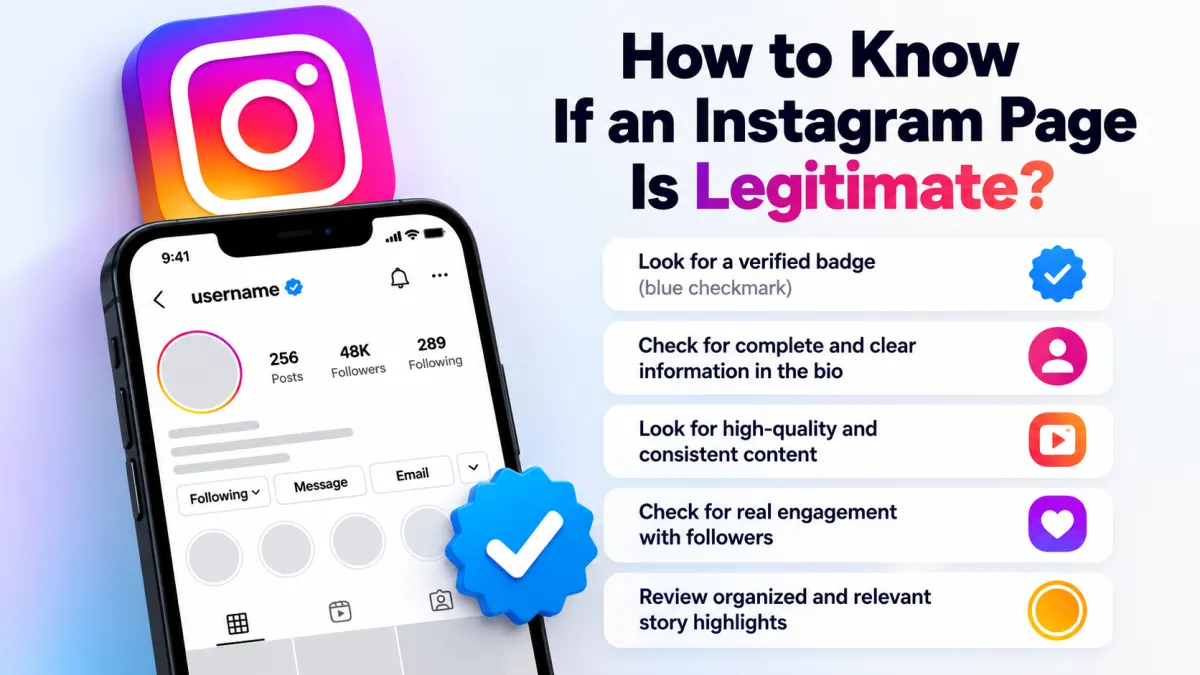
What Makes an Instagram Account More Trustworthy?
There is no single feature that guarantees an Instagram account is legitimate.
Instead, look for several consistent signs that the person or business is genuine.
An Official Website
An official website can provide useful information that may not fit into an Instagram profile.
Look for:
- Business information
- Product details
- Customer service contacts
- Shipping policies
- Return and refund policies
- Privacy information
- Terms and conditions
If a website is listed in an Instagram bio, make sure it actually belongs to the business.
Be especially careful with websites that use a domain name that is almost identical to the real company but contains extra words, unusual characters, or spelling changes.
A Long-Term Online Presence
An established business will often have a history across multiple platforms.
Look for:
- Older Instagram posts
- Consistent activity over time
- Older customer interactions
- A website with a history
- Social media accounts that link back to one another
A long history does not guarantee that a business is honest, but it provides more information to evaluate.
Clear and Professional Customer Service
Pay attention to how the seller communicates with you.
A legitimate business should generally be willing to answer reasonable questions about:
- Product availability
- Pricing
- Shipping
- Returns
- Warranty
- Delivery times
- Payment options
Be particularly careful if someone pressures you to pay immediately, refuses to answer basic questions, changes the terms of the deal, or gives contradictory information.
Major Warning Signs of an Instagram Scam
Some warning signs are especially common among fraudulent accounts.
Prices That Are Too Good to Be True
If a product normally sells for $500 but an unfamiliar Instagram account offers it for $100 with no clear explanation, take a step back.
Compare the price with several established retailers before buying.
A low price is not proof of a scam, but an unusually large difference from the normal market price deserves an explanation.
Extreme or Permanent Discounts
Scammers often use huge discounts to create urgency.
For example, an account offering 70% or 80% off almost everything, every day, without a clear reason may deserve extra scrutiny.
Legitimate businesses can certainly run major sales during events such as Black Friday, seasonal promotions, clearance periods, or store launches. The concern is when extreme discounts are combined with other warning signs.
Pressure to Use Unusual Payment Methods
Be careful when a seller refuses normal payment options and insists on methods that offer little or no buyer protection.
Whenever possible, use payment methods that provide transaction records and, where available, buyer or purchase protection.
Avoid sending money simply because the seller says the offer will disappear within minutes.
No Receipt or Order Confirmation
A legitimate online purchase should normally generate some type of confirmation.
Depending on the business, this could include an order number, receipt, invoice, confirmation email, or shipping information.
If a seller refuses to provide any record of the transaction, consider it a warning sign.
Disabled Comments
Some businesses legitimately restrict comments because of moderation or spam.
However, disabled comments can become more concerning when combined with other warning signs, especially if the seller appears to be hiding customer feedback.
Missing Business Information
A business that refuses to identify itself clearly can be difficult to trust.
Look for a real business name, website, contact information, and other details that can be independently verified.
No Real Photos or Videos of the Products
If every image looks like a catalog photo and the seller cannot provide a current photo or video of the actual product, be cautious.
For expensive purchases, you can ask the seller for a current photo showing the product from a specific angle or alongside a handwritten note with the date. A legitimate seller should generally be able to explain why such a request can or cannot be fulfilled.
Fake Instagram Account Checklist Before You Buy
Before sending money to an Instagram seller, take a few minutes to check the following:
- Account history: Check when the account started and whether it has a consistent history.
- Contact information: Look for a real business email, phone number, website, or other verifiable contact method.
- Customer reviews: Search for independent reviews instead of relying only on testimonials posted by the seller.
- Official website: If a website is provided, make sure it belongs to the same business and contains consistent information.
- Payment protection: Whenever possible, choose a payment method that provides transaction records and buyer protection.
- Seller communication: Ask a few basic questions and see whether the answers are clear and consistent.
- Content quality: Check whether photos and videos appear original and whether the content matches the business.
- Brand search: Search the business name, username, and website independently before purchasing.
- Product verification: For expensive items, ask for current photos, serial numbers, or other legitimate proof of the product when appropriate.
- Sense of urgency: Be cautious when the seller repeatedly pressures you to make an immediate payment.
If several warning signs appear at the same time, consider walking away from the purchase.
What Should You Do If You Bought From a Fake Instagram Account?
If you believe you have been scammed, act quickly.
Do not delete messages or throw away transaction records. The information you save may be important when contacting your bank, payment provider, Instagram, or the appropriate authorities.
Save All Evidence
Keep copies of:
- Instagram direct messages
- Emails or text messages
- Screenshots of the seller's profile
- Product listings and advertisements
- The Instagram username and profile URL
- Payment receipts
- Order confirmations
- Shipping information
- Any promises or claims made by the seller
If the account disappears later, your saved evidence may still help explain what happened.
Contact Your Bank or Payment Provider
If you paid for something that was never delivered, contact your bank, credit card company, payment service, or other payment provider as soon as possible.
Depending on the payment method and circumstances, you may have options for disputing a transaction or reporting unauthorized activity.
Do not assume that a refund is guaranteed. Policies vary between banks, credit card issuers, payment services, and countries.
Secure Your Accounts
If you gave the scammer your password, verification code, or other login information, change the affected password immediately.
If the same password was used elsewhere, change it there too.
Enable two-factor authentication wherever possible and review your account for unfamiliar login activity.
Never share an Instagram security code with someone who contacts you claiming to be Instagram support.
Report the Account to Instagram
You can also report a suspicious profile directly through Instagram.
Open the profile, select the menu option, choose Report, and follow the instructions.
If the account is impersonating a person or business, select the appropriate reporting category.
Reporting does not guarantee that Instagram will remove the account, but it gives the platform an opportunity to review the profile for potential violations.
Contact the Appropriate Authorities
If you have lost money, had your identity misused, or experienced another form of online fraud, you can consider reporting the incident to the appropriate authorities in your country.
In the United States, this may include the Federal Trade Commission (FTC), local law enforcement, or other relevant agencies depending on the circumstances.
In Canada, consumers can consider reporting fraud to the Canadian Anti-Fraud Centre (CAFC) and contacting local law enforcement when appropriate.
The correct reporting channel depends on the type of fraud, the amount involved, and where you are located.
Why Is It Important to Spot Fake Instagram Accounts?
Instagram has become an important part of online shopping and digital marketing. That also makes it attractive to scammers.
Fake accounts can be used to:
- Take payment without delivering products
- Sell counterfeit or misrepresented products
- Steal personal or financial information
- Send phishing links
- Impersonate brands, businesses, or public figures
- Trick users into revealing passwords or verification codes
- Redirect users to fraudulent websites
The risks are not limited to losing money. A scammer who obtains personal information may attempt to compromise other online accounts as well.
That is why checking an account before paying is usually much easier than trying to recover from a scam afterward.
Can the Owner of a Fake Instagram Account Be Identified?
Sometimes, yes, but there is no guarantee.
When an Instagram account is involved in fraud, identity theft, harassment, or another crime, investigators may be able to obtain information through legal processes and cooperation from relevant companies or service providers.
However, the outcome depends on the circumstances, the available evidence, the jurisdiction, and the information that can legally be obtained.
A fake account that simply looks suspicious is very different from an account that has actually committed a crime.
If you believe a serious crime has occurred, preserve your evidence and report it through the appropriate official channels rather than attempting to identify or confront the person yourself.
What Evidence Should You Keep?
If you need to report an Instagram scam, try to preserve as much relevant information as possible.
Useful evidence may include:
- Screenshots of conversations
- The account's username
- The profile URL
- Screenshots of posts and Stories
- Product advertisements
- Payment receipts
- Order numbers
- Emails or text messages
- Shipping information
- Names, email addresses, or other contact information provided by the seller
Keep the original files whenever possible instead of relying only on edited screenshots.