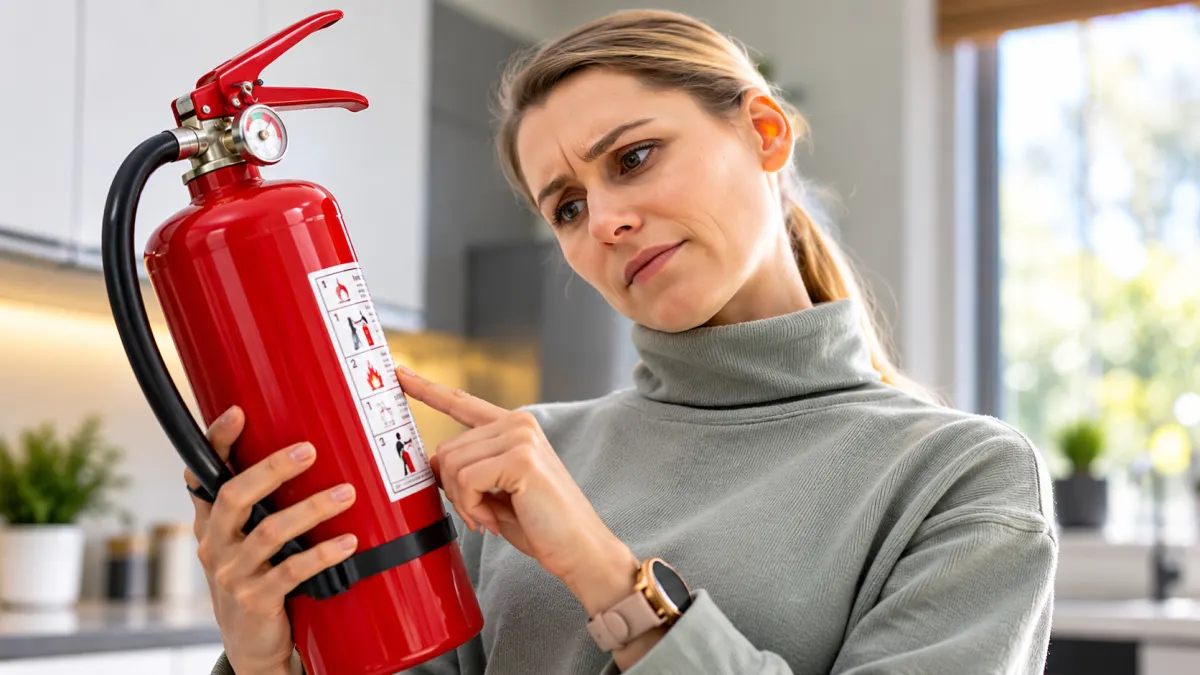

A fire extinguisher is one of those safety tools you hope you will never need—but having one readily available can make a critical difference during a small, early-stage fire.
Whether you keep one at home, in an office, garage, workshop, or vehicle, simply owning a fire extinguisher is not enough. You also need to know when it is safe to use one and how to operate it correctly.
A fire can grow from a small incident into a life-threatening emergency within minutes. The wrong response can also make the situation more dangerous. For that reason, understanding the basics before an emergency occurs is essential.
Read More

Check Your Fire Extinguisher Before You Need It
The worst time to discover that your fire extinguisher does not work is during a fire.
Inspect your extinguisher regularly and make sure it is in good condition. Check the pressure gauge, if the model has one, and make sure the needle is within the manufacturer's recommended range. The extinguisher should also be easily accessible and free from visible damage, corrosion or leakage.
Pay particular attention to the hose or nozzle. It should not be cracked, blocked, damaged or deteriorated.
Depending on the type of extinguisher, maintenance and inspection requirements can vary. Follow the manufacturer's instructions and have the unit professionally inspected or serviced when required.
For older or rechargeable extinguishers, check the service date and make sure they are maintained according to local fire-safety requirements.
Understand What Type of Fire It Can Handle
Not every fire extinguisher is suitable for every type of fire.
Common fire classes include:
- Class A: Ordinary combustibles such as wood, paper, cardboard and cloth.
- Class B: Flammable liquids such as gasoline, oil and certain solvents.
- Class C: Energized electrical equipment.
- Class D: Combustible metals.
- Class K: Cooking oils and fats, particularly in commercial kitchens.
Fire extinguisher classifications can differ slightly between countries, so always read the label on your specific extinguisher and make sure it is rated for the type of fire you are dealing with.
Never use water on a grease fire or an energized electrical fire unless you are certain it is specifically designed and safe for that application.
Step One: Assess the Situation
If a fire starts, stay calm and quickly evaluate the situation.
A portable fire extinguisher is intended for small, contained fires, such as a small wastebasket, pan or appliance fire. It is not designed to fight a rapidly spreading or large fire.
Before attempting to use the extinguisher, make sure:
- The fire is still small and contained.
- There is little or manageable smoke.
- You have a clear escape route behind you.
- You know what is burning and have the correct type of extinguisher.
- You are physically able to operate the extinguisher.
If any of these conditions are not met, do not attempt to fight the fire. Leave immediately and call emergency services.
Step Two: Use the PASS Method
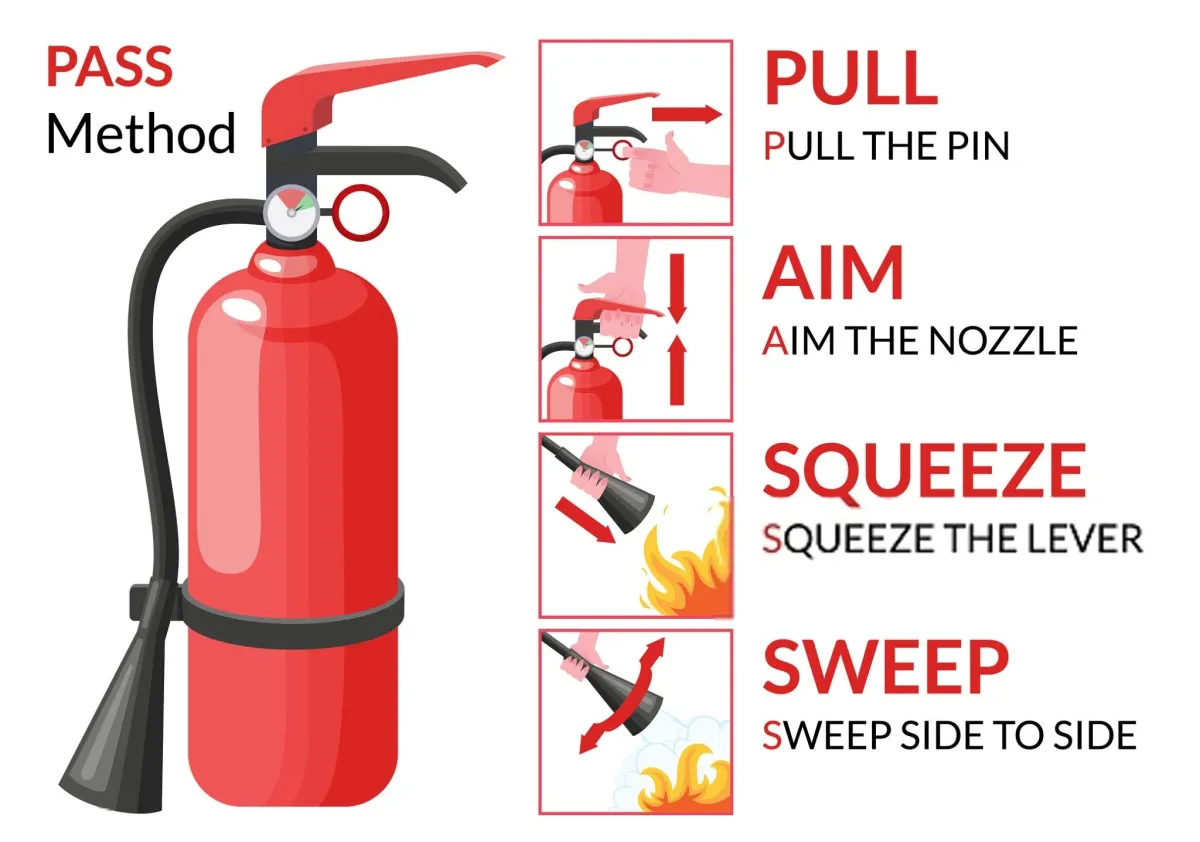
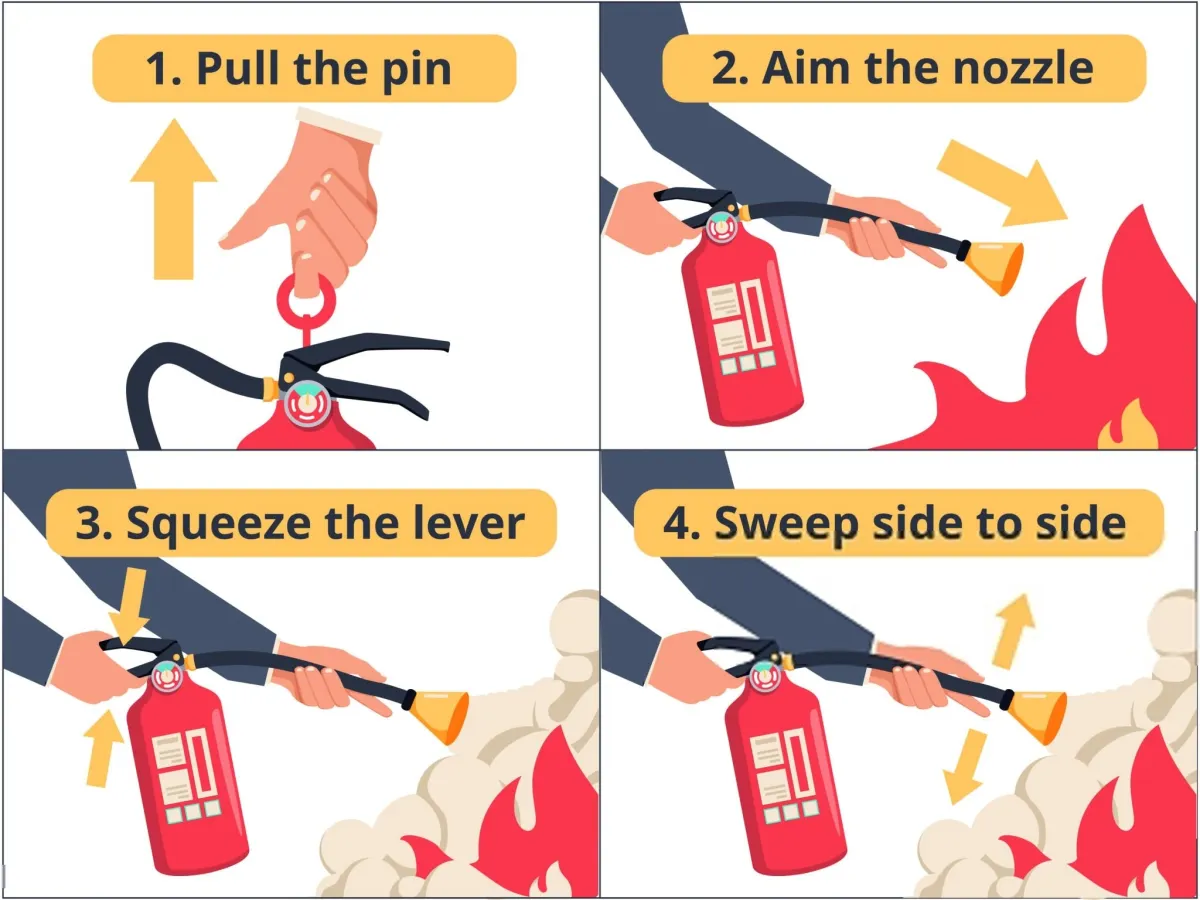
A simple way to remember how to operate many portable fire extinguishers is the PASS method:
P — Pull the Pin
Pull the safety pin or remove the safety mechanism. This unlocks the extinguisher and allows the handle to be operated.
A — Aim at the Base of the Fire
Hold the nozzle or hose and aim it at the base of the flames, not at the top of the fire.
The goal is to attack the source of the fire rather than simply spraying the visible flames.
S — Squeeze the Handle
Squeeze the extinguisher's handle firmly to release the extinguishing agent.
Keep a secure grip on the extinguisher and maintain control of the nozzle.
S — Sweep Side to Side
Move the nozzle from side to side across the base of the fire.
Continue sweeping until the fire appears to be completely extinguished, while remaining alert for the possibility that it could reignite.
Keep Your Exit Behind You
Never position yourself between a fire and your only escape route.
Stand so that you can retreat quickly if the fire suddenly grows or the extinguisher does not put it out.
As a general rule, maintain the distance recommended by the extinguisher manufacturer. Do not move closer than necessary, especially if the heat or flames are intense.
Your escape route should remain clear at all times.
Be Careful About Smoke and Wind
Smoke can be extremely dangerous even when the flames appear manageable. Fire can produce toxic gases and rapidly reduce visibility.
If you are outdoors, be aware of wind direction. Avoid standing where smoke, flames or the extinguishing agent can be blown directly toward you.
Never enter thick smoke to reach a fire.
Know When to Stop
A fire extinguisher is useful for small, early-stage fires, but it is not a replacement for professional firefighters.
Stop fighting the fire and leave immediately if:
- The fire is growing rapidly.
- Flames are spreading beyond the original source.
- The room is filling with smoke.
- Your escape route becomes threatened.
- The extinguisher runs out before the fire is controlled.
- You are unsure whether the extinguisher is appropriate.
- The fire involves hazardous chemicals, pressurized containers or other dangerous materials.
Once you are outside, call your local emergency number and do not re-enter the building until authorities say it is safe.
What to Do After Using a Fire Extinguisher
Never assume that an extinguisher is ready for future use simply because you only sprayed it for a few seconds.
Once an extinguisher has been discharged, even partially, it should be inspected and serviced or replaced according to the manufacturer's instructions.
A partially discharged extinguisher may no longer have sufficient pressure or extinguishing agent to handle another emergency.
The Most Important Rule: Get Out Safely
A portable fire extinguisher can sometimes prevent a small fire from becoming a major emergency, but personal safety always comes first.
If you have any doubt about whether you can safely control the fire, evacuate immediately.
Call emergency services, alert other people in the building and stay outside. Do not risk your life or attempt to retrieve belongings.
Knowing how to use a fire extinguisher is valuable—but knowing when not to use one is just as important.