

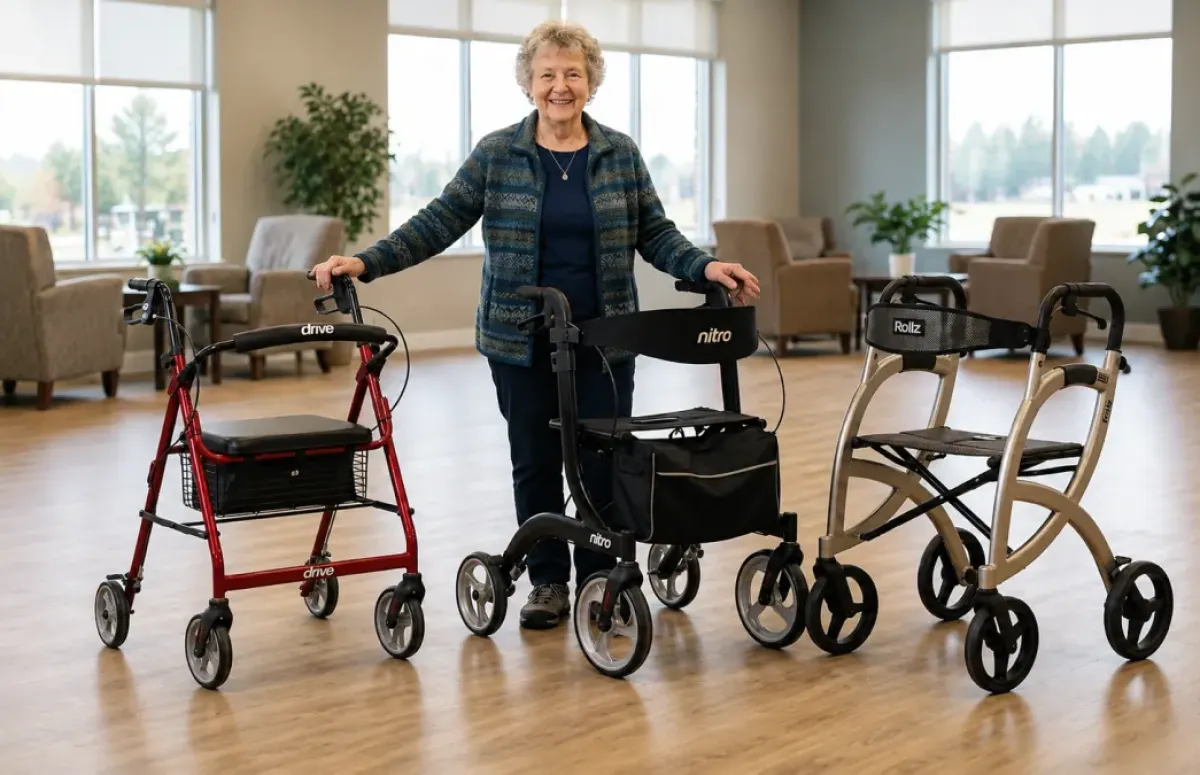
Quick answer: The best walker depends on your balance, weight, environment, and recovery stage. For most active seniors, a four-wheel rollator with a seat (like the Drive Medical Nitro DLX) is the top pick. For maximum stability indoors, a standard folding walker is safest. For one-sided weakness after a stroke, choose a hemi walker. For foot or ankle injuries, a knee scooter is the most comfortable.
Mobility loss affects more than 1 in 10 adults — and the right walker can be the single difference between independence at home and a serious fall. But with hundreds of models on the market in 2026, choosing wrongly can leave you with a device that's too heavy, too unstable, or simply uncomfortable to use every day.
We reviewed the 15 best walkers of 2026 across every major category — rollators, upright walkers, bariatric models, knee scooters, and hemi walkers — based on stability, weight, comfort, brake quality, and real-world reviews from therapists and users. This guide is built to help you, your parent, or your patient find the right device the first time.
Quick Comparison Table — Best Walkers 2026
| # | Walker Model | Best For | Type | Weight Capacity |
|---|---|---|---|---|
| 1 | Drive Medical Nitro DLX / Euro | Best Overall Rollator | 4-wheel rollator | 300 lbs |
| 2 | Medline Premium Empower | Best Comfort & Storage | 4-wheel rollator | 300 lbs |
| 3 | Hugo Elite Rollator | Best Long-Term Investment | 4-wheel rollator | 300 lbs |
| 4 | NOVA Traveler 3-Wheel | Best for Tight Spaces | 3-wheel rollator | 300 lbs |
| 5 | UpWalker Upright Walker | Best for Posture & Back Pain | Upright walker | 300 lbs |
| 6 | Drive Medical Two-Button Folding | Best Budget Pick | Standard walker | 350 lbs |
| 7 | Carex Steel Rollator | Best Durability | 4-wheel rollator | 250 lbs |
| 8 | Medline Heavy-Duty Bariatric | Best Bariatric (500 lbs) | Bariatric rollator | 500 lbs |
| 9 | BlessReach Bariatric | Best Bariatric Comfort | Bariatric rollator | 450 lbs |
| 10 | Helavo All-Terrain Rollator | Best for Outdoors | All-terrain rollator | 300 lbs |
| 11 | Henmnii Lightweight Rollator | Best for Travel | Lightweight rollator | 300 lbs |
| 12 | VOCIC Rollator-Transport Combo | Best Hybrid (2-in-1) | Rollator + transport | 300 lbs |
| 13 | Days Hemi Walker | Best for One-Sided Weakness | Hemi walker | 250 lbs |
| 14 | Days Steerable Knee Walker | Best for Foot/Ankle Injuries | Knee scooter | 300 lbs |
| 15 | EVA Support Walker | Best for Post-Surgery Rehab | Support walker | Varies |
How to Choose the Right Walker (2026 Buyer's Guide)

Before reviewing the models, here's how mobility specialists recommend matching a walker to the user. A 2026 walker that's right for one person can be unsafe for another.
1. Match the walker to balance and strength
- Severe balance issues / recovering from surgery → Standard walker (no wheels) for maximum stability.
- Moderate balance issues, walks slowly → Two-wheel walker — glides without lifting.
- Good balance, needs endurance support → 4-wheel rollator with seat.
- Tight indoor spaces → 3-wheel rollator (more maneuverable, but no seat).
- Hunched posture or back pain → Upright/posture walker.
- One-sided weakness (post-stroke) → Hemi walker.
- Non-weight-bearing leg injury → Knee scooter.
2. Check weight capacity
Standard models support up to 300 lbs (136 kg). Bariatric walkers handle 400–700 lbs (180–318 kg). Always size up if you're close to the limit — using an under-rated walker is a fall risk.
3. Indoor vs outdoor use
- Indoor only: Small wheels (5–6") are fine. Lightweight, narrow frames pass through doorways.
- Outdoor / mixed: Look for 8–10" wheels, pneumatic (air-filled) tires for grass and gravel, and a longer wheelbase for stability.
4. Brake type matters
Loop-style hand brakes are standard. Push-down brakes require almost no grip strength — ideal for users with arthritis or weak hands.
5. Don't skip the fitting
Get a physical therapist to set handle height precisely. A walker fitted incorrectly can cause shoulder pain, poor posture, and increase fall risk far more than walker choice alone.
The 15 Best Walkers in 2026 — Detailed Reviews
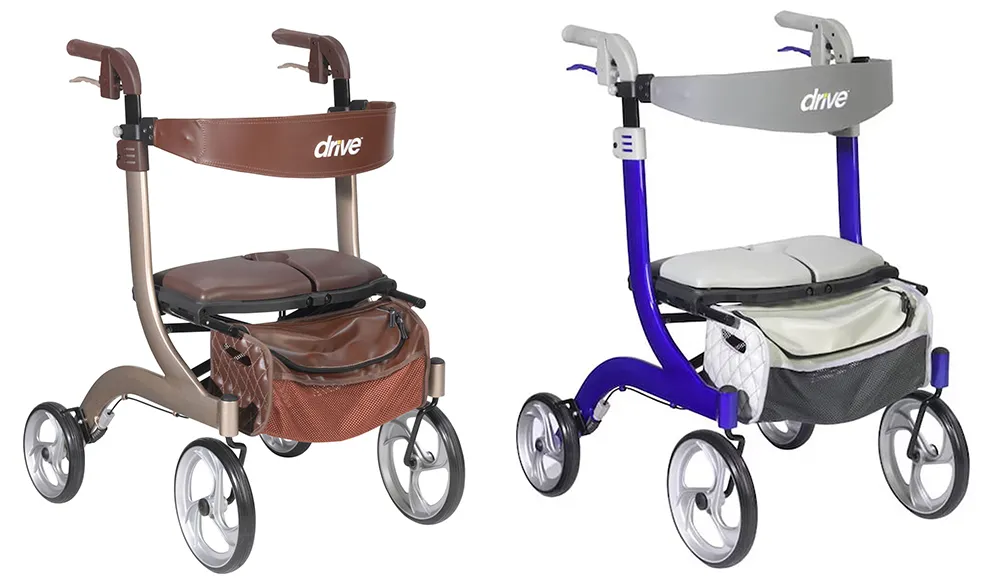
The Drive Medical Nitro remains the top all-around pick for 2026 — and for good reason. It pairs European-inspired styling with thoughtful engineering: brake cables are routed inside the frame so they don't snag on furniture or car trunks, and the 10-inch front wheels turn tight corners as easily as they roll over cracked sidewalks.
- Best for: Active seniors who want one walker for indoors and outdoors.
- Key features: 10" front casters, hidden brake cables, padded seat, height-adjustable handles, folds with one hand.
- Pros: Premium look, excellent maneuverability, durable.
- Cons: Higher price tag than entry-level rollators.
2. Medline Premium Empower Rollator — Best Comfort & Storage
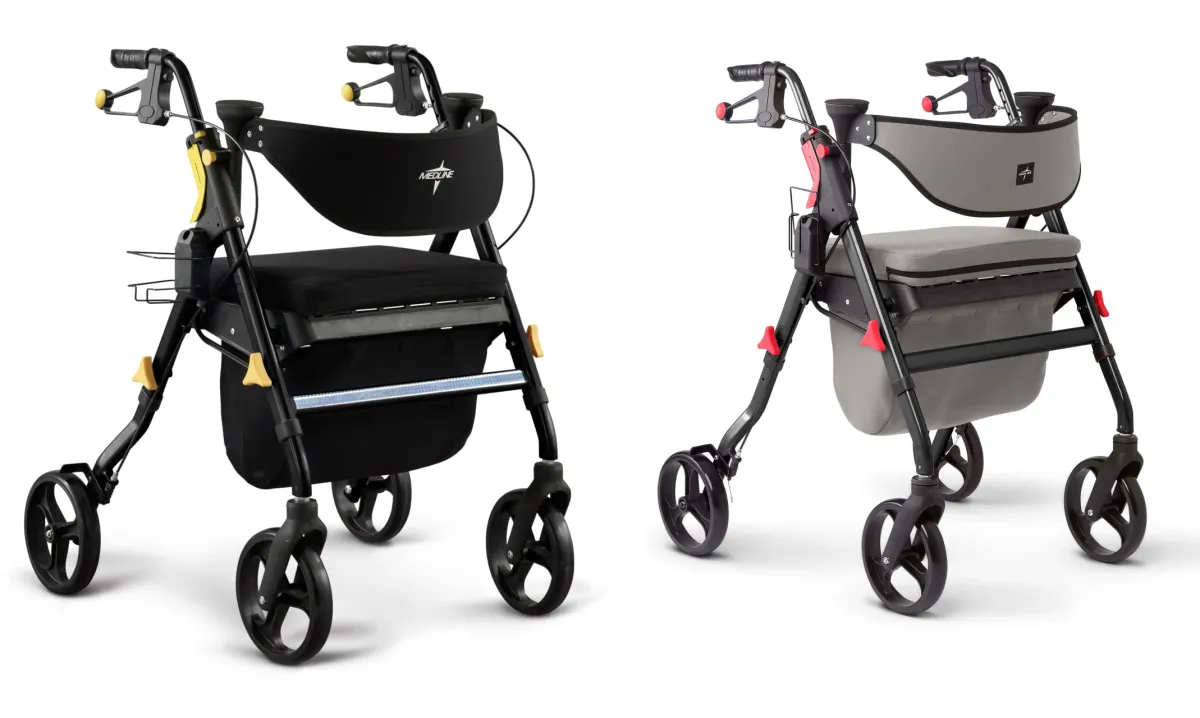
If long outings or shopping trips are part of daily life, the Medline Empower is the comfort champion. With a memory foam seat, backrest, cupholder, and generous storage, it's effectively a portable resting station. Nearly 90% of Amazon reviewers give it four stars or more.
- Best for: Seniors who take long walks and need frequent rest breaks.
- Key features: Memory foam seat, backrest, cup holder, storage pouch, reliable brakes, folds for car transport.
- Pros: Maximum comfort, generous storage, around $210.
- Cons: Slightly heavier than minimalist rollators.
3. Hugo Elite Rollator — Best Long-Term Investment
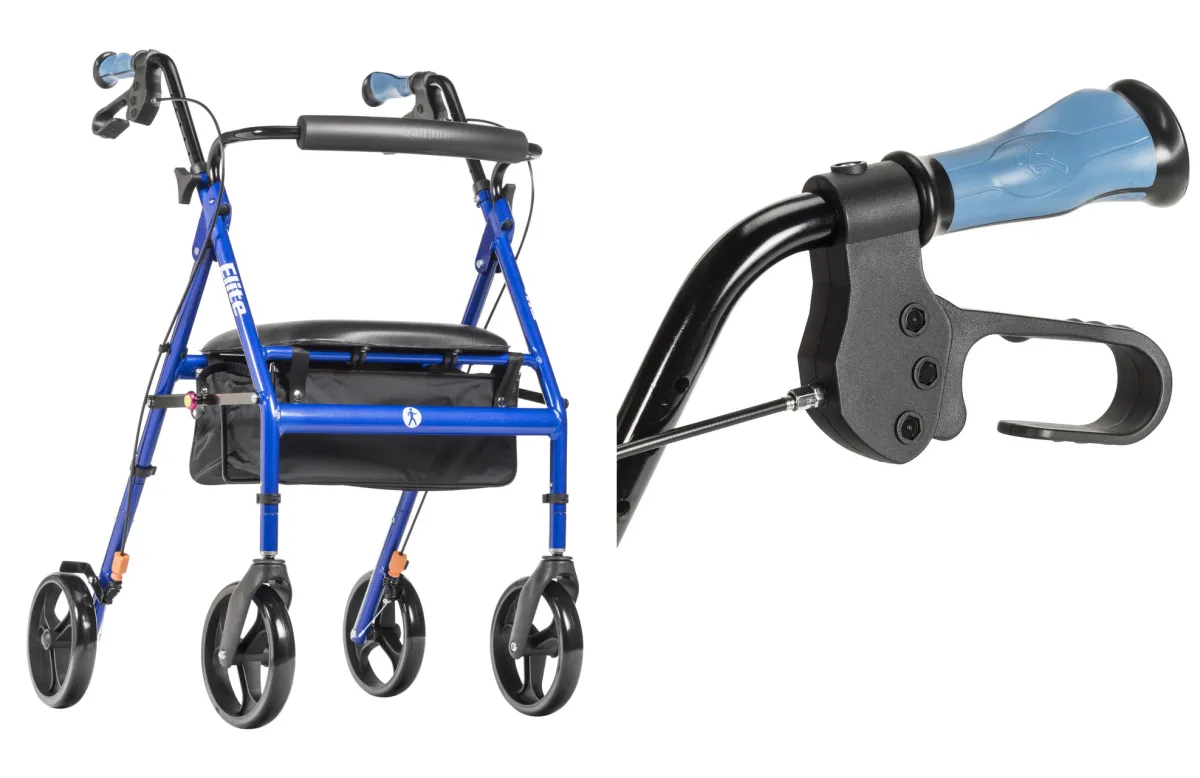
Hugo is one of the most trusted names in mobility, and quality rollators from the brand routinely last 5 to 10 years under normal use. The Hugo Elite balances comfort, sturdiness, and a clean appearance that doesn't scream «medical device.»
- Best for: Buyers who want one walker for a decade.
- Key features: Adjustable seat and backrest, durable frame, padded handles, lifetime warranty on frame.
- Pros: Reputation for longevity, comfortable seat.
- Cons: Mid-range price, not the lightest option.
4. NOVA Traveler 3-Wheel Walker — Best for Tight Spaces
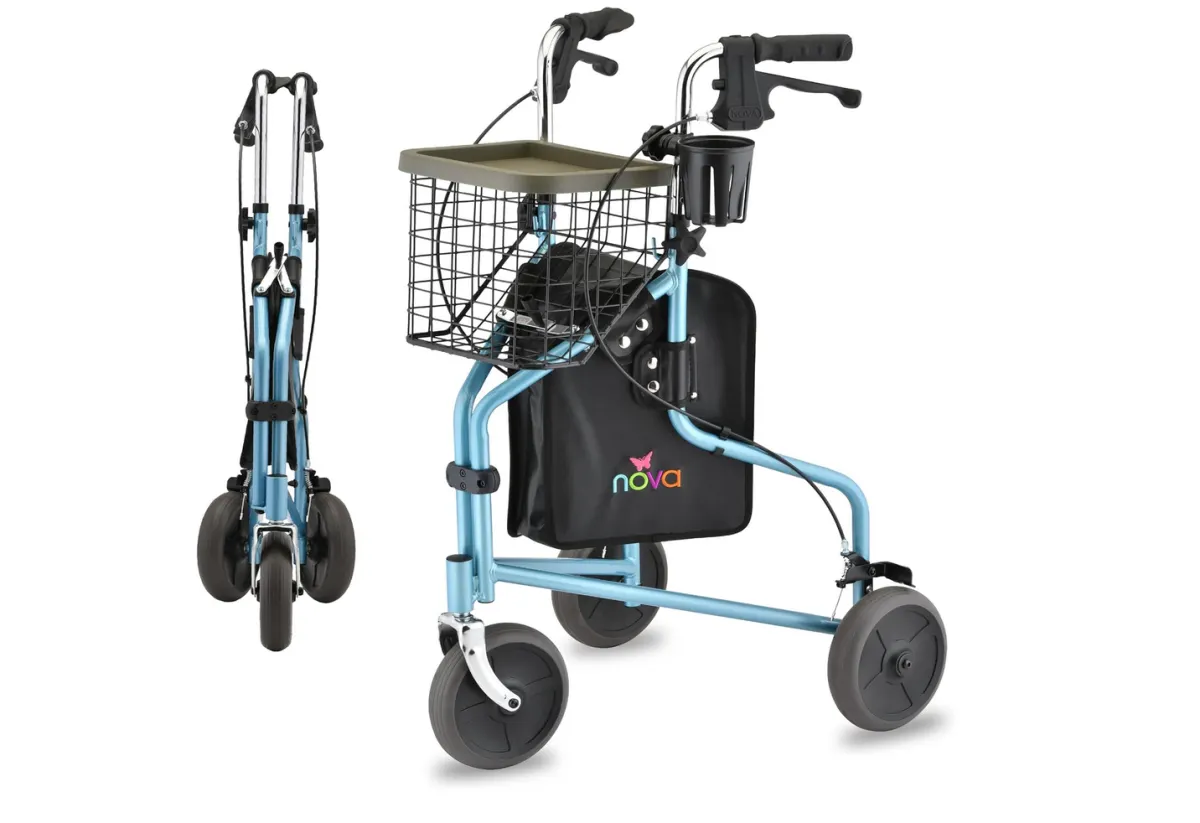
Three-wheel rollators trade the seat for superior maneuverability, and the NOVA Traveler is the gold standard. It threads through narrow doorways, bathrooms, and apartments where a 4-wheeler can't fit, while still offering a zipper pouch, basket, and tray.
- Best for: Small apartments, mobile home corridors, tight kitchens.
- Key features: 3-wheel design, lightweight, effective brakes, customizable storage accessories.
- Pros: Excellent in tight spaces, easy to fold.
- Cons: No seat for resting.
5. UpWalker Upright Walker — Best for Posture & Back Pain
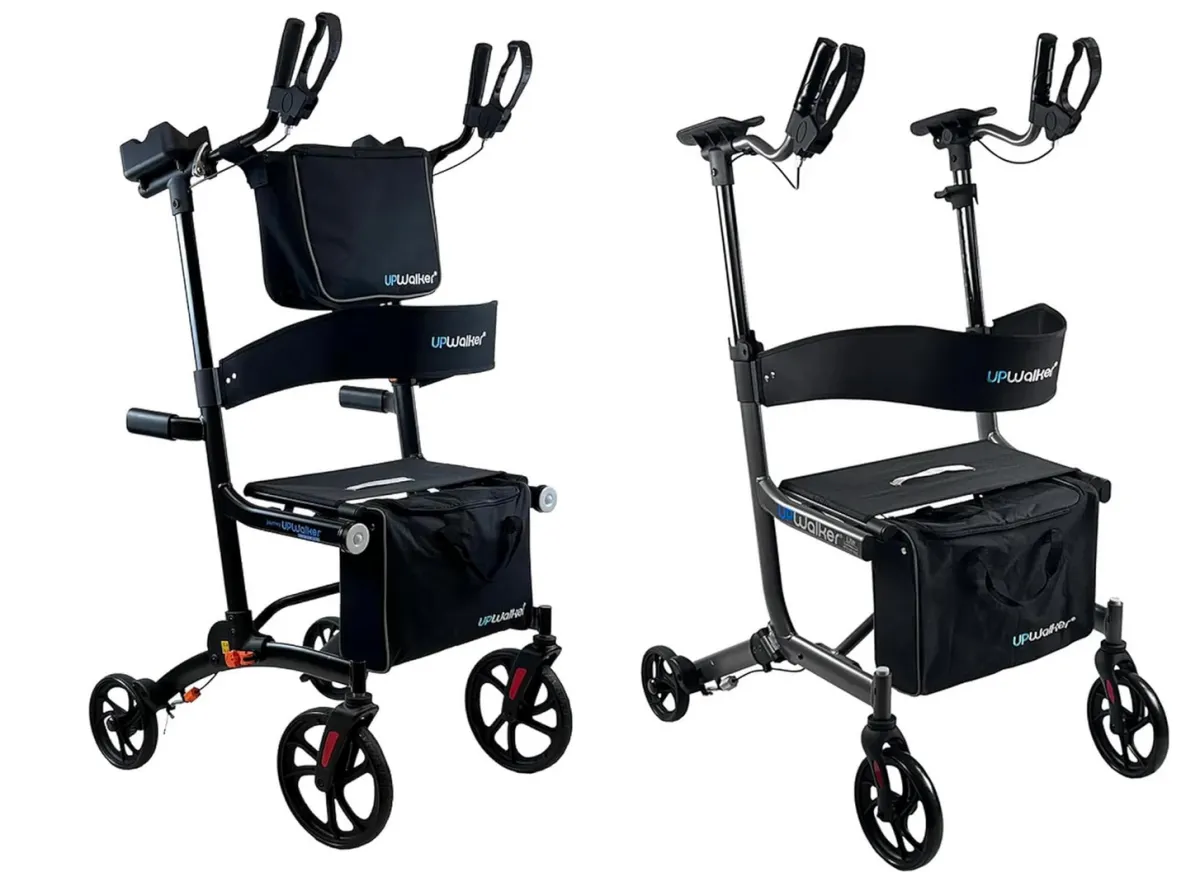
The UpWalker uses a «step-inside» design — you walk inside the frame, not behind it. Your weight rests on padded forearm supports rather than on the hands and wrists, dramatically reducing the hunched posture and back pain common with traditional walkers.
- Best for: Users with back pain, kyphosis, hand/wrist arthritis, or anyone tired of hunching.
- Key features: Forearm padded supports, step-through frame, ergonomic grips, seat with flip-up backrest.
- Pros: Greatly improves posture, reduces hand/wrist pressure, comfortable seat.
- Cons: Heavier and more expensive than standard rollators.
6. Drive Medical Two-Button Folding Walker — Best Budget Pick
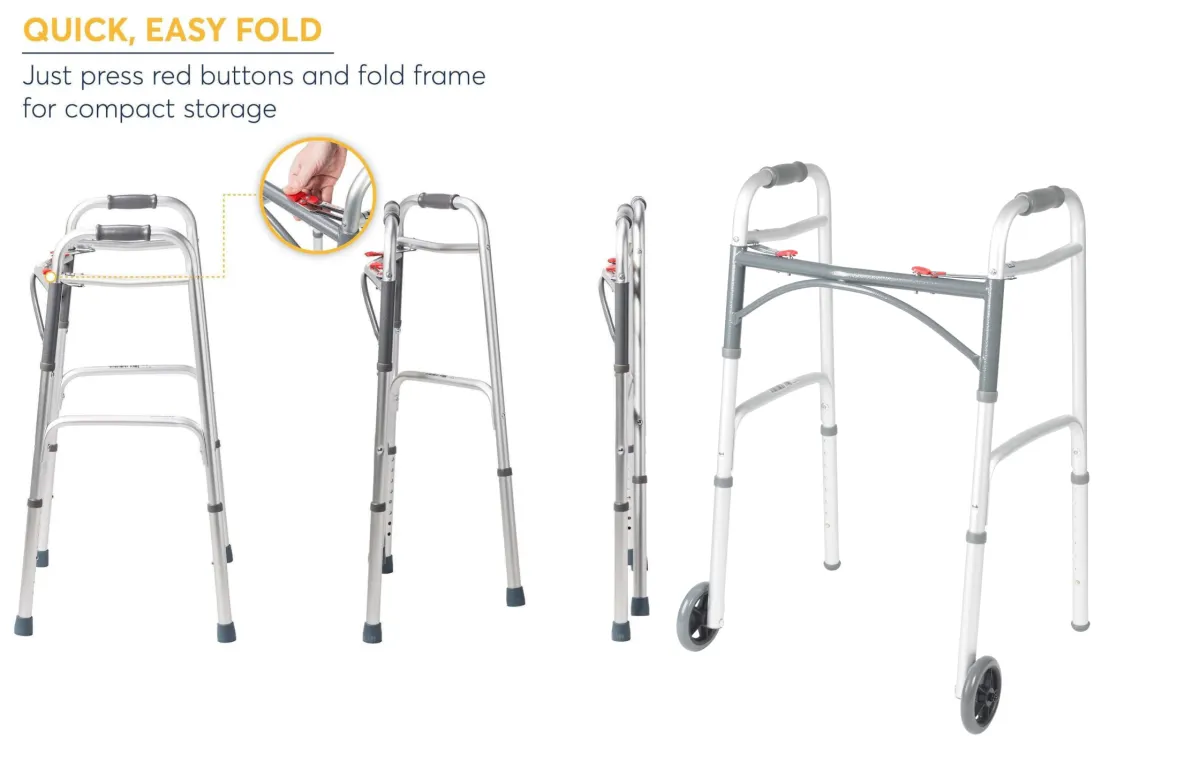
At under $40, this no-frills standard walker proves stability doesn't have to be expensive. The U-shaped frame allows you to step closer for a natural gait, and the two-button folding mechanism collapses it for storage. Comes with a limited lifetime warranty.
- Best for: Post-surgery patients, severe balance issues, budget buyers, indoor use.
- Key features: 4 rubber-tipped legs (no wheels), U-shaped frame, two-button fold, height-adjustable, lifetime warranty.
- Pros: Maximum stability, very affordable, lightweight (~6 lbs).
- Cons: Must be lifted with each step — tiring for long distances.
7. Carex Steel Rollator Walker — Best Durability
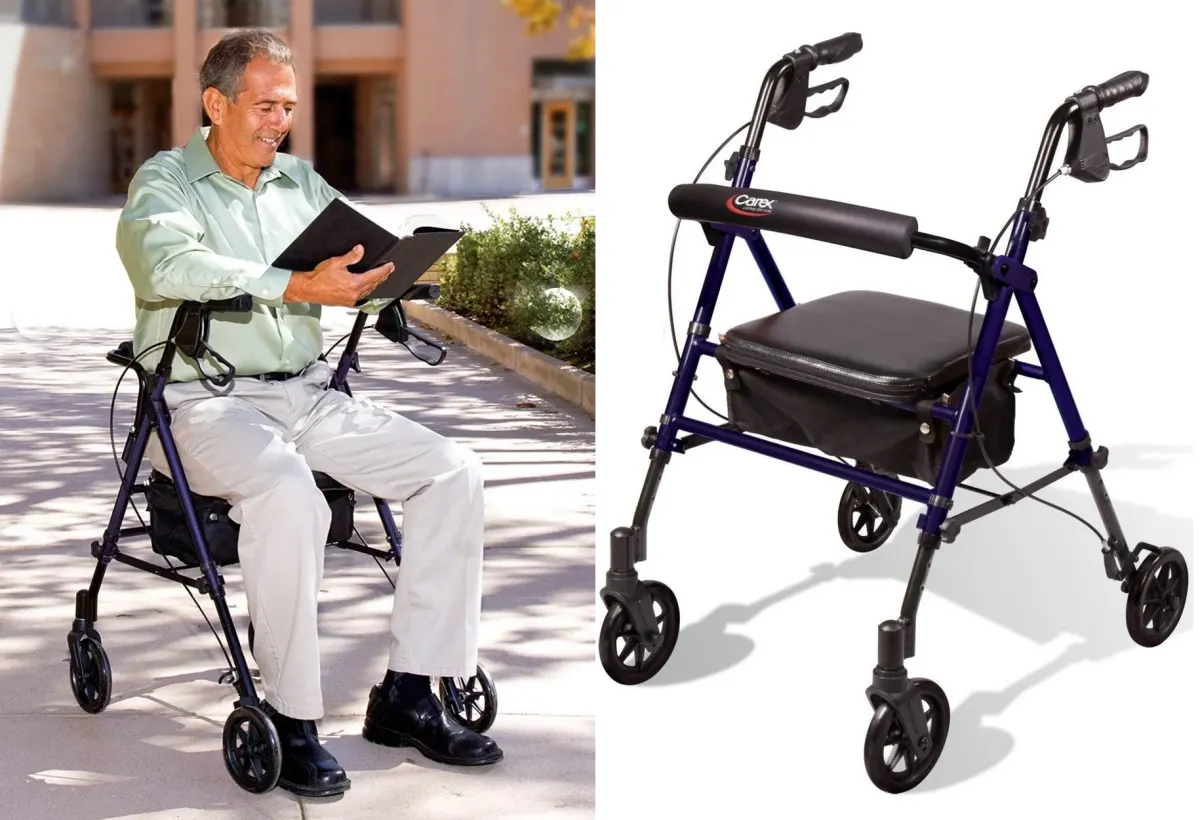
When buyers want a walker that simply won't give up, the Carex Steel Rollator earns the recommendation. Its steel frame is heavier than aluminum competitors — but that's the point: it provides exceptional stability and a service life that outlasts cheaper rollators.
- Best for: Users who want a workhorse that lasts.
- Key features: Welded steel frame, padded seat, backrest support, height-adjustable, 6" wheels.
- Pros: Extremely sturdy, well-priced for the durability.
- Cons: Heavier than aluminum models.
8. Medline Heavy-Duty Bariatric Rollator — Best Bariatric (500 lbs)
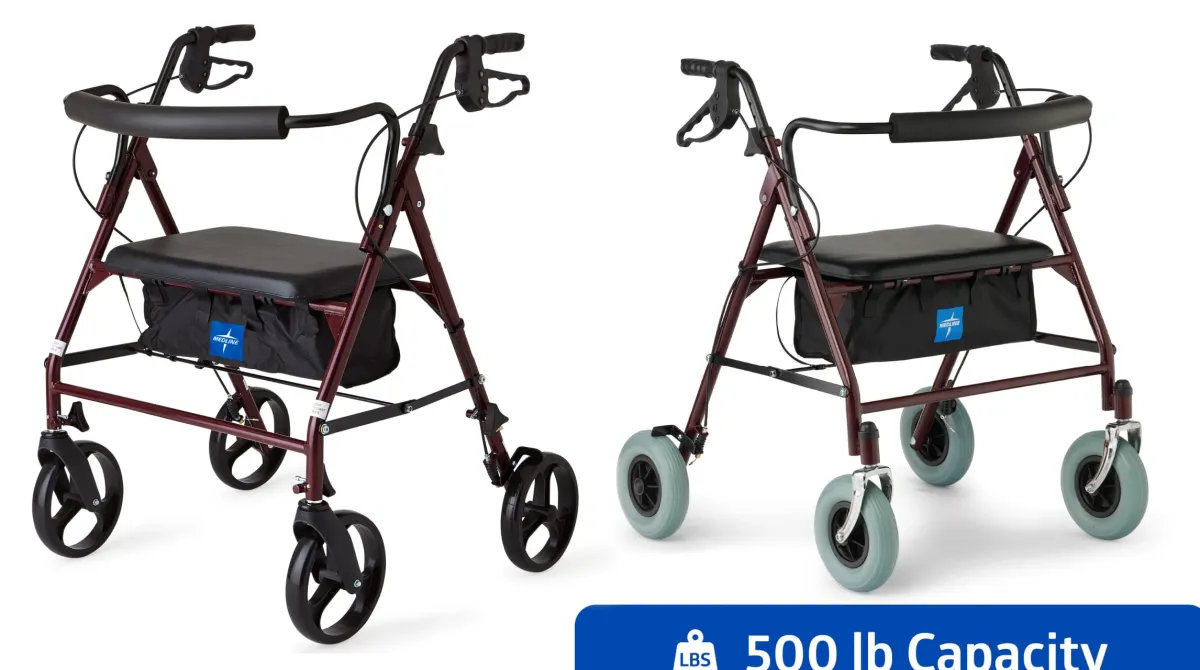
Standard rollators max out around 300 lbs. For users who need more capacity, the Medline Heavy-Duty Bariatric Rollator supports up to 500 lbs (227 kg) with a reinforced frame and 8" wheels for stability on uneven surfaces. The wider seat is also designed for comfort, not just compliance.
- Best for: Heavier users needing a higher weight rating.
- Key features: 500 lb capacity, 8" wheels, wide reinforced seat, height-adjustable.
- Pros: High capacity, sturdy construction, wider seat.
- Cons: Heavier than standard rollators, takes more storage space.
9. BlessReach Bariatric Rollator — Best Bariatric Comfort
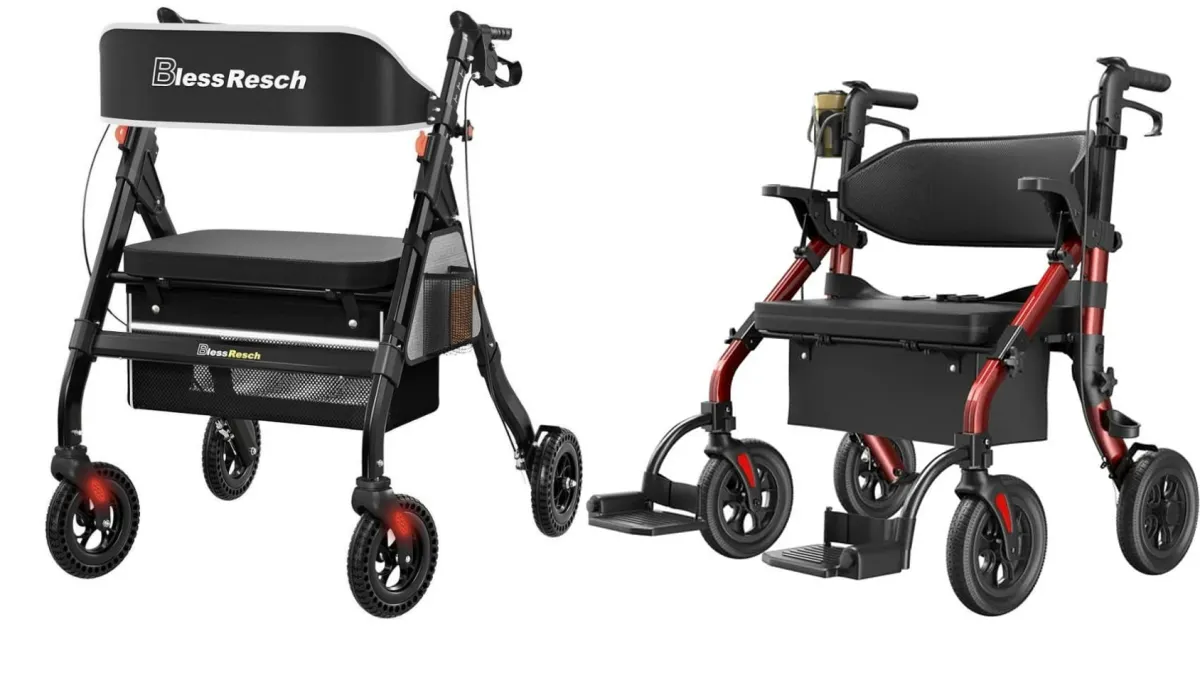
The BlessReach is the bariatric pick when comfort matters most. With a 450-lb capacity and an extra-wide cushioned seat, it's the walker users actually want to sit on during outings — not just the one they can technically use.
- Best for: Plus-size users who want premium comfort and storage.
- Key features: 450 lb capacity, oversized cushioned seat, large storage bag, padded backrest.
- Pros: Outstanding comfort, robust frame.
- Cons: Wider footprint than standard rollators.
10. Helavo All-Terrain Rollator — Best for Outdoors
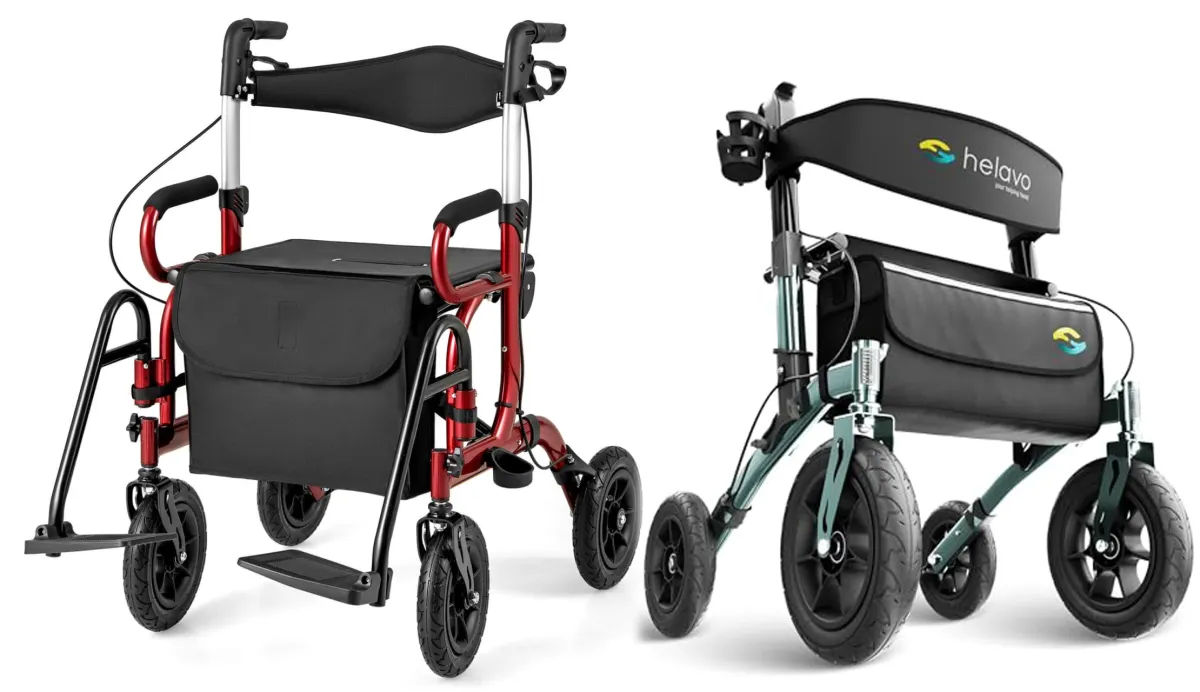
Sidewalks are fine — but lawns, gravel paths, dirt trails, and cobblestones defeat most rollators. The Helavo All-Terrain Rollator uses pneumatic (air-filled) tires that absorb shock and grip uneven ground, restoring outdoor freedom to active seniors who refuse to give up walks in the park.
- Best for: Outdoor enthusiasts, rural users, gardeners, dog walkers.
- Key features: Pneumatic outdoor tires, robust frame, foldable for car transport, seat with backrest.
- Pros: True all-terrain capability, shock-absorbing tires.
- Cons: Tires require occasional inflation; heavier than urban rollators.
11. Henmnii Lightweight Rollator — Best for Travel
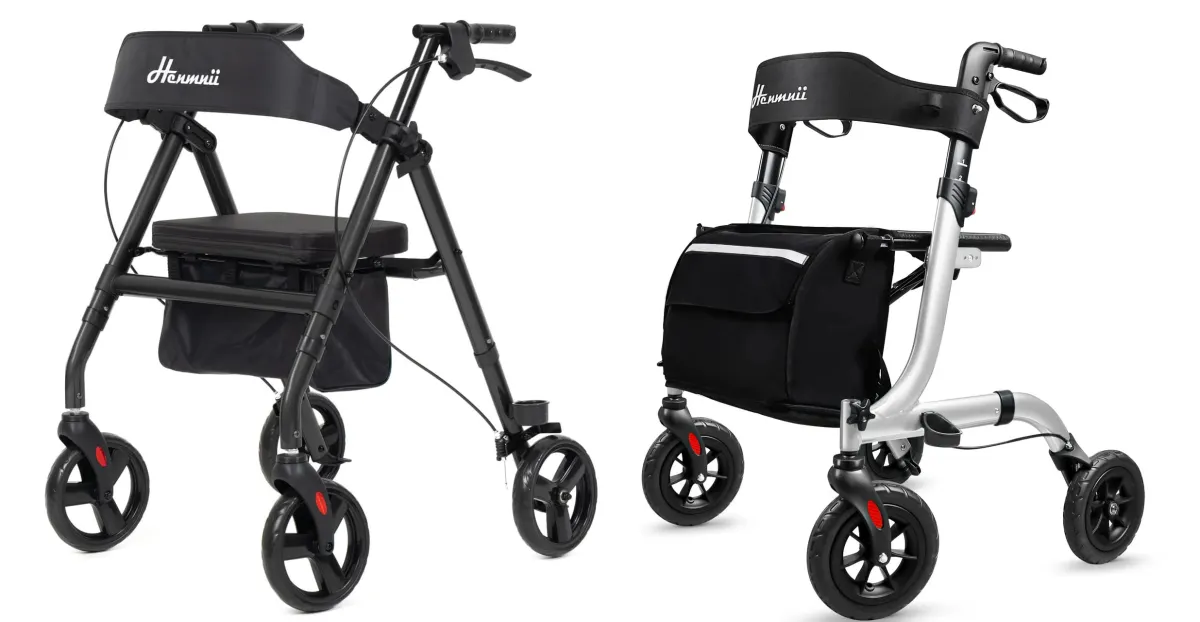
At just 16.5 lbs (7.5 kg), the Henmnii is the easiest rollator to lift into a car trunk or overhead bin. Quick-release wheels make it fold even more compactly, and its low center of gravity adds anti-rollover stability despite the lightweight build. The 8" wheels still manage grass and gravel.
- Best for: Frequent travelers, users with limited arm strength.
- Key features: 16.5 lb weight, quick-release wheels, 8" tires, anti-rollover design, padded seat.
- Pros: Easiest to lift, compact fold, surprisingly stable.
- Cons: Seat less plush than premium models.
12. VOCIC Rollator-Transport Chair Combo — Best Hybrid (2-in-1)
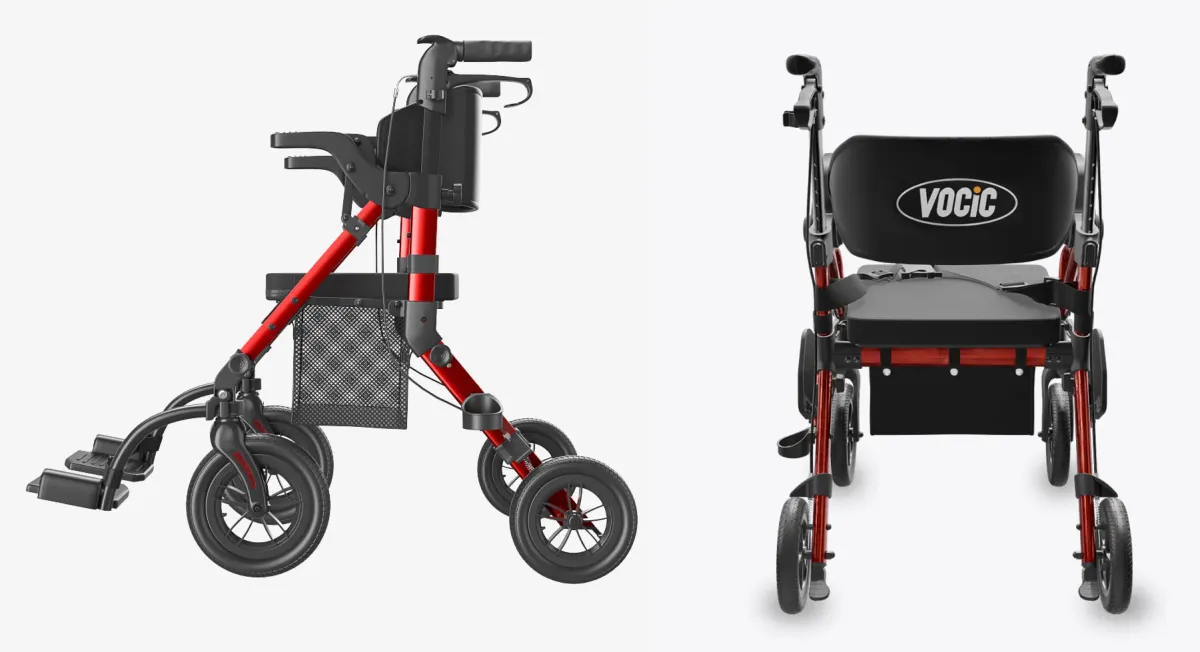
The VOCIC is a hybrid — it works as a 4-wheel rollator when the user can walk, then flips into a transport chair when they can't. A caregiver pushes from behind using rear handles. This is the right walker for someone whose endurance varies day-to-day or who fatigues partway through outings.
- Best for: Users with fluctuating energy, caregiver-assisted outings, medical appointments.
- Key features: Dual-function rollator + transport chair, rear push handles, footrests, seat with armrests.
- Pros: Two devices in one, excellent for caregivers.
- Cons: Heavier than a standard rollator due to dual function.
13. Days Hemi Walker — Best for One-Sided Weakness
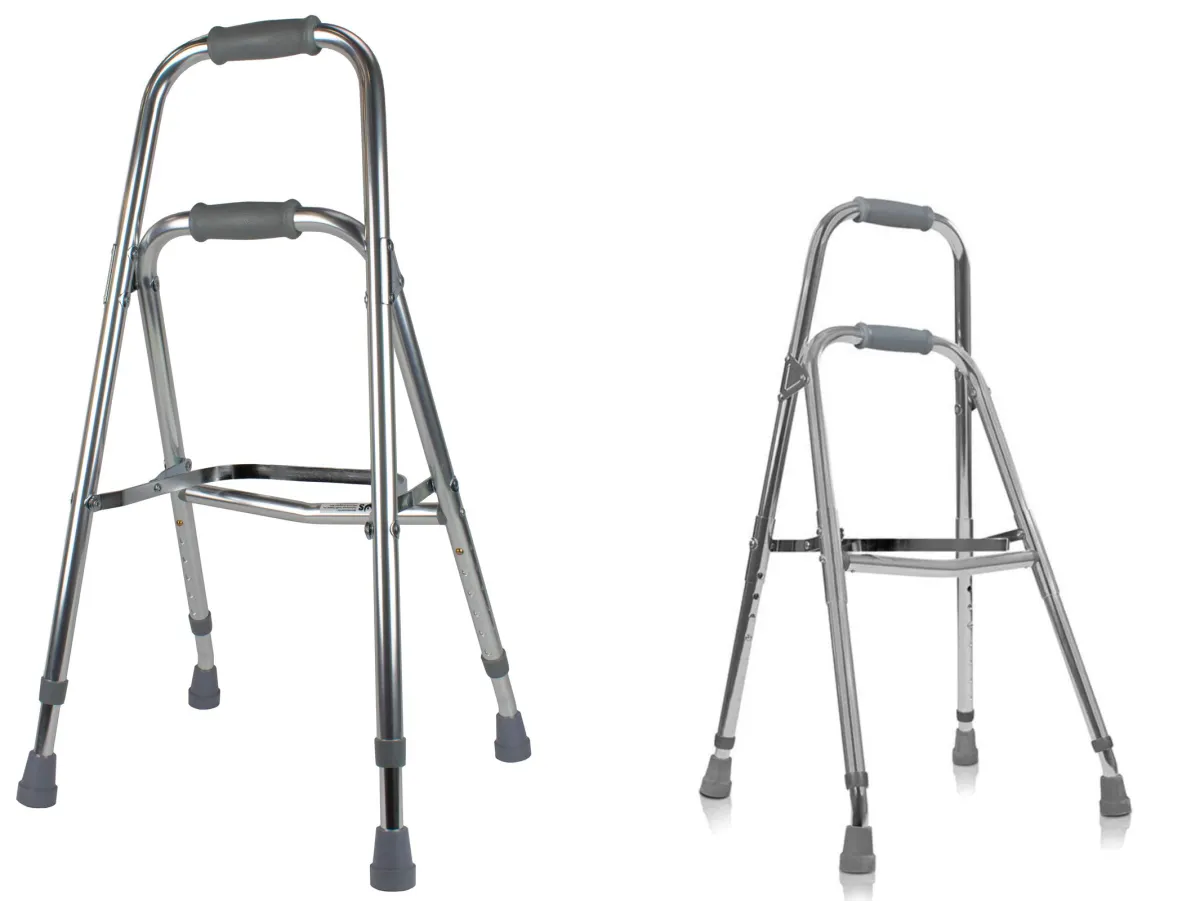
A hemi walker is a cross between a cane and a walker — designed specifically for users with one-sided weakness, such as post-stroke hemiparesis. It's operated with one hand and provides far more stability than a cane while remaining lightweight enough to manage with limited strength.
- Best for: Stroke survivors, users with one-arm weakness, single-side balance issues.
- Key features: One-handed design, height-adjustable, lightweight aluminum, pyramid base for stability.
- Pros: The only walker designed for unilateral weakness, very lightweight.
- Cons: Less overall support than a two-handed walker.
14. Days Steerable Knee Walker — Best for Foot/Ankle Injuries
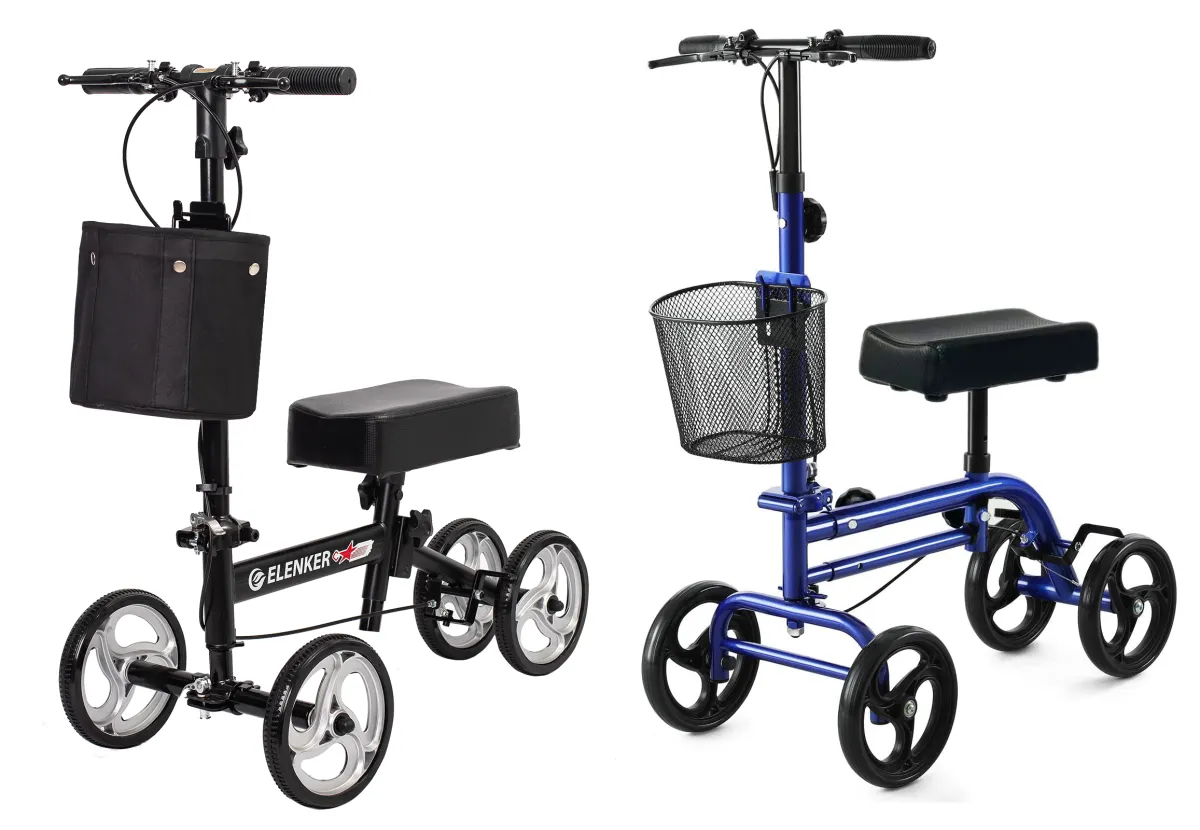
When a foot, ankle, or lower-leg injury rules out weight-bearing, the knee scooter is far more comfortable and faster than crutches. The padded knee platform supports about half your body weight, while the steerable front wheel and hand brakes give bicycle-like control.
- Best for: Foot surgery, ankle fractures, Achilles tendon recovery, diabetic foot wounds.
- Key features: Padded knee platform, steerable front wheel, hand brakes, basket, foldable.
- Pros: Far more comfortable than crutches, faster mobility.
- Cons: Not suitable for above-the-knee injuries or stairs.
15. EVA Support Walker — Best for Post-Surgery Rehab
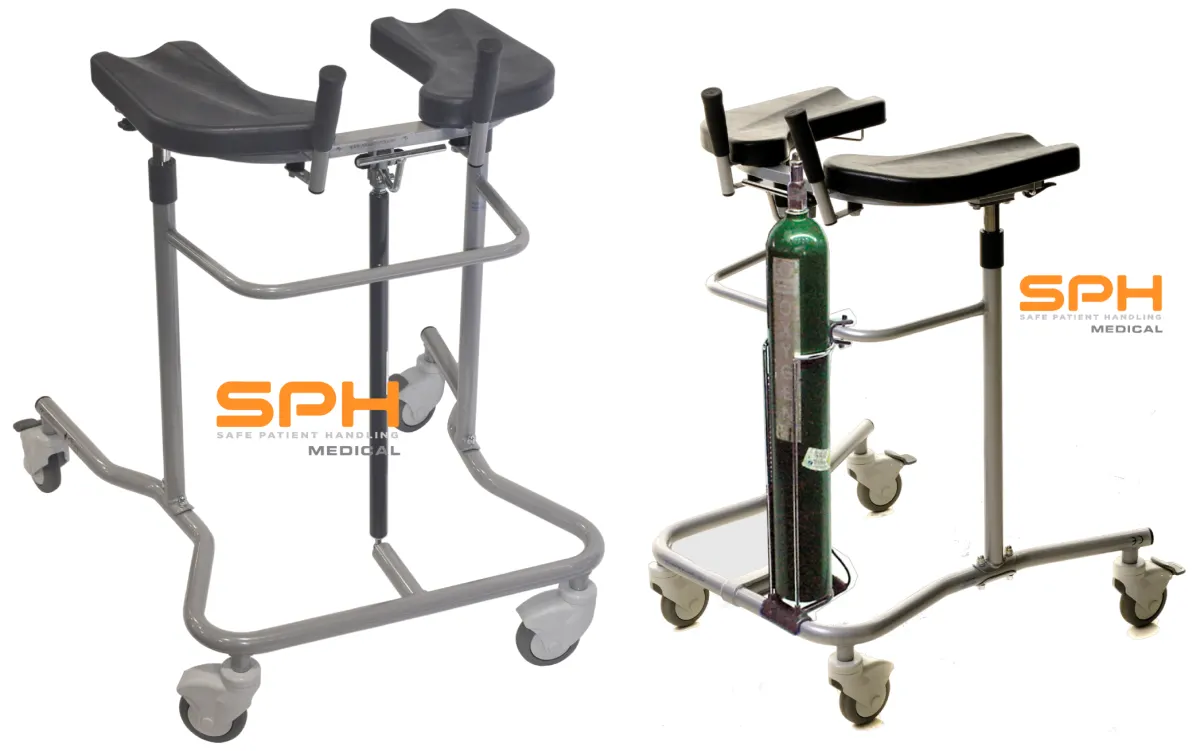
The EVA Support Walker is a clinical-grade rehabilitation aid for patients beginning to walk again after major surgery, hip replacement, or serious orthopedic procedures. Non-marring casters with step-on locks provide stability for standing exercises, while sculpted padded armrests prevent forward slipping.
- Best for: Early-stage rehabilitation, post-orthopedic surgery, physical therapy.
- Key features: Width-adjustable forearm supports, non-marring casters, step-on wheel locks, sculpted armrests.
- Pros: Excellent for guided rehab, supports significant body weight.
- Cons: Clinical aesthetic, typically used short-term during recovery.
How Much Should You Spend on a Walker in 2026?
| Walker Type | Price Range (2026) |
|---|---|
| Standard folding walker | $30 – $60 |
| Two-wheel walker | $40 – $80 |
| 3-wheel rollator | $80 – $200 |
| Standard 4-wheel rollator | $100 – $300 |
| Premium / upright rollator | $300 – $700 |
| Bariatric rollator | $150 – $400 |
| All-terrain rollator | $200 – $450 |
| Knee scooter | $150 – $350 |
| Hemi walker | $40 – $100 |
| Clinical support walker (EVA-type) | $400 – $1,000+ |
What's the difference between a walker and a rollator?
A walker is a frame (often with no wheels or only two) that you lift or slide with each step — it offers maximum stability. A rollator has 3 or 4 wheels, hand brakes, and often a seat — it rolls continuously and is built for longer distances and outdoor use.
Which walker is best for an elderly person with balance problems?
For serious balance issues, a standard walker without wheels (like the Drive Medical Two-Button Folding) is safest because it can't roll away when leaned on. For mild balance issues, a 4-wheel rollator with brakes offers a good combination of support and convenience.
Can a walker improve posture?
Yes — upright walkers (like the UpWalker) are specifically designed to keep users standing tall, with forearm supports taking pressure off the hands and wrists. This helps reduce back pain and the hunched gait common with standard walkers.
How long does a quality walker last?
Quality rollators from brands like Hugo, Drive Medical, and NOVA typically last 5 to 10 years with normal use. Budget models may show wear within 1 to 3 years. Replace any walker if the wheels wobble, brakes lose tension, or the frame bends or cracks.
Should I see a physical therapist before buying a walker?
Yes — strongly recommended. A physical therapist assesses which device type is correct, sets handle height precisely, and trains safe technique. This single step reduces fall risk more than the walker choice itself.
What weight capacity walker do I need?
If the user weighs under 250 lbs, a standard walker (300-lb capacity) is fine. For users 250–400 lbs, choose a bariatric model rated for 500 lbs. For users over 400 lbs, look at heavy-duty bariatric walkers rated 700 lbs or more. Always size up if you're close to the limit.
Are walkers covered by insurance?
Standard walkers are often covered by Medicare and similar programs when prescribed for medical need. Rollators with seats are frequently classified as a comfort upgrade and may not be covered. Check with your insurance provider before purchasing.