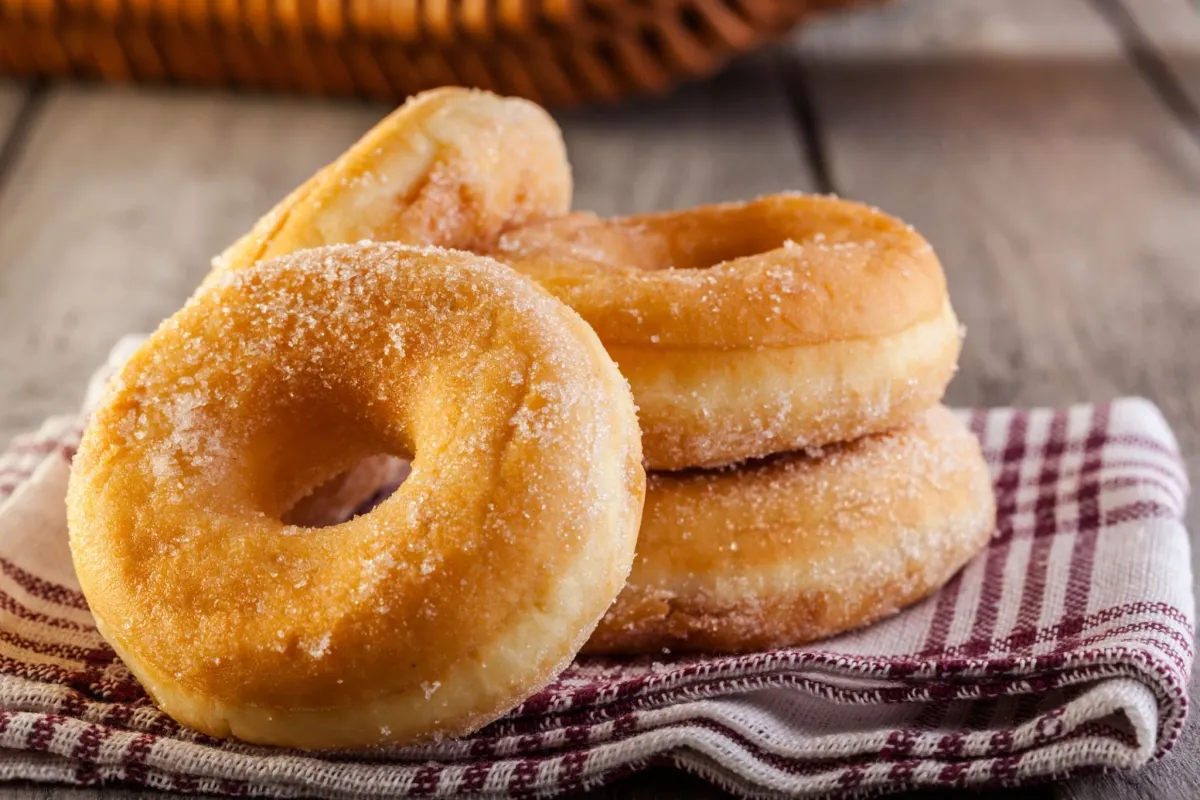

With a few simple ingredients and a frying pan, you can make delicious donuts that are golden on the outside and soft on the inside. The secret to successful homemade donuts is preparing the right dough, allowing enough time for it to rise, and controlling the oil temperature. Below, you'll learn how to make homemade donuts in a frying pan, step by step.
20 Easy One-Egg Meals That Are Filling and Delicious
Ingredients for Homemade Donuts in a Frying Pan
This recipe makes approximately 8 to 10 medium-sized donuts. The final number depends on the size of your cutter.
| Ingredient | Amount |
|---|---|
| Bread flour or all-purpose flour | About 3 cups |
| Warm milk | 1 cup |
| Egg | 1 |
| Sugar | 3 tablespoons |
| Softened butter | 30 grams |
| Instant yeast | 2 teaspoons |
| Vanilla extract | 1/2 teaspoon |
| Salt | 1/4 teaspoon |
| Oil for frying | As needed |
| Powdered sugar or chocolate | For decoration |
Tip: The milk should be warm, not hot. Milk that is too hot can damage the yeast. Add the flour gradually, too, because its moisture absorption can vary.
Step 1: Prepare the Yeast
If you're using instant yeast, you can mix it directly with the dry ingredients. However, the following method is also useful for checking whether your yeast is active:
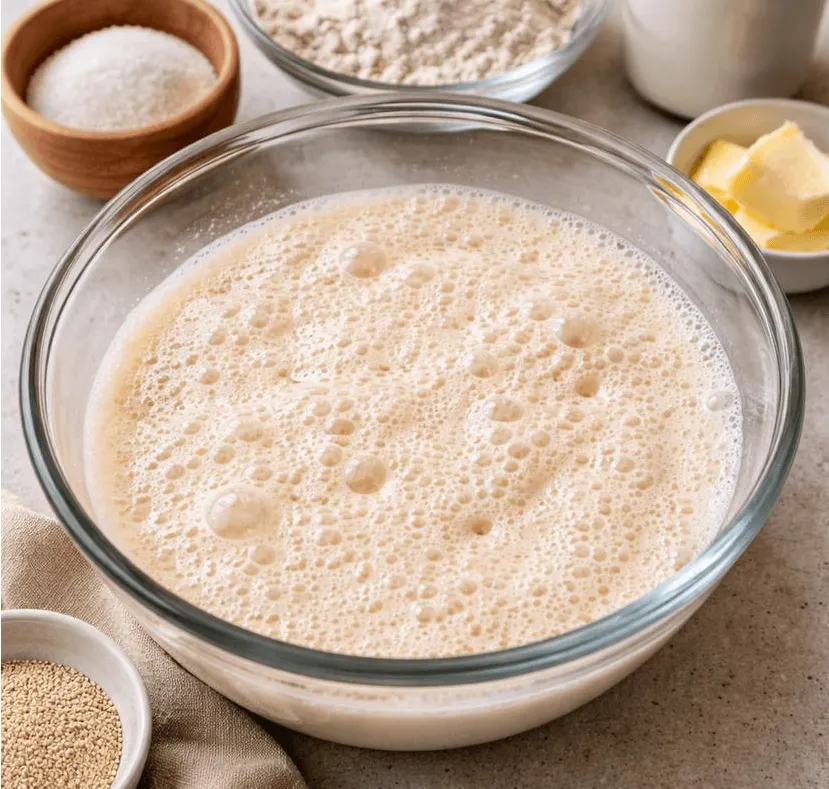
- Pour the warm milk into a bowl.
- Add one teaspoon of sugar and the yeast.
- Stir gently and wait about 5 to 10 minutes.
If bubbles appear on the surface of the mixture, the yeast is active. If you don't notice any changes, the yeast may no longer be effective, or the milk may not have been at the right temperature.
Step 2: Mix the Ingredients and Make the Donut Dough
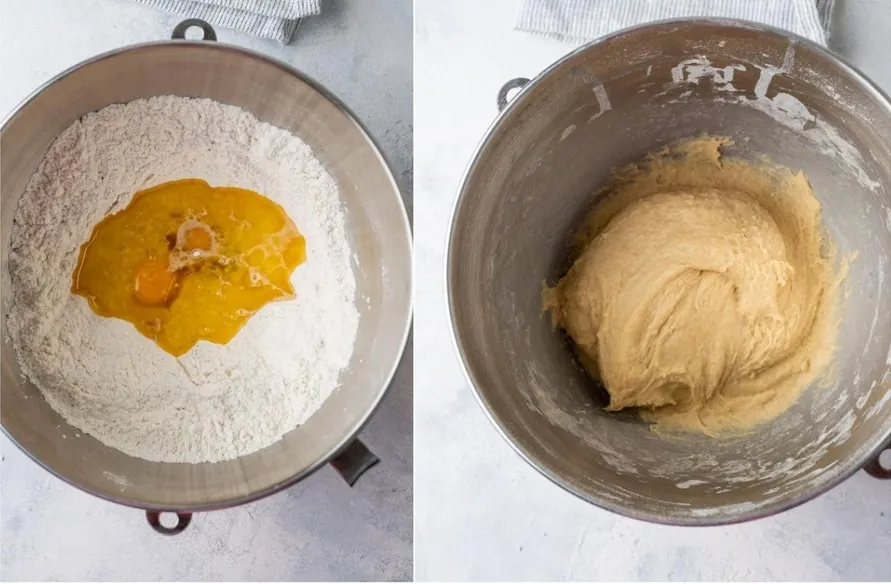
Combine the egg, remaining sugar, vanilla extract, and milk-and-yeast mixture in a large bowl. Gradually add the flour and salt, stirring until a dough forms.
Add the softened butter and knead the dough for about 8 to 10 minutes. The finished dough should be soft, smooth, and slightly sticky. Adding too much flour will make the donuts firm and dense.
If the dough sticks to your hands too much, knead it a little longer first. Only add a small amount of extra flour if necessary.
Step 3: Let the Dough Rise for Extra Fluffiness
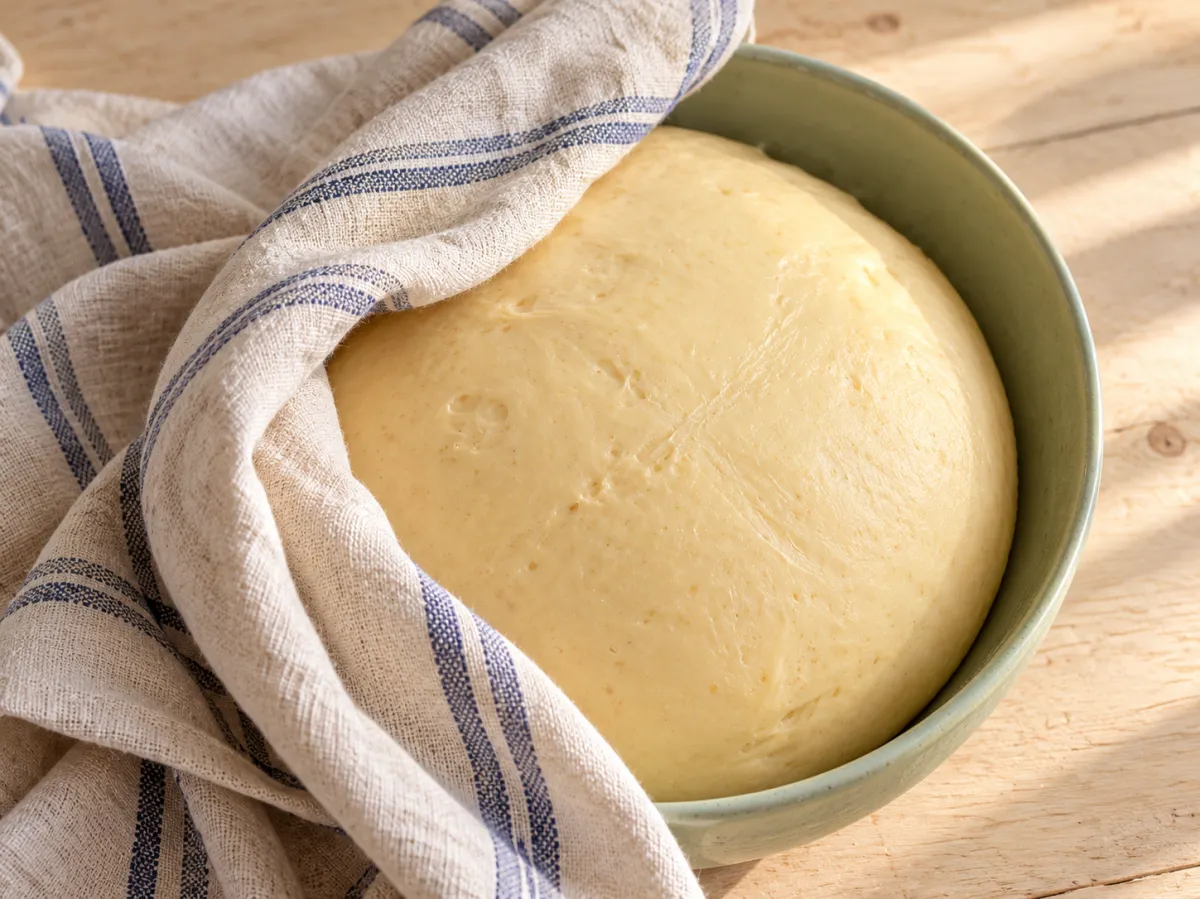
Grease the bottom of a bowl with a little oil and place the dough inside. Cover the bowl with a clean cloth or suitable cover.
Let the dough rest in a relatively warm place for about 60 to 90 minutes, or until it has nearly doubled in size. The exact time depends on the room temperature and the strength of the yeast.
The secret to soft donuts: Don't leave the dough in a very cold place. To speed things up, avoid placing it directly on a heater or next to a hot flame. Gentle warmth and enough time help create a better texture.
Step 4: Shape the Donuts
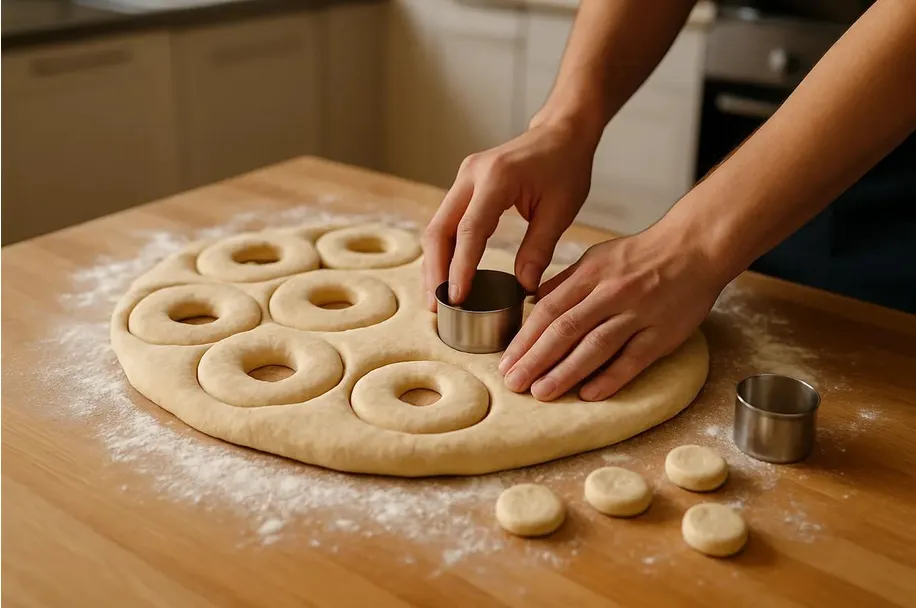
After the dough has risen, gently transfer it to a lightly floured surface and roll it out to a thickness of about 1 to 1.5 centimeters.
Use a round cookie cutter or the rim of a glass to cut out circles. Then, use a smaller cutter to remove the center of each circle, creating the classic ring shape.
If you don't have a donut cutter, you can use two glasses of different sizes. Gather the leftover dough, let it rest briefly, and cut out more donuts.
Step 5: Let the Donuts Rise Again: The Secret to a Pillowy Texture
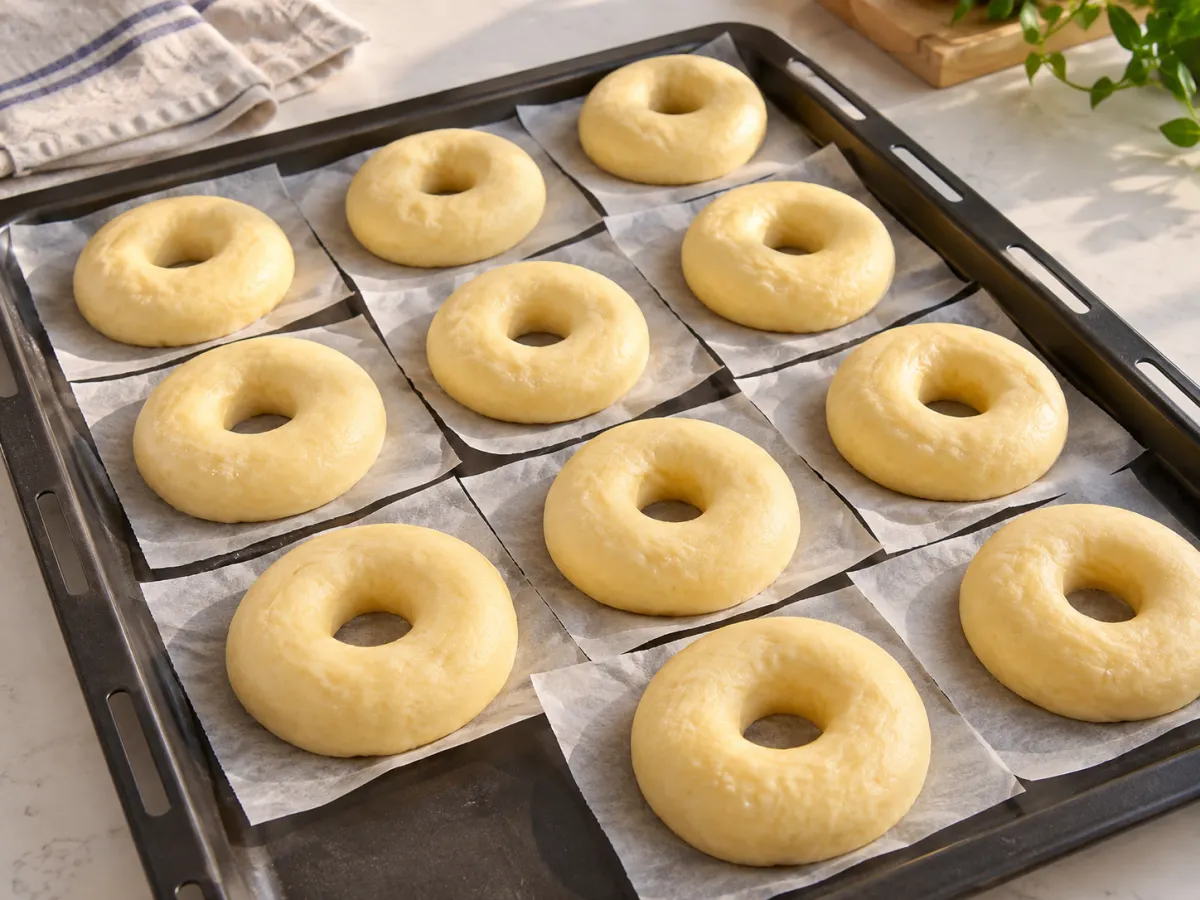
Place the shaped donuts on parchment paper or a tray, leaving some space between them, and cover them loosely.
Let them rest for another 20 to 30 minutes until they become slightly puffier. This step helps create a lighter, softer texture.
Handle the dough carefully when moving the donuts so they don't lose their airiness. If the donuts are too thin or compressed, the final result may not be as soft as you'd like.
Step 6: Fry the Donuts in a Frying Pan
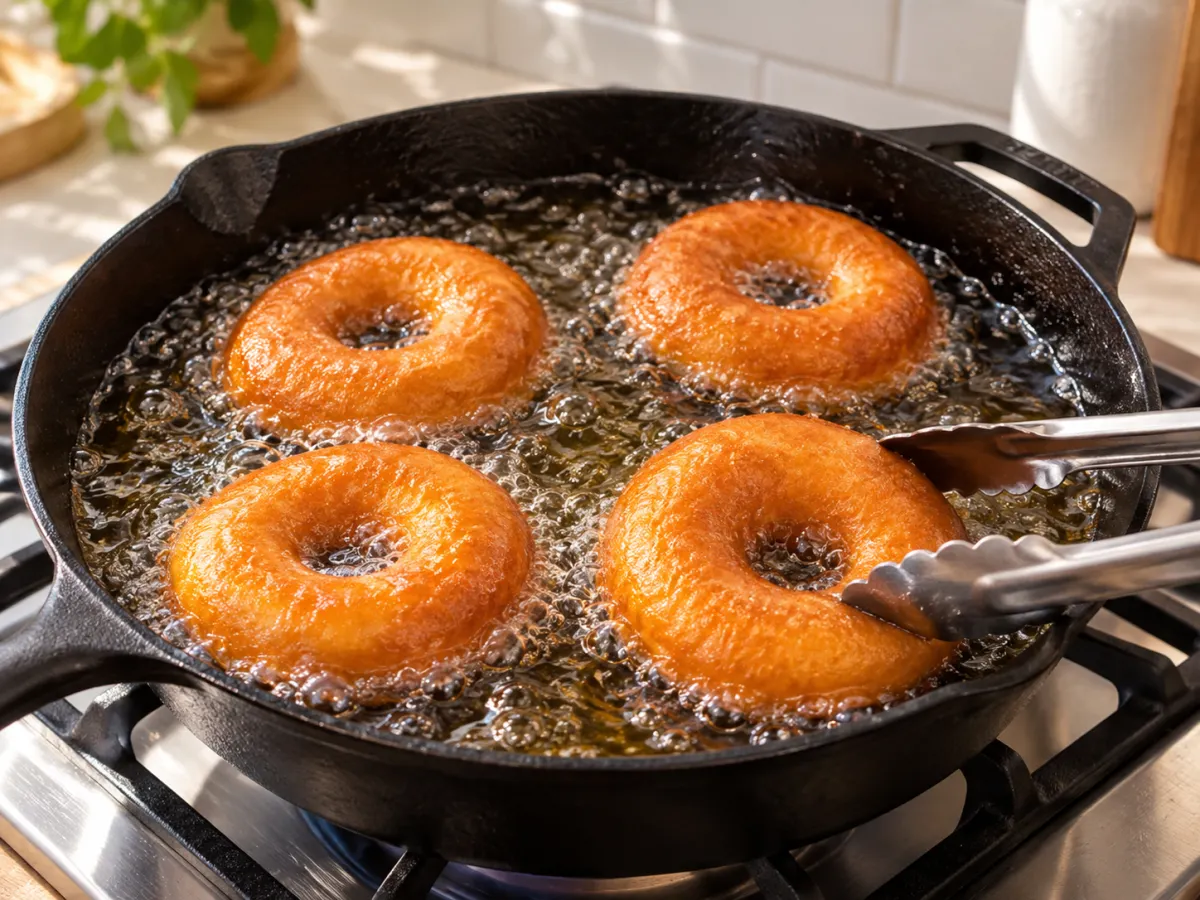
Choose a deep, suitable frying pan and add enough oil to give the donuts plenty of room while frying.
Heat the oil over medium heat. If you have a cooking thermometer, a temperature of around 170–175°C (340–347°F) is ideal.
Carefully place the donuts into the hot oil and fry each side for about 1 to 2 minutes, until golden brown. The exact cooking time depends on the size of the donuts and the oil temperature.
A few important tips:
- Don't put too many donuts in the pan at once.
- If the oil is too hot, the outside will darken quickly while the inside may remain undercooked.
- If the oil is too cool, the donuts will absorb more oil.
- When working with hot oil, lower the donuts gently into the pan to prevent splashing.
Step 7: Drain the Excess Oil and Decorate the Donuts
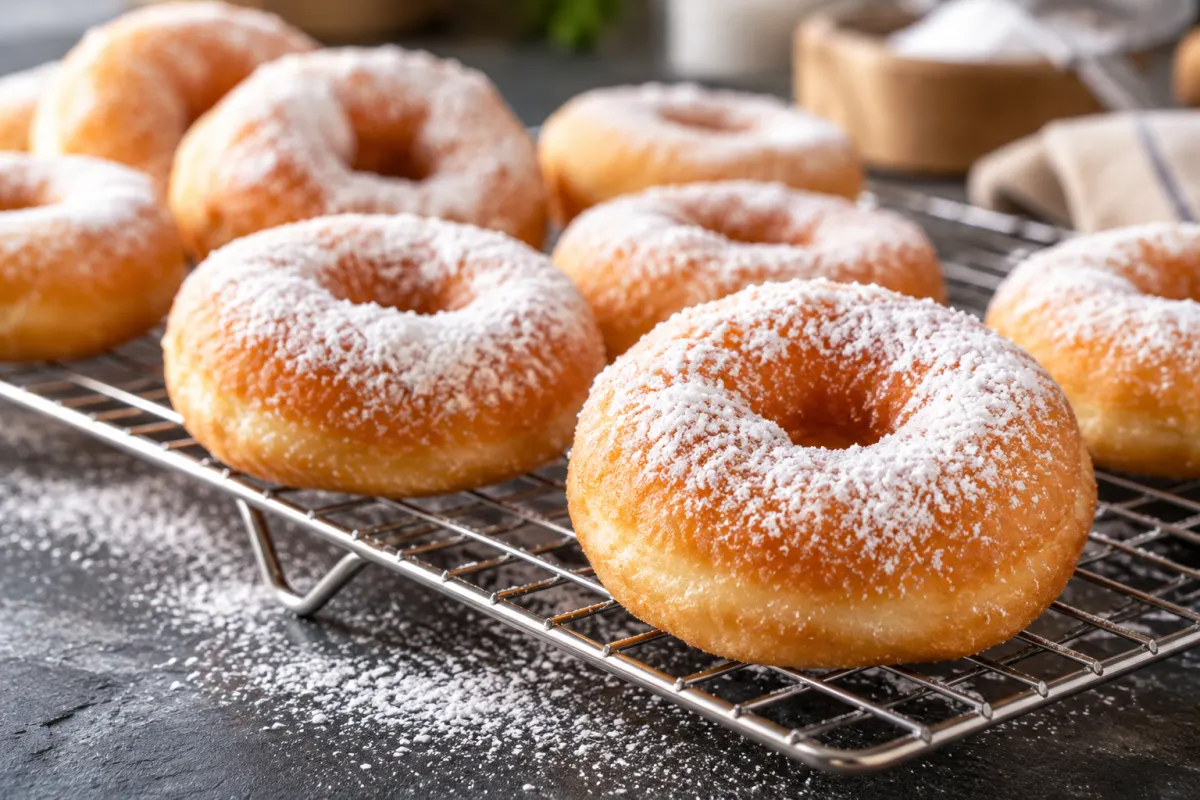
Once the donuts are golden brown, remove them with a slotted spoon and place them on a wire rack or paper towels to absorb the excess oil.
Allow them to cool slightly. Then, you can dust them with powdered sugar or add a chocolate coating.
To make a chocolate glaze, melt some chocolate using a double boiler. Once the donuts have cooled slightly, dip one side of each donut into the melted chocolate. For extra decoration, you can add chopped pistachios, sprinkles, or shredded coconut.
Three Delicious Ways to Customize Your Homemade Donuts
To give your donuts different flavors and appearances, try these three variations:
1. Powdered Sugar Donuts
The simplest option, allowing the soft texture of the donuts to shine. Just dust the finished donuts with powdered sugar.
2. Chocolate Donuts
Pour melted chocolate over the cooled donuts and decorate them with chopped nuts.
3. Cinnamon Sugar Donuts
Mix a little sugar with cinnamon and roll the donuts in the mixture while they're still slightly warm.
If you prefer a milder sweetness, don't increase the amount of sugar in the dough. Instead, adjust the final sweetness with your preferred topping.
Why Do Homemade Donuts Become Hard or Absorb Too Much Oil?
If your donuts don't turn out as soft and light as bakery-style treats, one of the following reasons may be responsible:
- Too much flour: The dough becomes stiff, resulting in heavy, dense donuts.
- Not enough rising time: The dough doesn't have enough time to produce gas and increase in volume.
- Inactive yeast: The donuts won't rise properly.
- Incorrect oil temperature: Oil that's too hot can burn the outside, while cool oil causes the donuts to absorb more fat.
- Insufficient kneading: The dough may not develop the structure and consistency it needs.
For better results, pay attention to the dough's texture and how much it rises rather than relying only on the suggested times.
How to Keep Homemade Donuts Soft
After cooling, homemade donuts are best stored in an airtight container at room temperature. They should generally be eaten within 1 to 2 days for the best texture and quality.
If the weather is hot or the donuts contain fillings or toppings that spoil easily, choose storage conditions appropriate for those ingredients. To reheat a plain donut, a few seconds of gentle heating is usually enough. Heating it for too long may dry it out.