

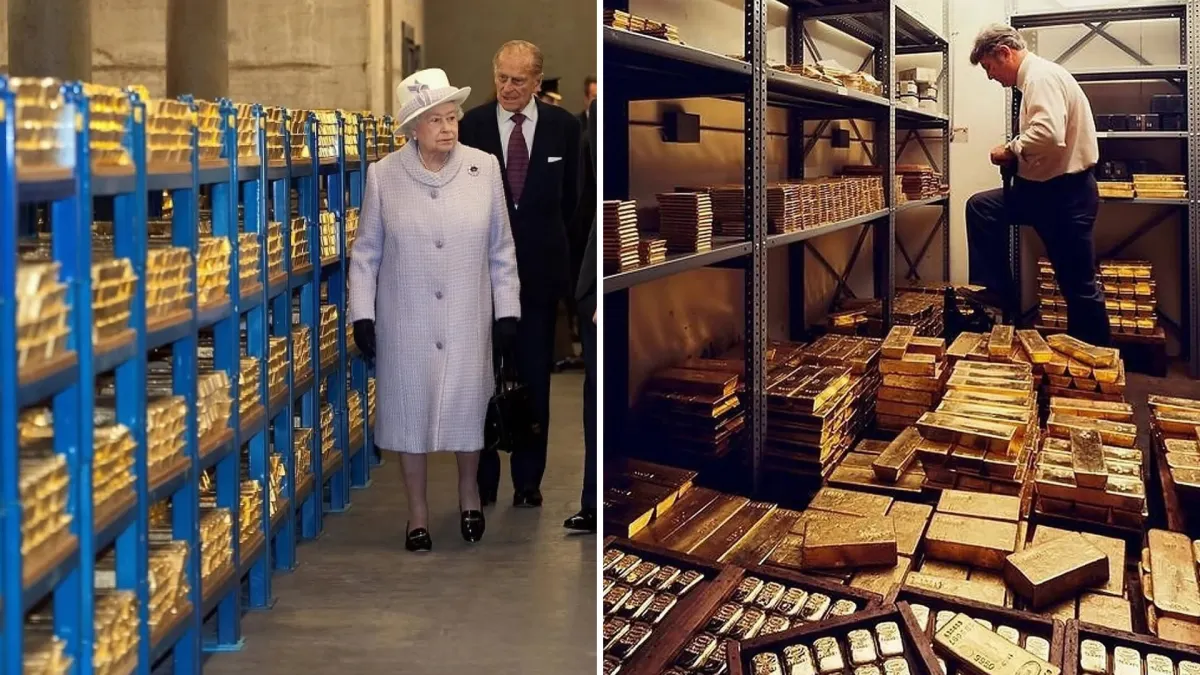
Deep beneath the busy streets of London’s financial district lies a hidden treasure worth more than $400 billion. While millions of people walk above it every year, few realize that one of the world's largest gold reserves is stored just three stories underground inside the Bank of England’s legendary gold vault.
Home to more than 400,000 gold bars weighing over 5,000 metric tons, the facility is the second-largest official gold storage site on Earth. Only the Federal Reserve Bank of New York holds more.
Why Is the Bank of England’s Gold Vault So Important?
The Bank of England’s vault is far more than a giant storage room filled with precious metal. It serves as a secure home for gold owned by governments, central banks, and international financial institutions from around the world.

Many countries choose to store their gold in London because of the city's long-standing reputation for stability, security, and global financial leadership. As a result, most of the gold inside the vault does not actually belong to the United Kingdom.
This unique role has helped make London one of the most influential centers of the global gold market.
A Fortress Built Beneath London
The underground vault was constructed during the 1930s, a period marked by economic uncertainty and rising geopolitical tensions. Engineers designed the facility to withstand extreme threats, including bombing campaigns and major security breaches.
Read More


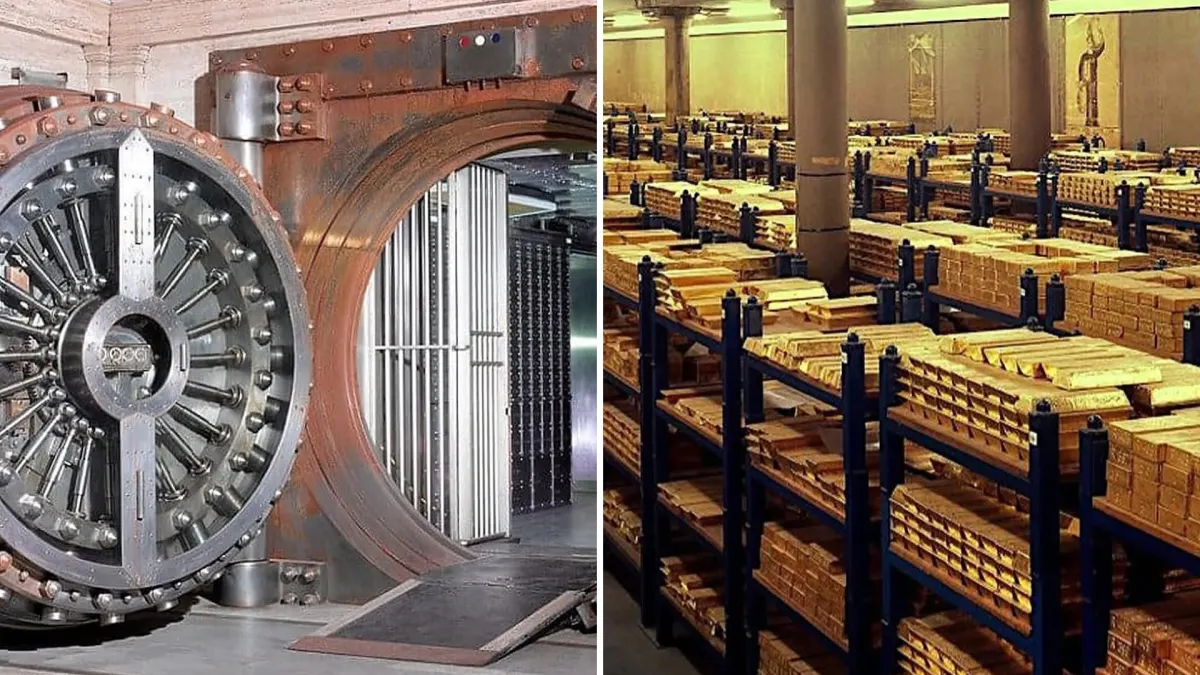
Protected by reinforced concrete, steel barriers, advanced surveillance systems, and multiple layers of restricted access, the vault remains one of the most secure locations in the world.
Although exact security details are closely guarded, the facility is monitored around the clock and operates under strict protocols designed to protect billions of dollars in assets.
What Does the Gold Look Like?
The gold stored inside the vault is held in «Good Delivery» bars, the international standard used in professional bullion markets. Each bar weighs approximately 12.4 kilograms (27.4 pounds) and is stamped with identifying information including weight, purity, and serial number.
Unlike the polished bars often seen in movies, these bars have a more practical appearance, reflecting their role as financial assets rather than display pieces.
Why Do Countries Still Hold Gold?
Despite the rise of digital finance, gold remains one of the world's most trusted stores of value.
Central banks maintain gold reserves as protection against inflation, currency fluctuations, economic crises, and geopolitical uncertainty. When financial markets become volatile, gold often serves as a safe-haven asset that helps preserve wealth.
For this reason, major economies continue to hold substantial gold reserves, and facilities like the Bank of England’s vault remain strategically important.

The Future of London’s Golden Fortress
While some nations have moved portions of their gold reserves back home in recent years, London continues to play a central role in global gold trading.
The Bank of England is also exploring new technologies to improve transparency and efficiency in gold ownership records, ensuring that the vault remains relevant in an increasingly digital financial world.
Nearly a century after its construction, the Bank of England’s gold vault remains one of the most fascinating hidden locations on the planet—a place where history, finance, security, and immense wealth meet beneath the streets of London.