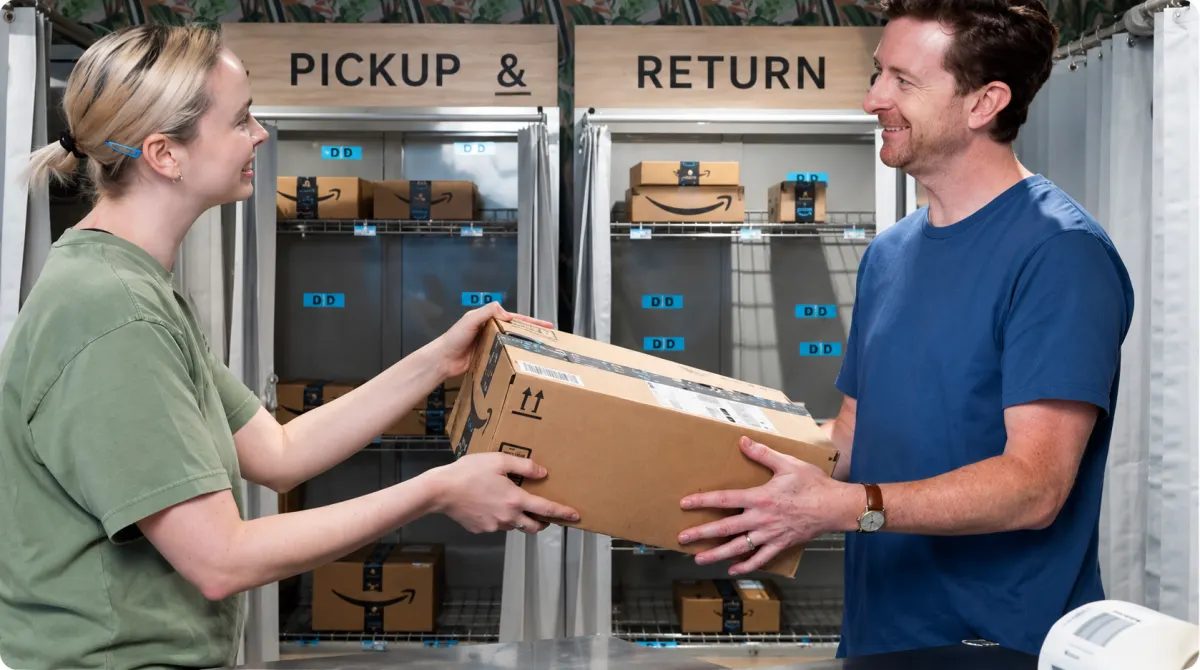

When a customer returns an item to Amazon, what happens to it next? Is it sold again as new, sent to liquidation warehouses, or simply thrown away? The answer depends on the product’s condition, its category, the seller’s policies, and the outcome of the inspection process.
Amazon, one of the world's largest e-commerce companies, has processes for handling returned products that include inspection, grading, resale, repair, donation, and recycling. However, not every returned item follows the same path. Even products that appear to be in good condition may not qualify for resale as new.
Dynamic Pricing Psychology on Amazon: Why Prices Change by a Few Cents Every Hour
According to Amazon’s official explanations and sustainability reports, the company's stated goal is to reuse returned products or recover their value whenever possible. However, independent investigations have also found that, under certain circumstances, usable products may be sent for disposal.
1. The First Step: Inspecting Returned Products
When a customer returns an item, it may be sent to a facility that specializes in processing Amazon returns. At these facilities, workers inspect the packaging and the product itself.
According to Amazon's official explanations, this assessment may include:
- Checking the original packaging for tears, damage, or signs that it has been opened.
- Confirming that the product matches its listed specifications.
- Assessing signs of use, physical damage, and potential defects.
- Testing the product's functionality when technical inspection is necessary.
For example, a pair of headphones with an opened box may still work perfectly. However, an electronic device that fails to turn on may require further testing or repair.
The important point is that a returned product is not necessarily a defective product. Customers may return items because they chose the wrong product, changed their minds, ordered the wrong size, or simply did not like what they received.
2. Does Amazon Sell Returned Products as New Again?
Yes, this can happen, but not with every product.
If an inspection confirms that a product meets Amazon's requirements for new merchandise, it may be returned to sellable inventory. For example, an unused item returned because a customer changed their mind may qualify for resale as new.
However, an opened package, signs of use, or damage may prevent a product from being sold under the new condition category.
In these cases, the product may be directed toward secondhand sales or another recovery channel.
Therefore, the common assumption that Amazon resells all returned products as new without inspecting them does not reflect the company's stated procedures.
3. What Is Amazon Resale, and How Does It Handle Returns?
One important resale channel is Amazon Resale, which was previously known as Amazon Warehouse in certain markets.
The program offers used, open-box, and other products that may no longer qualify for sale as new but are still suitable for use.
Before being listed on Amazon Resale, products are inspected and graded according to their condition. Amazon identifies four main condition categories:
| Condition | What It Generally Means |
|---|---|
| Like New | Nearly new condition; the packaging may have been opened or damaged. |
| Very Good | Very good condition, potentially with minor signs of use or limited imperfections. |
| Good | Good overall condition, potentially with more noticeable signs of use or cosmetic imperfections. |
| Acceptable | Usable condition, with more visible signs of wear or cosmetic damage. |
These labels provide general descriptions of a product's condition. The exact details depend on the item and the description provided in its individual listing.
For example, a returned laptop may undergo power-on testing, functional checks, and a factory reset before being assigned a condition grade. By contrast, a product with a serious technical defect may not be suitable for the program.
Why does this matter? Amazon can offer products that no longer qualify as new at a lower price, while giving customers information about their condition before purchase.
4. What Happens to Returned Products That Need Repairs?
Some returned products fall somewhere between fully functional and completely unusable. In these cases, repair may be an option.
Amazon has stated that it works with specialized repair companies to restore certain returned products, including televisions and laptops. These products may then be resold or directed toward other value-recovery channels.
However, repairing every returned product is not necessarily practical or economically viable. The cost of replacement parts, labor, the type of damage, the product's value, and its resale potential can all influence the decision.
As a result, an electronic device with a repairable fault may be sent to a specialist, while a product with severe damage or prohibitively expensive repair requirements may follow a different path.
5. Are Returned Amazon Products Sold to Liquidation Companies or Wholesalers?
Yes. Another documented route is selling inventory to liquidation companies, also known as liquidators.
These companies purchase merchandise through commercial arrangements and may subsequently sell it through secondary marketplaces, physical discount stores, e-commerce websites, or other resale channels.
Amazon's FBA Liquidations program allows eligible sellers to recover some value from certain inventory rather than paying to have it removed or disposed of. The program is designed to help sellers recover part of their inventory's value while reducing storage-related costs.
According to Amazon's official seller guidance, gross recovery values under this program have typically been around 5% to 10% of a product's value in many cases. However, actual recovery amounts vary depending on the merchandise and other factors, and these figures are not guaranteed.
It is also important to understand that inventory sold through liquidation is not necessarily made up entirely of customer returns. Excess inventory can enter the same process.
Likewise, buying a pallet of returned merchandise from a liquidation company does not guarantee that every item inside will be functional, complete, or suitable for resale.
6. Does Amazon Donate Returned Products to Charities?
Yes. Donations are another route Amazon has publicly identified for keeping products in use.
Some products may no longer be suitable for commercial sale because their packaging is damaged or they do not meet the requirements for regular retail inventory. However, they may still be perfectly usable. When eligible products can be matched with an appropriate donation program, they may be transferred to charitable organizations or support agencies.
In the United States, Amazon has worked with the nonprofit organization Good360 to distribute eligible merchandise to families and people in need. Donated products may include household goods, tools, school supplies, clothing, and certain electronic devices.
In its 2024 sustainability reporting, Amazon stated that it donated or supported the donation of more than 166 million items worldwide.
This figure represents the company's reported donation-related activities across that year. It should not be interpreted as the number of returned products donated.
7. What Happens to Products That Cannot Be Resold or Donated?
Not every item can be resold or donated. A product may be broken, contaminated, unsafe, expired, or otherwise unsuitable for reuse.
In such cases, recycling is one possible option. Amazon has stated in its sustainability reporting that it seeks to recycle products when possible, after considering opportunities for resale and donation.
In some circumstances, materials that cannot be recycled may be sent for energy recovery. This process involves recovering some of the energy contained in waste for useful energy production.
However, recycling, energy recovery, and landfill disposal are different processes. They should not be treated as interchangeable because they have different environmental implications.
Does Amazon Destroy Usable Products Too?
To answer this question accurately, it is important to look beyond the company's official statements.
In June 2021, British broadcaster ITV News published an investigation into the destruction of unsold goods at an Amazon warehouse in Dunfermline, Scotland. Based on footage from a former employee and internal documents, the report described large quantities of merchandise being sent for destruction. Reported items included televisions, laptops, books, and electronic products.
The investigation suggests that, under certain circumstances and at some facilities, products that may still have been usable were sent for disposal.
However, the investigation concerned a specific facility and period. It does not establish that all Amazon returns in every country are destroyed, nor does it demonstrate that the same practice continues at the same scale today.
Amazon's more recent official reports emphasize resale, repair, donations, and recycling. To assess the company's overall performance, these statements should be considered alongside independent investigations and verifiable data.
8. Do Returned Products from Third-Party Sellers Follow the Same Process?
Another important detail is that not every product sold on Amazon belongs to Amazon itself.
Many products are sold by independent third-party sellers. Some of these businesses use Fulfillment by Amazon, or FBA, which allows them to store inventory in Amazon's fulfillment centers and use the company's services for packing and shipping orders.
Under this arrangement, Amazon plays a role in logistics and inventory handling, but the products do not necessarily belong to Amazon.
For certain returned products handled through FBA, available options may include resale as used merchandise, refurbishment or repair, inventory liquidation, return to the seller, and donation. The final outcome depends on the product's condition, the seller's selected programs, and applicable rules.
Therefore, the term «Amazon returns» can refer to two different groups: products owned by Amazon and products owned by independent sellers who use Amazon's infrastructure.
Final Verdict: Where Do Amazon Returns Actually Go?
Based on Amazon's official information and independent reporting, returned products can follow several main routes:
| Product Condition | Possible Outcome |
|---|---|
| Unused and eligible for resale as new | Returned to sellable inventory and sold again |
| Functional but unsuitable for sale as new | Listed on Amazon Resale with a condition description |
| Has a repairable defect | Repaired and potentially resold or otherwise recovered |
| Suitable for secondary markets | Sold to liquidation companies |
| Usable but unsuitable for regular retail sale | Donated to eligible organizations |
| Unusable or unsuitable for resale and donation | Recycled or, in some cases, sent for energy recovery |
| Directed to a waste-disposal process | Disposed of or destroyed under the applicable procedures |
Ultimately, there is no single answer to the question, «What happens to Amazon returns?» Some products are resold, others go to sellers or secondary-market businesses, some are donated, and a portion enters recycling or waste-disposal channels.
The key takeaway is that a returned product is not automatically thrown away, but a product that appears undamaged is not guaranteed to be resold or donated either. Understanding what actually happens requires considering the product category, inspection results, seller policies, and evidence relating