

The 48-Hour Bugging of Silicon Valley's Top AI Suite
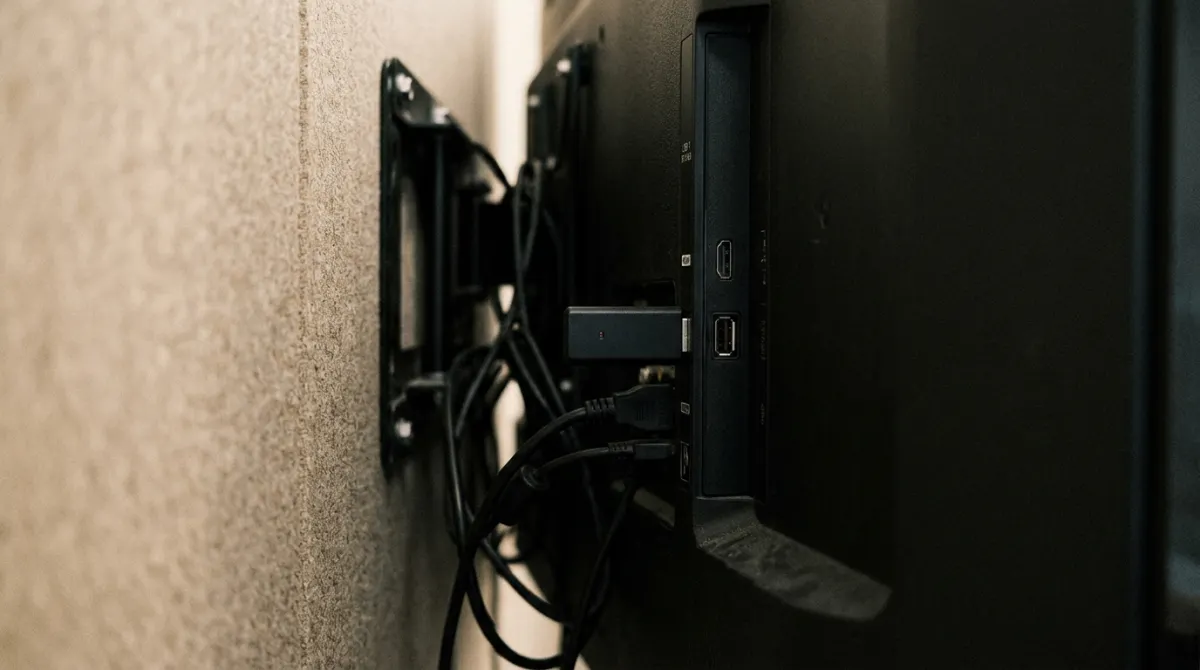
On Saturday, September 28, a product engineer walked into an executive conference room at OpenAI's San Francisco headquarters. The room was routinely used by leadership and technical teams to discuss sensitive, non-public developments in next-generation artificial intelligence. Before leaving the empty suite, he reached behind a mounted television screen and plugged a covert, encrypted audio-recording device directly into a USB port.
How to Lock Your Private ChatGPT Conversations With a PIN
He expected the bug to harvest confidential executive discussions undetected. Instead, his operation lasted barely forty-eight hours.
On Monday morning, OpenAI security staff discovered the foreign hardware during a physical sweep of the facility. What followed was a swift technical counter-investigation: OpenAI deployed its own internal artificial intelligence models alongside physical badge access logs and security footage to trace the device's origin. Within days, investigators identified 35-year-old product engineer Abdulrahman Alfozan, who had joined the company only months earlier in July.
By October 9, federal agents from the FBI moved in, arresting Alfozan before he could board an international flight out of the country. The case has sent shockwaves through the tech industry, marking one of the first direct criminal prosecutions involving physical espionage inside a frontier AI laboratory.
How OpenAI Used Its Own AI to Catch the Intruder
In traditional corporate security investigations, analyzing gigabytes of raw badge swipe records, server logs, and building camera timestamps takes weeks of tedious manual cross-referencing. In this incident, OpenAI accelerated the inquiry by feeding hardware signatures and access anomalies into its own internal machine learning tools.
The models rapidly correlated the exact window when the USB device first connected with electronic card-key records showing who entered that specific conference room outside normal operating hours. Security camera footage corroborated the finding, placing Alfozan directly at the scene.
Federal court filings unsealed by prosecutors revealed that Alfozan, a lawful permanent resident, was in communication with an unnamed member of the Saudi royal family regarding an AI initiative in Riyadh. When OpenAI terminated his employment and federal authorities intervened, prosecutors argued against bail, emphasizing the extreme national security value of frontier model architectures and the risk of flight.
| Investigation Aspect | Traditional Corporate Breach | OpenAI Incident (September 2026) |
|---|---|---|
| Target Location | Cloud databases & email servers | Executive conference room hardware |
| Detection Window | Average 200+ days (industry median) | Under 48 hours (weekend installation to discovery) |
| Forensic Method | Manual IT ticket reviews | Internal AI models correlating physical & digital logs |
| Suspect Action | Unauthorized external downloads | Physical audio recording bug behind TV display |
The Staggering Value of Frontier AI Secrets
To understand why foreign entities and rogue employees are willing to risk decades in federal prison for boardroom audio, consider the economics of modern frontier AI. Training a state-of-the-art foundation model requires hundreds of millions of dollars in computing clusters, specialized Nvidia processors, and months of proprietary algorithmic tuning.
Yet in competitive AI development, a company's most guarded secrets are not just finished code—they are the strategic decisions discussed behind closed doors. Knowing which technical experiments hit dead ends, which computing suppliers are under contract, or how safety evaluations are benchmarked can save a rival organization years of expensive trial and error.
Federal statutes under the federal wiretap and trade secret acts carry strict criminal penalties, including up to fifteen years of imprisonment for acts designed to benefit foreign interests. As generative models approach human-level capabilities across engineering and scientific domains, the economic incentives driving industrial espionage have escalated into geopolitical territory.
A Turning Point for Silicon Valley Security
For decades, Silicon Valley celebrated an open, informal work culture where talented engineers enjoyed unrestricted campus access and open collaborative spaces. The Alfozan prosecution marks a decisive end to that relaxed era.
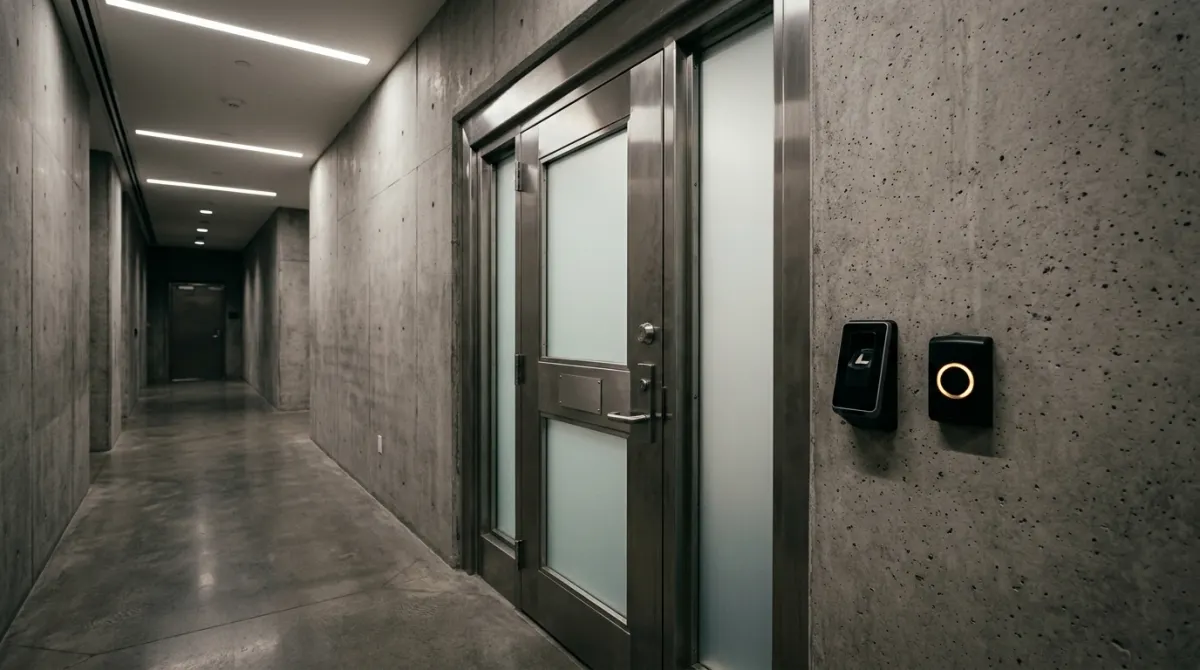
Frontier AI research institutions are now adopting strict compartmentalization protocols historically seen only in aerospace defense contractors and government intelligence agencies. Sensitive meeting rooms are being converted into secure facilities where unauthorized personal electronics, foreign USB storage devices, and smartwatches are strictly prohibited.
The arrest at OpenAI makes one reality unmistakable: as artificial intelligence becomes the defining commercial and geopolitical technology of the century, the battle to protect it is no longer fought solely across digital firewalls—it is fought on the physical factory and office floor.
The Mechanics of Modern Counter-Surveillance Sweeps
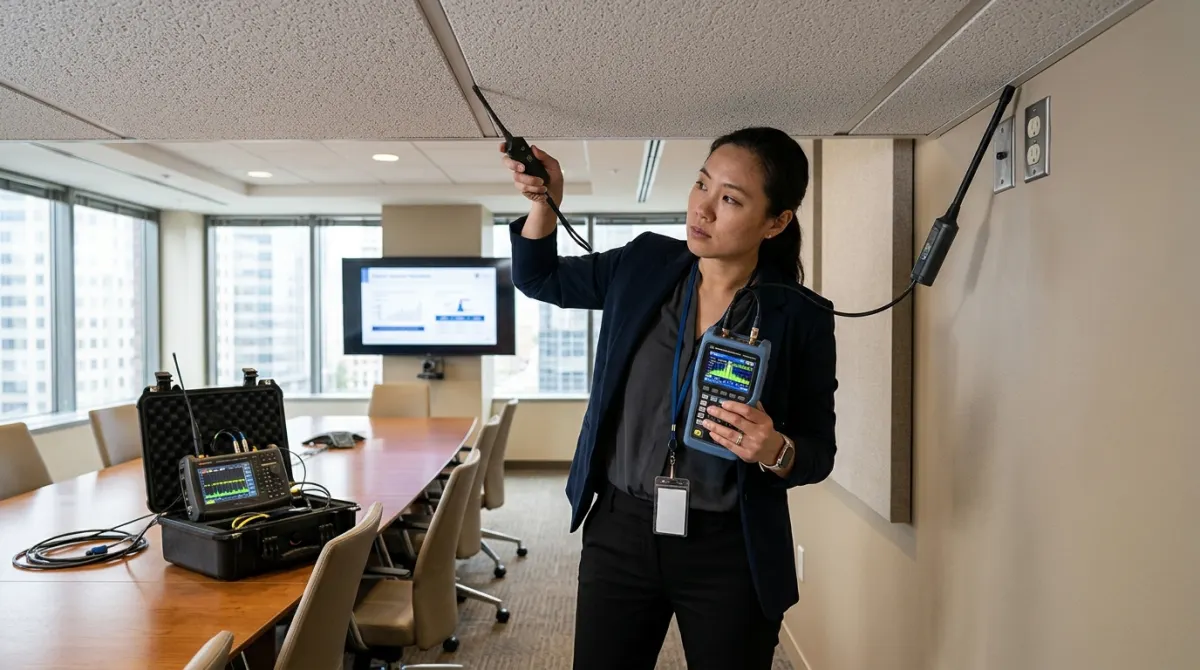
The swift detection of the recording device inside OpenAI's conference facilities highlights the specialized nature of technical surveillance countermeasures (TSCM). Enterprise security teams at leading research institutions conduct regular electronic sweeps using near-field RF spectrum analyzers, non-linear junction detectors, and thermal imaging cameras capable of identifying concealed active micro-circuitry.
A non-linear junction detector operates by transmitting a high-frequency microwave signal into walls, furniture, and consumer electronics. When that signal encounters semiconductor components—such as diodes, transistors, or flash memory chips—it emits secondary harmonic frequencies that reveal the presence of silicon hardware, even if the recording device is powered off or dormant.
During the Monday inspection, security specialists detected unnatural electronic signatures behind the wall-mounted conference monitor. Physical dismantling revealed a modified USB recording unit concealed inside a standard television port, prompting the immediate forensic extraction that linked the hardware signature to internal access badges.
Legal Precedents and Trade Secret Protections
Under Title 18 of the United States Code, unlawful interception of wire, oral, or electronic communications carries severe statutory penalties including substantial fines and multi-year federal prison terms. When proprietary algorithmic training recipes and state-backed foreign intermediaries are involved, prosecutors can layer additional counts under the Economic Espionage Act, which carries up to fifteen years of imprisonment.
Legal analysts following federal tech prosecutions point out that maintaining trade secret protection in court requires proving that the victim organization took active, reasonable measures to protect confidentiality. By documenting restricted badge access, physical room sweeps, and immediate policy enforcement, frontier technology companies ensure that intercepted research remains fully protected under federal criminal statutes.
The Growing Threat of Insider Infiltration
Cybersecurity intelligence firms monitoring advanced technology sectors emphasize that the greatest vulnerability facing modern artificial intelligence labs is insider risk. While enterprise IT teams invest tens of millions of dollars in external firewalls, threat monitoring software, and perimeter defense systems, an authorized employee with physical badge access can bypass digital defenses entirely in seconds.
The arrest of an internal product engineer demonstrates that foreign adversaries and commercial competitors are actively targeting authorized personnel with specialized technical access. As frontier AI models become strategic national assets, research labs are enforcing strict dual-custody access policies for sensitive testing environments, ensuring that no single individual can access critical hardware or proprietary model weights without secondary administrative authorization.