



Cargo ships transport more than 80% of the world's goods by volume. But not every cargo ship is the same. From massive container vessels carrying $4 trillion worth of goods annually to specialized livestock carriers crossing the Indian Ocean, each type of cargo ship is purpose-engineered for a specific freight category, route, and loading method. This guide covers every major type of cargo ship used in global maritime trade today — with up-to-date specifications, size classifications, and real-world applications.
What Is a Cargo Ship?
A cargo ship — also called a merchant vessel or freight ship — is any commercial vessel designed to transport goods across oceans or coastal waters. Cargo ships are classified by the type of cargo they carry, their deadweight tonnage (DWT), and their loading and unloading method.
Read More
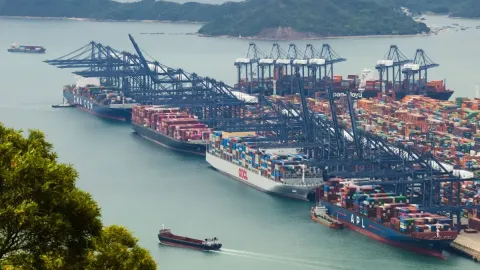
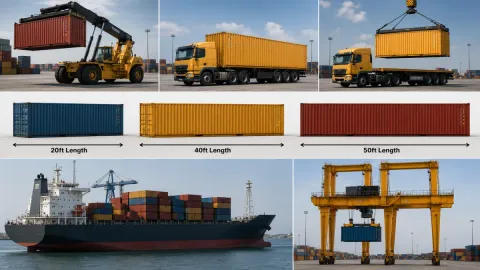
Deadweight tonnage (DWT) is the standard measure of a ship's cargo capacity, representing the total weight it can safely carry including cargo, fuel, water, and supplies.
Types of Cargo Ships: Overview
| Ship Type | Primary Cargo | Typical DWT Range |
|---|---|---|
| Container Ship | Manufactured goods | 10,000 – 240,000+ DWT |
| Bulk Carrier | Dry commodities | 3,000 – 400,000 DWT |
| Crude Oil Tanker | Crude oil | 75,000 – 550,000 DWT |
| Chemical Tanker | Liquid chemicals | 5,000 – 40,000 DWT |
| LNG Carrier | Liquefied natural gas | 125,000 – 180,000 m³ |
| Ro-Ro Ship | Vehicles & machinery | 5,000 – 70,000 DWT |
| Reefer Ship | Perishable goods | 2,000 – 20,000 DWT |
| Multi-Purpose Vessel | Mixed cargo | 3,000 – 25,000 DWT |
| Heavy Lift Ship | Oversized structures | 10,000 – 50,000+ DWT |
| Livestock Carrier | Live animals | 5,000 – 25,000 DWT |
1. Container Ships
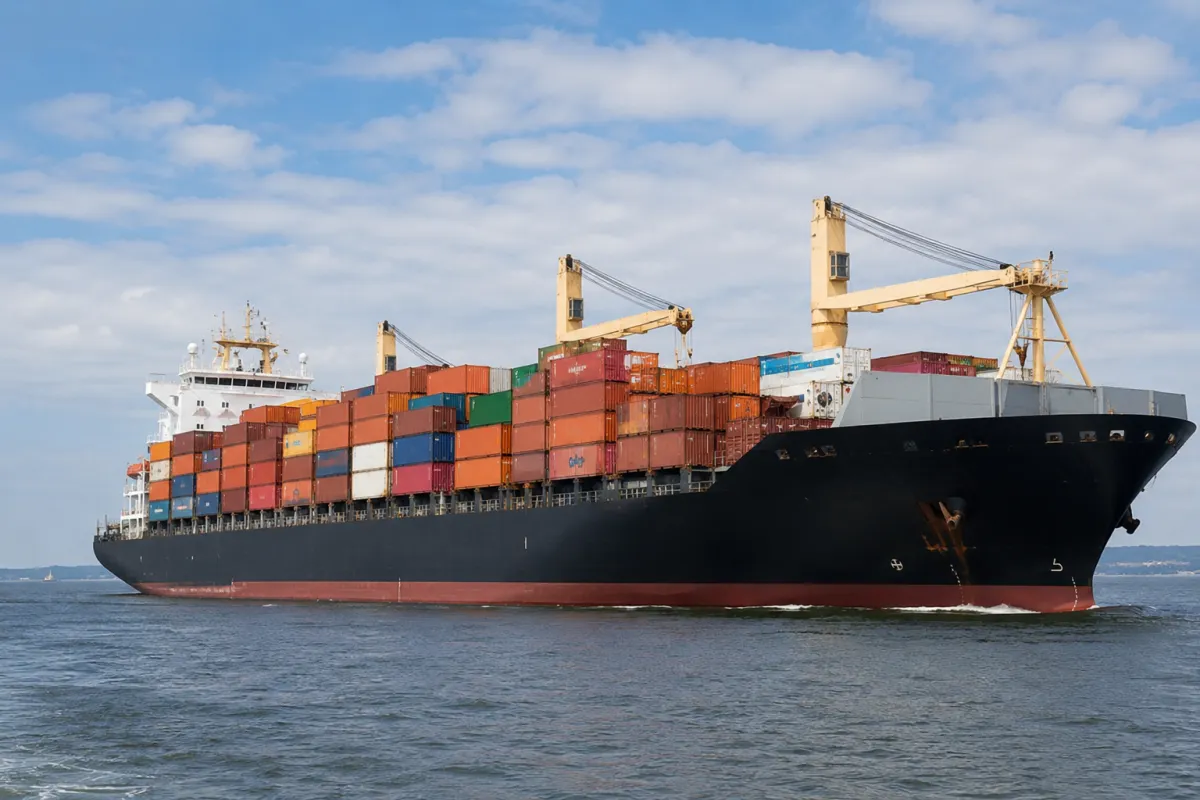
Container ships are the most economically significant type of cargo vessel in modern maritime transport. They carry standardized intermodal containers — primarily 20-foot units (TEU) and 40-foot units (FEU) — stacked in holds and on deck.
Key Facts and Specifications
- Container ships carry approximately 60% of the value of global seaborne trade, totaling over $4 trillion worth of goods annually
- As of April 2025, the global container fleet comprises 6,033 vessels with a combined capacity of 30.3 million TEU
- The current record holder is MSC's Irina-class, capable of carrying 24,346 TEU, measuring 399.9 meters in length and 61.3 meters in width
- Containers enable intermodal transport — goods move seamlessly between ship, truck, and rail without unpacking
Container Ship Size Classes
- Feeder vessels: Under 3,000 TEU — serve regional ports and act as feeders to larger hub vessels
- Panamax: Up to ~5,000 TEU — sized to transit the original Panama Canal locks (max 275m length, 32m beam)
- Post-Panamax / New Panamax: 5,000–14,500 TEU — transit the expanded Panama Canal (opened 2016)
- Ultra-Large Container Vessels (ULCV): Above 18,000 TEU — operate on major Asia–Europe and transpacific trade lanes
What Container Ships Carry
Electronics, clothing, machinery, furniture, food products, pharmaceuticals, automotive parts, and virtually any packaged manufactured good.
2. Bulk Carriers (Dry Bulk Ships)
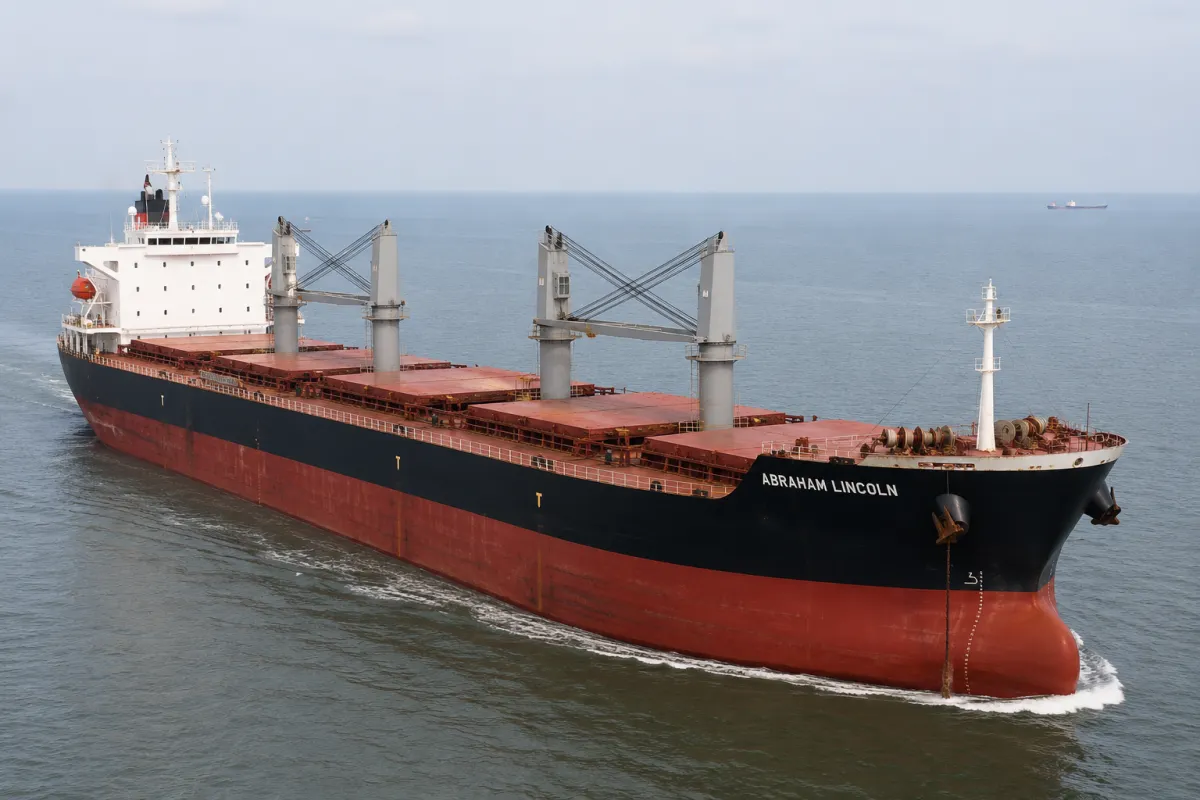
Bulk carriers — also called bulkers or dry bulk ships — transport unpackaged dry commodities loaded directly into open cargo holds. They are the largest fleet segment globally by deadweight tonnage, accounting for over 1 billion DWT and approximately 42.7% of total global fleet tonnage.
Key Facts and Specifications
- Over 13,000 bulk carriers are in active operation worldwide
- Primary cargoes: iron ore, coal, grain, bauxite, cement, fertilizer, and forest products
- Cargo is loaded via conveyor belts or chutes and discharged by grabs, suction equipment, or self-unloading systems
Bulk Carrier Size Classifications
- Mini Bulk Carrier: 3,000–23,999 DWT — coastal and short-sea trades, port feeder vessels
- Handysize: 20,000–40,000 DWT — highly versatile, equipped with onboard cranes, can call at ports with limited infrastructure
- Handymax / Supramax: 35,000–65,000 DWT — widely used for grain and minor bulk trades globally
- Panamax: Up to ~80,000 DWT — designed to transit the Panama Canal
- Capesize: 100,000+ DWT — too large for the Panama and Suez canals, routes around Cape Horn or Cape of Good Hope
- Very Large Ore Carrier (VLOC): Up to 400,000 DWT — purpose-built for iron ore, primarily on Brazilian and Australian export routes
What Bulk Carriers Carry
Iron ore, coal, grain (wheat, corn, soybeans), bauxite, phosphate, fertilizers, cement, and steel products.
3. Oil Tankers
Oil tankers are specialized cargo ships designed to transport crude oil or refined petroleum products in large internal tanks. They are classified by size and cargo type.
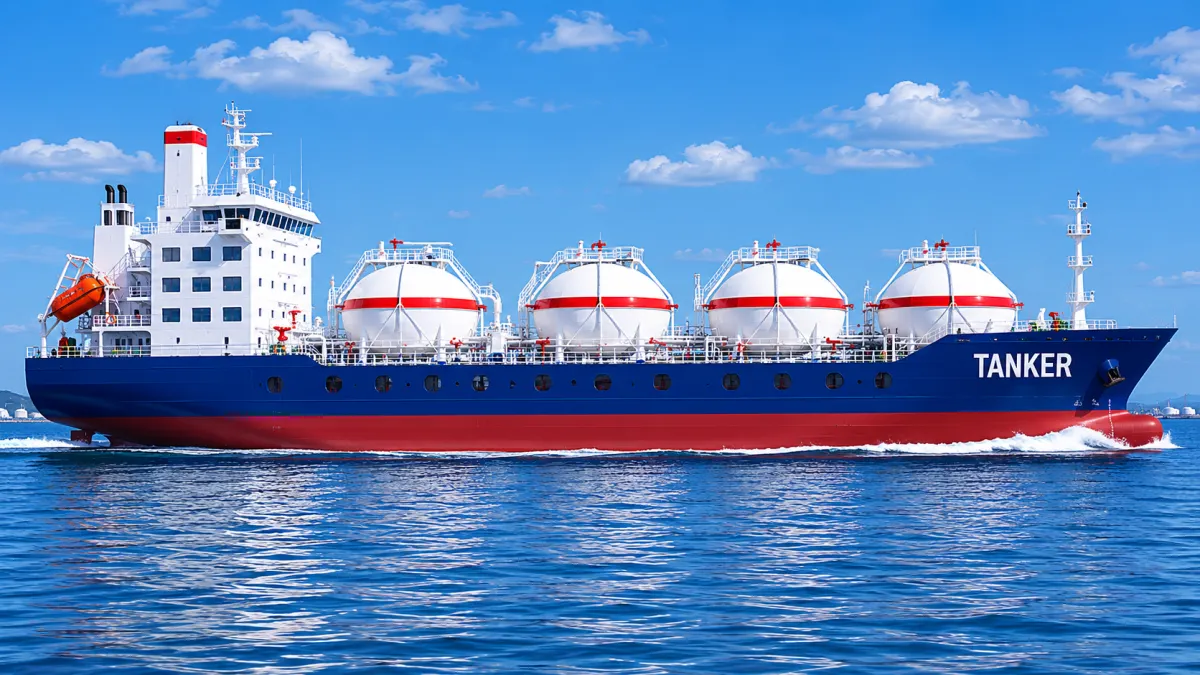
Crude Oil Tanker Size Classifications
- Aframax: 75,000–120,000 DWT — suited for ports and terminals with depth restrictions; primary vessels in the Caribbean, Mediterranean, and North Sea
- Suezmax: Approximately 150,000 DWT — maximum size able to transit the Suez Canal fully loaded
- VLCC (Very Large Crude Carrier): 200,000–320,000 DWT — the dominant vessel class for Middle East to Asia and Europe crude oil routes
- ULCC (Ultra Large Crude Carrier): 320,000–550,000 DWT — among the largest ships ever built; limited to deep-water terminals
Product Tankers
Product tankers carry refined petroleum products — gasoline, diesel, jet fuel, and naphtha. They are smaller than crude oil tankers, typically ranging from 25,000 to 75,000 DWT, and feature coated tanks to prevent contamination between different product grades.
What Oil Tankers Carry
Crude oil, gasoline, diesel, jet fuel, naphtha, fuel oil, and bitumen.
4. LNG Carriers (Liquefied Natural Gas Ships)
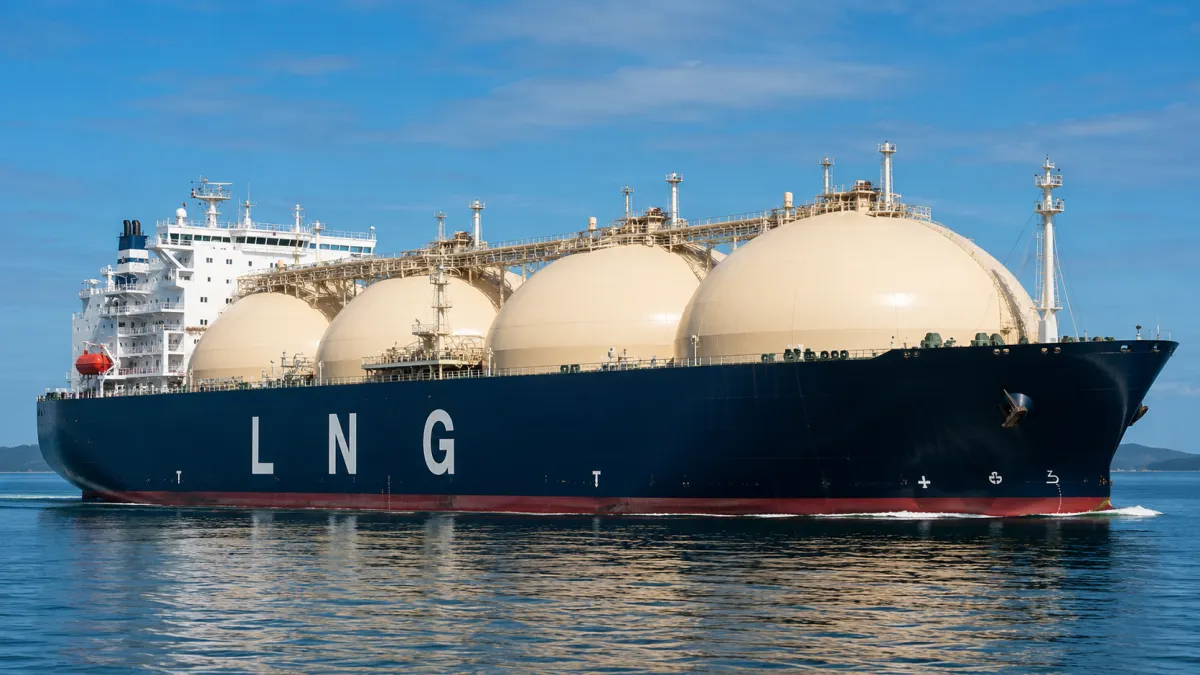
LNG carriers are among the most technically complex cargo vessels in the global fleet. They transport liquefied natural gas cooled to -162°C in specialized cryogenic tanks, which reduces gas volume by approximately 600 times for economical ocean transport.
Key Facts and Specifications
- Typical cargo capacity: 125,000 to 180,000 cubic meters
- Tank systems include Moss spherical tanks and membrane-type tanks (GTT Mark III and NO96 systems)
- LNG carriers are among the most expensive vessels to build, with newbuild prices exceeding $230 million USD per vessel
- LNG-fueled ships (over 1,000 on order as of 2024) are also being adopted across other vessel categories as an emissions-reduction strategy
What LNG Carriers Transport
Liquefied natural gas from producing countries (Qatar, USA, Australia, Russia) to import terminals in Europe, Japan, South Korea, and China.
5. Chemical Tankers
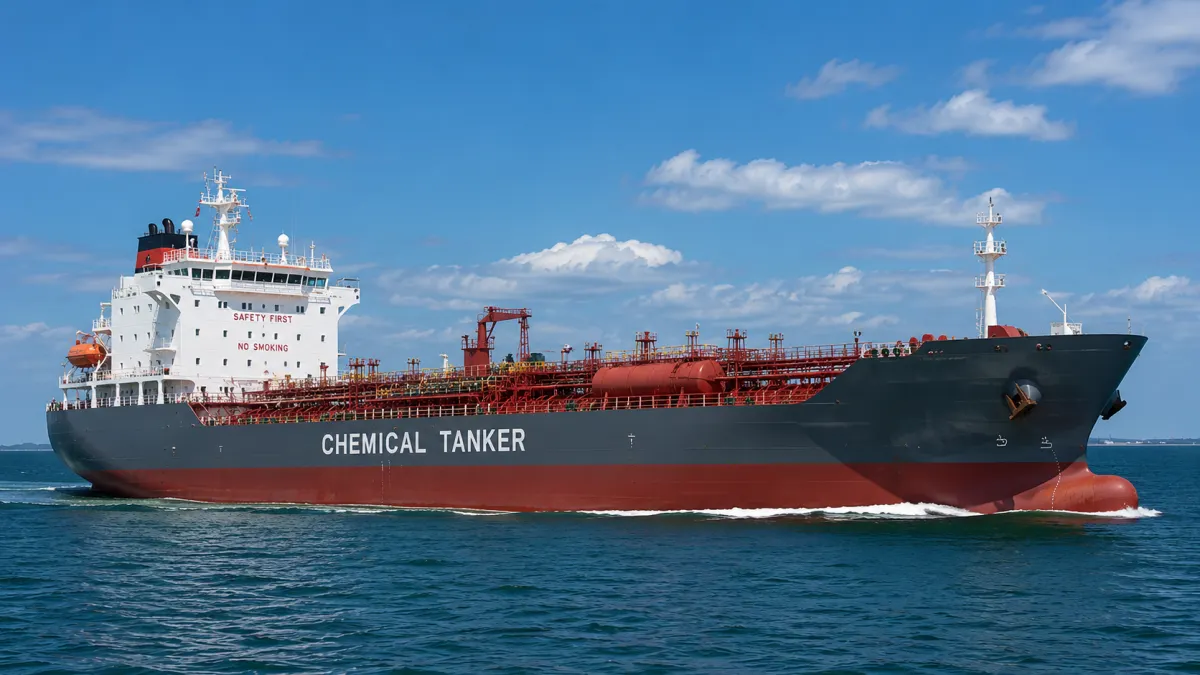
Chemical tankers carry hazardous or sensitive liquid chemicals in segregated, individually coated cargo tanks. Unlike crude oil tankers that carry a single product, chemical tankers often transport multiple different products simultaneously in separate tanks.
Key Facts and Specifications
- Tanks are lined with stainless steel, zinc silicate, or epoxy coatings to prevent contamination and corrosion
-
The IMO classifies chemical tankers into three categories:
- IMO Type 1: Highest hazard chemicals requiring maximum containment (e.g., carbon disulfide)
- IMO Type 2: Moderately hazardous chemicals (e.g., sulfuric acid, benzene)
- IMO Type 3: Lower-hazard chemicals suitable for standard tanks (e.g., ethanol, vegetable oils)
- Typical capacity: 5,000 to 40,000 DWT
What Chemical Tankers Carry
Sulfuric acid, methanol, ethanol, benzene, vegetable oils, molasses, industrial solvents, and specialty petrochemicals.
6. Ro-Ro Ships (Roll-On/Roll-Off Vessels)
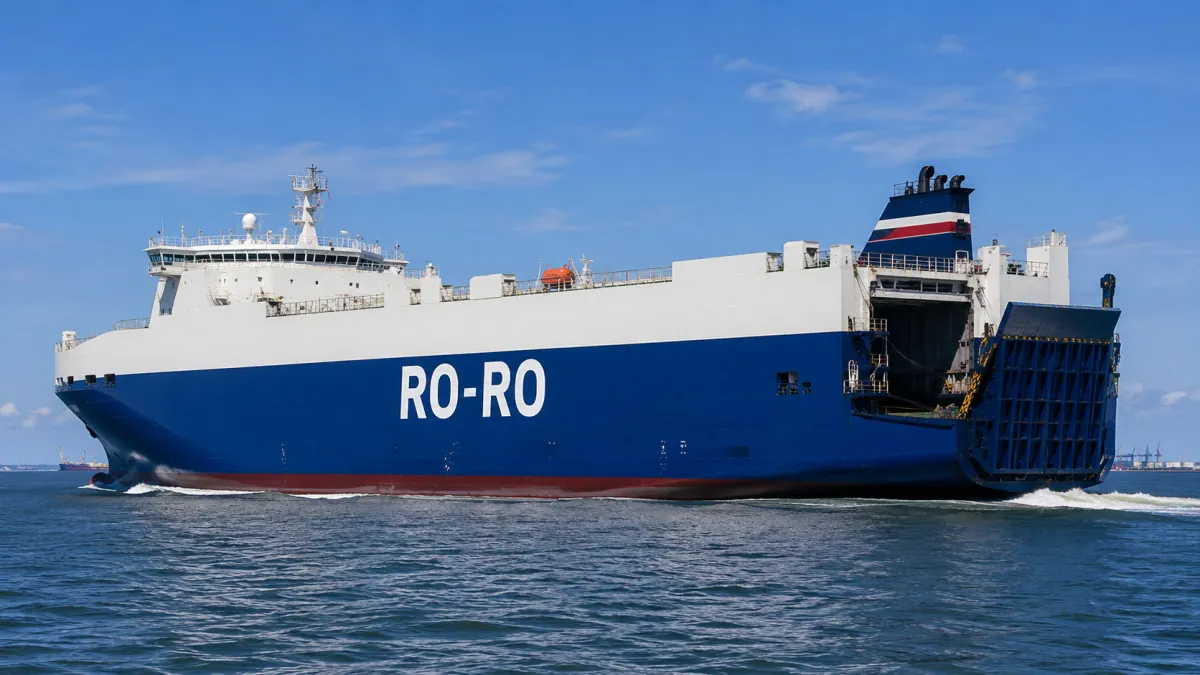
Ro-Ro ships are cargo vessels designed to carry wheeled cargo — vehicles and machinery that roll on and off the ship via built-in stern, bow, or side ramps. This loading method eliminates the need for cranes, significantly reducing port turnaround time.
Types of Ro-Ro Vessels
- Pure Car Carrier (PCC): Multi-deck vessels with adjustable deck heights, purpose-built for automobile transport between manufacturing plants and global markets
- Pure Car and Truck Carrier (PCTC): Larger than PCCs, can also carry trucks, buses, agricultural machinery, and static construction equipment
- ConRo Ship: Combines Ro-Ro decks with container-carrying capacity, offering flexibility for mixed cargo voyages
- RoPax: Combines Ro-Ro cargo capacity with passenger accommodation, primarily used on ferry routes and short-sea trades
Key Facts and Specifications
- Ro-Ro ships are critical to the global automotive supply chain, transporting finished vehicles from factories in Japan, South Korea, Germany, and the USA to global markets
- Some Ro-Ro vessels can also carry wind turbine components, boat hulls, and non-containerizable oversized industrial items
- Loading and unloading via ramp is substantially faster than crane-based operations on conventional cargo ships
What Ro-Ro Ships Carry
Automobiles, trucks, buses, agricultural tractors, heavy construction equipment, mining machinery, and oversized wheeled cargo.
7. Reefer Ships (Refrigerated Cargo Vessels)
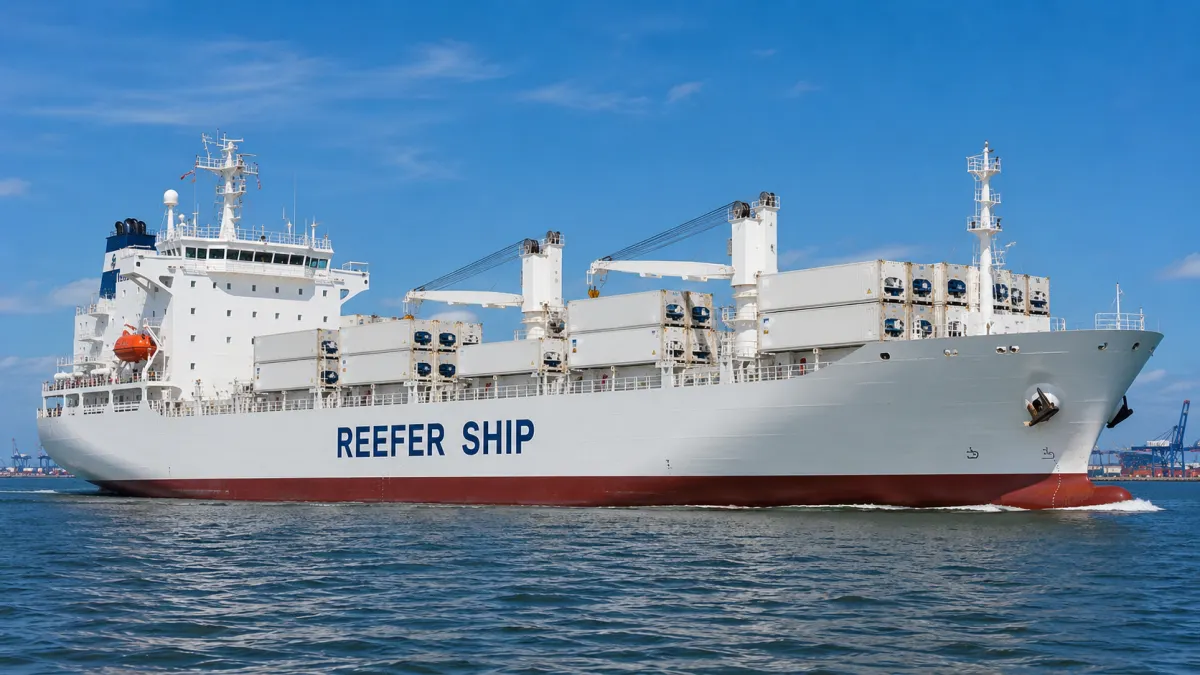
Reefer ships maintain precise temperature-controlled environments throughout the entire voyage to protect perishable cargo. They are purpose-built with insulated holds and onboard refrigeration machinery.
Key Facts and Specifications
-
Temperature ranges vary by cargo type:
- Fresh fruit and vegetables: +8°C to +13°C
- Chilled meat and dairy: 0°C to +4°C
- Frozen meat and fish: -25°C to -30°C
- Ice cream and frozen goods: -30°C to -35°C
- Modern reefer ships feature pallet-friendly decks, side access doors, and onboard forklift systems for rapid handling
- Refrigerated containers on standard container ships have taken a significant portion of this market, but dedicated reefer vessels remain preferred for large-volume perishable shipments requiring maximum speed and freshness control
What Reefer Ships Carry
Fresh fruit, vegetables, meat, fish, dairy products, frozen food, cut flowers, and temperature-sensitive pharmaceuticals.
8. Multi-Purpose Vessels (MPVs) and General Cargo Ships
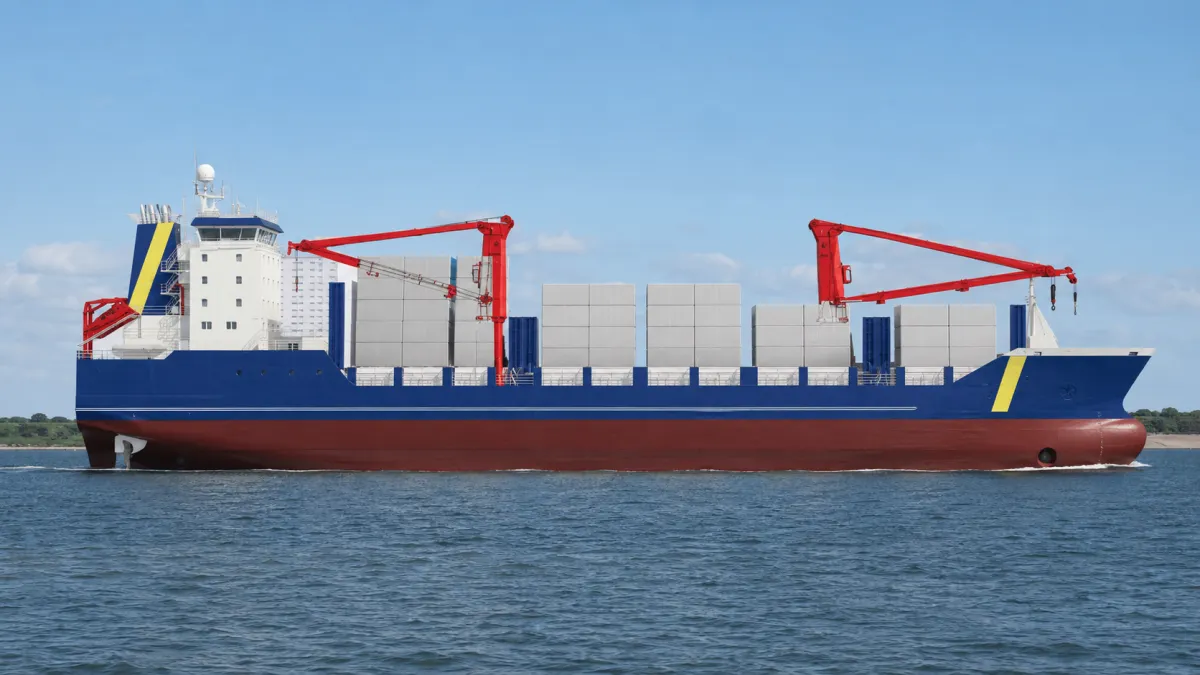
Multi-purpose vessels (MPVs) are designed to carry a combination of cargo types — containers, breakbulk goods, project cargo, and oversized items — on a single voyage. They serve routes where cargo volumes or port infrastructure do not justify specialized vessels.
Key Facts and Specifications
- MPVs are equipped with onboard cranes capable of handling loads from 100 to 3,000+ tonnes depending on specification
- The general cargo and breakbulk segment accounts for approximately 20% of global maritime trade by value
- As of 2024, the general cargo fleet is the oldest segment of the global merchant fleet, averaging 28 years of age
- These vessels remain essential in regions with limited port infrastructure, island trade routes, and project cargo logistics
What Multi-Purpose Vessels Carry
Industrial machinery, steel products, packaged timber, bagged goods, project cargo, and mixed consignments.
9. Heavy Lift Ships
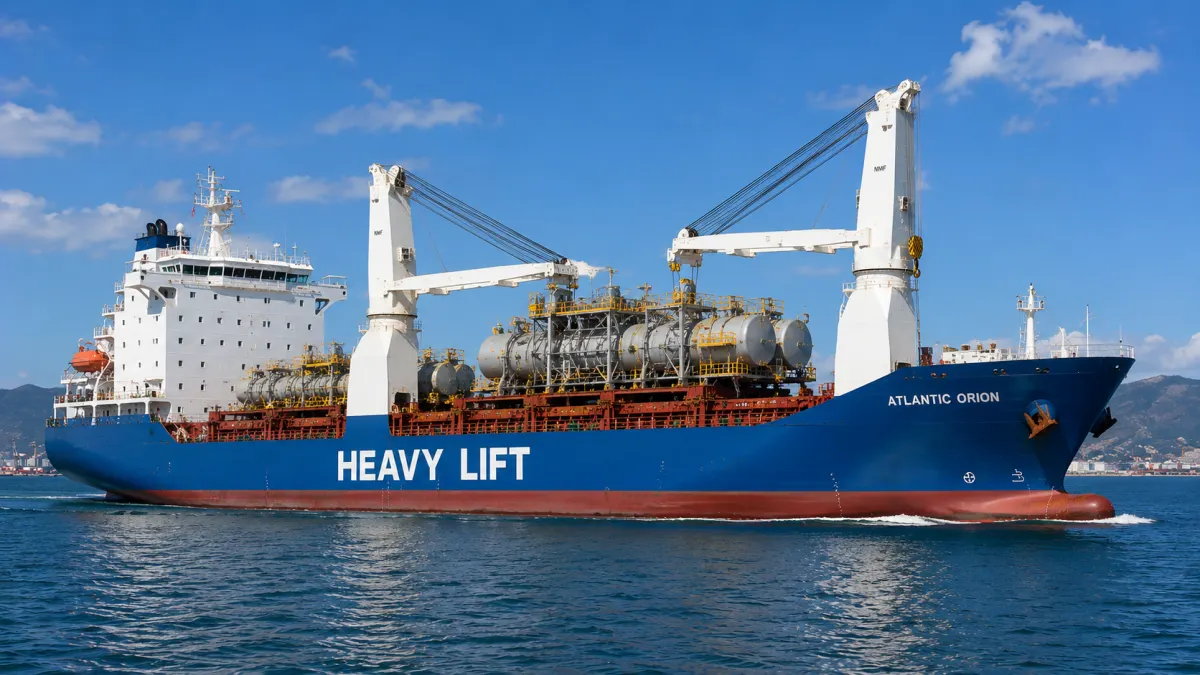
Heavy lift ships are specialized cargo vessels equipped with extremely powerful cranes engineered to transport cargo that is too heavy, too large, or too structurally complex for any standard vessel.
Key Facts and Specifications
- Crane capacities typically range from 200 to 3,000+ tonnes
- Some heavy lift vessels use a semi-submersible loading method — flooding ballast tanks to partially submerge the deck, allowing massive floating structures to be positioned above deck before the ship resurfaces beneath them
- Payload capacities on the largest semi-submersible heavy transport ships can exceed 50,000 tonnes
What Heavy Lift Ships Carry
Oil rig modules, offshore platforms, power plant components, industrial transformers, turbines, locomotives, large naval vessels, floating dry docks, and entire prefabricated structures.
10. Livestock Carriers
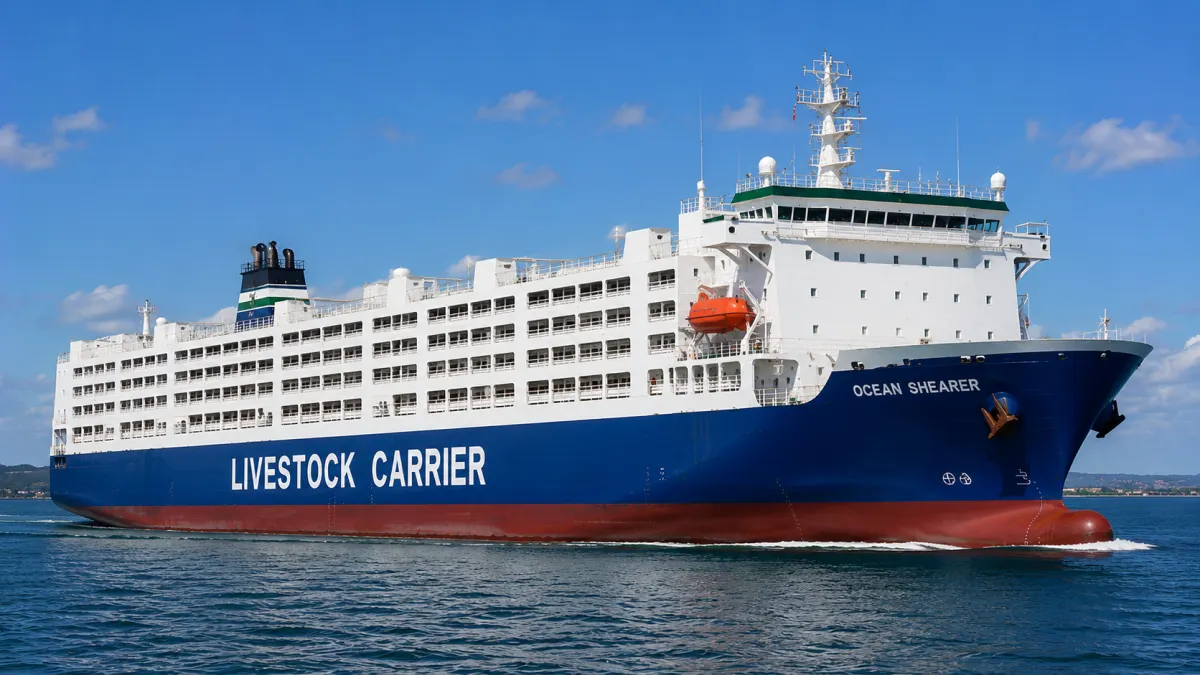
Livestock carriers are purpose-built vessels designed to transport live animals safely across long ocean voyages, with full animal welfare systems integrated into the ship's design.
Key Facts and Specifications
- Systems include mechanical ventilation, automated feeding and watering, waste management, and onboard veterinary facilities
- Ships are divided into segregated pens and decks by species and animal size
- Major trade routes: Australia and New Zealand to the Middle East and Southeast Asia
- Increasing international regulatory pressure on animal welfare has driven significant vessel design upgrades and stricter operational standards in recent years
What Livestock Carriers Transport
Cattle, sheep, goats, horses, and other livestock for breeding, dairy production, or meat supply chains.
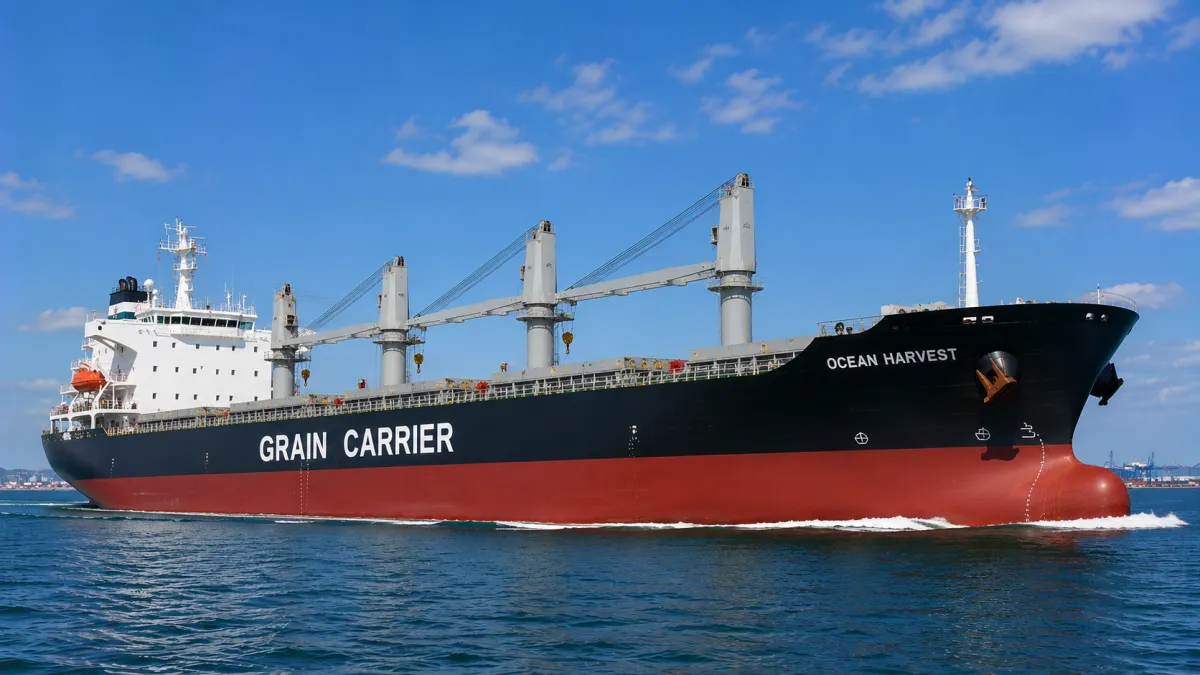
11. Grain Carriers
While grain is commonly transported in standard bulk carriers, dedicated grain carriers include additional engineering features specifically designed to protect grain cargo integrity during extended ocean voyages.
Key Facts and Specifications
- Cargo holds are sealed and coated to prevent moisture ingress, which can cause spoilage, mold, or spontaneous heating
- Ventilation systems are calibrated to maintain safe humidity and temperature levels throughout the voyage
- Built-in fumigation access points allow pest control treatment without opening holds
- Self-unloading grain carriers use conveyor belt systems for rapid, dust-controlled discharge at destination ports
What Grain Carriers Transport
Wheat, corn, soybeans, barley, sorghum, rice, and other edible grains and oilseeds.
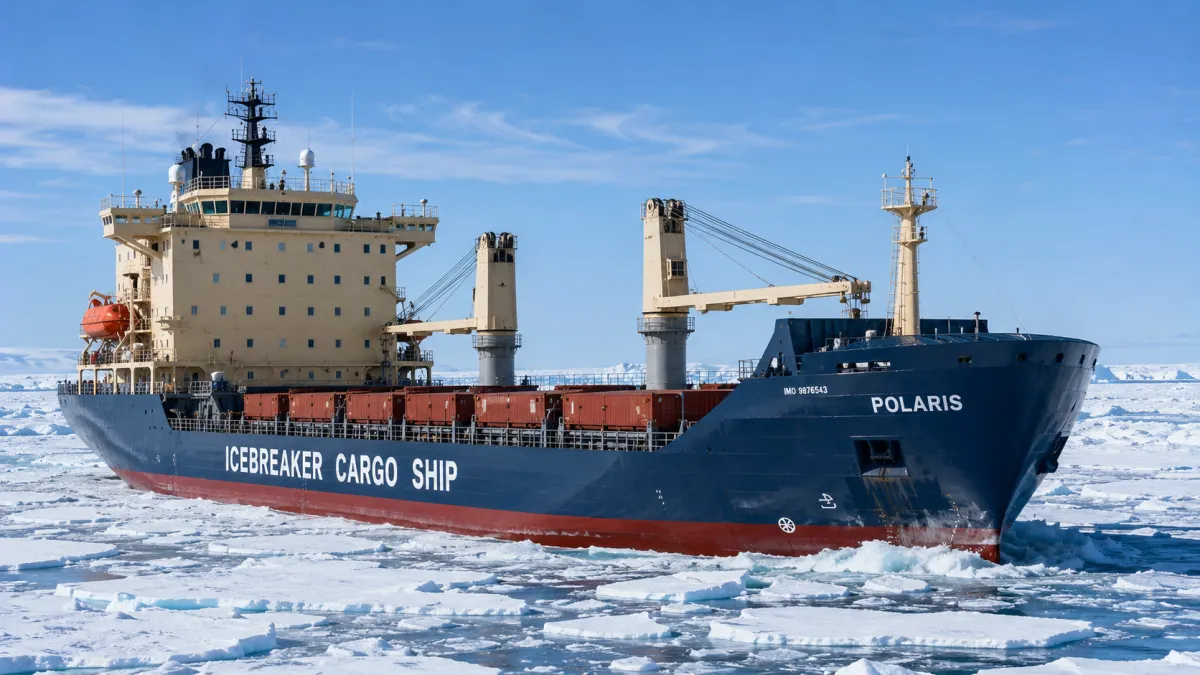
12. Icebreaker Cargo Ships
Icebreaker cargo ships operate in polar and sub-polar regions, navigating ice-covered waters to maintain year-round access to Arctic ports and emerging Northern Sea Route trade lanes.
Key Facts and Specifications
- Hulls are constructed with reinforced high-tensile steel and shaped specifically to ride up onto ice and break it under the vessel's own weight, rather than ramming through it
- Powered by diesel-electric or nuclear propulsion systems — Russia's nuclear icebreaker Arktika is among the most powerful in service
- As Arctic sea ice extent continues to decline, the Northern Sea Route between Europe and Asia (cutting sailing distance by approximately 40% compared to the Suez Canal route) is gaining strategic commercial significance
- The IMO Polar Code, in force since 2017, governs safety and environmental requirements for vessels operating in polar waters
What Icebreaker Cargo Ships Carry
Supplies for Arctic communities, mining and energy sector equipment, and general cargo for polar research stations.
How Are Cargo Ships Measured and Classified?
Understanding cargo ship types requires familiarity with standard industry measurements:
- Deadweight Tonnage (DWT) — The total weight a ship can carry including cargo, fuel, water, crew, and provisions. The primary measure of a ship's carrying capacity.
- TEU (Twenty-foot Equivalent Unit) — The standard unit for measuring container ship capacity based on a standard 20-foot intermodal container.
- Gross Tonnage (GT) — A measure of a ship's total internal volume. Used for regulatory purposes, port fees, and safety compliance — not a measure of weight.
- Length Overall (LOA) — The total length of the vessel from bow to stern. Critical for determining which canals and ports a vessel can access.
- Draft — The depth of the ship's keel below the waterline when loaded. Determines which ports and waterways the vessel can safely navigate.
What is the most common type of cargo ship?
By number of vessels, bulk carriers are among the most numerous with over 13,000 in operation. By economic value of goods transported, container ships dominate, carrying approximately 60% of global seaborne trade value.
What is the largest type of cargo ship?
Ultra Large Crude Carriers (ULCCs) and Very Large Ore Carriers (VLOCs) are among the largest by deadweight tonnage, reaching up to 400,000–550,000 DWT. By length and TEU capacity, Ultra-Large Container Vessels (ULCVs) such as MSC's Irina-class at 399.9 meters are the longest commercial cargo ships in service.
What is the difference between a bulk carrier and a container ship?
Container ships transport goods packed in standardized intermodal containers. Bulk carriers carry loose, unpackaged dry commodities — such as iron ore, coal, or grain — loaded directly into open cargo holds without any containers or packaging.
What cargo ships carry oil?
Crude oil is transported by oil tankers — specifically VLCCs, Suezmax, and Aframax tankers depending on route and port constraints. Refined petroleum products travel on product tankers. Liquefied natural gas (LNG) requires purpose-built LNG carriers with cryogenic tank systems.
How many types of cargo ships are there?
There are more than a dozen distinct types of cargo ships in commercial operation, including container ships, bulk carriers, crude oil tankers, product tankers, LNG carriers, chemical tankers, Ro-Ro ships, reefer ships, multi-purpose vessels, heavy lift ships, livestock carriers, grain carriers, and icebreaker cargo ships.