

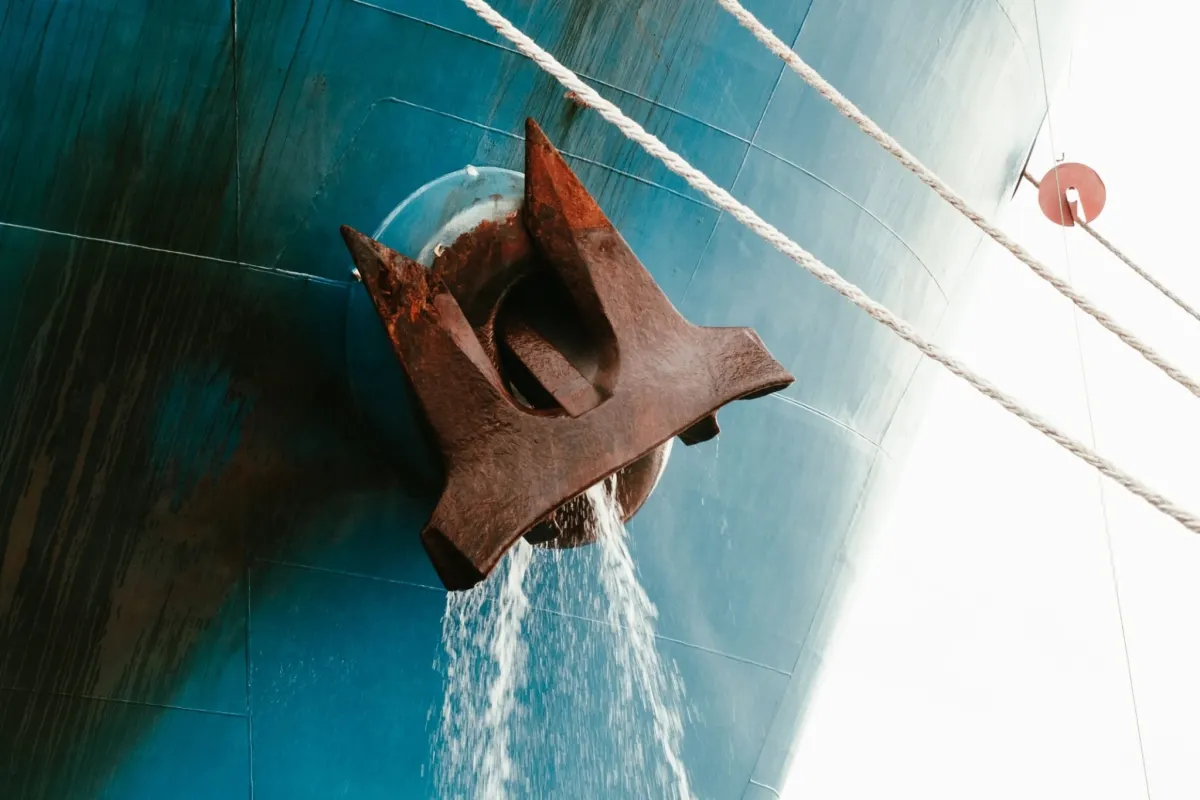

Cargo ship anchors are critical components of maritime operations, ensuring ships remain stationary during docking, waiting, or when encountering unfavorable weather conditions. Anchors play a vital role in safety and stability on the water. In this article, we explore the types of cargo ship anchors, their materials, weight considerations, and proper usage techniques.
Types of Cargo Ship Anchors
1. Stockless Anchor
The most common type of anchor found on modern cargo ships. It has a curved design and no protruding stock (the crossbar), which allows for easier stowing. Ideal for deep-water and harbor anchoring, stockless anchors hold well in most seabeds, particularly sand, mud, or clay. Weight varies from 1 to 30 tons, depending on the ship's size.
2. Chetteral Anchor
A heavy-duty, all-steel anchor with a fluke that grips the seabed tightly. Its design allows for excellent holding power in various seabeds. Best used for vessels operating in rocky or variable seabed conditions. Typically weighs between 5 and 25 tons.
3. Plough Anchor
Shaped like a plough and designed to dig into the seabed when dropped. It has high holding power and is effective for harsh seabeds. Suitable for shallow waters and muddy or sandy conditions. Can range from 1 to 15 tons.
4. Hall Anchor
A variant of the stockless anchor with a more refined design for better performance in the toughest environments. Known for its fast and easy deployment. Primarily used on vessels that operate in rough seas and require swift, secure anchorage. Ranges between 5 and 30 tons.
5. Fisherman's Anchor
A traditional design featuring two flukes that help hold the ship in place by hooking into the seabed. Typically used for smaller vessels or ships in harbors or shallow waters, offering excellent reliability for short-term anchoring. Typically weighs between 1 to 8 tons.
Materials Used in Cargo Ship Anchors
Steel is the most common material due to its strength and corrosion resistance. Anchors are often made from high-quality steel grades such as ASTM A36 or AISI 316 to withstand marine corrosion.
Galvanized Steel provides extra protection from corrosion through a zinc coating applied over the steel surface.
Aluminum is sometimes used in lighter-duty anchors due to its reduced weight and corrosion resistance. However, it is not as strong as steel and is therefore less common in larger vessels.
Parts of an Anchor Explained
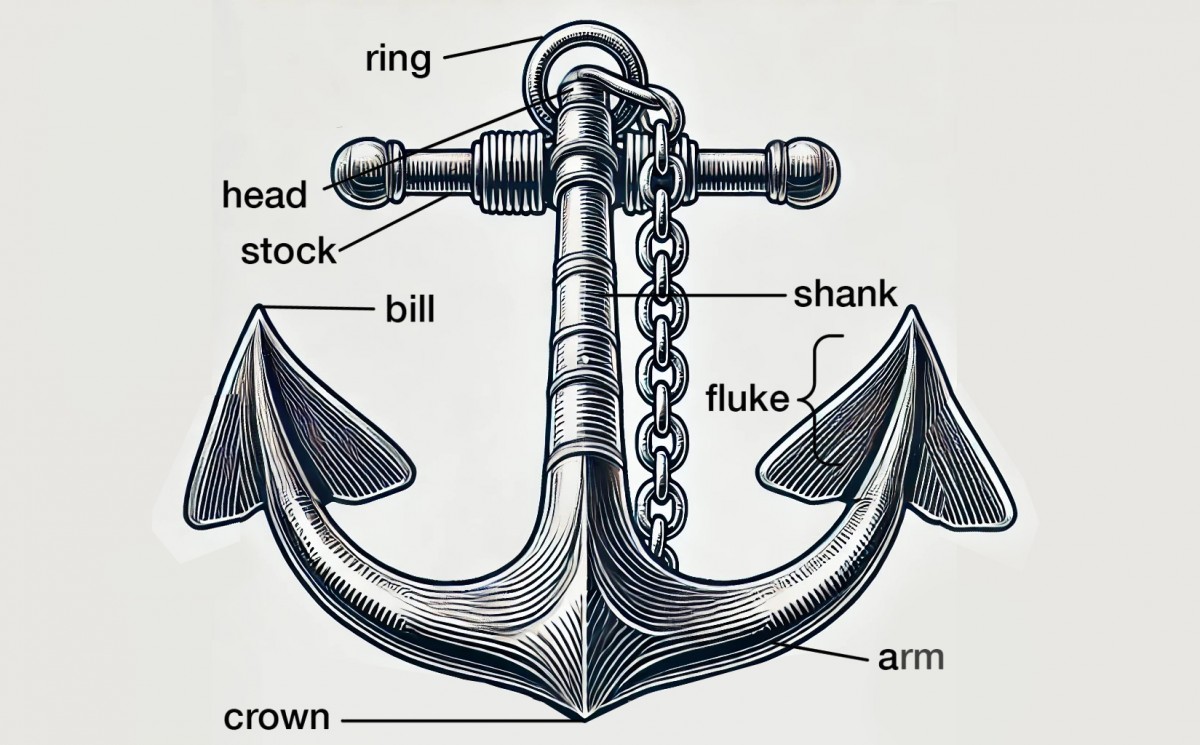
| Part | Description |
|---|---|
| Ring | The top loop where the chain or rope attaches to connect the anchor to the ship |
| Head | The top end of the shank, often near the ring |
| Stock | A horizontal bar attached to the shank that helps the anchor turn and dig into the seabed |
| Shank | The long vertical shaft connecting the stock to the arms and flukes — the main body of the anchor |
| Balancing Band | A ring or strap around the shank for stabilizing the anchor while hoisting |
| Fluke | The pointed part designed to dig into the seabed to hold the anchor in place |
| Bill | The sharp end of the fluke that helps the anchor catch onto the seabed |
| Palm | The flat surface of the fluke that helps with gripping the ground |
| Crown | The area at the bottom of the shank where the arms branch out, allowing the anchor to pivot |
| Arm | The curved sections extending from the crown that end in flukes and stabilize the anchor |
Weight Considerations for Cargo Ship Anchors
The weight of an anchor is crucial to its holding power and must be balanced with the vessel's design and operational needs.
- Lightweight Anchors: Suitable for smaller vessels, typically weighing between 500 kg to 5 tons
- Medium Anchors: Found on mid-sized ships, usually weighing between 5 and 20 tons
- Heavy Anchors: For large cargo vessels, weighing anywhere from 20 tons to more than 30 tons
How to Use a Cargo Ship Anchor
1. Preparation: Before dropping anchor, ensure the anchor chain or cable is fully deployed and the anchor is ready to be released. Most modern ships use a windlass to lower the anchor.
2. Deployment: Drop the anchor to the seabed, ensuring it digs into the sediment. The anchor's flukes or ploughs should immediately begin to hold the vessel in place.
3. Holding the Ship: After deployment, the ship should remain stationary. If the ship drifts, the anchor may not have dug in properly and adjustments will be needed.
4. Retrieving the Anchor: When it is time to move, the anchor is raised using the windlass. The anchor chain is pulled back aboard and the anchor is secured for the next operation.
Key Considerations for Effective Anchor Use
- Water Depth: The ratio of chain to depth is 5:1 — for every meter of water depth, 5 meters of chain are needed
- Seabed Conditions: Choose the anchor type based on the seabed. Muddy and sandy seabeds are easier to hold, while rocky or hard grounds require anchors designed to grip firmly
- Weather Conditions: Strong currents and winds may affect the anchor's ability to hold. Using a second anchor or increasing the chain length can improve stability
The Heaviest Ship Anchors and Their Vessels
The heaviest anchors are typically found on large cargo ships, oil tankers, and large container ships where stability and security are paramount.
- Large Cargo Ships (over 100,000 GT): Use anchors weighing between 20 and 30 tons or more
- Oil Tankers: Often use anchors exceeding 30 tons to ensure stability in rough seas or deep waters
- Container Ships: Anchor weights can reach up to 30 tons depending on size and operational requirements
- LNG Carriers: Require heavy-duty anchors typically weighing between 25 and 30 tons for secure positioning during loading and unloading operations
The weight of these anchors is directly proportional to the size and operational demands of the ship. Choosing the right anchor and understanding its proper use is essential for safety and efficiency in maritime operations.