



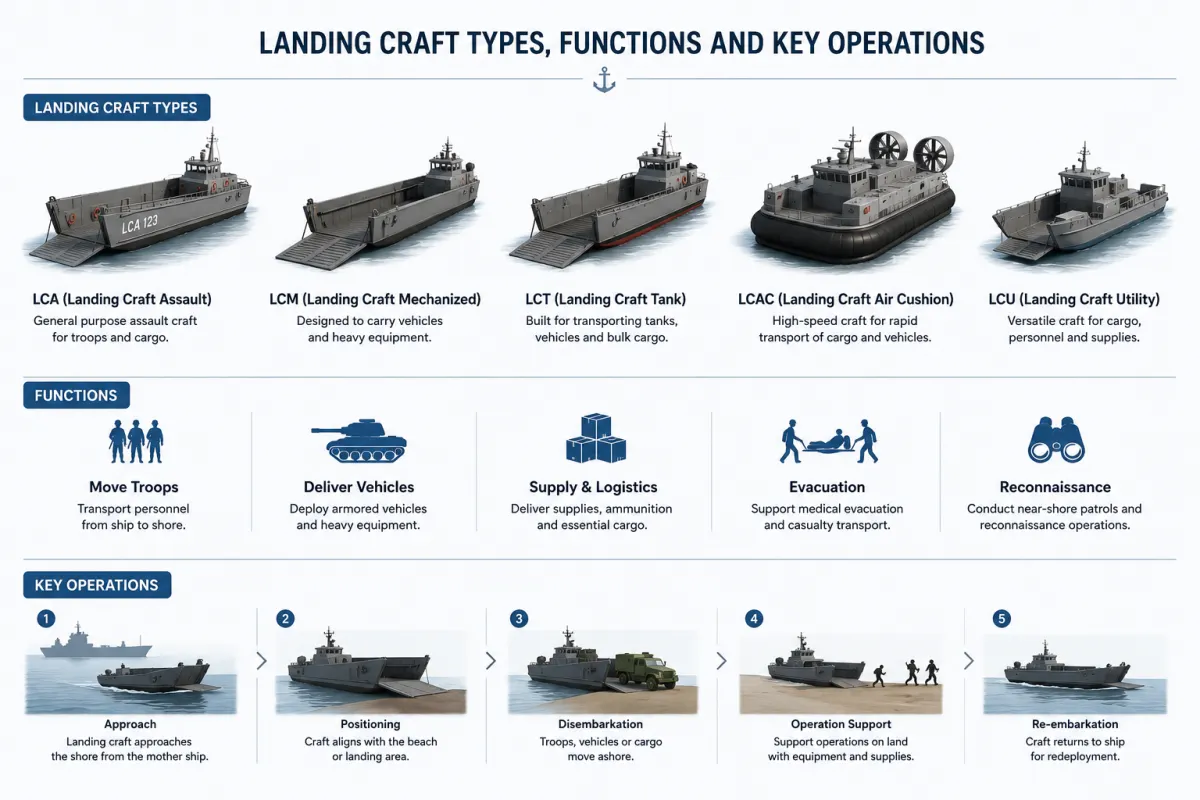
A landing craft is a specialized marine vessel designed to transport cargo, vehicles, and passengers directly from larger ships to the shoreline, particularly in locations without developed port infrastructure. Unlike conventional vessels that rely on deep-water docking facilities, landing crafts are built for beaching operations, enabling direct offloading onto shore.
Landing crafts play a critical role in both military operations and commercial maritime logistics. Their flat-bottomed hull design, combined with an onboard propulsion system, makes them uniquely capable of operating in shallow coastal waters where standard cargo ships cannot maneuver.
History of Landing Crafts
Landing crafts were first developed and widely used during World War II, where they proved essential for amphibious assaults — most notably the D-Day landings in Normandy and operations across the Pacific theater. Their ability to deploy troops, tanks, and heavy military equipment directly onto beaches gave allied forces a decisive tactical advantage.
Following the war, the technology transitioned into civilian use. Today, landing crafts serve a broad range of industries, from offshore construction and oil field logistics to island supply chains and remote infrastructure projects.
Types of Landing Crafts
Landing crafts are classified into three primary categories based on their intended application:
Military Landing Crafts are purpose-built for armed forces operations. They are engineered to carry heavy military equipment including armored vehicles, artillery, and large numbers of personnel. Speed, durability, and ramp deployment capability are the defining features of this type.
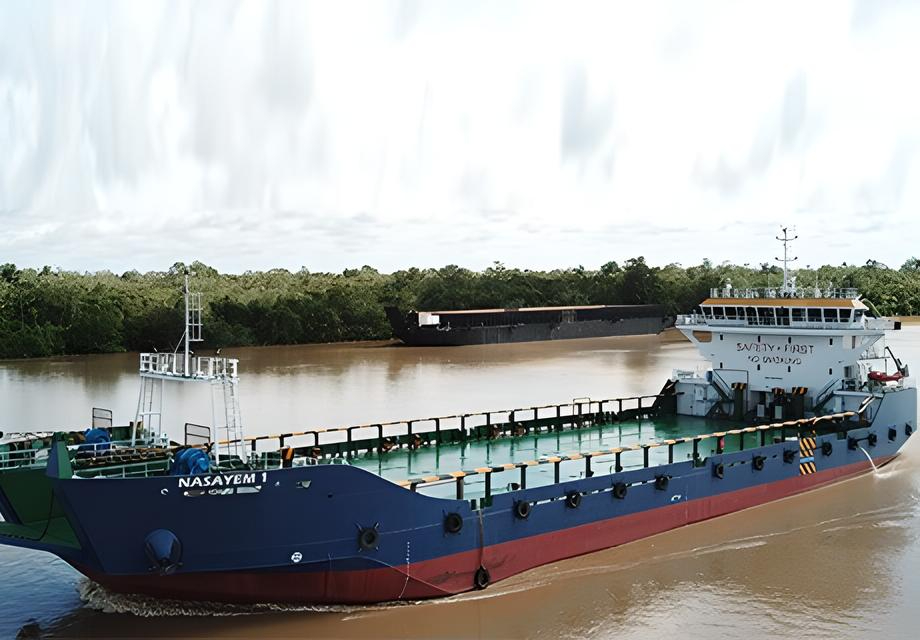
Commercial Landing Crafts are widely used in the private sector for transporting vehicles, industrial machinery, construction equipment, and bulk commodities to areas without harbor access. They are a core component of supply chains serving remote coastal or island locations.
Multi-Purpose Landing Crafts combine passenger and cargo capacity within a single vessel. These are commonly deployed in construction projects, offshore energy operations, and humanitarian logistics where operational flexibility is essential.
What Cargo Do Landing Crafts Transport?
Landing crafts are capable of carrying an exceptionally wide range of goods, which contributes to their versatility across industries. Common cargo types include:
- Heavy vehicles and machinery
- Construction materials such as cement, steel, and aggregates
- Bulk commodities including wheat, coal, and grain
- Industrial and petrochemical equipment
- Containerized freight
- Passengers alongside cargo in multi-purpose configurations
Their ability to handle oversized and heavy loads that cannot be accommodated on conventional roll-on/roll-off vessels makes them particularly valuable for infrastructure and resource development projects in remote areas.
Key Advantages of Landing Crafts
The operational advantages of landing crafts make them a preferred choice for specific maritime transport needs:
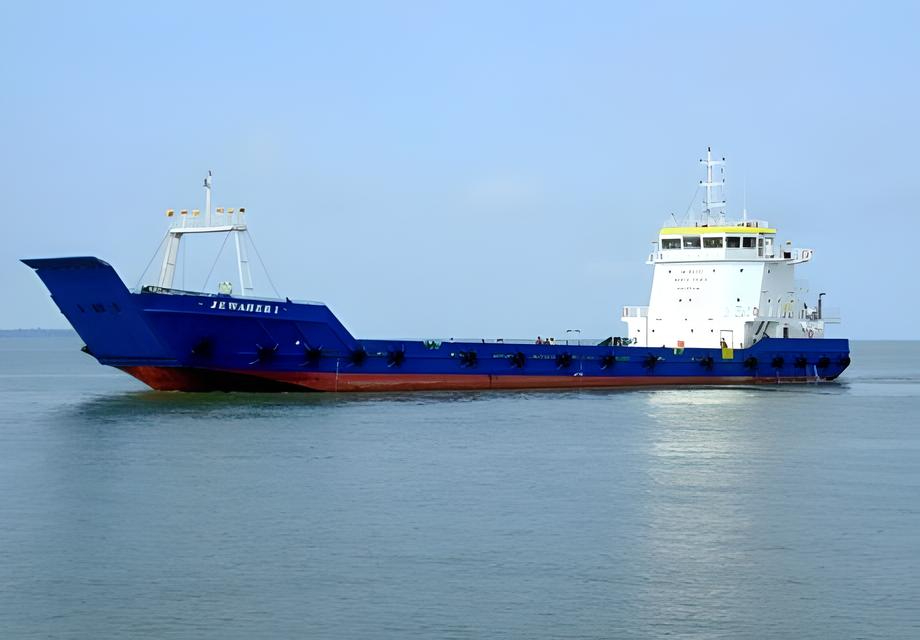
Shore Access Without Port Infrastructure: Landing crafts can beach directly on shorelines, eliminating the need for quays, cranes, or deep-water berths. This is their most significant competitive advantage.
Heavy and Oversized Cargo Capability: Their open deck configuration and reinforced hull allow for the loading and unloading of cargo that exceeds the capacity of standard maritime vessels.
Cost-Effective for Short-Haul Operations: For nearshore and coastal routes, landing crafts offer lower operational and logistics costs compared to full-scale cargo shipping.
Rapid Load and Discharge: The bow ramp design allows for fast, direct loading and unloading without the need for cranes or lifting equipment, significantly reducing turnaround time.
Limitations and Disadvantages of Landing Crafts
Despite their strengths, landing crafts have operational constraints that must be factored into logistics planning:
Limited Cargo Capacity: Compared to large cargo vessels, the payload capacity of landing crafts is restricted. They are not suited for high-volume, large-scale freight operations.
Restricted to Nearshore Routes: Landing crafts are designed for coastal and short-sea operations. They are not built for open-ocean or long-distance voyages, limiting their geographic range.
Weather Dependency: Safe operation requires relatively calm sea conditions. In rough weather, the shallow-draft design and open decks make them vulnerable, restricting operational windows.
Not Suitable for Deep-Draft Cargo: Certain types of cargo requiring specialized handling, refrigeration, or deep-hold stowage cannot be efficiently transported by standard landing crafts.
Landing Craft vs. Barge: Key Differences
A common point of confusion in maritime logistics is the distinction between landing crafts and barges. While both are flat-bottomed vessels used for cargo transport, they differ fundamentally in design and application.
Landing crafts are self-propelled, meaning they operate independently without the need for a tugboat. They are purpose-designed for shore-to-shore or ship-to-shore transfer, featuring a bow ramp for direct beaching operations.
Barges, by contrast, are non-self-propelled flat vessels typically towed by tugboats. They are primarily used for bulk cargo transport along inland waterways, rivers, and sheltered harbors. Barges are not designed for beaching operations and require fixed dock infrastructure for loading and unloading.
In summary, landing crafts are the preferred solution for coastal access missions, while barges are optimized for inland and harbor logistics.
Leading Countries in Landing Craft Manufacturing
The global landing craft market is served by several key producing nations, each with distinct specializations:
- United States: The dominant manufacturer of military-grade landing crafts, supplying both domestic armed forces and allied navies worldwide.
- China: A major producer of cost-competitive commercial landing crafts, with significant market share in the Asia-Pacific region.
- South Korea and Japan: Renowned for technologically advanced multi-purpose landing crafts, combining high build quality with innovative design.
- India: An emerging manufacturer that has expanded its production capabilities in recent years, targeting both domestic and export markets.
Buying vs. Renting a Landing Craft
The decision between purchasing and leasing a landing craft depends on the frequency and duration of operational needs.
For businesses with ongoing, long-term requirements — such as island freight operators or offshore construction companies — purchasing a landing craft represents the most cost-efficient solution over time, providing operational control and asset ownership.
For short-term or project-specific needs, renting a landing craft is the more practical and economical choice. Many specialized maritime companies offer flexible charter arrangements tailored to project timelines and cargo specifications.
Key Factors When Purchasing a Landing Craft
Buyers should evaluate the following factors before committing to a landing craft acquisition:
Operational Purpose: Define whether the vessel is needed for military, commercial, or multi-purpose use, as this determines the required specifications.
Deadweight Tonnage (DWT) and Cargo Capacity: Match the vessel's load capacity to operational requirements. Landing crafts are available across a wide range of DWT ratings, from under 1,000 tonnes to over 4,000 tonnes.
Propulsion System and Engine Reliability: Assess the engine configuration for suitability in targeted operating environments, including shallow coastal waters and tidal zones.
Hull Material: Marine-grade steel and aluminum are the standard materials. Steel offers greater durability for heavy commercial use; aluminum reduces weight and is preferred for faster, lighter applications.
Certification and Classification: Confirm that the vessel holds valid certification from a recognized maritime classification society and complies with all applicable flag-state regulations.
Maintenance Requirements and Operating Costs: Factor in long-term servicing, spare parts availability, and drydocking intervals when calculating total cost of ownership.
Manufacturer Track Record: Prioritize vessels from builders with an established reputation for quality, after-sales support, and warranty coverage.
Landing Craft Operational Scheduling
Landing craft schedules are typically structured around project cycles, seasonal cargo demands, or recurring supply routes. For remote island supply operations, fixed weekly or bi-weekly schedules are common. For construction projects, vessel deployment is aligned with project milestones and material delivery windows.
Operators must account for tidal windows, weather forecasts, and port availability when planning landing craft schedules, particularly in regions with significant tidal variation or seasonal storm exposure.