



 26 November 2026
Mission engineering helps organizations understand whether their technologies, systems, and people can work together to achieve a real-world objective.
Rather than evaluating equipment in isolation, it examines the complete mission, revealing capability gaps, operational risks, and opportunities to improve performance.
10 Essential Elements of Mission Engineering
Read More


 Inside the List
10 Items

Capability Gap Analysis and Investment Decisions
Main Purpose: Guide capability development
Mission engineering results help decision-makers identify missing capabilities, assess operational risks, and prioritize improvements. The findings can inform technology investments, acquisition planning, research and development, upgrades, and future capability requirements.
- Gap identification
- Investment planning
- Capability prioritization

Modeling, Simulation, and Mission Analysis
Main Purpose: Evaluate mission alternatives
Mission engineering analysis evaluates baseline and alternative mission approaches in a defined scenario. Models and simulations help assess system performance, test assumptions, compare possible solutions, and identify how changes could affect mission outcomes.
- Scenario testing
- Performance analysis
- Alternative comparison

Digital Engineering and Mission Modeling
Main Purpose: Represent mission systems
Digital engineering uses models, structured data, and specialized software to represent mission architectures and system relationships. These digital environments support collaboration, traceability, and analysis while helping teams maintain a shared understanding of complex capabilities.
- Digital models
- Data integration
- Model traceability
Complex System Integration and Interoperability
Main Purpose: Coordinate connected capabilities
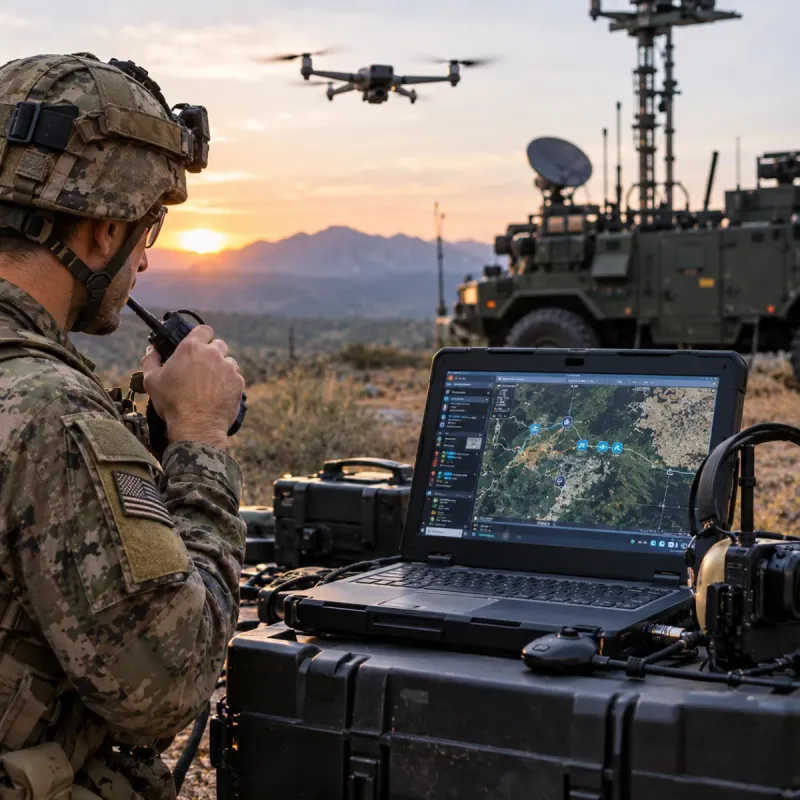
Mission success often depends on multiple platforms and technologies working together, not independently. Mission engineering examines their connections and interoperability to identify integration problems that could affect end-to-end performance.
- System integration
- Interoperability assessment
- Dependency analysis

Mission Architecture Development
Main Purpose: Organize mission capabilities
Mission architecture brings together mission threads, capabilities, organizations, technologies, and information exchanges in one structured representation. It helps engineers understand how different elements contribute to overall objectives and compare alternative mission approaches.
- Capability mapping
- System relationships
- Information exchange

Mission Engineering Threads
Main Purpose: Connect systems and activities
Mission engineering threads describe how specific actors, organizations, and systems carry out mission activities within a defined operational context. They provide a more detailed view of the relationships and interactions behind mission execution.
- System interactions
- Actor relationships
- Context mapping

Mission Threads
Main Purpose: Map mission activities
A mission thread represents the sequence of activities required to accomplish a particular mission objective. It connects operational tasks, people, and systems into an end-to-end process, making dependencies and potential gaps easier to examine.
- Task sequences
- Actor interactions
- End-to-end workflows

Mission Measures and Metrics
Main Purpose: Measure mission effectiveness
Mission engineering uses measurable criteria to evaluate whether an approach can achieve its intended results. These measures help teams compare performance, identify weaknesses, and assess whether proposed capabilities contribute to mission success.
- Success metrics
- Performance indicators
- Outcome assessment

Mission Characterization
Main Purpose: Define mission conditions
Mission characterization describes the environment in which a mission must operate. It considers objectives, timelines, physical conditions, potential threats, available resources, and operational assumptions to establish a realistic context for analysis.
- Environmental factors
- Threat assessment
- Operational objectives

Mission Problem Definition
Main Purpose: Establish mission priorities
Mission engineering begins by identifying the operational problem or opportunity that needs attention. A clearly defined problem establishes the scope of the work and guides the questions the engineering team must investigate.
- Problem identification
- Scope definition
- Stakeholder questions