


 24 November 2026
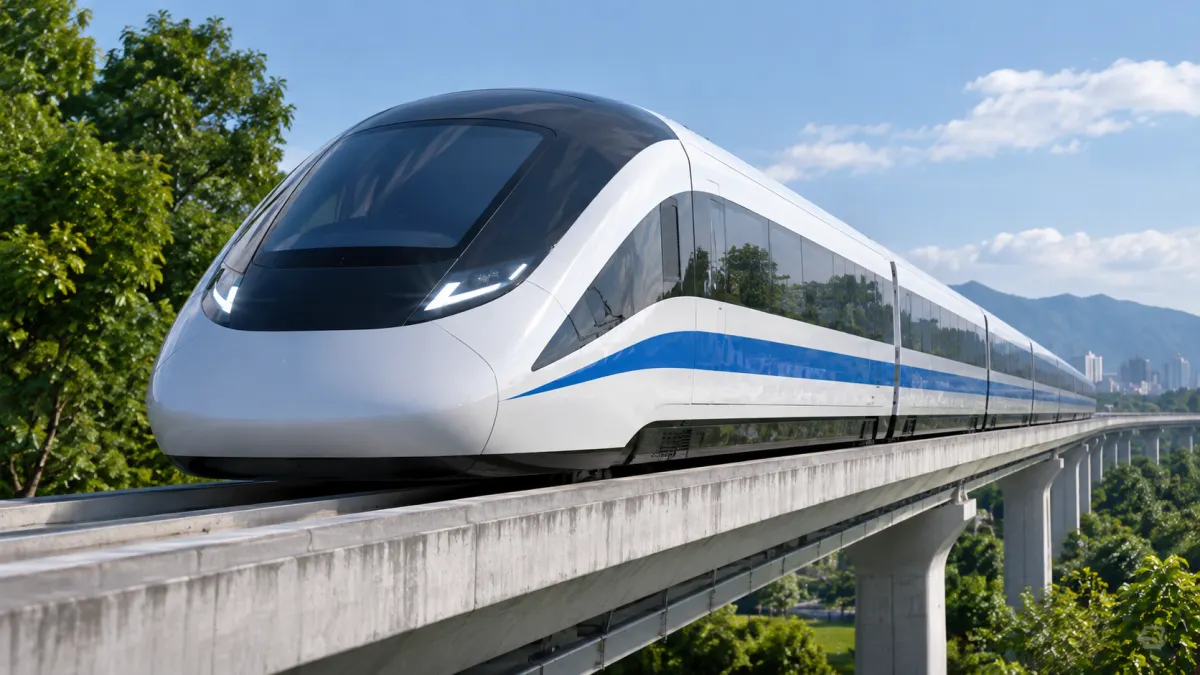
Maglev trains use magnetic forces to lift, guide, and propel trains without conventional wheel-on-rail contact.
By combining magnetic levitation technology with electromagnetic propulsion, these advanced railway systems can reduce mechanical friction, support high speeds, and offer a different approach to future transportation.
11 Maglev Train Technologies Transforming High-Speed Rail
Read More

 Inside the List
11 Items
High-Speed Maglev Guideways
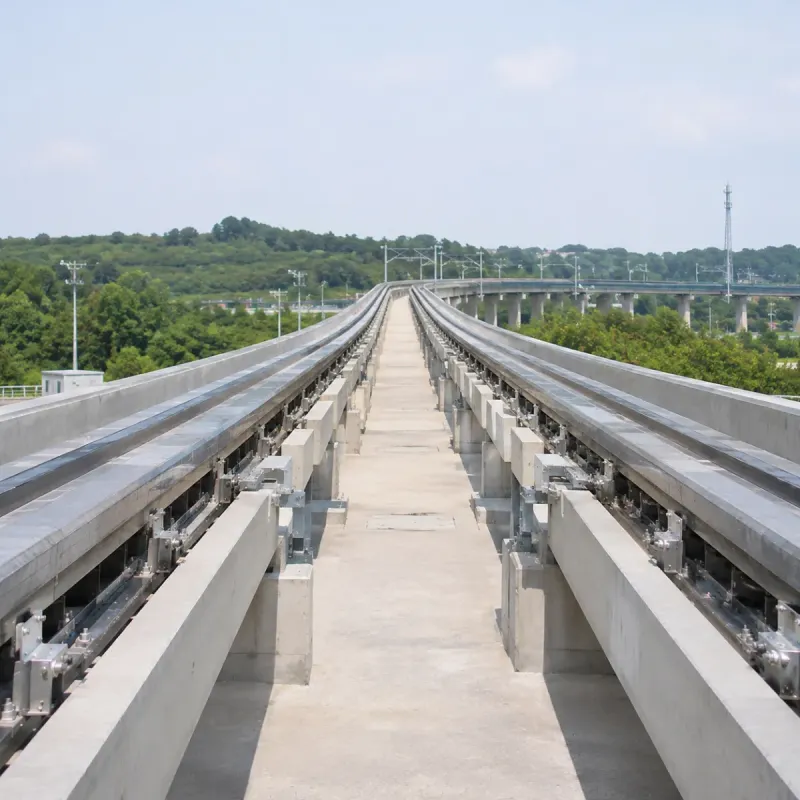
Design: Dedicated magnetic guideway
Maglev guideways replace conventional steel railway tracks with specially engineered structures that support magnetic levitation and propulsion. Their design must maintain precise alignment and stability, especially at high speeds. Some systems use U-shaped concrete guideways, while others use different structural configurations.
- Precision alignment
- Structural stability
- Dedicated infrastructure
Integrated Power and Propulsion Systems
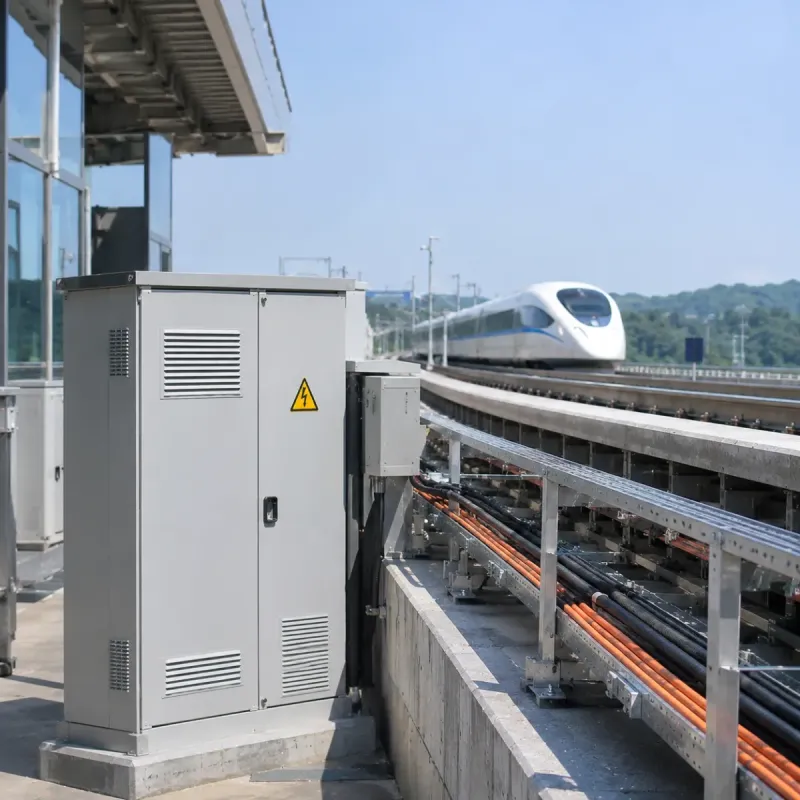
Design: Integrated power infrastructure
Maglev trains depend on coordinated electrical systems to provide the energy required for levitation, guidance, acceleration, and braking. Power supplied to guideway components controls the magnetic fields that interact with the train, making electrical infrastructure essential to the transportation system.
- Electrical supply
- Power distribution
- System coordination
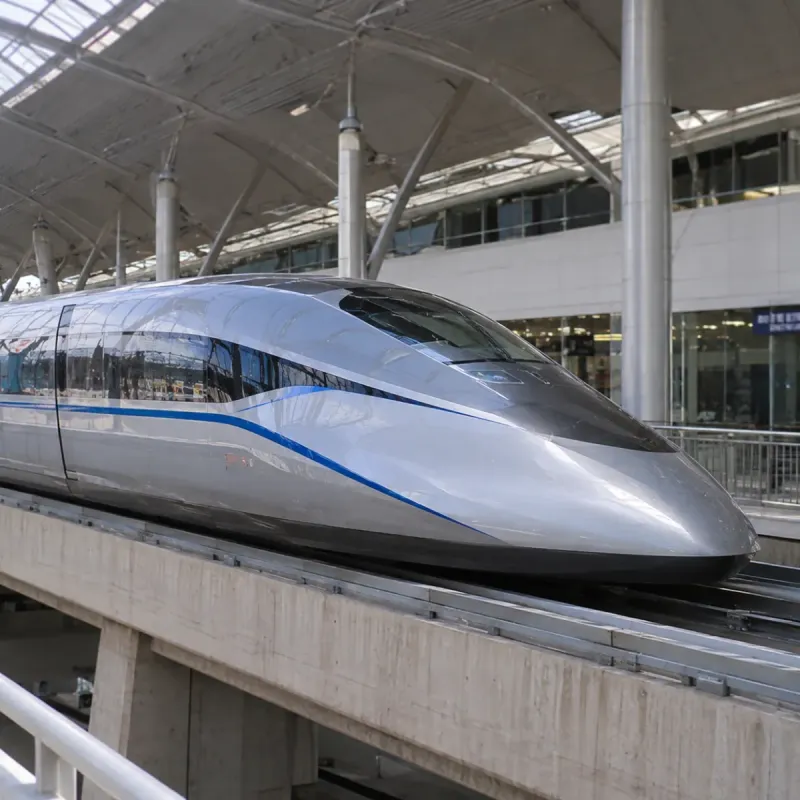
Aerodynamic Train Design
Design: Streamlined train body
At very high speeds, air resistance becomes a major engineering challenge for maglev trains. Streamlined train bodies help reduce aerodynamic drag, while careful design can also address noise and airflow disturbances. China's 600 km/h development program, for example, reported reducing aerodynamic drag through extensive simulations and testing.
- Reduced drag
- Airflow management
- Noise reduction
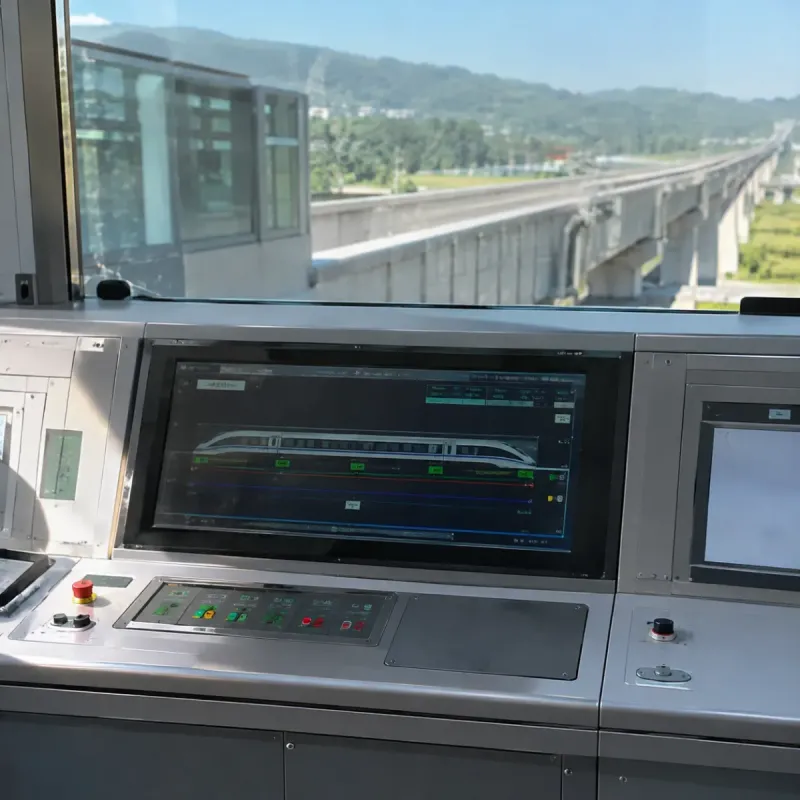
Electronic Levitation Control
Design: Electronic feedback system
Electronic control systems continuously monitor and adjust the magnetic forces responsible for levitation. In electromagnetic suspension systems, precise control matters because the distance between the train and guideway must stay within a narrow operating range.
- Real-time monitoring
- Gap regulation
- Automatic adjustment
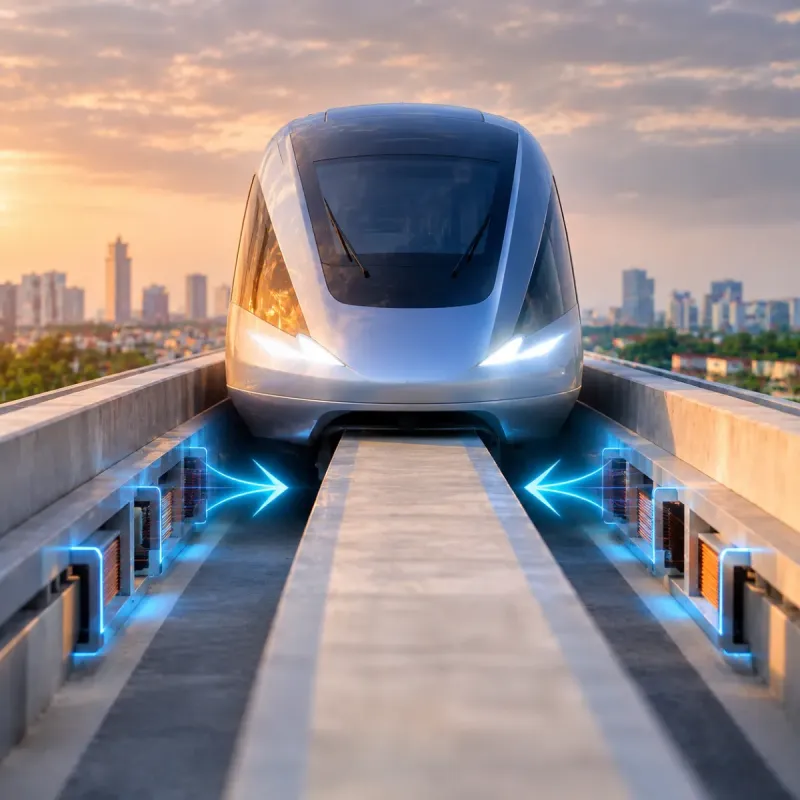
Magnetic Guidance Systems
Design: Lateral magnetic control
Magnetic guidance systems keep maglev trains centered over their guideways during operation. When a train moves away from its intended position, magnetic forces can act to correct its alignment and help prevent unwanted lateral movement.
- Position correction
- Magnetic stabilization
- Lateral control
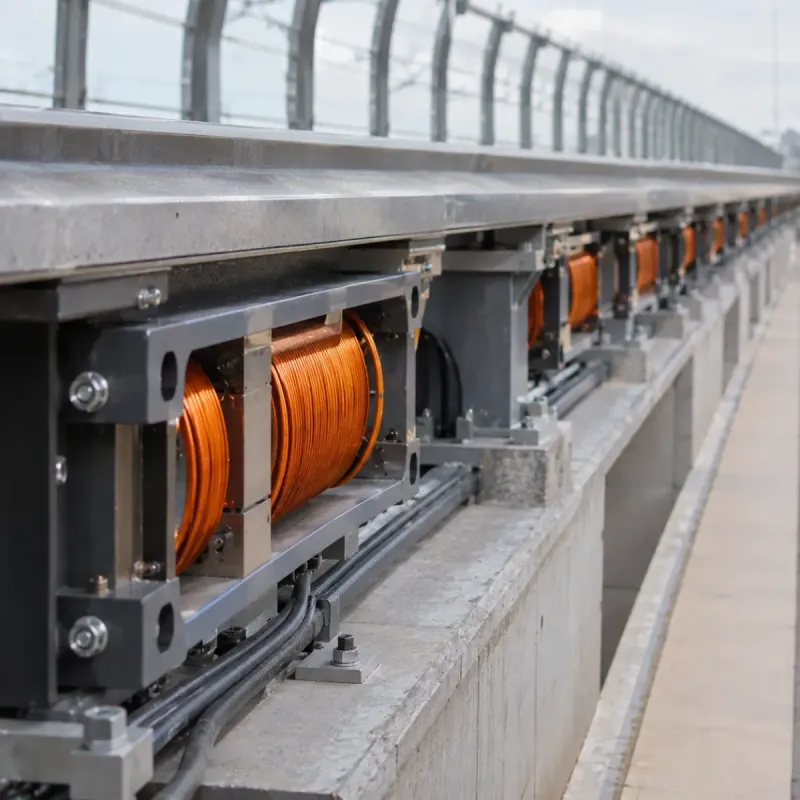
Guideway Electromagnetic Coils
Design: Integrated electromagnetic coils
Magnetic coils installed along the guideway interact with magnets on the train to support levitation, guidance, and propulsion. By controlling electrical currents in different coil systems, engineers can manage the train's movement and keep it on track.
- Track integration
- Magnetic interaction
- Electrical control
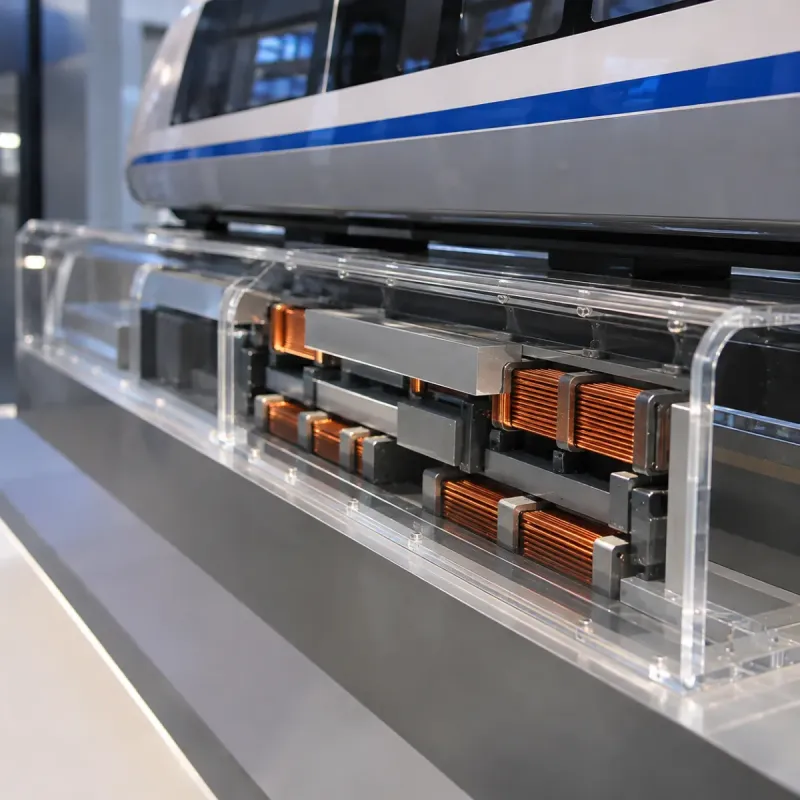
Linear Synchronous Motors
Design: Traveling magnetic field
Linear synchronous motors propel maglev trains by creating a magnetic field that travels along the guideway. Magnets on the train interact with this moving field, producing forward motion without requiring conventional rotating wheels or mechanical transmission systems.
- Linear propulsion
- Magnetic interaction
- Speed regulation
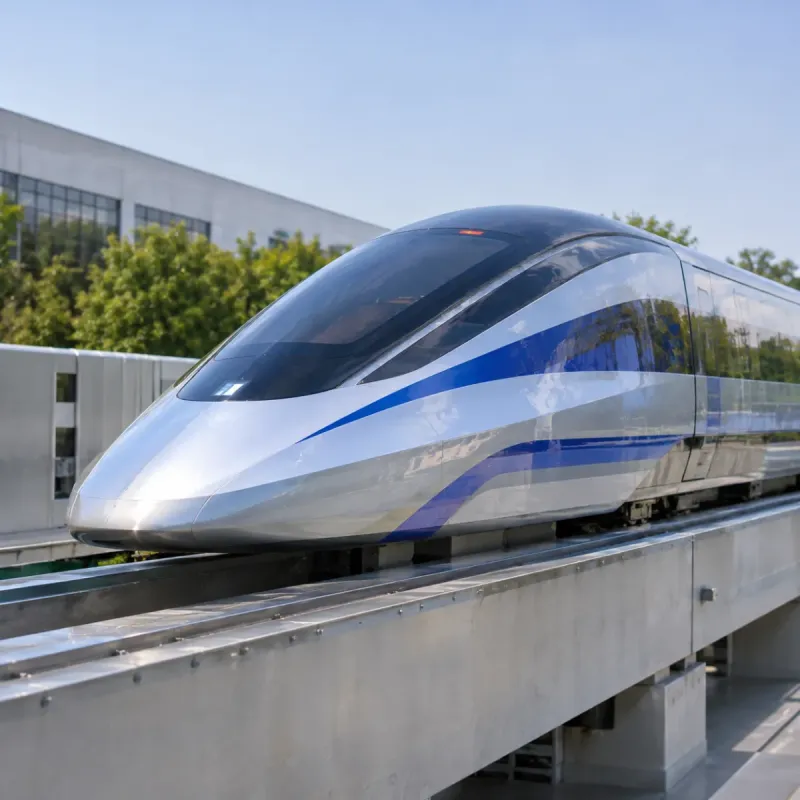
High-Temperature Superconducting Maglev
Design: High-temperature superconducting system
High-temperature superconducting technology uses superconducting materials that can operate at higher temperatures than conventional low-temperature systems. A Chinese prototype presented in Chengdu in 2021 demonstrated this approach, using liquid nitrogen cooling and a design speed of 620 km/h.
- Liquid nitrogen
- Superconducting materials
- Advanced levitation
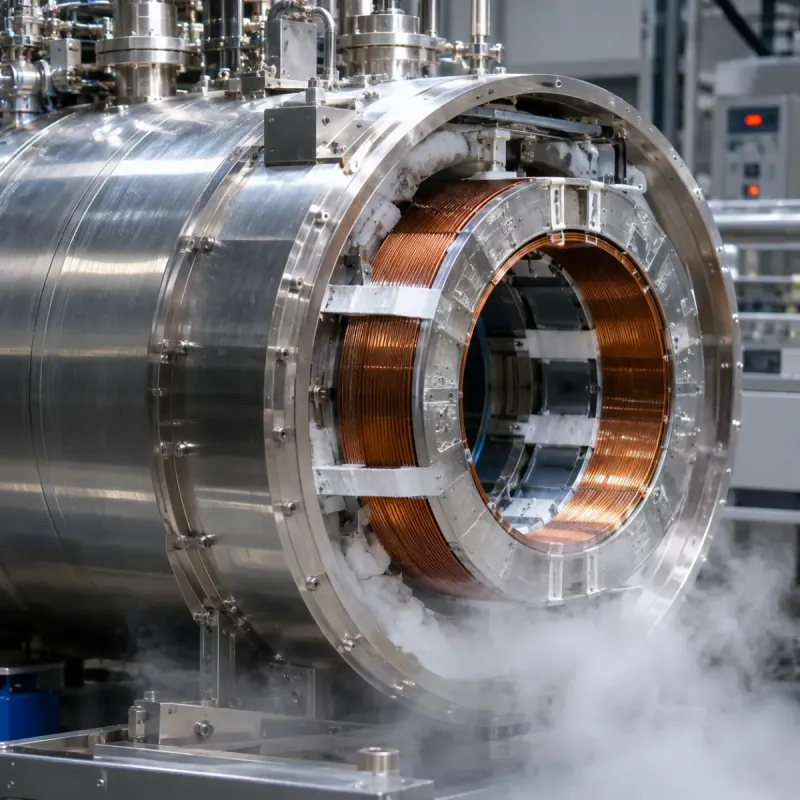
Superconducting Magnets
Design: Cooled superconducting coils
Superconducting magnets generate exceptionally strong magnetic fields when their materials are cooled to extremely low temperatures. These powerful fields support levitation, guidance, and propulsion in certain high-speed maglev systems.
- Strong magnetic fields
- Extreme cooling
- High-speed applications
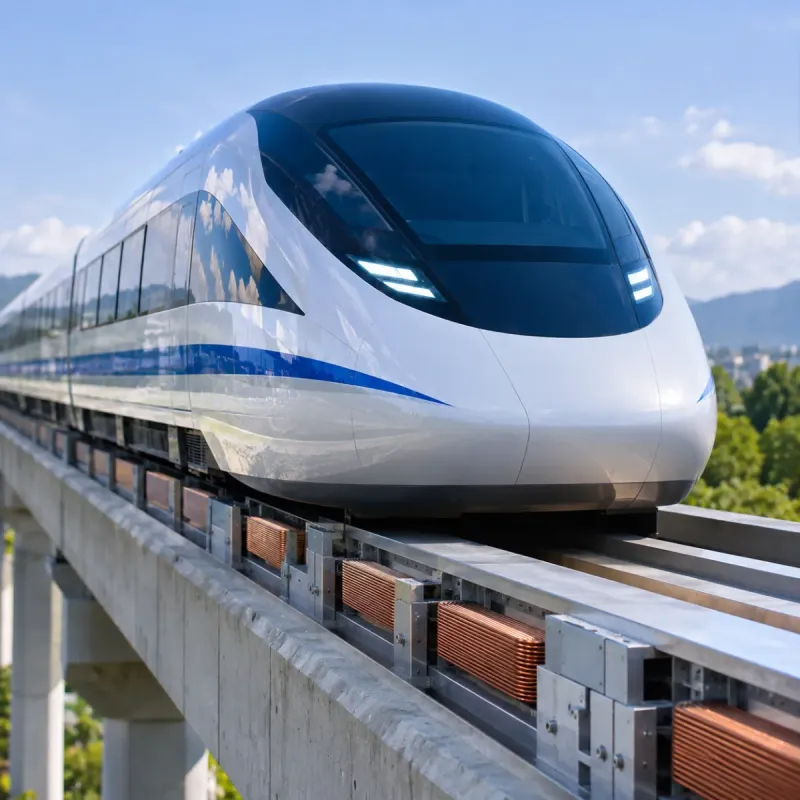
Electrodynamic Suspension (EDS)
Design: Electromagnetic repulsion
Electrodynamic suspension uses repulsive magnetic forces to lift and stabilize a train. In superconducting maglev designs, magnets on the vehicle interact with conductive coils in the guideway, inducing electrical currents that generate the forces needed for levitation.
- Magnetic repulsion
- Induced currents
- Stable suspension
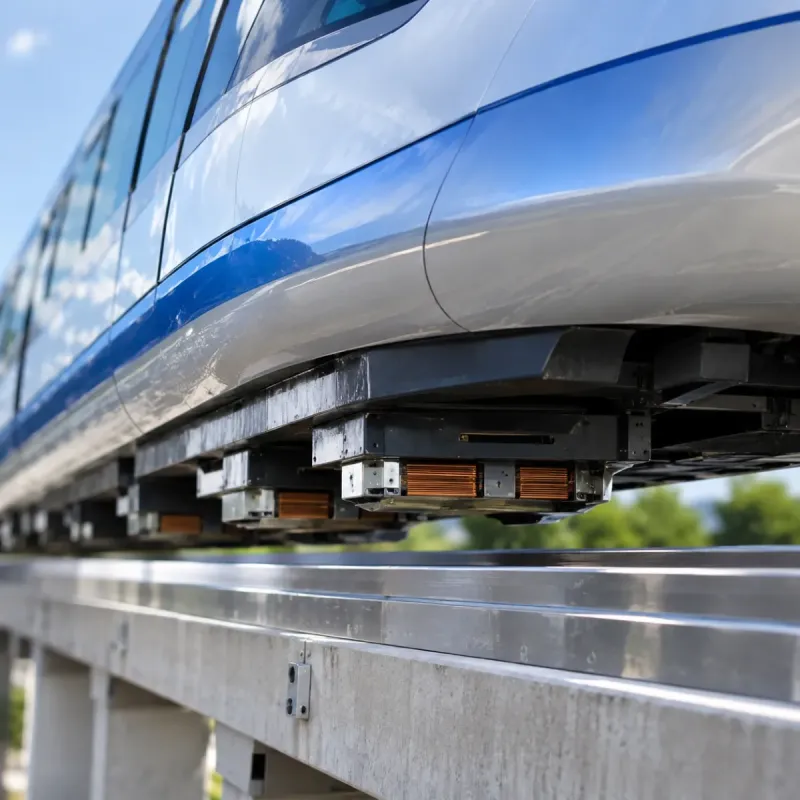
Electromagnetic Suspension (EMS)
Design: Electromagnetic attraction
Electromagnetic suspension uses attractive magnetic forces to lift a train above its guideway. Electromagnets mounted beneath the train pull toward ferromagnetic rails, while electronic controls continuously adjust the magnetic force to maintain the required gap.
- Magnetic attraction
- Electronic regulation
- Continuous levitation