
The Six-Million-Dollar Tabby with an Antenna in Its Tail
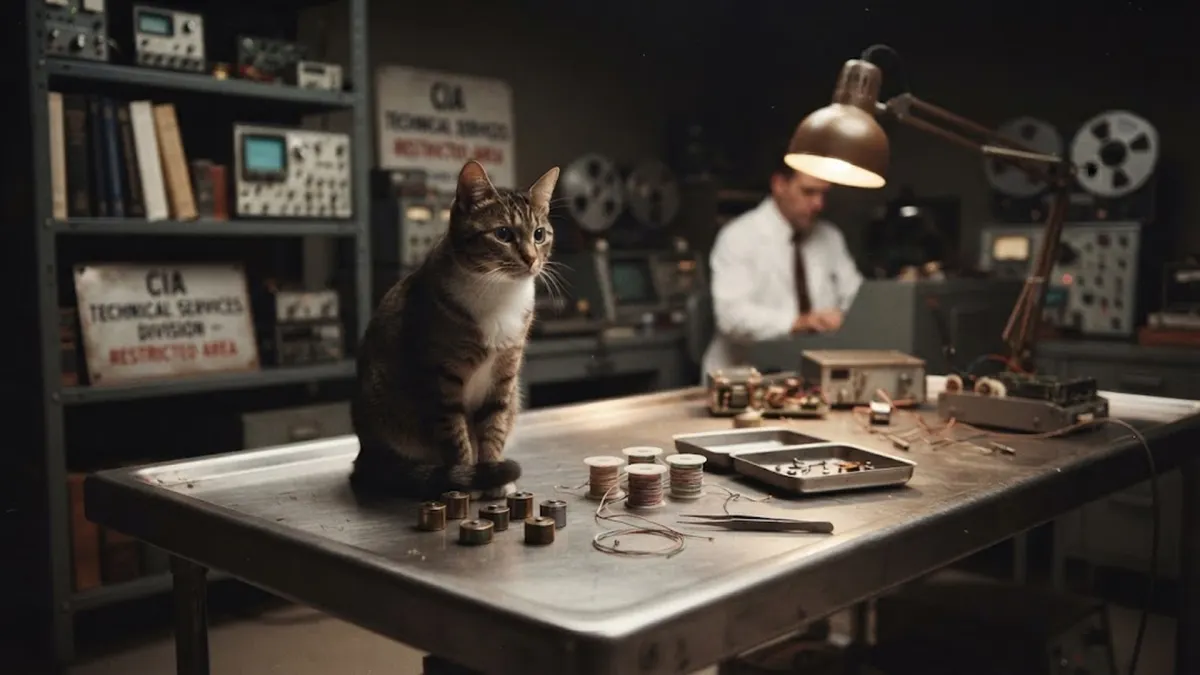
On an unseasonably muggy Thursday afternoon in July 1961, three senior CIA technical officers from the Directorate of Science and Technology met in the basement laboratory of a nondescript office park in Langley, Virginia. Spread across a stainless-steel operating tray were miniature mercury batteries, an ultra-thin audio transmitter no larger than a pencil eraser, and several yards of flexible insulated copper wire.
Across the room, inside a wire cage, sat a quiet five-year-old grey-and-white domestic short-haired cat named Prince. The Cold War was reaching boiling point following the failed Bay of Pigs invasion, and CIA station chiefs in Moscow and Berlin were desperate for eavesdropping intelligence. The agency could plant bugs in telephone poles or parked sedans, but Soviet counterintelligence sweeps routinely uncovered them. Nobody, CIA theorists argued, would ever suspect a stray alley cat napping beneath a wooden park bench outside the Soviet embassy in Washington.
That meeting greenlit Operation Acoustic Kitty, one of the most secretive, bizarre, and financially disastrous espionage programs of the twentieth century.
The Ghost Blimp L-8: Why a US Navy Airship Landed on a Suburban Street with No Crew
The Surgery Room at Langley
I spoke with retired military intelligence archivist Douglas Campbell, who spent eight years cataloging declassified Cold War surveillance documents at a research facility in Arlington, Virginia. Campbell laid out photocopies of heavily redacted 1967 CIA memoranda titled simply "Views on Trained Cats."
"The engineering challenge was absolute madness," Campbell told me, adjusting a desk lamp over the faded typed pages. "The CIA hired a prominent veterinary surgeon and paid him top-secret clearance wages to perform delicate hours-long operations on live housecats. They shaved the animals down, made an incision along the base of the skull, and slipped a microphone inside the ear canal."
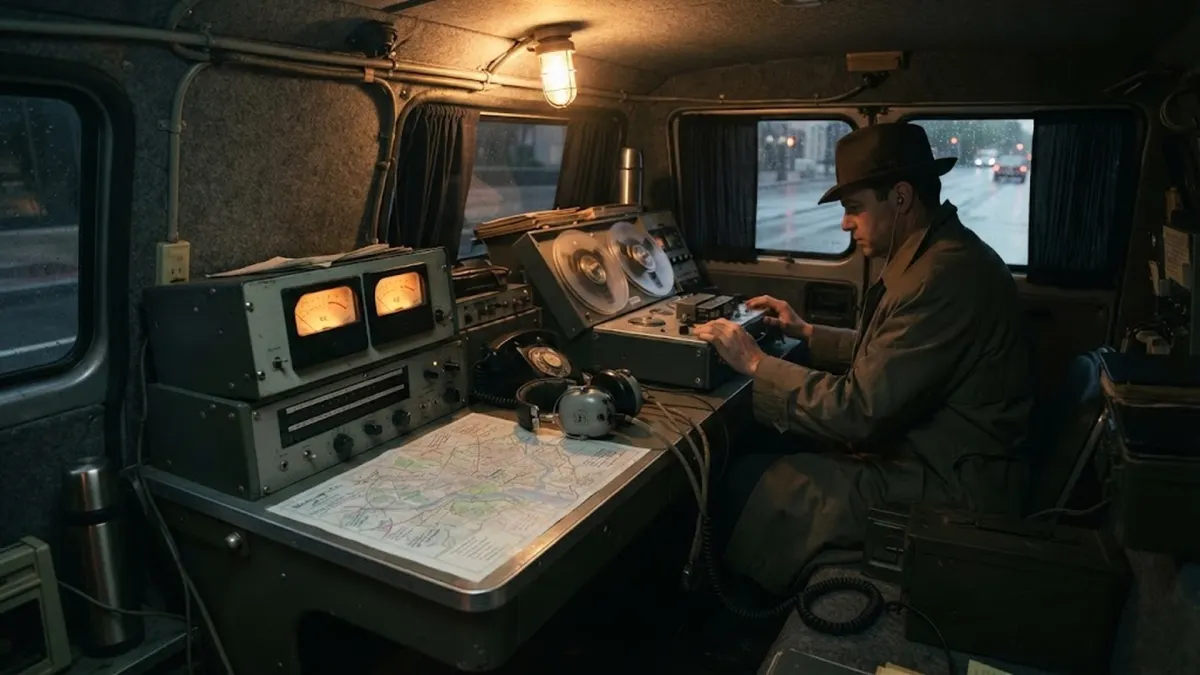
The surgeon ran fine copper wire beneath the cat's skin along the spine, terminating in an antenna woven straight through the fur of its tail. A miniature power pack was sewn into the cat's ribcage. When finished, the cat looked completely normal from the outside. But inside, it was a walking radio transmitter tuned to broadcast ambient human conversation to an unmarked surveillance van parked three blocks away.
| Program Phase | Timeline | Estimated Budget | Operational Outcome |
|---|---|---|---|
| Surgical R&D | 1961 – 1964 | $2.8 Million | Successfully implanted microphone, transmitter, and tail antenna |
| Behavioral Conditioning | 1964 – 1966 | $1.5 Million | Failed to override predatory distractions and food wandering |
| Field Deployment Test | 1966 (Wisconsin Ave) | $500,000 | Subject released outside park; struck by taxi within minutes |
| Official Cancellation | October 1967 | Total: ~$16 to $20 Million (adjusted) | Deemed unsuitable for covert collection; files classified |
The Wisconsin Avenue Disaster
The technical team spent nearly five years training their surgical creations on indoor obstacle courses. Cats are notoriously aloof, and the animals constantly wandered off course whenever they caught the scent of canned fish or heard a bird chirping outside a laboratory window. Engineers eventually installed a second wire to stimulate hunger control and directional movement.
In the autumn of 1966, the CIA decided Acoustic Kitty was ready for its premier real-world field test. A grey surveillance van pulled up to the curb along Wisconsin Avenue in northwest Washington, parked across from a small public park where two men suspected of passing Soviet intelligence were seated on a green bench.
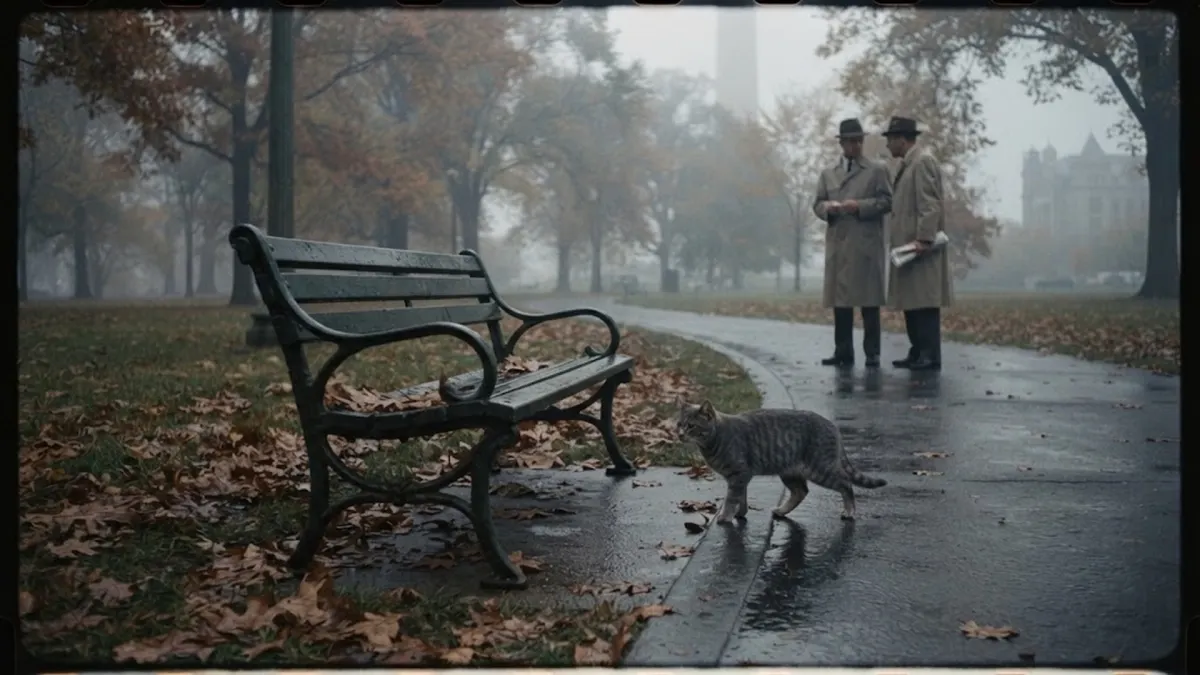
"The handler opened the side door of the van and placed the wired cat on the sidewalk," Campbell recounted. "The handler gave the signal, expecting the animal to stroll thirty yards across the grass, curl up under the bench, and transmit crystal-clear audio back to the tape reels in the van."
The cat took four cautious steps toward the park lawn, hesitated, and veered directly into the street. A passing yellow taxicab struck the animal instantly, killing it on impact.
The 1967 CIA Declassified Assessment
In October 1967, CIA research chief Donald Steininger signed a closing memo conceding that while the surgical team accomplished a remarkable feat of bio-engineering, "the environmental and security factors in using the cat in a real-world foreign situation convince us that, in our opinion, the program would not be practical."
Why Cats Will Never Be Secret Agents
Following the disaster on Wisconsin Avenue, CIA technicians retrieved the cat's remains from the asphalt to prevent foreign operatives from discovering the miniature microphone and wiring. A few months later, the agency quietly scrapped the entire project.
Campbell closed the declassified folder with a quiet chuckle. "Dogs have been trained for centuries to follow human commands because they are pack animals with an innate drive to please their leader. Cats are solitary ambush predators. You can spend twenty million dollars stitching microphones into a cat's skull, but the moment a pigeon lands twenty feet away, every piece of American espionage technology is going to chase that pigeon."
Espionage Takeaway
Biomedical engineering can overcome anatomical limits, but it cannot rewrite fifty thousand years of feline predatory instinct. Operation Acoustic Kitty remains the premier case study in intelligence overreach.