
Imagine standing face-to-face with a venomous snake, walking alone through a dangerous neighborhood, or hearing footsteps behind you in a dark alley—and feeling almost no fear.
The Woman Who Couldn’t Feel Fear: How a Rare Brain Disorder Helped Scientists Unlock the Mystery of the Amygdala
For most people, fear is an essential survival mechanism. It warns us of danger, triggers rapid responses, and helps keep us alive. But for one woman known only as S.M., fear was almost entirely absent.
Her extraordinary case became one of the most important discoveries in modern neuroscience and offered researchers an unprecedented look at the role of the amygdala, the brain's primary fear-processing center.
Read More


Who Was Patient S.M.?
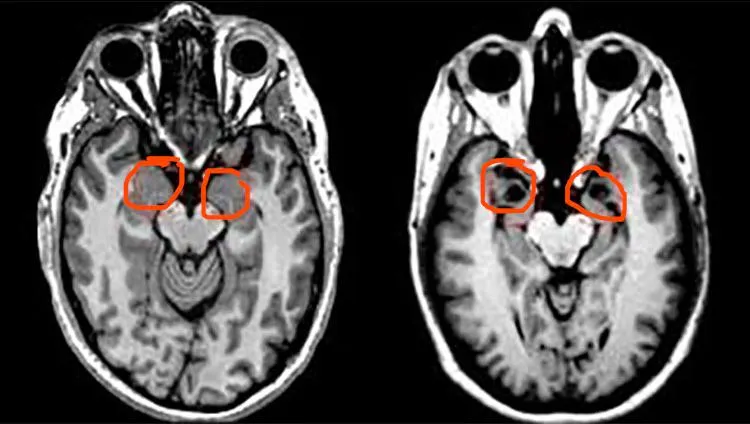
Patient S.M. is one of the most studied individuals in the history of brain science. She was born with a rare genetic condition called Urbach-Wiethe disease, a disorder that gradually damaged both of her amygdalae—two small almond-shaped structures located deep within the temporal lobes of the brain.
Brain scans comparing S.M. with healthy individuals revealed that these critical regions were largely destroyed, giving scientists a unique opportunity to study what happens when the human brain loses one of its key emotional centers.
What Is the Amygdala and Why Is It Important?
The amygdala plays a central role in:
- Processing fear and danger
- Detecting potential threats
- Triggering the fight-or-flight response
- Forming emotional memories
- Recognizing fear in other people's facial expressions
For decades, scientists suspected that the amygdala was closely linked to fear. S.M.'s condition provided some of the strongest evidence ever discovered.
A Woman Who Couldn’t Feel Fear
Researchers placed S.M. in situations that would normally trigger strong emotional reactions.The results were remarkable.She willingly approached snakes and spiders, despite knowing they could be dangerous. She showed little hesitation when exposed to situations most people would find frightening and often failed to recognize fear in the faces of others.
While she understood the concept of danger intellectually, she rarely experienced the emotional response that accompanies it.This unusual behavior helped researchers confirm that the amygdala is essential for generating fear responses to external threats.
The Surprising Discovery That Changed Everything
For years, scientists believed S.M. was essentially incapable of feeling fear.
Then researchers made an unexpected discovery.
During a controlled experiment, S.M. inhaled air containing elevated levels of carbon dioxide (CO₂). Almost immediately, she experienced intense panic and distress.
The finding stunned researchers because it suggested that fear is not controlled by a single brain structure alone.
Instead, the brain appears to use multiple systems to detect danger. While the amygdala plays a critical role in responding to external threats such as predators or dangerous situations, other neural pathways can trigger panic when the body senses internal threats like suffocation.
What Scientists Learned From S.M.'s Brain
The case of S.M. transformed our understanding of:
- How fear is generated in the brain
- The function of the amygdala
- Emotional processing and survival instincts
- The neural pathways involved in panic and anxiety
- How different parts of the brain work together to protect us
Her condition demonstrated that emotions are not abstract experiences but are deeply rooted in specific biological structures.
Why the Story of S.M. Still Fascinates Scientists Today
Few medical cases have had such a profound impact on neuroscience.More than two decades after researchers first began studying her, S.M. remains one of the most famous patients in brain research. Her rare condition continues to be cited in scientific papers, psychology courses, and neuroscience textbooks around the world.
Her story provides a fascinating glimpse into the complex machinery of the human mind and raises an intriguing question: If fear helps keep us alive, what would life be like without it?