

The Anatomy of an Ice Cream Headache
A few summers ago, I watched a buddy order a triple-scoop dark cherry sundae on a sweltering afternoon in Florence. He was so starved for something cold that he shoved a heaped tablespoon straight into his mouth and swallowed before the cream even started melting. Two seconds later, his jaw dropped, his eyes squeezed shut, and he dropped his spoon straight onto the cobblestones, clutching his forehead like he'd been clipped by a cricket ball. For twenty seconds, he couldn't speak a single word.
Every kid knows that exact sensation. You drink a slushie through a straw on a July afternoon, take two gulps too many, and a vicious, throbbing ache blooms right between your eyes. Most of us laugh it off as an annoying tax on summer desserts. But in medical clinics, neurologists give it a wonderfully pompous name: sphenopalatine ganglioneuralgia. Broken down into plain English, that just means nerve pain originating from the roof of your mouth.
The funny thing is that your brain itself has zero pain receptors. A neurosurgeon can poke around in cerebral gray matter with a probe while you're wide awake doing crossword puzzles and you won't feel a tickle. That ice cream headache isn't your brain freezing at all. It is a biological false alarm, an emergency vascular reaction triggered when ancient nerves at the back of your throat mistake a mouthful of pistachio gelato for hypothermia.
Read also: The Bird That Remembers Your Face: The Science of Crow Memory and Lifelong Grudges
The False Alarm at the Roof of Your Mouth
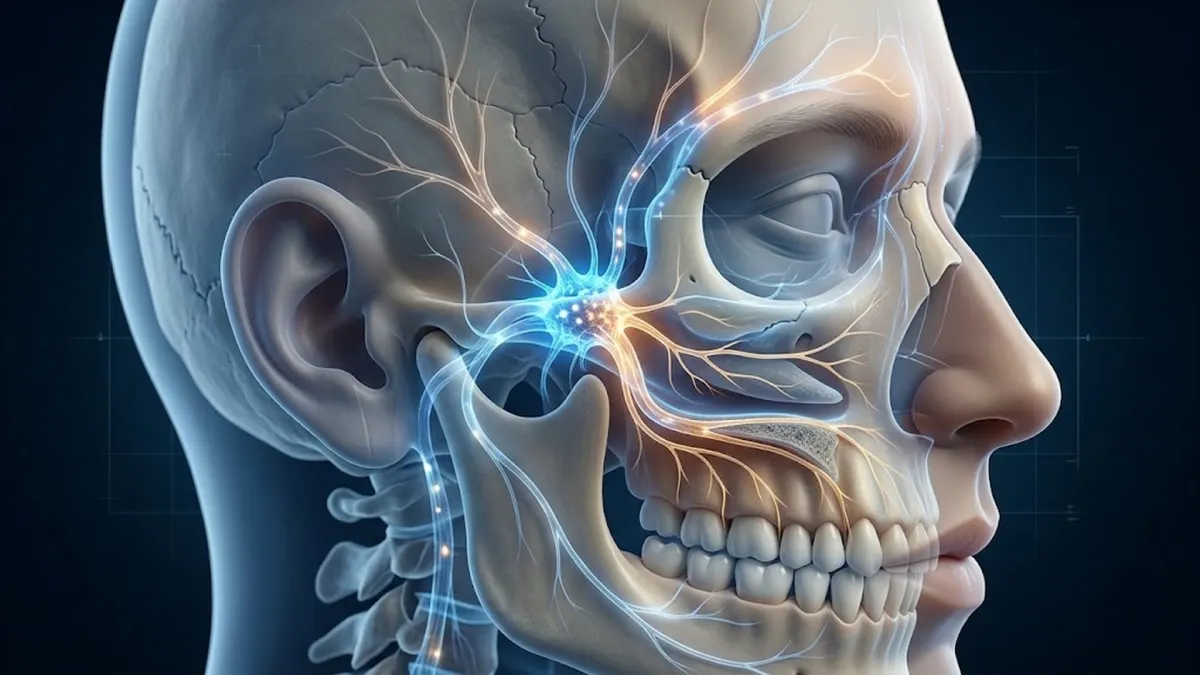
The real culprit lives at the very back of your oral cavity, right where the hard roof of your mouth softens up near your uvula. Running right through that soft tissue is an intricate nerve hub called the sphenopalatine ganglion. This little wiring cluster feeds straight into the trigeminal nerve—the massive sensory cable that handles signals from your forehead, temples, eyes, and lower jaw.
When you shovel cold ice cream back there too quickly, the sudden thermal plunge shocks the microscopic capillary beds lining your palate tissue. The capillaries react instinctively by snapping shut to lock in heat. But then your autonomic system spots the rapid local freeze and panics: it decides your core head temperature is collapsing. To save your brain from freezing, it fires an emergency flare to the anterior cerebral artery, forcing it to dilate wide open and pump a torrent of warm, pressurized blood toward your frontal lobes.
| Headache Type | What Actually Causes It | How Long It Stays | Where You Feel the Throbbing |
|---|---|---|---|
| Ice Cream Brain Freeze | Vascular dilation after sudden palate cooling | 20 to 60 seconds | Mid-forehead, behind the eyebrows |
| Tension Headache | Clenched neck, jaw, and scalp muscles | A few hours to days | A tight rubber band around the skull |
| Classical Migraine | Spreading neurological irritation and vessel spasms | 4 to 72 hours | One side of head, with light sensitivity |
Because the nerve fibers monitoring your palate share the exact same trigeminal nerve bundle as the fibers running down from your forehead, your sensory cortex gets confused. This is textbook referred pain: your nervous system knows an alarm is ringing, but it mistakenly tells you the fire is behind your eyes instead of on the roof of your mouth.
What Thermal Ultrasound Shows in the Lab
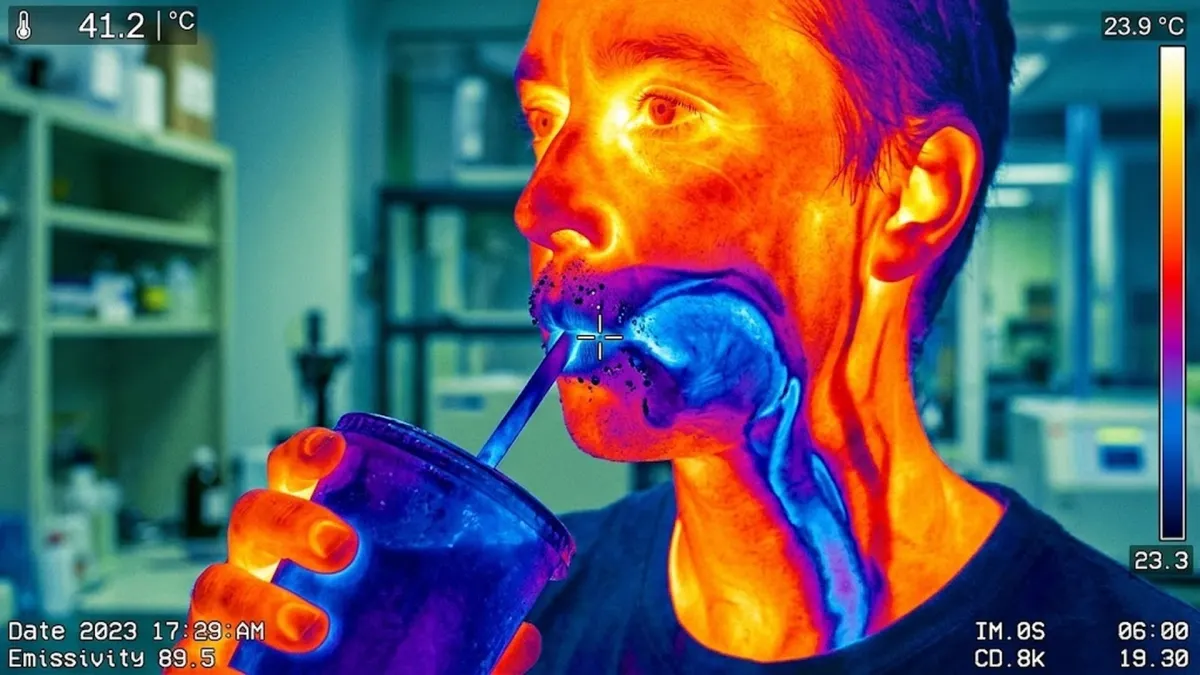
A few years back, clinical researchers at Harvard Medical School hooked thirteen volunteers up to transcranial Doppler ultrasound machines to watch what happens inside cranial blood vessels during a brain freeze in real time. They had each person sip freezing ice water through a straw angled upward against the roof of their mouth until the pain flared up, raising their hand the instant the headache began.
The ultrasound readouts showed that the moment the pain peaked, blood flow velocity through the anterior cerebral artery surged by over twenty percent. The vessel expanded rapidly, pushing against surrounding cranial tissue inside the rigid bone container of the skull. The volunteers then drank a sip of warm water, and the artery clamped back down to normal diameter within four seconds, wiping the pain away completely.
The study confirmed that the pain isn't caused by cold tissue itself, but by the rapid rebound swell of blood rushing into a tight skull space. Your body is trying so hard to protect brain temperature that the cure ends up hurting worse than the cold.
The 5-Second Roof-of-Mouth Reset
Once you understand how the plumbing works, you never have to sit through twenty seconds of forehead agony again. The goal isn't massaging your temples or rubbing your eyebrows; you simply have to warm up the nerve junction at the back of your palate:
- The Broad Tongue Press: Roll your tongue backward and press the warm, meaty underside flat against the roof of your mouth. Keep firm pressure on the soft palate for five to eight seconds. The heat transfers directly into the chilled tissue, signaling the artery to dial back its emergency flood.
- The Thumb Heat Sink: If your tongue has gone numb from eating ice cream, press the pad of your clean thumb firmly against the roof of your mouth. Your core body heat warms the nerve bundle within seconds.
- The Warm Water Trick: Take a small swallow of room-temperature or lukewarm water and hold it against the back of your throat for three seconds before swallowing.
- The Exhale Pocket: Cup both hands tightly over your nose and mouth and breathe out hard through your mouth. The trapped, warm, humid breath raises your oral cavity temperature almost instantly.

Why Migraine Sufferers Suffer More
If you get regular migraines, you probably already know that brain freeze hits you twice as hard as your friends. Clinical surveys run in headache clinics show that over seventy percent of migraine patients suffer from severe cold-induced headaches, compared to barely thirty percent of people without a migraine history.
Neurologists believe this happens because migraine brains live with a hyper-sensitive trigeminal nerve system. When cold hits the palate, their blood vessels dilate faster, open wider, and stay swollen longer. Because brain freeze mimics this vascular swelling in miniature, researchers actually use ice-water tests in laboratories to test new migraine medications, using the twenty-second freeze as a harmless trial run for full-blown migraine attacks.
How to Eat Ice Cream Without the Headache
You don't have to eat your dessert at a snail's pace to stay comfortable. The secret is simply steering cold food away from the very back of your mouth. Use a small spoon, keep the ice cream on your front teeth and the tip of your tongue, and let it soften slightly before you swallow. When drinking frozen milkshakes or slushies through a straw, point the straw tip down toward your tongue instead of aiming straight up at the roof of your mouth.