
The Cracks in Seahaven Island
A few months back, a film projectionist at an independent repertory cinema in Bristol told me that whenever they run Peter Weir's 1998 classic The Truman Show on 35mm, you can always tell who is watching it for the third or fourth time. First-timers focus entirely on Jim Carrey's expressive, rubbery face as Truman Burbank goes about his cheery morning routine. But repeat viewers stare exclusively past his shoulders into the background blur, watching the extras check their wristwatches, spotting the painted seams on the curb, and counting the surveillance camera lenses hidden in plain sight.
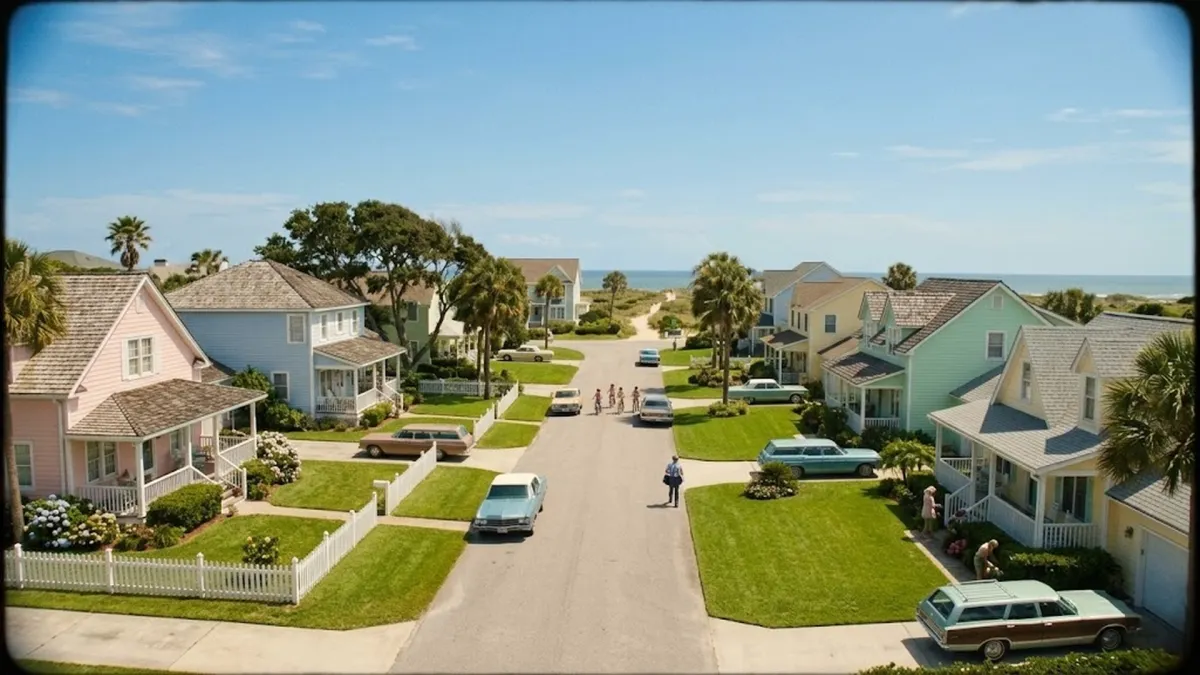
Most moviegoers remember the big reveals: the studio spotlight that falls from the clear blue sky, the radio scanner that broadcasts Truman's driving route, and the rain shower that tracks him across the beach like a targeted garden hose. Yet the brilliance of Peter Weir's directing and Andrew Niccol's screenplay goes much deeper than those flashy plot points. Long before Truman starts suspecting that his quaint seaside hometown is a manufactured television set, the production design quietly tells the audience that literally everything in Seahaven is a cheap corporate prop.
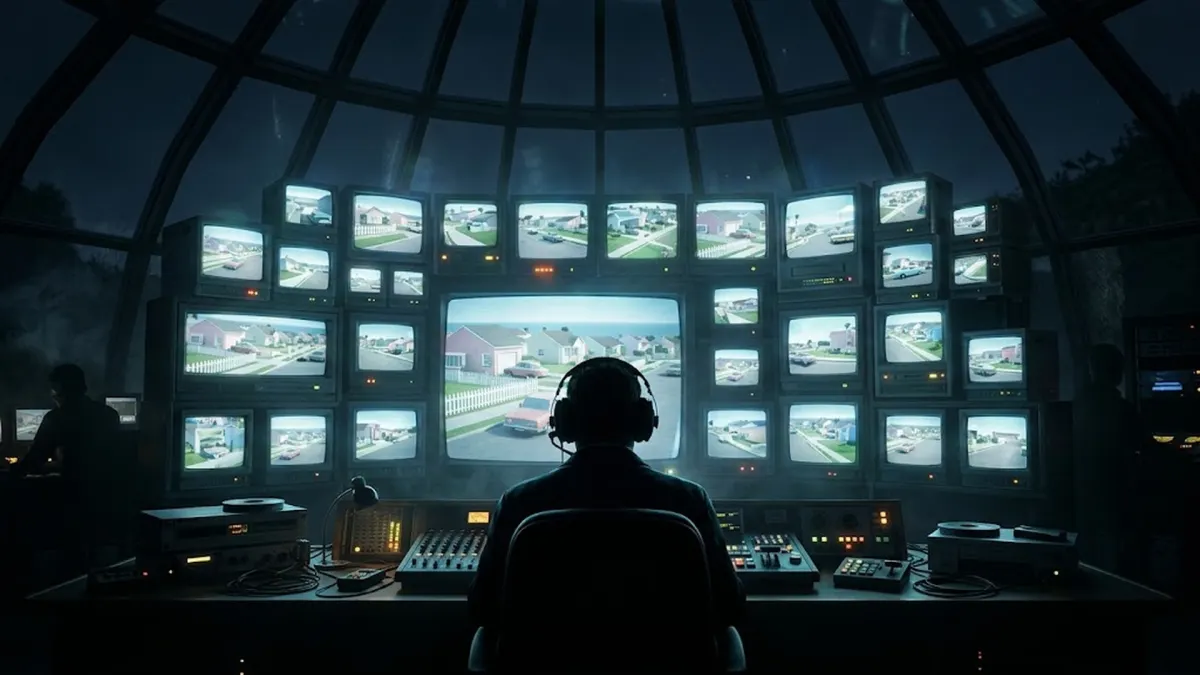
From architectural Easter eggs and subtle Latin jokes on public monuments to the unnatural behaviors of background actors trapped in repetitive loops, the film hid the truth in almost every single camera setup. Here are the ten cleverest visual clues that gave the game away before Truman ever realized he was an orphan adopted by an entertainment conglomerate.
Read also: The Moving Stones of Death Valley: How Scientists Finally Solved the 70-Year Mystery
1. The Latin Inscription on the Seahaven Archway
Early in the film, Truman walks through the bustling town center past a decorative neoclassical archway. Chiseled into the stone header is an ornate Latin motto: UNUS PRO OMNIBUS, OMNES PRO UNO? No. The actual inscription carved into the marble reads: UNUS PRO OMNIBUS? Look closer on a high-definition remaster. The civic motto on the central town monument is: "OMNIS ENIM VIRTUS QUAE EST IN HOMINE CONSTAT EX ACTIONE"—or translated into plain English: "The whole life of man is an act." The set designers literally carved the show's entire premise into public civic architecture for anyone who paid attention in high school Latin.
2. Vitamin D Pills on the Breakfast Table
Whenever Truman eats breakfast with his wife Meryl, there is always a prominent amber bottle of Vitamin D supplements sitting right next to the cereal bowl. In an ordinary sunlit coastal town in Florida, residents would be swimming in natural sunlight and producing plenty of Vitamin D naturally. But because Seahaven is encased beneath a colossal geodesic dome under artificial studio arc lights that emit zero true ultraviolet radiation, the show's medical staff had to quietly supplement the entire cast and crew with synthetic vitamins to prevent severe rickets.
3. The Pinhole Lenses in the Dashboard and Lamp Posts
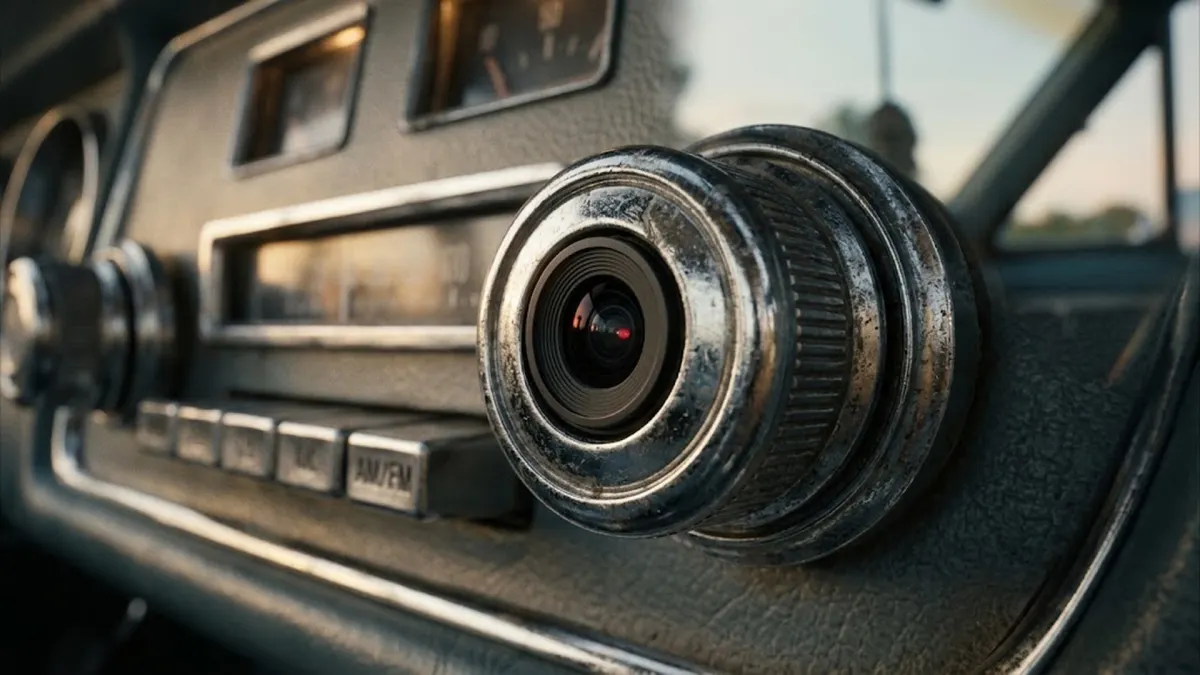
Peter Weir made a deliberate stylistic choice that many casual viewers overlooked during the theatrical release: almost every wide shot in Seahaven uses subtle vignette shading around the edges of the frame. If you freeze-frame Truman's daily commute, the production design planted over five thousand miniature surveillance lenses throughout the town. You can see them embedded into the chrome volume knob of his car radio, peeking through the buttonholes of his neighbor's coat, hidden inside the numbers on the street clock, and mounted directly into the brass knocker on his own front door.
4. The Street Names All Honor Real Hollywood Icons
Seahaven's geography is not named after local geography or historical founders; it is an overt tribute to golden-age cinema directors and studio moguls. Truman lives on Lancaster Square (named after actor Burt Lancaster). The street he takes to his insurance office is Barrymore Boulevard (after the Barrymore acting dynasty), and his work route crosses Hawks Street (after director Howard Hawks). Even his best friend, Marlon, is an unmasked nod to Marlon Brando. The whole town directory reads like a Hollywood call sheet.
| Seahaven Location / Item | Cinematic Namesake | Underlying Story Meaning |
|---|---|---|
| Lancaster Square | Burt Lancaster | Nod to classic mid-century studio drama |
| Barrymore Boulevard | The Barrymore family | Generational theatrical acting dynasty |
| Hawks Street | Howard Hawks | Master director of classic American cinema |
| The Boat (Santa Maria) | Christopher Columbus's flagship | Symbol of sailing off the edge of the known world |
5. The Repeat Extras on 15-Minute Loops
When Truman sits in his car during his mid-movie breakdown, he tests his sanity by predicting the exact sequence of vehicles: a woman on a red bicycle, a dented station wagon with a dented fender, and a man carrying a rolled carpet. But if you re-watch the opening ten minutes of the movie, that exact same sequence of extras passes his driveway in the exact same order. The background cast operates on an automated fifteen-minute production loop designed to keep traffic looking lively without having to hire thousands of union actors.
6. The Travel Agency Posters Designed to Terrorize Him
When Truman finally gets the courage to walk into a local travel agency to book a flight to Fiji, the office walls are covered in horrific, discouraging propaganda. One poster shows a passenger plane being struck by a jagged bolt of lightning with the bold headline: "IT COULD HAPPEN TO YOU!" Another travel brochure highlights the dangers of contracting foreign tropical diseases and shark attacks. Christof's production company specifically designed every public service campaign in Seahaven to cultivate agoraphobia and keep Truman anchored to his suburban cul-de-sac.
7. The Omnipresent Product Placement Labels
Throughout the film, Meryl and Marlon speak in strange, formal advertising copy whenever they hand Truman an everyday household object. When Meryl holds up a jar of "Mococoa" or a Chef's Pal kitchen slicer, she holds the item awkwardly with the brand label facing directly toward the hidden camera behind the refrigerator door. Because the broadcast runs commercial-free twenty-four hours a day, the entire multibillion-dollar show is financed entirely through integrated catalog product placement, and Truman is the only person on the set who doesn't realize he is living inside an infomercial.
8. The Sun That Rises in the Wrong Direction
In one of the most clever cinematographic clues, eagle-eyed astronomy buffs noticed that Seahaven's sun doesn't follow the laws of orbital physics. Because the sun is a massive lighting rig mounted on a track across the ceiling of the dome, its shadow angles shift slightly during scene transitions when the lighting crew adjusts power levels to accommodate studio camera exposures. In several wide establishing shots, shadows from trees and fences fall at angles that would be mathematically impossible for a coastal town at that latitude.
9. The Radio Frequency Leak in the Traffic Jam
When Truman's car radio picks up the director's communication channel, the voice calmly narrates: "He's turning left onto Lancaster... stand by extra number seven." Casual viewers assumed this was a freak transmission glitch. But audiophiles and audio engineers pointed out that the frequency displayed on Truman's dashboard radio is 530 kHz—the lowest possible frequency on the standard AM dial, universally reserved in North America for low-power airport and highway advisory transmitters. Christof's sound engineers were simply utilizing the most basic short-range broadcast band to feed cue prompts to local actors.
10. The Boat Named "Santa Maria"
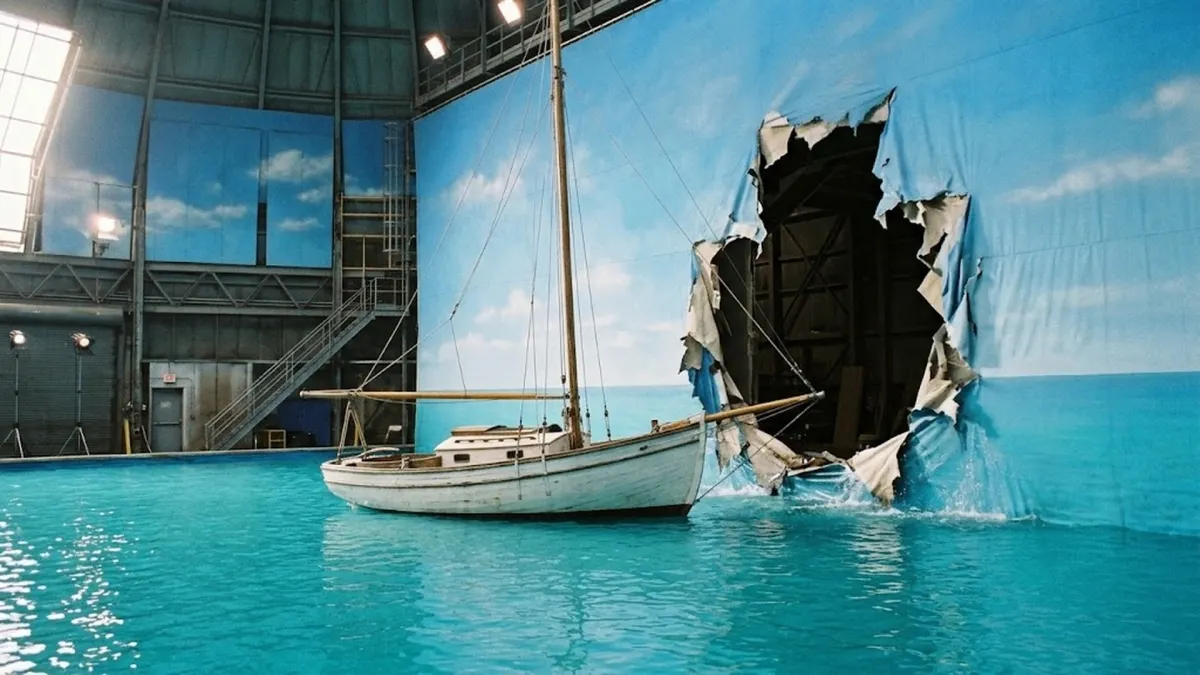
When Truman finally stages his midnight escape and steals a small sailboat from the harbor, the name painted in gold across the transom is the Santa Maria. This was not a random choice by the prop department: the Santa Maria was the flagship Christopher Columbus used in 1492 to cross the Atlantic Ocean into unknown territory, defying the contemporary fears of sailors who believed they would fall off the edge of the flat earth. Truman uses his own Santa Maria to sail straight into the artificial horizon wall—proving once and for all that his world was indeed completely flat.
The Enduring Legacy of Peter Weir's Vision
Released six years before Facebook launched and a year before the first season of Big Brother debuted on European television, The Truman Show remains one of the most prescient cinematic masterpieces in modern Hollywood history. It didn't just satirize reality television; it accurately predicted a twenty-first-century digital culture where ordinary people willingly curate and broadcast their daily private lives to a global audience of voyeuristic strangers.